Skip to Content Facebook Feature Image

South China's Hainan, Guangdong brace for Typhoon Maysak

China

China

China

South China's Hainan, Guangdong brace for Typhoon Maysak

2026-07-03 12:56 Last Updated At:16:17

Guangdong and Hainan in south China are bracing for Typhoon Maysak, tightening transport and safety measures as the storm closes in.

Maysak, the 10th typhoon of this year, is projected to make landfall in Hainan on Friday afternoon, according to the provincial meteorological service. Upon landfall, it will become the first typhoon to hit China this year, the forecast noted.

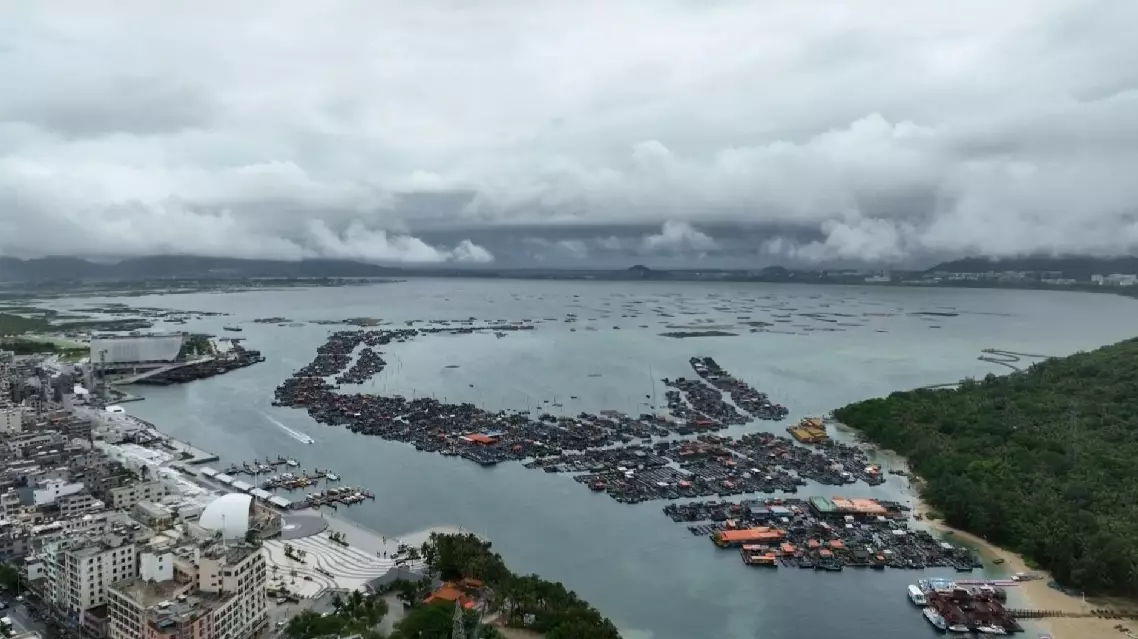
In Lingshui Li Autonomous County of Hainan, all fishing boats have returned to port for shelter.

Additionally, ferry service across the Qiongzhou Strait has been suspended starting from Friday, and the island's high-speed railway loop has also been halted.

Some flights at Sanya Phoenix Airport have been canceled or delayed, and tourist attractions in Sanya and Lingshui have been closed.

Meanwhile, Guangdong is also bracing for the typhoon, which is expected to make a second landfall on Saturday evening near the coastal border between Guangxi and northern Vietnam.

Due to the typhoon's impact, heavy rain is forecast to lash Guangdong from Friday through Sunday.

"The rainfall from the typhoon will have a greater impact than the winds. From July 3 to 5, heavy to torrential rain is expected to batter central and western Guangdong, with extreme downpours possible in some areas," said Han Pucheng, deputy chief forecaster of the Guangdong Meteorological Observatory.

In Zhanjiang of Guangdong, more than 20,000 fishing boats have taken shelter in port, and maritime workers have been evacuated ashore.

A Level-IV emergency response for typhoon prevention is in effect, and all coastal tourism projects have been suspended.
South China's Hainan, Guangdong brace for Typhoon Maysak


South China's Hainan, Guangdong brace for Typhoon Maysak

Chinese authorities announced Friday that starting from January 1, 2027, the country will cancel the policies of halving the vehicle and vessel tax for energy-saving vehicles and exempting certain new energy vehicles (NEVs), including pure electric commercial vehicles, plug-in hybrid electric vehicles, and fuel cell commercial vehicles from the tax.

With the adjustment, taxpayers who have acquired or will acquire the above-mentioned vehicles will be required to pay the annual tax starting next year, according to the Ministry of Finance.

However, pure electric passenger vehicles and fuel cell passenger vehicles remain unaffected by this policy adjustment and will continue to be exempt from the tax, as the two categories do not fall within the taxable scope stipulated by the vehicle and vessel tax law.

The vehicle and vessel tax is a property tax levied annually on the owners or managers of vehicles and vessels. Provincial-level regions can set region-specific applicable tax amounts within a certain range of tax rates.

Since 2012, China has implemented preferential vehicle and vessel tax policies to support the growth of the NEV industry and promote energy conservation and emission reduction. In recent years, the sector has witnessed rapid growth, along with rising challenges brought about by the preferential treatment to tax equity and the regulatory role of tax.

Analysts believe that this policy adjustment will help promote tax equity and guide the sound development of the NEV industry.

China to cancel vehicle and vessel tax preferential policy for energy-saving vehicles, NEVs

China to cancel vehicle and vessel tax preferential policy for energy-saving vehicles, NEVs

Recommended Articles