A remarkable collection of Chinese porcelain, recovered from an 18th-century shipwreck discovered off the coast of Norway earlier this year, is now on display in the Norwegian capital of Oslo, offering visitors a rare glimpse into early global trade.
Now being showcased at the Norwegian Maritime Museum, the artifacts, which spent more than 250 years underwater, were salvaged from what experts describe as the best-preserved wreck ever found in Northern Europe.
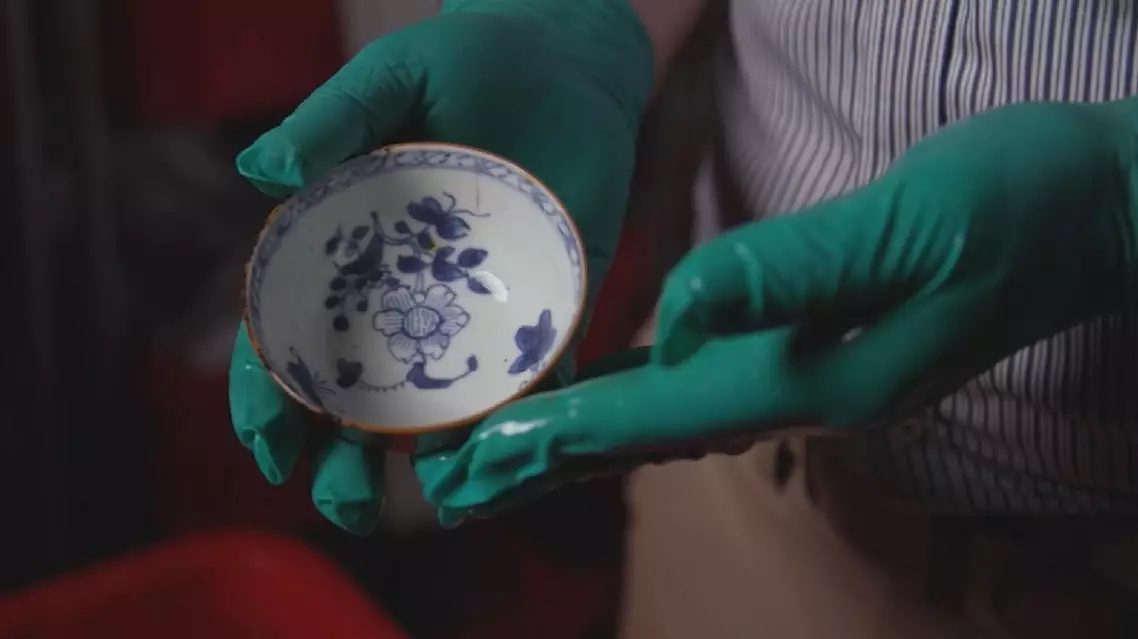
The vessel, known to researchers as the Porcelain Wreck, was located at a depth of 600 meters, far deeper than most historic wrecks, which are typically discovered between 10 and 30 meters below the surface. The porcelain features distinctive Batavia-style designs, popular in the 18th century and widely traded between Asia and Europe.
Archaeologists said cold waters and the absence of shipworms helped preserve both the ship and its cargo.
"Many of the objects, for example this cup, are almost perfectly preserved. We believe that it might be produced in Jingdezhen in China," said Sven Ahrens, director of Research and Heritage Management at Norwegian Maritime Museum.
The wreck was discovered by Espen Saastad, a watch designer from Porsgrunn in southeastern Norway who also operates a small remotely operated vehicle, or ROV, and seabed survey company.
"After maybe half an hour, an hour, we started to see small objects on the seabed. First on the sonar, some hard objects, and then after we come closer and we get the small objects on the camera," said Saastad.
For Saastad, it was the discovery of a lifetime. The diving enthusiast joined forces with the Norwegian Maritime Museum to recover artifacts using the ROVs, a first in Northern Europe.
"This is the most amazing find that we ever did. It's like a time capsule on the seabed. The wreck is completely intact," Saastad said.
The team at the museum believes the ship sank around 1750, when Europe's appetite for consumerism was beginning to take hold. As merchants moved everything from raw materials to luxury goods, such as porcelain, chandeliers and even grain, through growing international shipping networks, this vessel may have been caught in the middle of a rapidly changing world.
However, researchers still do not know exactly where the ship came from or where it was headed. So far, only a fraction of the cargo has been recovered and desalinated.
"Every find that we have made is part of a great puzzle, a jigsaw. Every piece has to be put together to solve the whole mystery about the trade route of this ship," said Ahrens.
Looking ahead, the team hopes to begin a full-scale excavation soon. For now, a selection of the recovered treasures is on display in Oslo, with plans underway for a larger permanent exhibition at the Norwegian Maritime Museum.
Opened on June 2, the exhibition will run through September 1.
Rare Chinese porcelain from 18th-century shipwreck on display in Oslo
Rare Chinese porcelain from 18th-century shipwreck on display in Oslo