Boarding school education in southwest China's Xizang Autonomous Region helped broaden the horizons of many local children, including Dekyi Chodron, who had such a background and went on to become a successful entrepreneur after studying overseas, running various businesses and activities that preserve Tibetan culture and support rural communities.
At a rural music festival held nearly 3,900 meters above sea level, villagers performed folk songs and dances while Chodron moved through the crowd serving tea.
Chodron did her graduate study in the United Kingdom. She returned to Xizang to pursue her career, as her commitment is rooted in the places where she grew up.
"I'm from Ngari [Prefecture]. I went to elementary school in Ngari. Apart from when I was at school, I spent time in pastoral areas with my grandparents. I really love the place for its rustic warmth. I think the sense of human connection there is something nowhere else can match," she said.
Growing up in Ngari, one of Xizang's most remote regions, Chodron benefited from the region's boarding school system, which has expanded educational access for children living across vast pastoral areas.
She described boarding life as a natural part of growing up, saying studying and living with classmates fostered lifelong friendships while giving her opportunities to explore a much broader world from the age of 11. She also credited the region's education policies with enabling her to pursue further studies and the career she has today.
While studying for her master's degree in the United Kingdom, she encountered stereotypes about her homeland. She recalled that many people questioned whether Tibetans were oppressed or lacked freedom, describing such perceptions as seeing her community "through a filter."
The experience strengthened her determination to return home, believing that the best way to promote Xizang's culture was to become part of its development.
Back in Xizang, Chodron and her team began working with local artisans and folk artists to bring traditional culture to wider audiences.
"This is a custom-made boot for a Tibetan opera troupe, over 70 pairs in total, and they were just sent off. The order brought in about 170,000 yuan, or 24,000 U.S. dollars in income for five tailors in the workshop," she said.
She has also worked with local elders to preserve traditional Tibetan folk songs, compiling lyrics that had previously been passed down orally.
"People look at Xizang through different lenses, whether good or bad. But for us young people living here, especially those of us in the culture and tourism industry, we can see that it is modern and fashionable. It's something we can fully vouch for and proudly show to the outside world. We are confident to say that big cities like Beijing, Shanghai, and Guangzhou are good, but Xizang has its own greatness too," Chodron said.
Chodron's journey reflects a broader trend among a new generation of Tibetans. Equipped with broader educational opportunities and wider global perspectives, many are returning home to preserve their cultural heritage, support local development and share a more authentic picture of Xizang with the world.
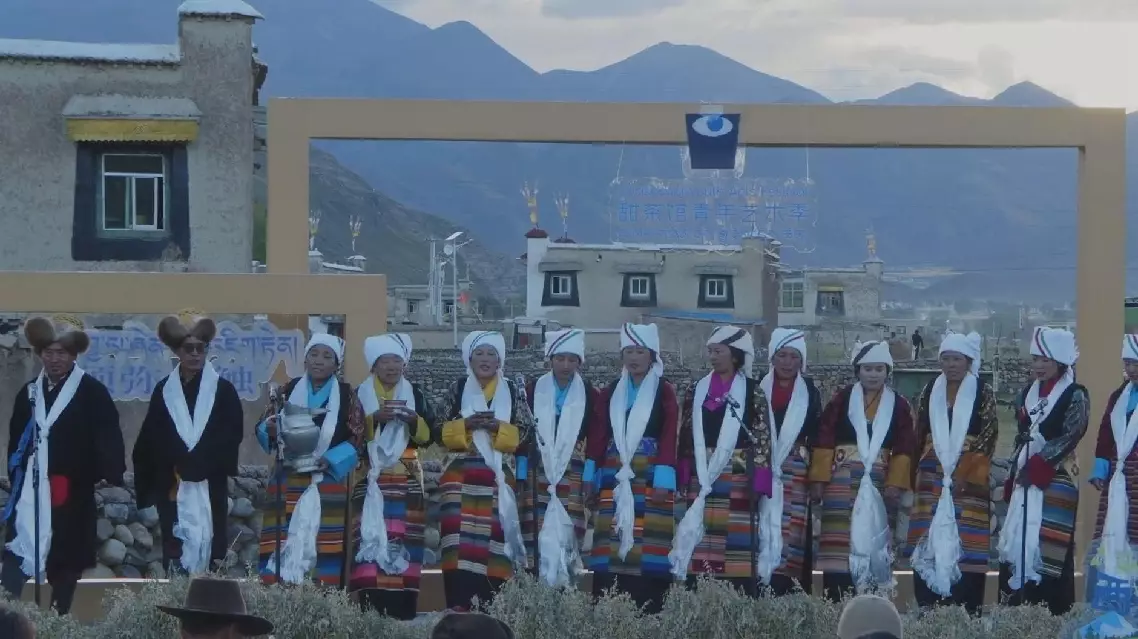
Young Tibetan entrepreneur returns from overseas to Xizang to preserve culture, challenge stereotypes