Various activities were held across China on Tuesday to commemorate the 89th anniversary of the beginning of the country's whole-nation resistance war against Japanese aggression.
The July 7th Incident, also known as the Lugou Bridge Incident, which occurred in 1937, is recognized as the start of Japan's full-scale invasion of China, and China's whole-nation resistance against Japanese aggression.
Following the incident in southwest Peiping (Beijing), the city was captured by the Japanese army on July 29, 1937. Over 10,000 civilians were killed or went missing during the fall of the city.
A commemorative ceremony was held at the Museum of the War of Chinese People's Resistance Against Japanese Aggression in Beijing on Tuesday morning.
Yin Li, a member of the Political Bureau of the Communist Party of China (CPC) Central Committee and secretary of the CPC Beijing Municipal Committee, presided over the ceremony.
At 09:00, the ceremony began with China's national anthem. Poems were recited and songs were performed by students from the capital to express the younger generation's resolve to faithfully follow the Party, carry forward the spirit of the heroes and martyrs, and advance China's modernization.
Attendees offered floral tributes and bowed to pay their respects to those who had laid down their lives in fighting the Japanese aggression.
Air-raid sirens rang in northwest China's Shaanxi Province and north China's Hebei Province to remind people to remember history and think of danger in time of peace.
In Nanjing City, east China's Jiangsu Province, representatives from all sectors rang the Peace Bell at the Memorial Hall of the Nanjing Massacre Victims by Japanese Invaders to remember revolutionary martyrs and the victims in the massacre.
The Nanjing Massacre, following the Japanese troops' capture of Nanjing, the then Chinese capital, on Dec. 13, 1937, left more than 300,000 Chinese civilians and unarmed soldiers killed.
In Shenyang City, northeast China's Liaoning Province, students vowed to carry forward the revolutionary spirit in front of the Broken Calendar Monument at the September 18th History Museum.
On the night of Sept. 18, 1931, the Japanese Kwantung Army bombed a section of the South Manchuria Railway near the Liutiao Lake on the northern outskirts of Shenyang. The Japanese blamed Chinese troops for the act and used this as a pretext to attack Beidaying, where the Chinese Northeast Army was garrisoned, and then bombarded Shenyang.
The September 18th Incident and the subsequent resistance on the Chinese side marked the beginning of the Chinese people's War of Resistance against Japanese Aggression, a significant part of the World Anti-Fascist War.
In Harbin City, northeast China's Heilongjiang Province, the Exhibition Hall of Evidence of Crime by Unit 731 of the Japanese Imperial Army unveiled an archive, which is a core criminal evidence that proves that the chemical warfare of the Japanese invaders was a premeditated, organized and systematic state crime.
In Yangquan City, north China's Shanxi Province, people visited the Hundred Regiments Offensive Memorial Hall, where over 470 historical pictures and more than 200 exhibits present the glorious history of the CPC leading the military and civilians to fight the Japanese aggression together.
The Hundred Regiments Offensive was a bold and unprecedented counterattack by the Eighth Route Army, led by the CPC, that not only disrupted enemy operations but also galvanized national morale during the darkest days of World War II.
Launched on the night of Aug 20, 1940, the operation involved an astonishing 105 regiments -- hence its later name -- and continued for over five months, ending in January 1941. Over the course of 1,824 engagements, the offensive inflicted more than 20,000 Japanese casualties.
Military troops across China also held commemorative activities, including remembering revolutionary martyrs in cemeteries, visiting history and military museums, and reviewing the oath of joining the Party.
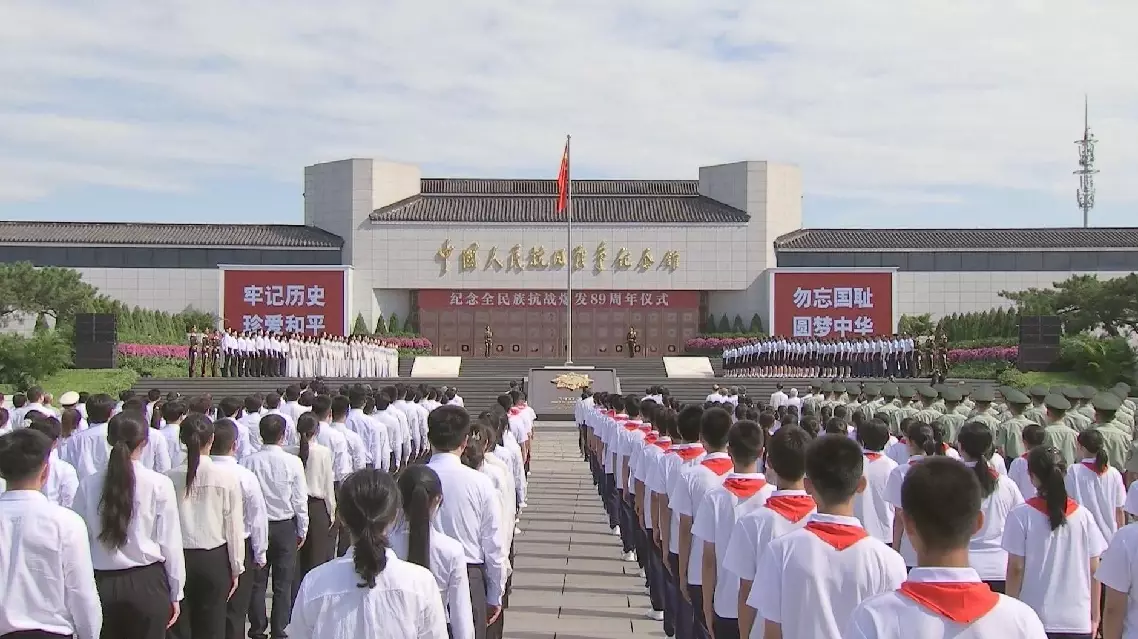
China marks 89th anniversary of whole-nation resistance war against Japanese aggression
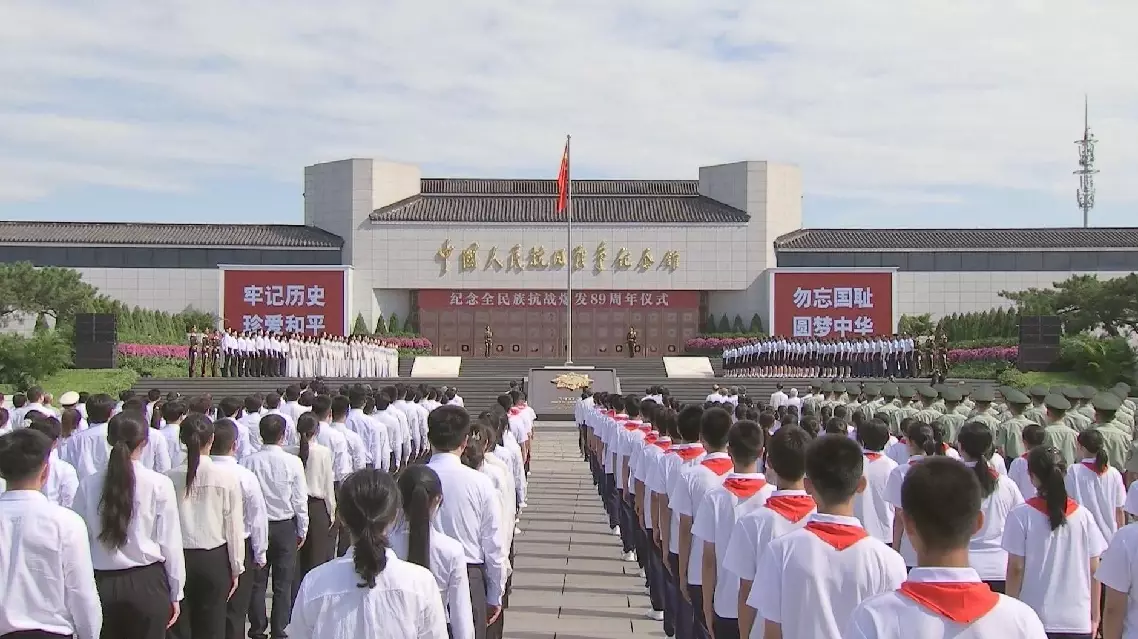
China marks 89th anniversary of whole-nation resistance war against Japanese aggression