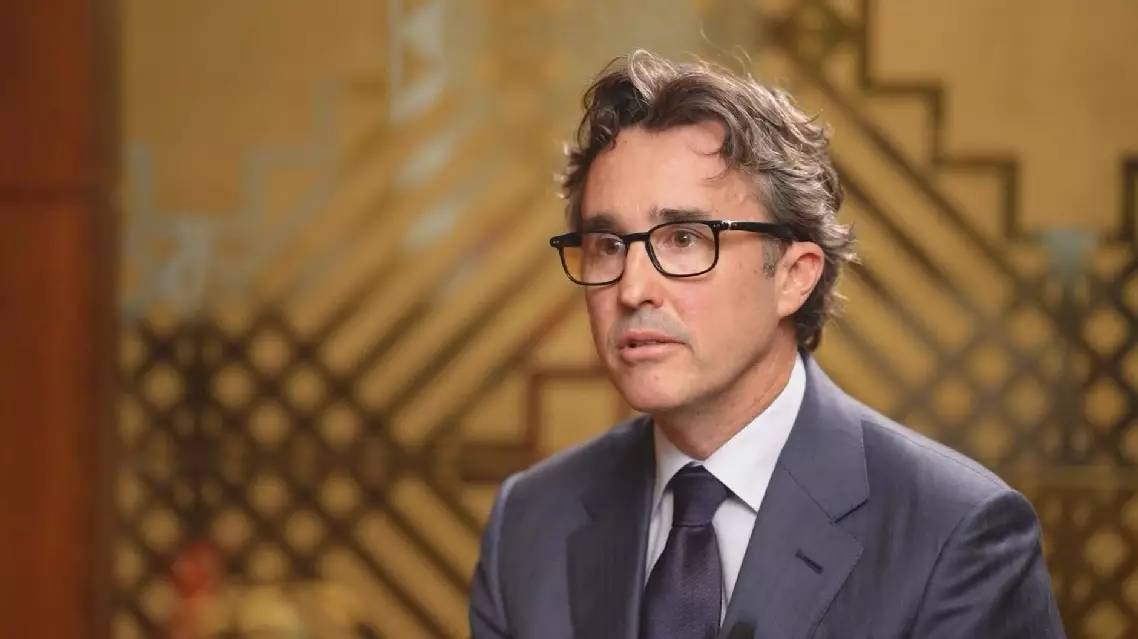
Simon Trott, CEO of the mining giant Rio Tinto has emphasized that China's 15th Five-Year Plan (2026-2030) for national socioeconomic development serves as a clear roadmap for the company's continued collaboration with China.
In an interview with China Global Television Network (CGTN) in Beijing, Trott said China's 15th Five-Year Plan provides a clear direction for the company to continue supplying materials essential for the country's development.
"The 15th Five-Year Plan really provides a clear direction for us to continue to work together, for us to continue to provide materials that China needs for ongoing development. And so for Rio Tinto it really is a clear roadmap for how best we continue to collaborate and one of the things that really stands out is that there will be resource intensive and so we need to make sure that our business is really strong so that we continue to play a supporting role providing the materials needed for that transition," said Trott.
Trott highlighted growing demand for commodities supporting the energy transition, noting the company's focus on iron ore, aluminium, copper and lithium.
"For us, we're focused on four main commodities, iron ore, aluminium, copper and lithium. Our first lithium supply from developments that we've got in Argentina is due to arrive in Shanghai in coming days and I think that symbolizes a little bit the change and the way commodities is changing because some of those commodities supporting that energy transition are really starting to increase in terms of demand and we need to make sure that we continue to bring that supply to market," he said.
The Five-Year Plans are a set of social and economic development initiatives that map out China's strategies for growth in a five-year period. The plans usually include numerical growth targets such as annual gross domestic product (GDP) goals and offer policy guidelines for reforms.
Rio Tinto CEO sees China's 15th Five-Year Plan as clear roadmap
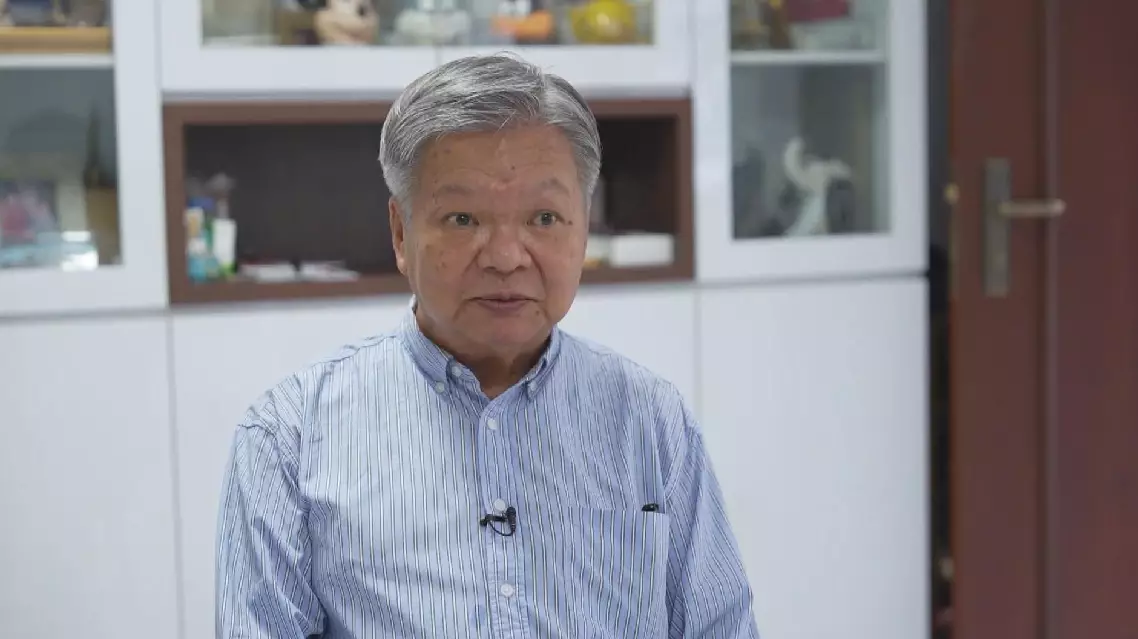
Singaporean scholar Lim Shao Bin, who has been studying World War II history and the Japanese army's wartime atrocities, has shed light on Japan's extensive network of bacterial experiments in Southeast Asia -- alongside its germ-warfare crimes in China -- through his research.
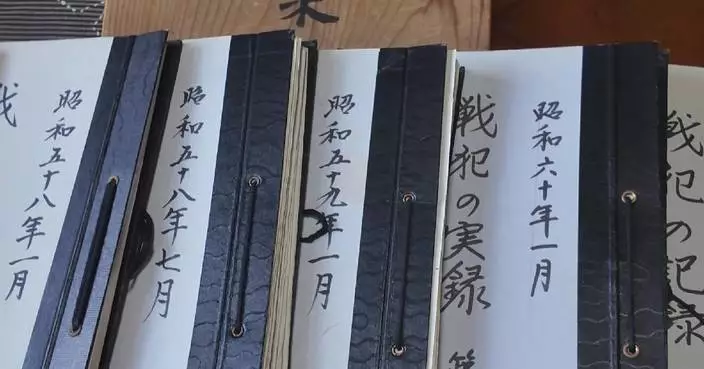
In 2025, Lim published a collection of historical records compiled by Singaporean and Chinese scholars, "Oka 9420 Unit, Japanese South Army BW Troops", bringing together nearly a decade of archival digging, exposing Japan's wartime inhumane atrocity to the public.
Lim's interest in Japanese germ warfare was sparked by Nobuyoshi Takashima, an honorary professor at Japan's University of the Ryukyus. In Feb 2016, Takashima took Lim to the outskirts of Johor Bahru, Malaysia, and pointed out a building that had been used for Japanese army's experiments involving plague bacteria.
"Professor Takashima took me to the site and pointed out to me that this building was the factory where Japanese Army Unit 731 produced those plague bacteria bombs. I was really shocked. I never imagined that Unit 731 would be so close to my doorstep. After that, I started my research trying to find out what Unit 731 was doing in Singapore and across Southeast Asia," Lim said.
To facilitate its aggression in the Pacific theater, the Japanese Imperial Army in World War II began deploying a biowarfare troops unit in Southeast Asia in March 1942, similar to the notorious Unit 731 in northeastern China's Harbin.
In May, a biowarfare unit was formed in Nanjing, China, and was dispatched to Singapore a month later. The detachment, publicly known as the Epidemic Prevention and Water Purification Department of the Southern Expeditionary Army Group, was referred to as the Oka 9420 Unit within the Japanese Imperial Army, according to historical records.
"On March 30, 1942, a military order was issued, and all troops began preparations to establish the Oka 9420 accordingly," Lim said.
Through his research, Lim found out why the Japanese army needed to build Oka 9420 in Southeast Asia despite already operating Unit 731 in China.
"Around Singapore, Malaysia and Indonesia, temperatures stay at about 30 degrees Celsius year-round, with humidity reaching 80 to 90 percent. For the bacteria cultivators in Harbin, Singapore and Malaysia were almost like paradise: they didn't have to spend much money, and fleas could survive simply by being placed on the ground. That's why the Japanese army decided to move their cultivation base to Singapore and Malaysia," Lim said.
The Singapore-based biowarfare unit crept into what are today Malaysia, Indonesia, the Philippines, Thailand, Vietnam and Myanmar. Records show one of its central missions was raising rats and cultivating plague-infected fleas.
"Their goal was to cultivate large quantities of plague bacteria in preparation for bombing the U.S. West Coast. The Japanese army was cultivating the equivalent of about five tons of fleas, and Singapore was one of the important plague cultivation centers," Lim said.
The Japanese army established mass production lines for plague fleas in Singapore and Malaysia, and then transported those fleas to Bangkok, sealed in glass bottles, according to witnesses. Based on that evidence, Lim deduced that these flea bombs were likely intended for use in the China-Burma-India Theater.
"The fleas sealed inside the glass bottles have a lifespan of only 20 to 30 days, so the bombs must be dropped quickly before the fleas die. I suspect their goal was to disrupt the Yunnan-Burma Road, cutting off supplies donated by overseas Chinese in Southeast Asia from reaching China," Lim said.
The unit destroyed a large amount of equipment and materials after Japan's unconditional surrender in 1945, and many members hid their identities, according to Lim.
Unit 731 was a covert biological and chemical warfare research and development unit of the Imperial Japanese Army that engaged in lethal human experimentation and biological weapons manufacturing in China during World War II.
Singaporean scholar's study exposes Japan's bacterial experiment network in Southeast Asia