Cross-border freight transported via the China-Laos Railway has exceeded 20 million tonnes since the line opened in December 2021, marking another milestone for this international rail corridor, local railway authorities said on Wednesday.
As of Wednesday morning, the railway had handled more than 20 million tonnes of cross-border cargo and operated over 23,000 cross-border freight train trips, according to China Railway Kunming Group Co., Ltd.
Since the railway began operation on Dec 3, 2021, railway authorities in China and Laos have worked closely to improve freight organization and enhance transport capacity and efficiency, driving steady growth in cross-border cargo volumes.
The railway transported more than 1 million tonnes of cross-border cargo within its first year of operation. The cumulative volume surpassed 5 million tonnes by the end of 2023 and exceeded 10 million tonnes by the end of 2024.
Cross-border freight transport has continued to maintain strong momentum this year. The railway has transported a cumulative 3.16 million tonnes of cross-border cargo so far in 2026, averaging about 17,000 tonnes per day and registering steady year-on-year growth, further underscoring its role as a corridor linking China with Southeast Asia.
The railway now carries goods to and from 19 countries and regions, including Laos, Myanmar, Cambodia, Thailand, Vietnam, Malaysia, Singapore and Bangladesh. The range of commodities transported has expanded from just over 10 categories when the railway first opened to more than 3,800 today.
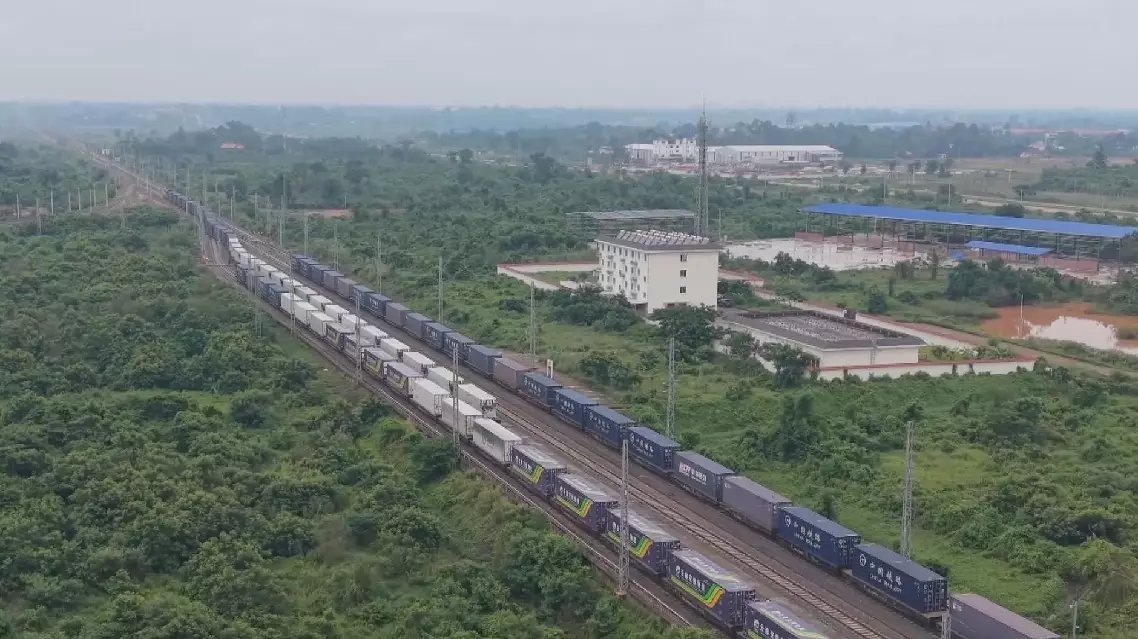
China-Laos Railway transports over 20 million tonnes of cargo
U.S. President Donald Trump said in Ankara on Wednesday that the ceasefire with Iran "is over," and he does not want to deal with Iran anymore.
Speaking to journalists alongside NATO Secretary-General Mark Rutte, Trump said he no longer wants to engage with Iranian officials.
"For me, I think it is over. I don't want to deal with them anymore," he said, adding "If they had nuclear weapons, they would use them. As far as I am concerned, it (the ceasefire) is over."
Trump expressed skepticism regarding future negotiations, saying he would consult his negotiators but characterized dealing with Iranian officials as a "waste of time," accusing them of dishonesty.
Trump accused Iranian representatives of agreeing privately to terms regarding nuclear weapons but publicly denying them after the meetings conclude.
He concluded that while negotiations could technically continue, he considers the current process to be at an end.
In a new round of escalation of tensions beginning Tuesday, the United States has launched strikes against 80 Iranian targets, the U.S. Central Command said Tuesday evening.
In response, Iran's Islamic Revolution Guard Corps (IRGC) attacked 85 U.S. military sites in Bahrain and Kuwait.
Iran's state-run Press TV reported renewed explosions on its Qeshm island, with several blasts heard on Kharg island.
"A member of the Guards, Mohammad Reza Khazini, was hit by shrapnel and died a martyr while confronting enemy drones" in Mahshahr, a port city not far from the Iraqi border, IRNA reported, citing a statement from the IRGC.
Iran's top joint military command said that its armed forces will give a "crushing response" to U.S. attacks and will not allow U.S. interference in the management of the Strait of Hormuz.
Press TV reported on Wednesday that heavy explosions rocked Ali Al Salem Air Base in Kuwait. Moreover, multiple explosions were heard in Bahrain on Wednesday.
The IRGC said its forces hit U.S. military targets in Bahrain and Kuwait early Wednesday in retaliation for strikes earlier in the day by the U.S. Army.
The IRGC said that its forces also shot down an MQ-9 Reaper drone "that sought to interfere in the operation."
It said that the "terrorist" U.S. strikes were in flagrant violation of the ceasefire and a recently signed peace memorandum of understanding (MoU) between Iran and the United States, saying the U.S. attacks were aimed at overshadowing the "historic" funeral ceremonies for Iran's late Supreme Leader Ali Khamenei, who was killed in a U.S. and Israeli strike in Tehran in late February.
Iranian Parliament Speaker and top negotiator Mohammad Bagher Ghalibaf said Wednesday that violations of "Iranian adjustments" in the Strait of Hormuz, continued threats of further strikes, the reinstatement of oil sanctions, attacks on southern Iran, and continued Israeli aggression on Lebanon constitute major MoU violations by the United States.
"The era of bullying and extortion is over. It leads nowhere," he wrote in a post on X.
The U.S. Central Command said earlier that U.S. forces launched strikes against Iran after three commercial ships transiting the Strait of Hormuz were attacked.
It added that U.S. forces struck "Iranian air defense systems, command and control networks, coastal radar sites, anti-ship missile capabilities, and more than 60 small boats" belonging to the IRGC in and near the Strait to "degrade Iran's ability to continue attacking international commerce flowing through the international trade corridor."
The attack on the three oil tankers also triggered the U.S. Treasury Department's Office of Foreign Assets Control to revoke a license on Tuesday that had authorized the sale of Iranian-origin oil until Aug 21.
Iran tightened its grip on the Strait of Hormuz beginning Feb 28, when it barred safe passage of vessels belonging to or affiliated with Israel and the United States following joint strikes on Iranian territory.
On June 18, Iran and the United States signed the MoU on ending the war in the region on all fronts, including Lebanon. The two countries were expected to hold negotiations within a 60-day period to reach a final agreement.
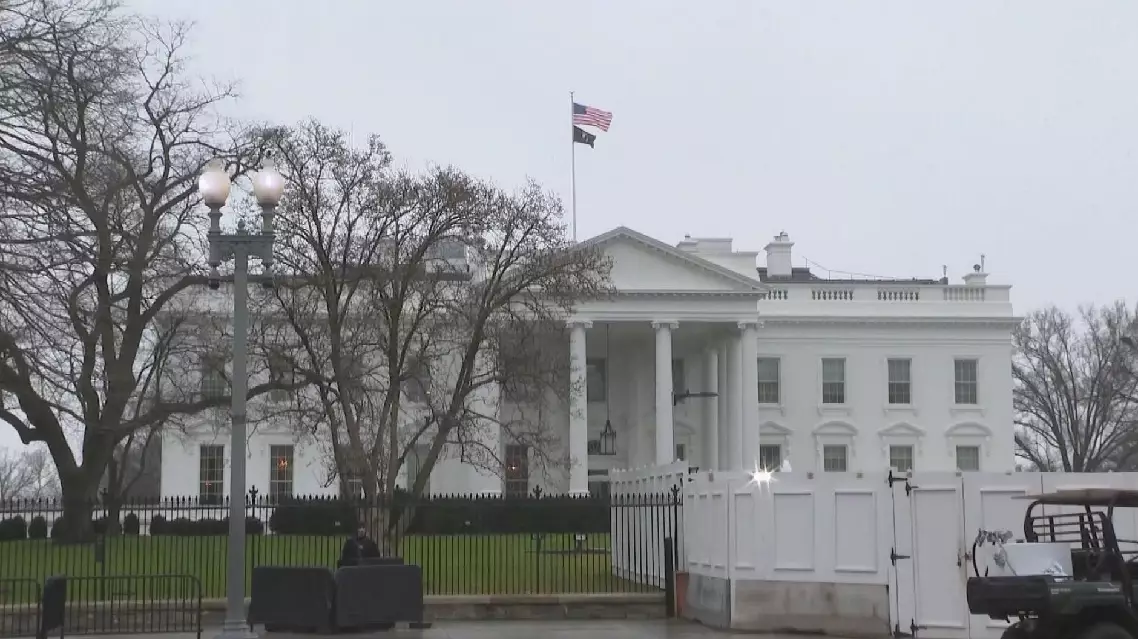
Trump says ceasefire with Iran "is over"