Skip to Content Facebook Feature Image

World Cup quarterfinals: It's Messi, Morocco, and 6 teams from Europe. And that's not unusual

Sport

World Cup quarterfinals: It's Messi, Morocco, and 6 teams from Europe. And that's not unusual
Sport

Sport

World Cup quarterfinals: It's Messi, Morocco, and 6 teams from Europe. And that's not unusual

2026-07-08 23:48 Last Updated At:07-09 00:00

MIAMI GARDENS, Fla. (AP) — More World Cup teams. Same World Cup story.

This edition started with 48 teams; it’s now down to eight, with six of those from Europe. And unless Morocco pulls off a series of surprising outcomes over the final two weeks, the champion will come from Europe or South America.

More Images
France's Kylian Mbappe (10) celebrates his team's victory at the end of the World Cup round of 16 soccer match between Paraguay and France in Philadelphia, Saturday, July 4, 2026. (AP Photo/Martin Meissner)
France's Kylian Mbappe (10) celebrates his team's victory at the end of the World Cup round of 16 soccer match between Paraguay and France in Philadelphia, Saturday, July 4, 2026. (AP Photo/Martin Meissner)

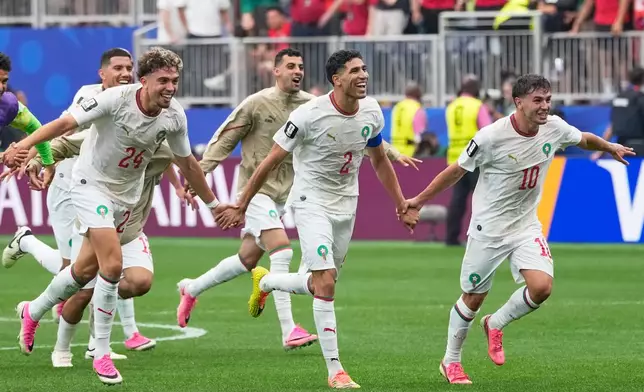
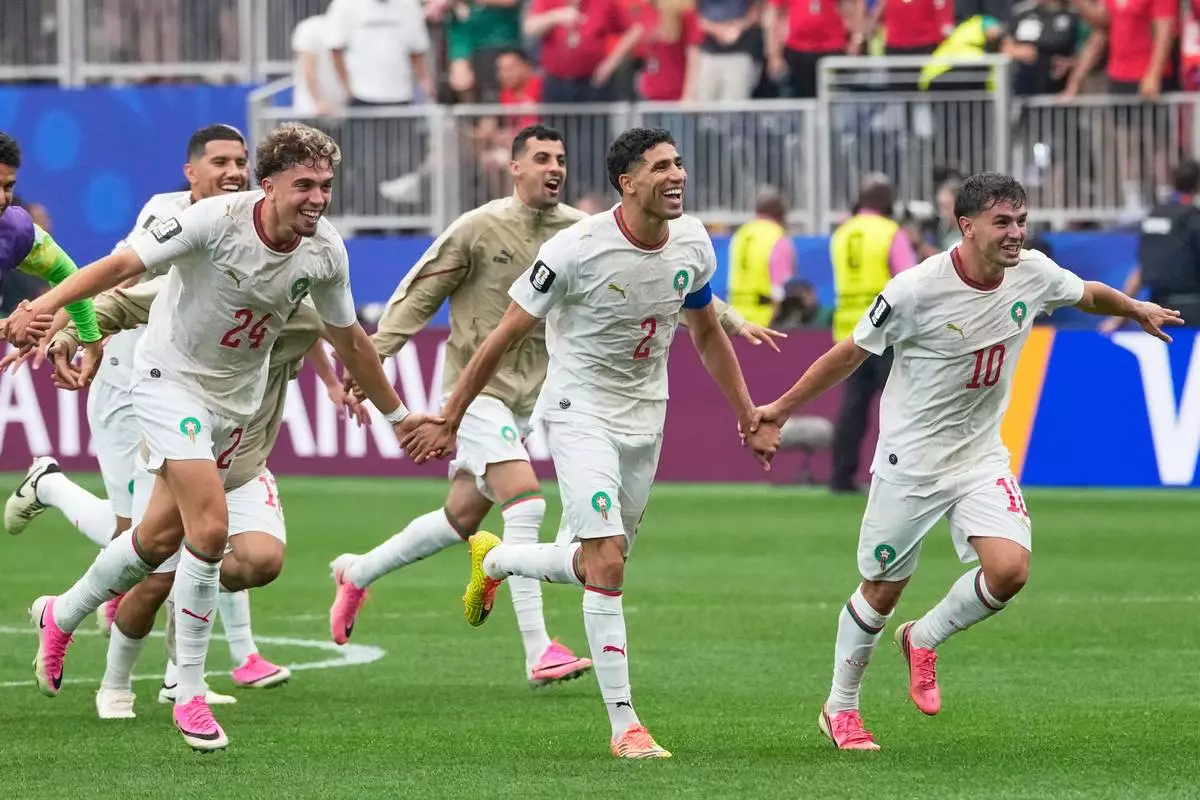
Players of Morocco react after the World Cup round of 16 soccer match against Canada in Houston, Saturday, July 4, 2026. (AP Photo/David J. Phillip)

Players of Morocco react after the World Cup round of 16 soccer match against Canada in Houston, Saturday, July 4, 2026. (AP Photo/David J. Phillip)

Norway's Erling Haaland (9) celebrates with teammates after scoring their second goal during the World Cup round of 16 soccer match between Brazil and Norway in East Rutherford, N.J., near New York, Sunday, July 5, 2026. (AP Photo/Pamela Smith)
Norway's Erling Haaland (9) celebrates with teammates after scoring their second goal during the World Cup round of 16 soccer match between Brazil and Norway in East Rutherford, N.J., near New York, Sunday, July 5, 2026. (AP Photo/Pamela Smith)

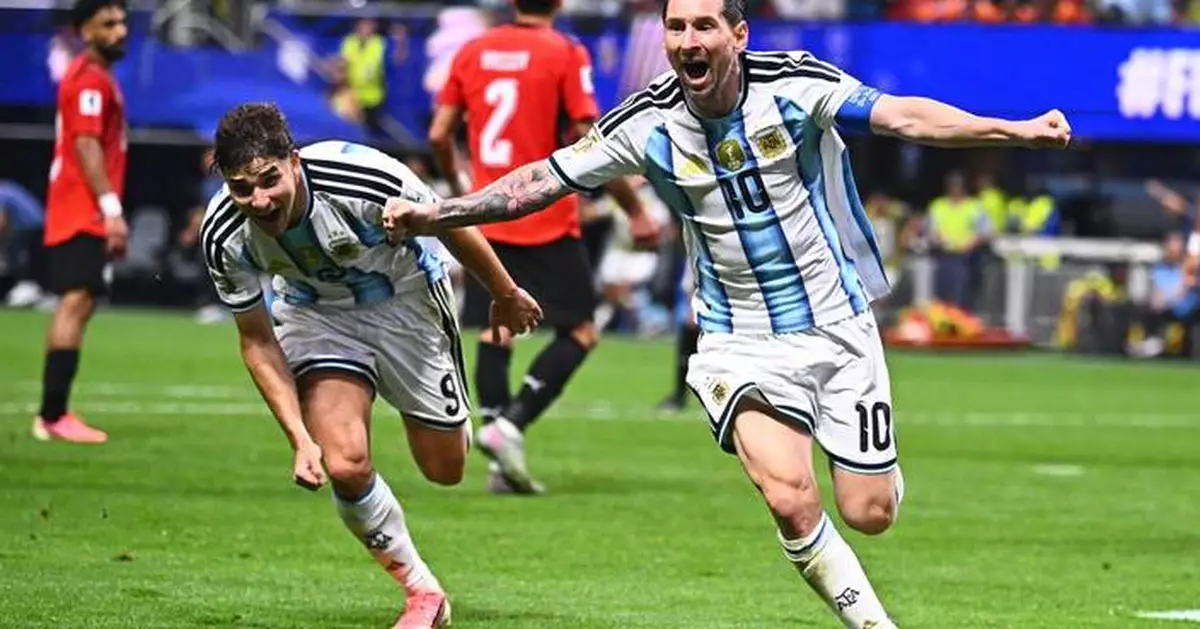
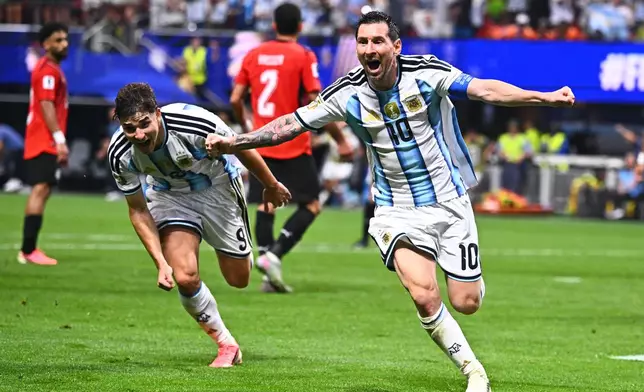
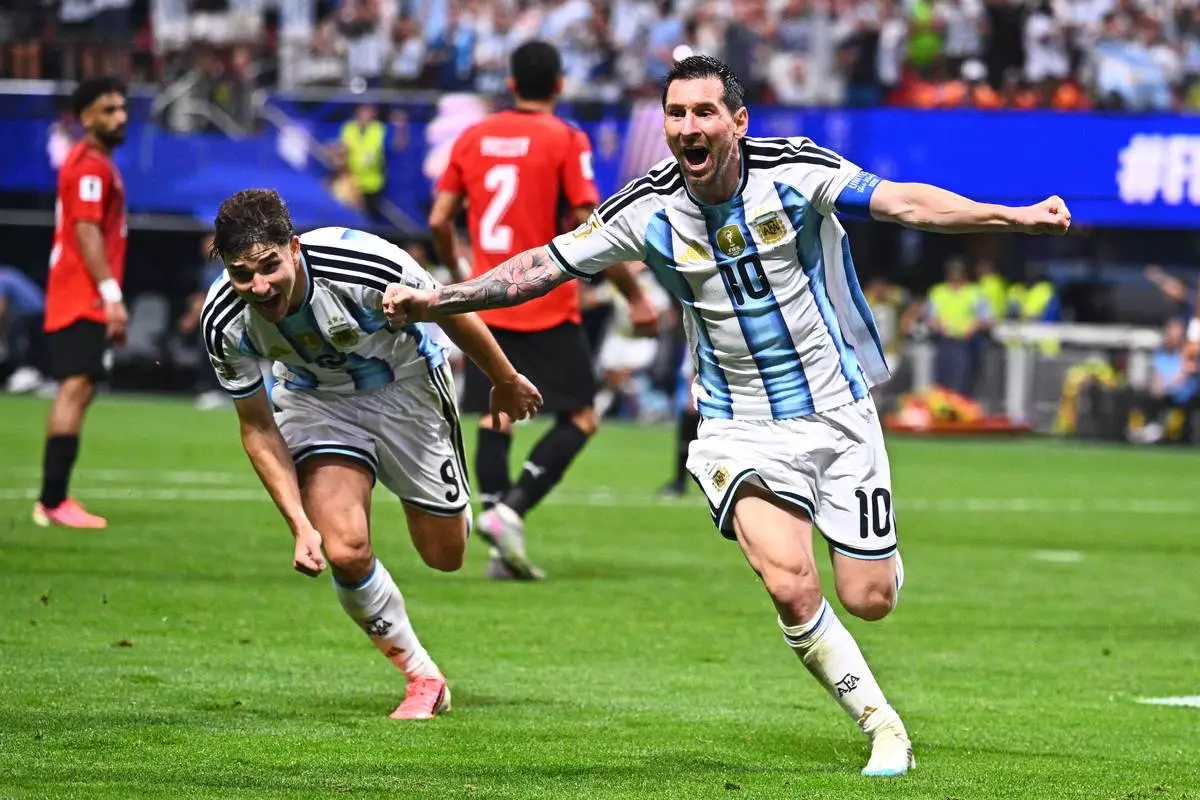
Argentina's Lionel Messi (10) celebrates scoring their second goal during the World Cup round of 16 soccer match between Argentina and Egypt in Atlanta, Tuesday, July 7, 2026. (AP Photo)

Argentina's Lionel Messi (10) celebrates scoring their second goal during the World Cup round of 16 soccer match between Argentina and Egypt in Atlanta, Tuesday, July 7, 2026. (AP Photo)

Again. As always.

A tournament that has been around for nearly a century — the first World Cup was in 1930 — has been contested on 22 previous occasions. The champions: 12 from Europe, 10 from South America, zero from the rest of the globe combined.

This year’s quarterfinal lineup: six from Europe, one from South America, one from Africa. Not exactly a history-bucking set of outcomes there.

That said, it seems like even some of Europe’s best players are surprised at how well this World Cup has gone.

“I thought it was not possible to do some things,” Norway star Erling Haaland said after his two goals helped his team beat Brazil for a spot in the quarterfinals — the first time his nation has gone this deep in a World Cup. “I guess I’m wrong.”

He was wrong in a good way. The tournament hosts were wrong in a not-so-good way.

North America had three cracks at breaking through this year in a bigger-than-ever, 48-team World Cup with the U.S., Mexico and Canada all co-hosts.

None of those teams even made the quarterfinals.

“We need to get over that next hurdle,” U.S. star Christian Pulisic said in a televised interview after the Americans were ousted by Belgium in the round of 16, a lopsided 4-1 defeat that shows how far North America still has to go. “Trying to compete and beat the world’s best, that’s our next step … There’s still another step that we have to take.”

The three hosts all got through the group stage and the round of 32 with ease. The U.S., Mexico and Canada had a combined 9-2-1 record in those matches, outscoring opponents by a total of 20 goals. Things looked promising, to say the least.

Then came the round of 16. Thud.

England ousted Mexico 3-2, the U.S. got rolled by Belgium in a match that looked one-sided from the outset and Canada was outclassed in a 3-0 loss to Morocco. Combined numbers from that trio of matches: 0-3-0 record, outscored by seven goals.

“Levels,” French soccer legend Thierry Henry said in his role as an analyst on Fox after the U.S. defeat. “The World Cup is different in the group stage. Round of 32 never existed before. Everyone made history in the round of 32. It never existed before … Unfortunately, one host, two hosts, three hosts, out. That’s exactly what you don’t want at a World Cup. That is annoying for me.”

If it annoys Henry, imagine how it feels for the Canadians, Mexicans and Americans.

There hasn’t been a CONCACAF — the Confederation of North, Central America and Caribbean Association Football — team in the World Cup quarterfinals since Costa Rica in 2014.

Before that, it was the U.S. in 2002 in its best showing at the World Cup since finishing third in 1930. Canada has never been past the round of 16. Mexico has played in each of the last nine World Cups; it reached the round of 16 in eight of those, never going further in that span.

“Everyone gave everything,” Mexico midfielder Erik Lira said. “But, in the end, it wasn’t enough.”

That seems to be an every-four-years refrain for every place other than Europe and South America.

There was some diversity in the makeup of the 2002 World Cup quarterfinal field with five confederations — Europe, South America, Asia, Africa and North America — all represented that year.

It was a rare blip. Of the 48 available quarterfinal spots over the six World Cups since, Europe has claimed 30, South America 14, Africa three and North America one.

Morocco is carrying Africa's hopes now and that continent came out of the group stage looking poised for a breakthrough. It sent 10 teams to the tournament; nine made it into the round of 32.

And then, most of the teams saw their hopes end by surrendering late goals.

Ivory Coast, South Africa and Congo all surrendered decisive goals in the 86th minute or later of what became their exits from the knockout phase. Cape Verde's magical ride ended after giving up an own goal to Lionel Messi and defending champion Argentina in the 111th minute. And for Senegal and Egypt, the endings were particularly harsh — both led 2-0 late in the second half, then fell by 3-2 scores to Belgium and Argentina, respectively.

Egypt felt the match was stolen by officiating decisions.

“Perhaps they wanted to keep the world champion in the competition," Egypt coach Hossam Hassan said. “Perhaps they wanted Messi to stay in the competition.”

The counterpoint to that was how, once again, a powerhouse like Argentina found a way. For the fifth time in the last six World Cups, Messi's team is in the quarterfinals.

Some things just don't seem to change.

“It wasn’t easy to come back from a 2-0 deficit in a World Cup knockout match — especially given how games are going these days, where no one gives you anything for free,” Messi said. “But thank God, we did it once again.”

See more of AP’s World Cup coverage here

France's Kylian Mbappe (10) celebrates his team's victory at the end of the World Cup round of 16 soccer match between Paraguay and France in Philadelphia, Saturday, July 4, 2026. (AP Photo/Martin Meissner)
France's Kylian Mbappe (10) celebrates his team's victory at the end of the World Cup round of 16 soccer match between Paraguay and France in Philadelphia, Saturday, July 4, 2026. (AP Photo/Martin Meissner)

Players of Morocco react after the World Cup round of 16 soccer match against Canada in Houston, Saturday, July 4, 2026. (AP Photo/David J. Phillip)

Players of Morocco react after the World Cup round of 16 soccer match against Canada in Houston, Saturday, July 4, 2026. (AP Photo/David J. Phillip)

Norway's Erling Haaland (9) celebrates with teammates after scoring their second goal during the World Cup round of 16 soccer match between Brazil and Norway in East Rutherford, N.J., near New York, Sunday, July 5, 2026. (AP Photo/Pamela Smith)
Norway's Erling Haaland (9) celebrates with teammates after scoring their second goal during the World Cup round of 16 soccer match between Brazil and Norway in East Rutherford, N.J., near New York, Sunday, July 5, 2026. (AP Photo/Pamela Smith)

Argentina's Lionel Messi (10) celebrates scoring their second goal during the World Cup round of 16 soccer match between Argentina and Egypt in Atlanta, Tuesday, July 7, 2026. (AP Photo)

Argentina's Lionel Messi (10) celebrates scoring their second goal during the World Cup round of 16 soccer match between Argentina and Egypt in Atlanta, Tuesday, July 7, 2026. (AP Photo)
NEW YORK (AP) — Oil prices are rising, and stock markets are dropping worldwide Wednesday after President Donald Trump raised doubts about the temporary truce in the war with Iran.

The S&P 500 fell 1% after Trump said the agreement to pause fighting was “over,” though he added that he would allow negotiations to continue. The Dow Jones Industrial Average was down 831 points, or 1.6%, as of 11:45 a.m. Eastern time, and the Nasdaq composite was 1% lower.

The action was stronger in the oil market, where the price for a barrel of Brent crude climbed 8% to $80.09. That’s well below its peak from earlier in the war, when the price for the most actively traded contract reached nearly $120. But the jump is unsettling because oil prices had just dropped back to where they were before the war.

The worry is that a continuation of the war will block the Strait of Hormuz and prevent the delivery of crude from the Persian Gulf to customers worldwide. That could worsen inflation, which economists expected would ease with oil prices, and in turn force the Federal Reserve and other central banks to raise interest rates.

Higher rates can keep a lid on inflation, but they also slow the economy and hurt prices for all kinds of investments.

Losses for stock markets in Europe accelerated, and oil prices climbed immediately after Trump said, “For me, I think it’s over” about the status of the ceasefire. He added that U.S. representatives can continue negotiations, “but I think they’re wasting their time.”

Trump later said the United States was preparing for another night of strikes against Iran.

On Wall Street, companies with big fuel bills fell sharply. American Airlines lost 5.9%, and United Airlines fell 4.9%.

Stocks of companies in the housing industry were also weak. They were hurt by worries that rising Treasury yields in the bond market will lead to higher rates for mortgages and chill the industry.

Builders FirstSource, which sells countertops, windows and other building supplies, fell 6.6%. Homebuilders PulteGroup fell 4.6%, and D.R. Horton sank 4.5%.

Drops of 4% for Sherwin-Williams and 3.3% for Home Depot were two of the biggest reasons the Dow was heading toward its worst loss in about a month.

Helping to offset those losses was a steadying for some influential stocks in the artificial-intelligence industry. They’ve been under pressure in recent weeks on worries that their prices shot too high and that AI may not produce enough productivity and profits to make all the investments in chips and data centers worth it.

Their swings carry a lot of weight on Wall Street because AI stocks have grown into some of the U.S. market’s biggest, giving their movements more effect on the S&P 500 than other stocks.

Nvidia rose a modest 0.3%, for example, and was the second-strongest force pushing upward on the S&P 500 because it's the largest stock on Wall Street.

The strongest push upward on the market came from Broadcom, which rose 4.1%. Apple announced a multiyear commitment with Broadcom to design and produce custom components for its products. Apple said the agreement's value could top $30 billion.

In the bond market, Treasury yields rose with the price of oil. The yield on the 10-year Treasury climbed to 4.59% from 4.55% late Tuesday and from just 3.97% before the war with Iran began.

In stock markets abroad, losses for European markets worsened after Trump made his comments, and Germany’s DAX lost 2.2%.

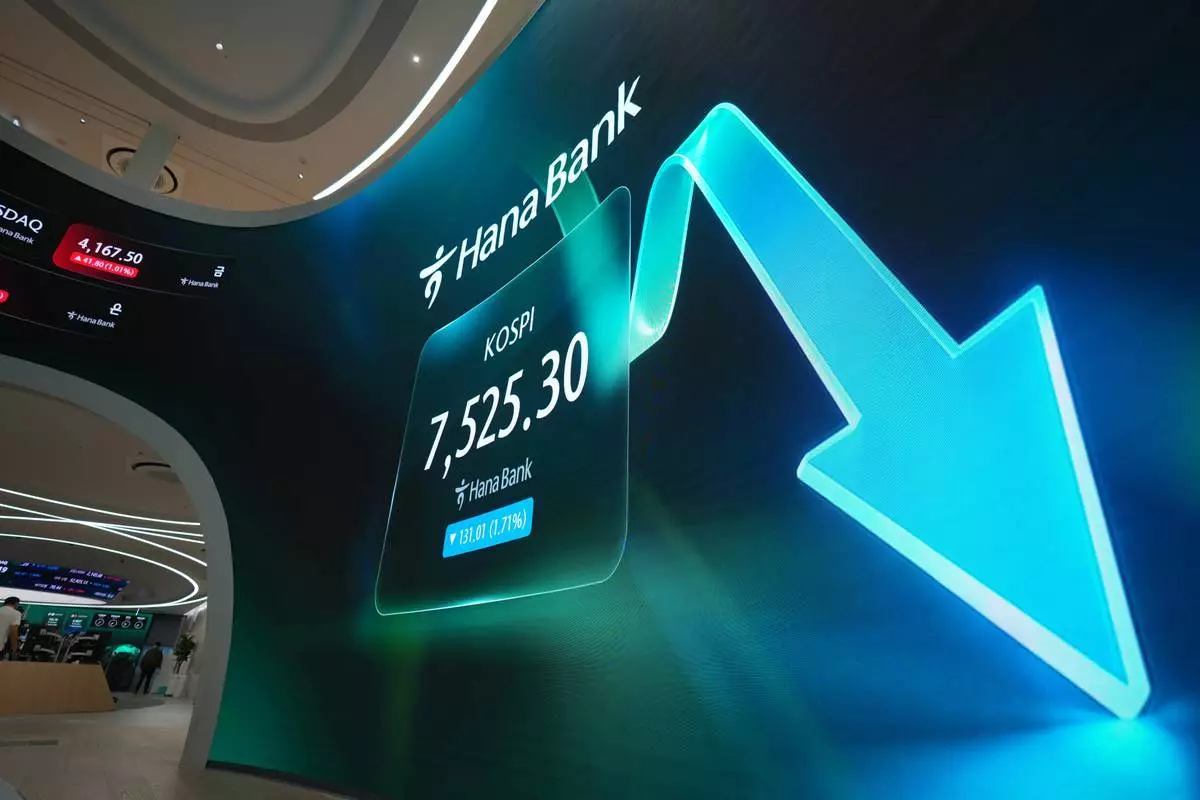
In Asia, South Korea’s Kospi dropped 5.3% and continued its sharp swings amid dueling worries and euphoria about the AI stocks that dominate its market.

Hong Kong’s Hang Seng index was an outlier and rose 3%.

Shares that trade in Hong Kong of Chinese AI startup Zhipu, known also as Z.ai and traded as Knowledge Atlas Technology, jumped 13.4%.

A six-month lock-up period for “cornerstone” investors following its January trading debut in Hong Kong expires this week. China National Radio reported late Tuesday that nearly 70% of Zhipu’s cornerstone investors are committed to stay on, despite previous worries that the lock-up period expiration could trigger a sell-off.

Zhipu’s share price has risen more than 1,300% since its debut.

AP Business Writers Matt Ott, Chan Ho-him and Elaine Kurtenbach contributed to this report.

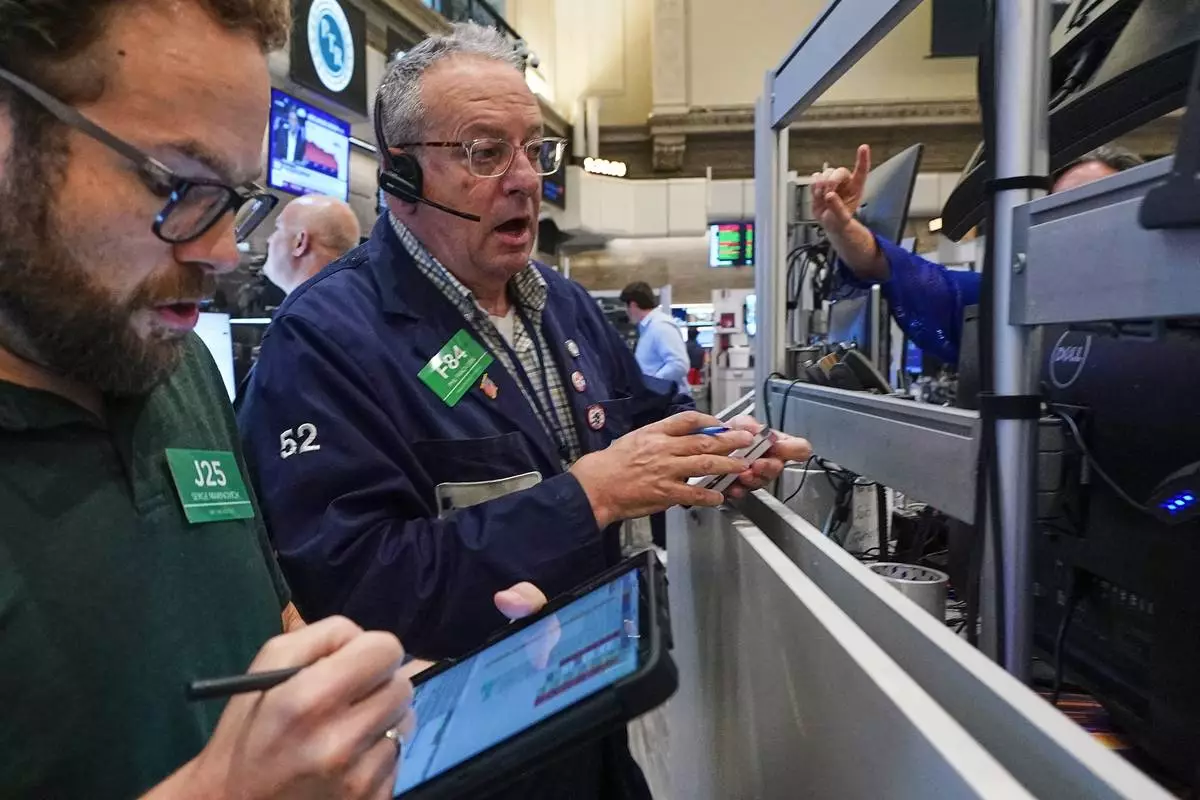
Options traders Serge Marinovich, left, and Phil Phil Fracassini work on the floor of the New York Stock Exchange, Friday, June 26, 2026. (AP Photo/Richard Drew)

Options traders Serge Marinovich, left, and Phil Phil Fracassini work on the floor of the New York Stock Exchange, Friday, June 26, 2026. (AP Photo/Richard Drew)

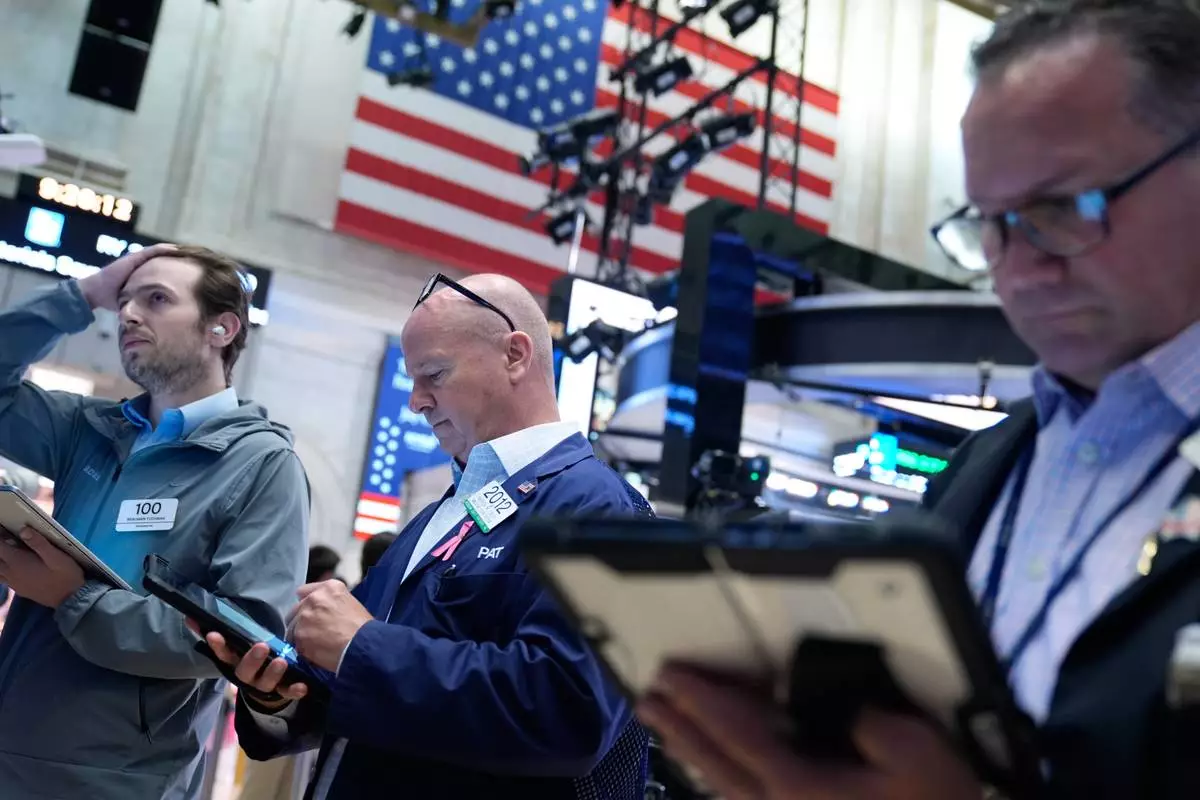
Traders work on the floor at the New York Stock Exchange in New York, Monday, July 6, 2026. (AP Photo/Seth Wenig)

Traders work on the floor at the New York Stock Exchange in New York, Monday, July 6, 2026. (AP Photo/Seth Wenig)

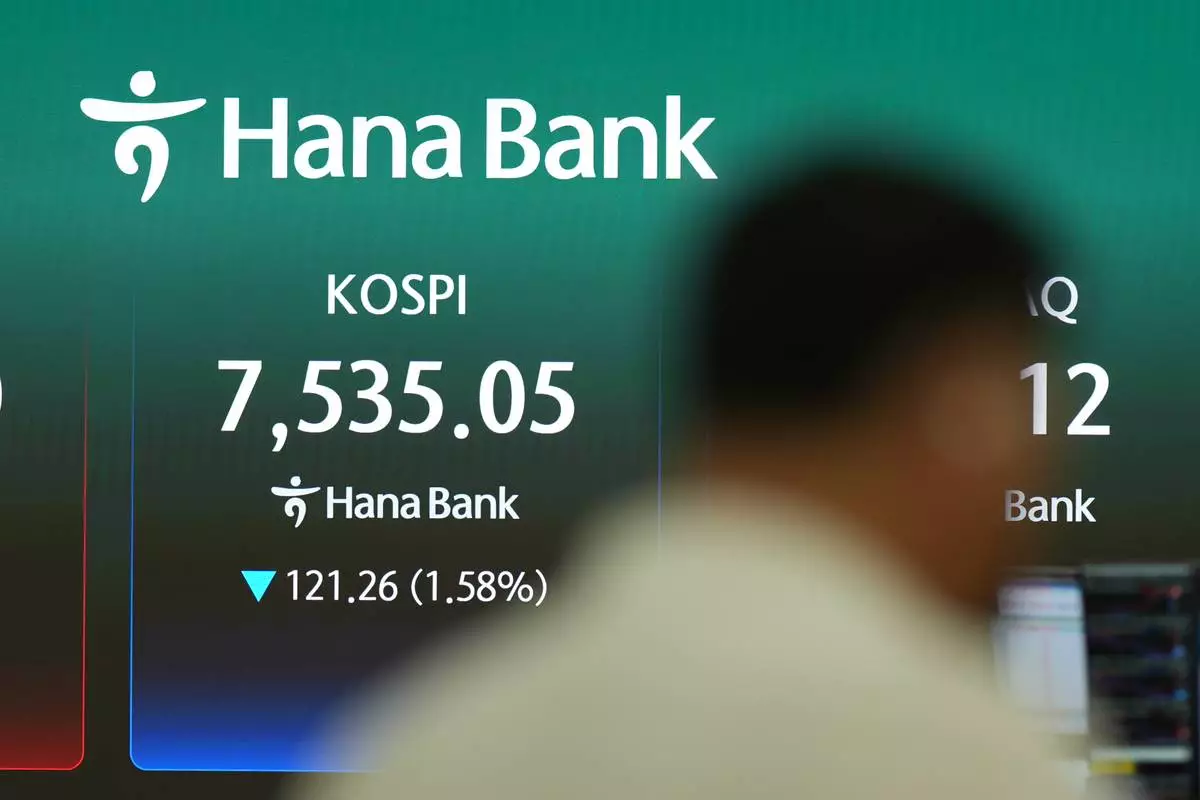
A member of media stands near the screen showing the Korea Composite Stock Price Index (KOSPI) at a dealing room of Hana Bank in Seoul, South Korea, Wednesday, July 8, 2026. (AP Photo/Lee Jin-man)

A member of media stands near the screen showing the Korea Composite Stock Price Index (KOSPI) at a dealing room of Hana Bank in Seoul, South Korea, Wednesday, July 8, 2026. (AP Photo/Lee Jin-man)

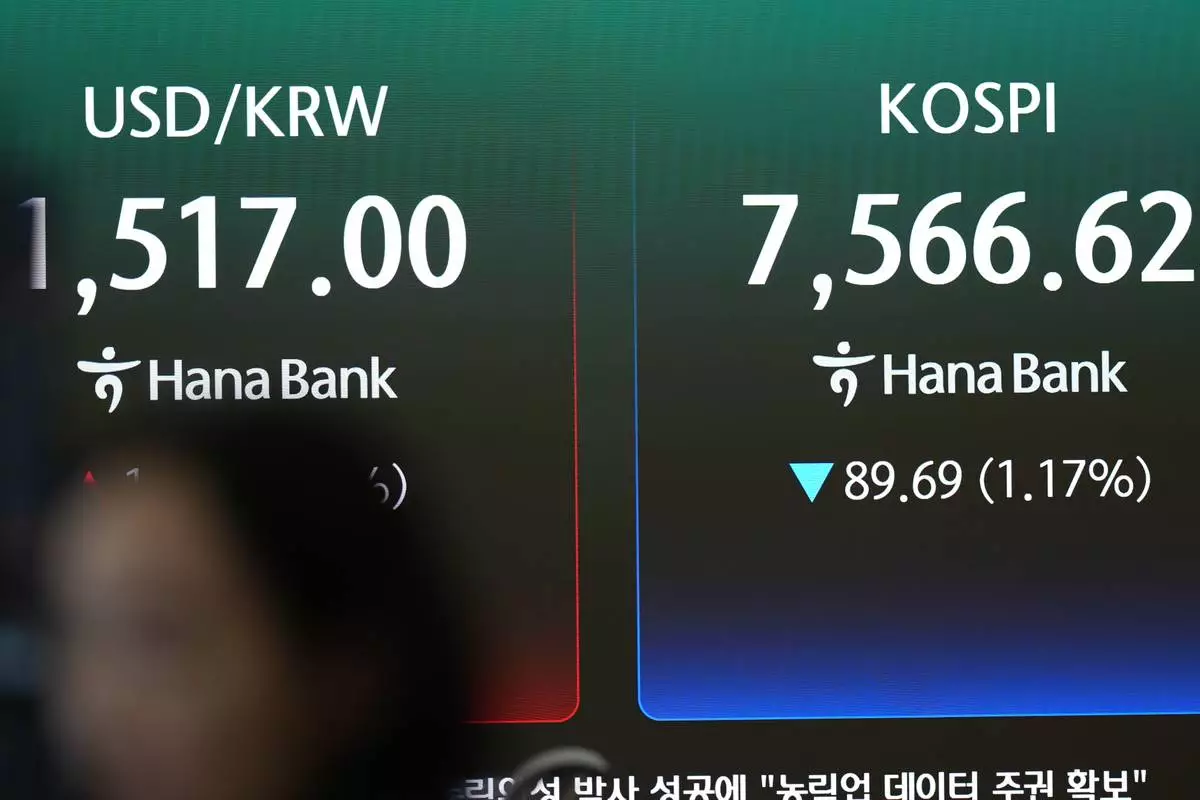
A dealer watches computer monitors near the screens showing the Korea Composite Stock Price Index (KOSPI) and the foreign exchange rate between U.S. dollar and South Korean won at a dealing room of Hana Bank in Seoul, South Korea, Wednesday, July 8, 2026. (AP Photo/Lee Jin-man)

A dealer watches computer monitors near the screens showing the Korea Composite Stock Price Index (KOSPI) and the foreign exchange rate between U.S. dollar and South Korean won at a dealing room of Hana Bank in Seoul, South Korea, Wednesday, July 8, 2026. (AP Photo/Lee Jin-man)

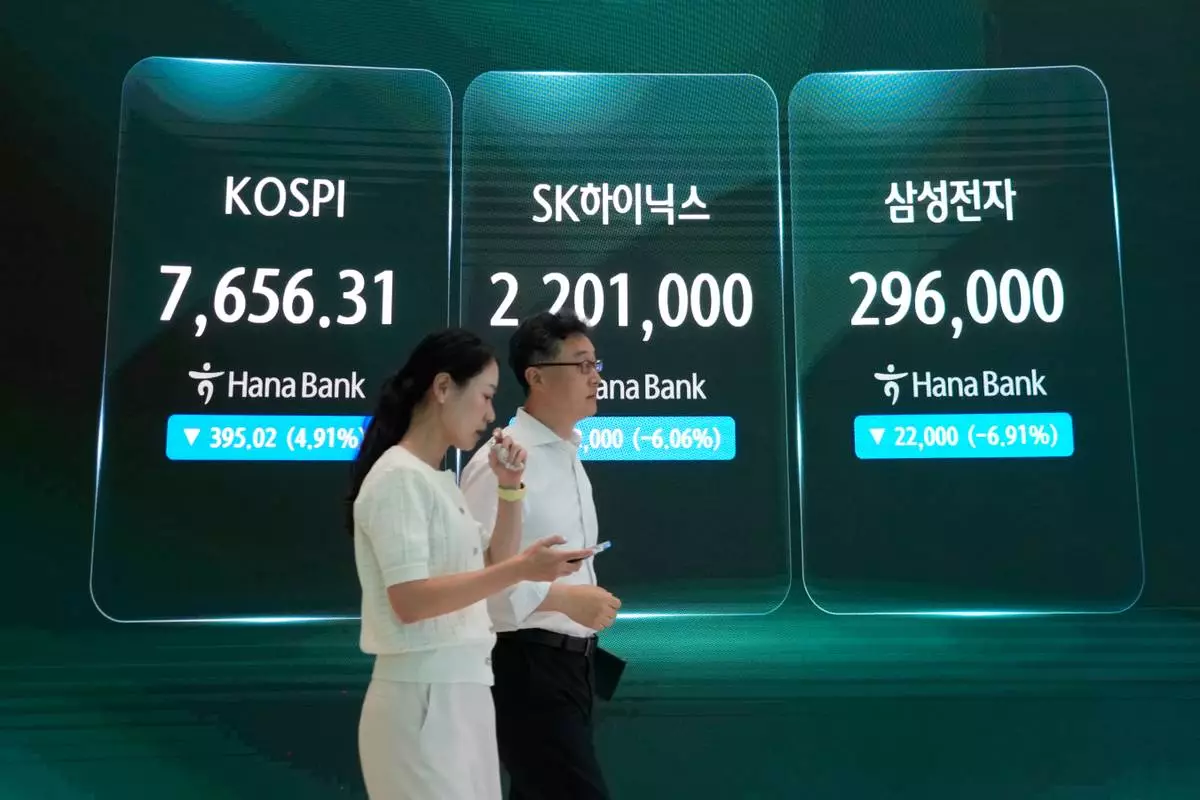
Currency traders pass by a screen showing the Korea Composite Stock Price Index (KOSPI), left, SK Hynix and Samsung Electronics Co., right, stock price at the foreign exchange dealing room of the Hana Bank headquarters in Seoul, South Korea, Tuesday, July 7, 2026. (AP Photo/Ahn Young-joon)

Currency traders pass by a screen showing the Korea Composite Stock Price Index (KOSPI), left, SK Hynix and Samsung Electronics Co., right, stock price at the foreign exchange dealing room of the Hana Bank headquarters in Seoul, South Korea, Tuesday, July 7, 2026. (AP Photo/Ahn Young-joon)

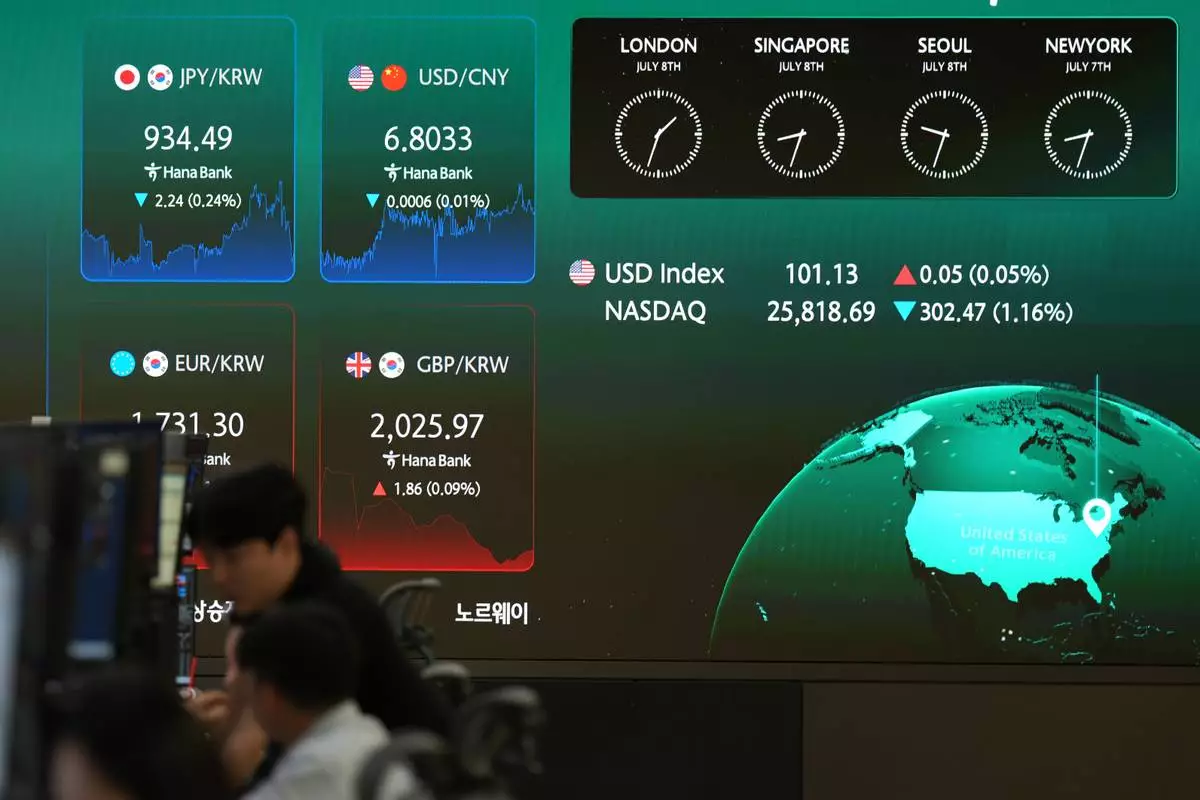
Dealers talk near the screens showing foreign exchange rates at a dealing room of Hana Bank in Seoul, South Korea, Wednesday, July 8, 2026. (AP Photo/Lee Jin-man)

Dealers talk near the screens showing foreign exchange rates at a dealing room of Hana Bank in Seoul, South Korea, Wednesday, July 8, 2026. (AP Photo/Lee Jin-man)

A screen shows the Korea Composite Stock Price Index (KOSPI) at a dealing room of Hana Bank in Seoul, South Korea, Wednesday, July 8, 2026. (AP Photo/Lee Jin-man)

A screen shows the Korea Composite Stock Price Index (KOSPI) at a dealing room of Hana Bank in Seoul, South Korea, Wednesday, July 8, 2026. (AP Photo/Lee Jin-man)

Recommended Articles