Eight teams are left in the World Cup, and the quarterfinals feature the top four countries in FIFA's pretournament men's world rankings plus two others in the top 10.
France looks like a juggernaut and is the betting favorite at just under 2-1, followed by Spain and defending champion Argentina at 7-2 and England at 9-2. Norway is 14-1, while Belgium, Switzerland and Morocco are 28-1.
Click to Gallery
Argentina's Lionel Messi (10) celebrates his side's second goal during the World Cup round of 16 soccer match between Argentina and Egypt in Atlanta, Tuesday, July 7, 2026. (AP Photo/Jacob Kupferman)
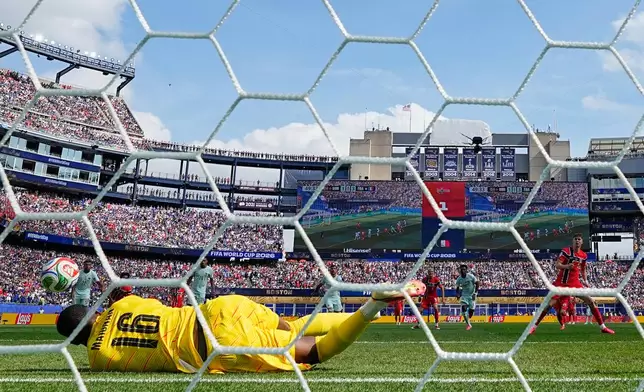
France goalkeeper Mike Maignan (16) saves a penalty from Norway's Joergen Strand Larsen (11) during the World Cup Group I soccer match between Norway and France in Foxborough, Mass., near Boston, Friday, June 26, 2026. (AP Photo/Martin Meissner)
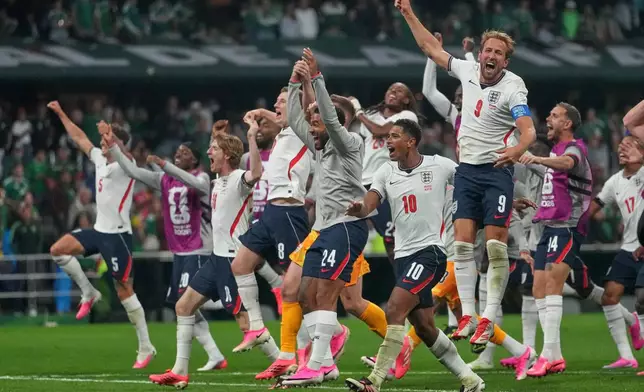
England players celebrate after winning the World Cup round of 16 soccer match between Mexico and England in Mexico City, Sunday, July 5, 2026. (AP Photo/Eduardo Verdugo)
France's Ousmane Dembele celebrates after scoring his side's second goal during the World Cup Group I soccer match between Norway and France in Foxborough, Mass., near Boston, Friday, June 26, 2026. (AP Photo/Martin Meissner)
All games are airing in the U.S. on Fox and Peacock in English and in Telemundo in Spanish.
When: Thursday, 4 p.m. EDT
Where: Foxborough, Massachusetts
France dominated in group play by outscoring opponents 10-2, an impressive showing even considering Norway rested Erling Haaland and almost all its starters, and rolled over Sweden 3-0 at the beginning of the knockout stage. Kylian Mbappé scored his 19th career World Cup goal in a hard-fought, 1-0 victory against Paraguay. Four years removed from reaching the semifinals, Morocco drew with Brazil in its opener, knocked out the Netherlands on penalty kicks and bounced back from a rough start to beat co-host Canada to reach the quarterfinals. France is favored to advance.
“I do not want to talk about euphoria getting to us,” France coach Didier Deschamps said. “And I do pay a lot of respect to this Moroccan team. We know what we are expecting.”
When: Friday, 3 p.m. EDT
Where: Inglewood, California
A surprising draw against Cape Verde early only seemingly prepared Spain for handling tight games. It eliminated Uruguay 1-0, and after cruising past Austria 3-0 in the round of 32 got past Cristiano Ronaldo and Portugal thanks to Mikel Merino's goal in stoppage time. Belgium rallied from 2-0 down with five minutes left in regulation time to beat Senegal, then blew out the U.S. in Seattle after FIFA let Folarin Balogun play despite his automatic red-card suspension. Spain is favored.
When: Saturday, 5 p.m. EDT
Where: Miami Gardens, Florida
The underdog story of the tournament is Norway, with Haaland leading the way and fans and players doing the Viking Row all over the U.S. as giant crowds celebrate back home. Haaland scored his sixth and seventh goals to upset five-time champion Brazil and get the Scandinavian country into the World Cup quarterfinals for the first time. England endured a raucous crowd at the Azteca Stadium to beat Mexico in a round-of-16 thriller but lost veteran midfielder Jordan Henderson to a wrist injury from a postgame celebration. England is a slight favorite.
When: Saturday, 9 p.m. EDT
Where: Kansas City, Missouri
Lionel Messi leads all players with eight goals this year and set the World Cup record at 21 — and counting — in his illustrious career. Messi's latest trick was scoring to complete a rally from down 2-0 against Egypt in an instant classic Tuesday that Argentina won 3-2. Switzerland has scored only nine goals through five games, relying on defensive style to get through. It took penalty kicks to defeat Colombia in the round of 16 after neither team scored in regulation or extra time. The Swiss are in the quarterfinals for the first time since hosting the tournament in 1954. Argentina is favored.
The France-Morocco and Spain-Belgium winners meet in the first semifinal match next Tuesday, July 14, at 3 p.m. EDT in Arlington, Texas. The Norway-England and Argentina-Switzerland winners play in the other one Wednesday, July 15, in Atlanta, also at 3 p.m.
The final is the same time on Sunday, July 19, in East Rutherford, New Jersey.
AP Sports Writer Kyle Hightower in Foxborough, Massachusetts, contributed to this report.
See more of AP’s World Cup coverage here

Argentina's Lionel Messi (10) celebrates his side's second goal during the World Cup round of 16 soccer match between Argentina and Egypt in Atlanta, Tuesday, July 7, 2026. (AP Photo/Jacob Kupferman)
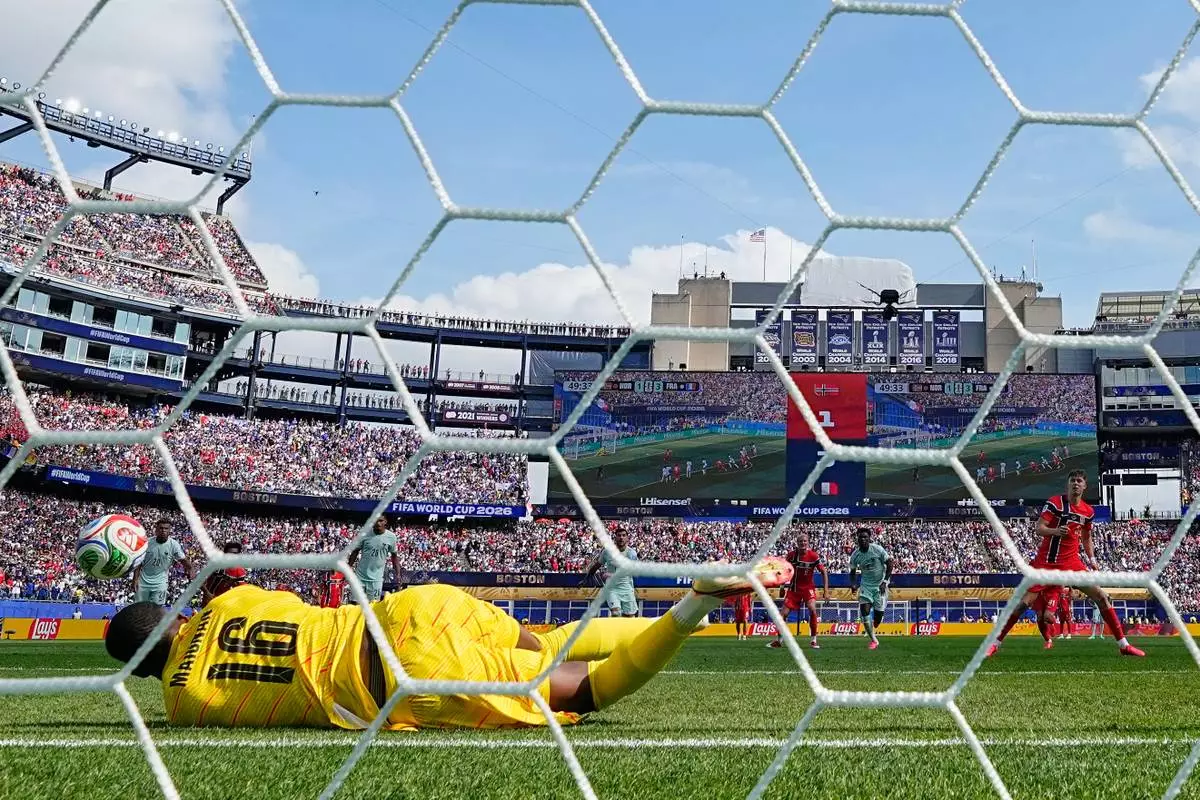
France goalkeeper Mike Maignan (16) saves a penalty from Norway's Joergen Strand Larsen (11) during the World Cup Group I soccer match between Norway and France in Foxborough, Mass., near Boston, Friday, June 26, 2026. (AP Photo/Martin Meissner)
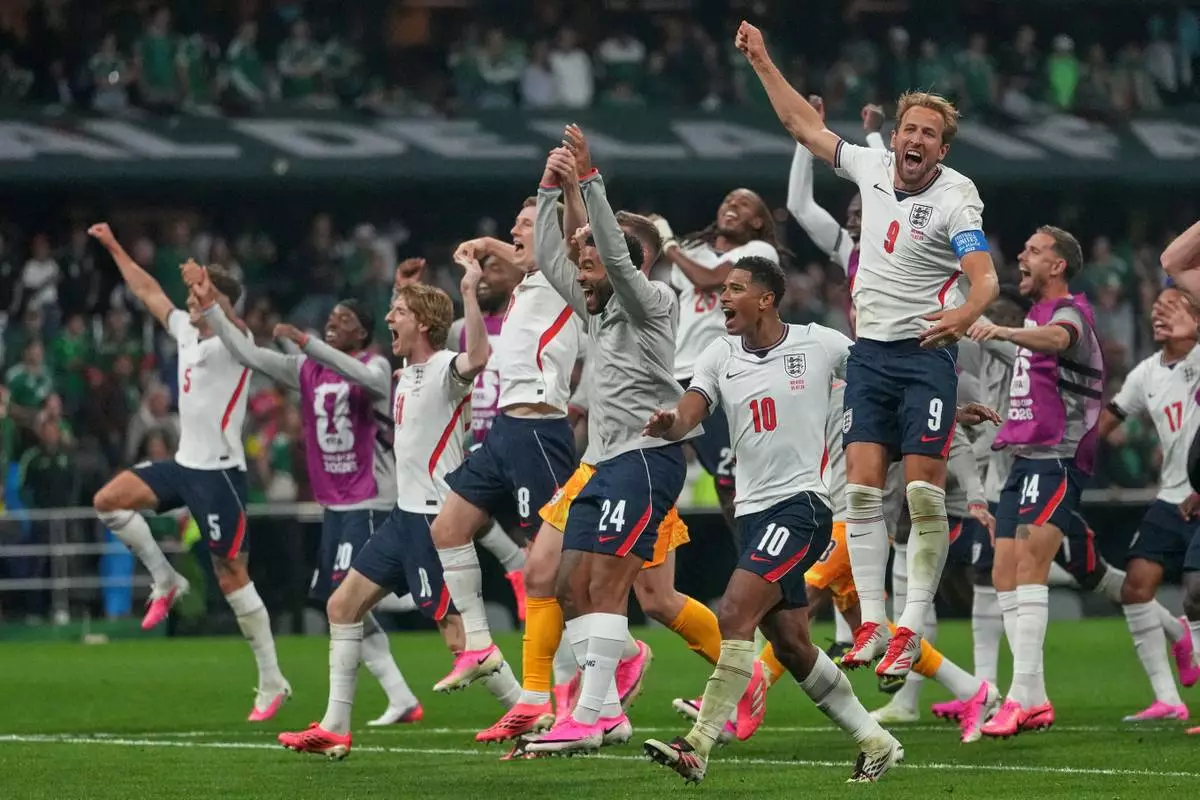
England players celebrate after winning the World Cup round of 16 soccer match between Mexico and England in Mexico City, Sunday, July 5, 2026. (AP Photo/Eduardo Verdugo)

France's Ousmane Dembele celebrates after scoring his side's second goal during the World Cup Group I soccer match between Norway and France in Foxborough, Mass., near Boston, Friday, June 26, 2026. (AP Photo/Martin Meissner)
NEW YORK (AP) — After four years in exile, the prediction market platform Polymarket has begun a well-funded campaign to sell a new version of itself to the American public.
To do so, the company is trying to convince policymakers, regulators, the public and prospective customers that the business it is building onshore is a more disciplined operation than the freewheeling offshore exchange that has at times been the subject of unfavorable headlines.
Polymarket has hired social media influencers to produce viral marketing on TikTok and other platforms. Its account on X, formerly known as Twitter, is now followed by millions and posts about current events throughout the day. It has signed partnership deals with major sports teams and Major League Baseball, as well as news organizations ranging from CNBC to CNN. It's all part of a pitch that its real-time markets are a more accurate read on the future than traditional polling or punditry.
The campaign is, effectively, an effort to sell Polymarket as something different from the Polymarket people know today.
What the American public knows as Polymarket has, at least by the letter of the law, been unavailable to Americans. In 2022, it was pushed offshore after settling federal charges that it operated an unregistered derivatives market. But Americans have regularly found ways around the prohibition, and the offshore business faced criticism over allegations of insider trading and allowing wagers tied to war and other violence.
Polymarket's push into the U.S. means Americans now have legal access to Polymarket through their U.S. platform, albeit it will be limited access. It adds another competitor to the U.S. prediction market industry, now dominated by Kalshi, and also featuring Robinhood and others offering similar services.
Polymarket began operating again in the U.S. at the end of 2025 after buying the derivatives exchange QCEX to get the regulatory license to operate in the country. Executives say the U.S. exchange is walled off from the international platform, and they have hired a slate of compliance, surveillance and regulatory specialists in recent weeks to keep it that way.
“Trust is the product we are building here,” said Dan Lee, head of U.S. operations at Polymarket, in an interview. Lee started with Polymarket in February from Coinbase.
Among the hires, the company added Megan McGrath from Robinhood as its new chief compliance officer. Lee and another executive, Natalie Oblazny, were hired from Coinbase. It’s also hired former Department of Justice and FBI officials as the platform’s head of enforcement and new surveillance head. Lee said Polymarket’s successful reentry into the U.S. depends almost entirely on whether it can convince people that Polymarket U.S. can be a trusted prediction market platform, and the new hires are key to that effort.
Both Polymarket International and Polymarket U.S. provide the same service: trading on the likelihood of events, such as weather, sports, politics or news. But the underlying structures differ. Polymarket’s international platform is built on blockchain technology and requires users to trade with cryptocurrency, while Polymarket U.S. operates through a more centralized structure regulated by the Commodity Futures Trading Commission and funded with traditional U.S. dollars.
Customers using Polymarket U.S. versus Polymarket International won't notice the difference, with the exception of how they fund their accounts. Also Polymarket U.S. is going to have a much narrower number of contracts, and more regulations, than its international counterpart.
“Polymarket U.S. is supposed to comply with U.S. law and regulations. Polymarket International is where anything goes,” said Todd Phillips, who has written extensively on prediction markets at the Roosevelt Institute.
The stakes are high for Polymarket. Between its departure in 2022 and return six months ago, the prediction market industry has changed and grown in popularity. The trading volume across the platforms for Polymarket and rival Kalshi is now $26.6 billion, according to blockchain analytics firm Dune. That’s up from $9.75 billion in volume across the platforms in October last year. About two-thirds of that activity is on Kalshi, which dominates the U.S. market on the strength of sports wagering. Kalshi was valued at $22 billion in its most recent funding round.
Both platforms are also benefiting from a more favorable treatment of the industry in Washington. The Trump Administration has been generally supportive of prediction markets. The CFTC has sued states to argue that federal law should preempt any regulations that state politicians have wanted to place on the prediction market industry. The president’s son, Donald Trump Jr., is also an investor in Polymarket through his venture capital firm 1789 Capital.
Even so, it’s been a rough start for Polymarket’s reintroduction to American audiences. The Wall Street Journal found evidence that Polymarket’s advertising and marketing campaigns used allegedly deceptive strategies that showed hired influencers making money trading on Polymarket when the trades were fake.
Politico reported in June that a Polymarket executive paid at least 20 political content creators, many of which did not disclose those partnerships to the public. Both projects have been part of the campaign Polymarket was using to reintroduce to American audiences.
In response to the WSJ and Politico reports, the company says it is investigating its marketing and promotional campaigns.
It's too soon to tell whether Polymarket U.S. will be able to differentiate itself from its international counterpart. Polymarket’s international platform has made headlines, often to public and political outrage.
When a U.S. Army sergeant was indicted earlier this year over bets on the capture of Venezuelan President Nicolás Maduro, he was trading on Polymarket’s international platform. The Associated Press reported in April that 50 brand new accounts on Polymarket’s international platform placed substantial bets on a U.S.-Iran ceasefire in the hours, even minutes, before President Donald Trump announced a ceasefire on social media, raising concerns of insider trading.
Lee said he believes the steps the U.S. business is taking will help further legitimize it, despite the issues the international platform has faced.
“I think having the international business being the bulk of the volume, it often sort of masks the progress we are making here in the U.S. to broaden Polymarket’s acceptance,” Lee said.
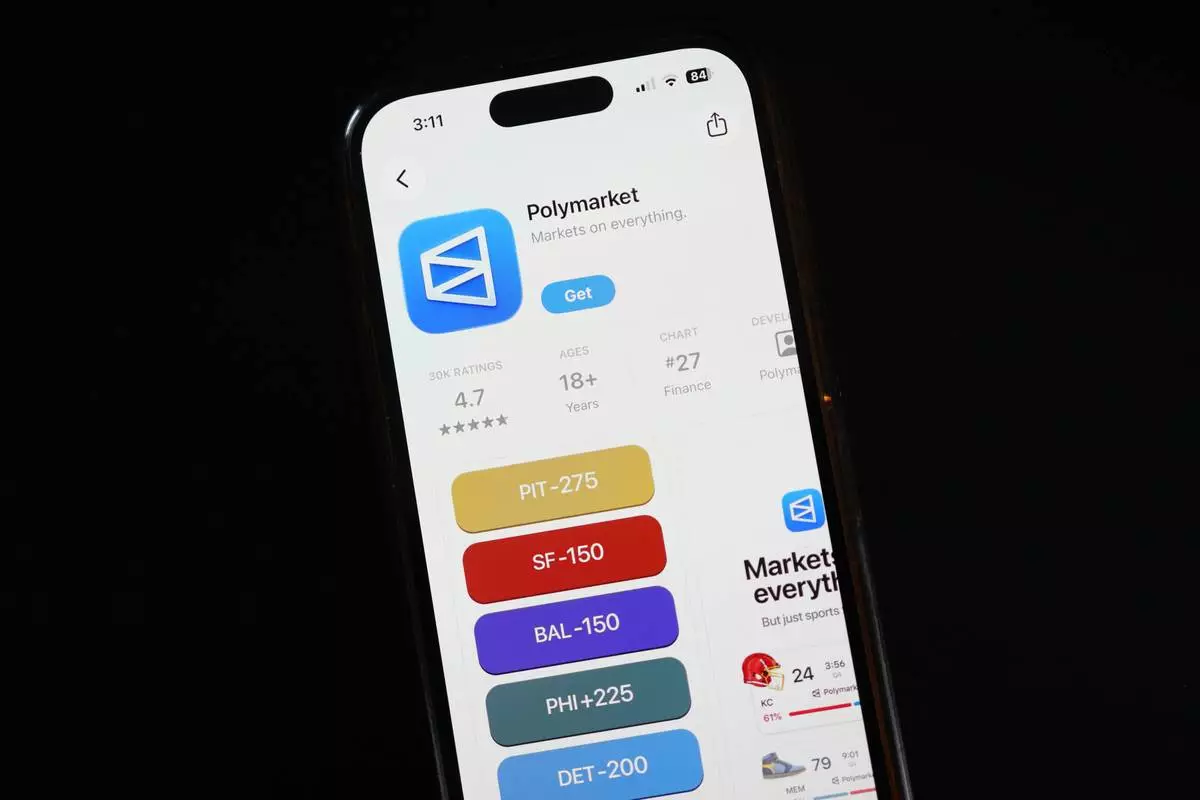
FILE - The prediction market app Polymarket is displayed on a mobile phone, April 16, 2026, in Chicago. (AP Photo/Erin Hooley, File)