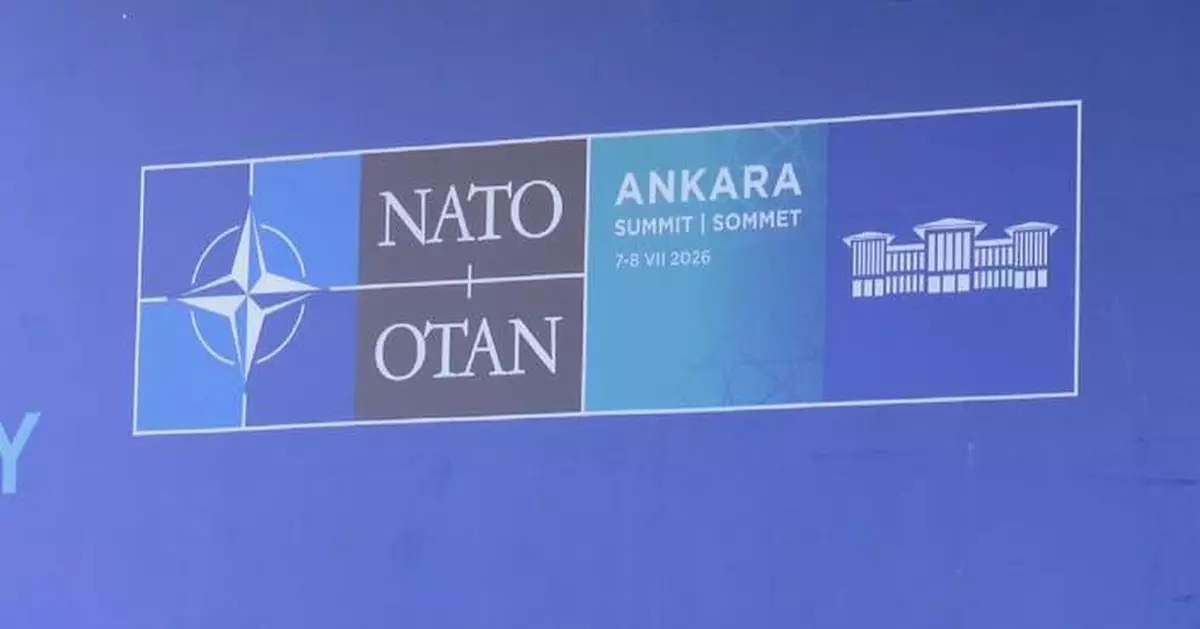
A former German rear admiral said Wednesday that the North Atlantic Treaty Organization (NATO) has openly contradicted the EU's defense autonomy push, after the alliance unveiled a new initiative involving the U.S. and Canada at the just-concluded NATO summit in Ankara, capital of Türkiye.
During the summit, NATO Secretary General Mark Rutte proposed creating a "Made in NATO" defense system, which includes a transatlantic cooperative production plan aimed at promoting deep integration between North American and European defense contractors.
However, this proposal runs counter to the EU's policy of prioritizing support for its domestic defense industry.
Rutte's Made in NATO initiative seeks to have U.S., Canadian, and European defense companies jointly participate in weapons research, development, and production, thereby strengthening interoperability of equipment and supply chain stability within NATO, while ensuring the U.S. remains within the alliance and keeping U.S. and European security interests firmly linked.
The EU's strategy, however, differs.
In recent years, the EU has accelerated its push for strategic autonomy, hoping to reduce long-term dependence on U.S. military equipment and technology by expanding domestic defense production, thereby further enhancing European industrial competitiveness and defense autonomy.
Clearly, EU's policy orientation is in direct conflict with the model advocated by Rutte.
At a deeper level, this conflict over the defense industry essentially reflects the differing strategic visions of NATO and the EU regarding the future direction of European security.
It is foreseeable that NATO and the EU will maintain the broad framework of security cooperation in the near future; however, the rivalry between the two sides is likely to intensify over core issues such as the control of the defense industry, the allocation of defense funding, and European strategic autonomy.
Jurgen Ehler, a retired German rear admiral, said the EU is determined to depend on itself in terms of defense.
"Europeans, they want to become more independent from the United States. So, there is a very clear goal of the European Union member states to procure their own military equipment themselves. We have a European Defense Industrial Strategy, and clear target is to buy and to procure more European (defense equipment) in a cooperative manner. So, this is the goal," he said.
NATO, EU clash over defense autonomy: insider