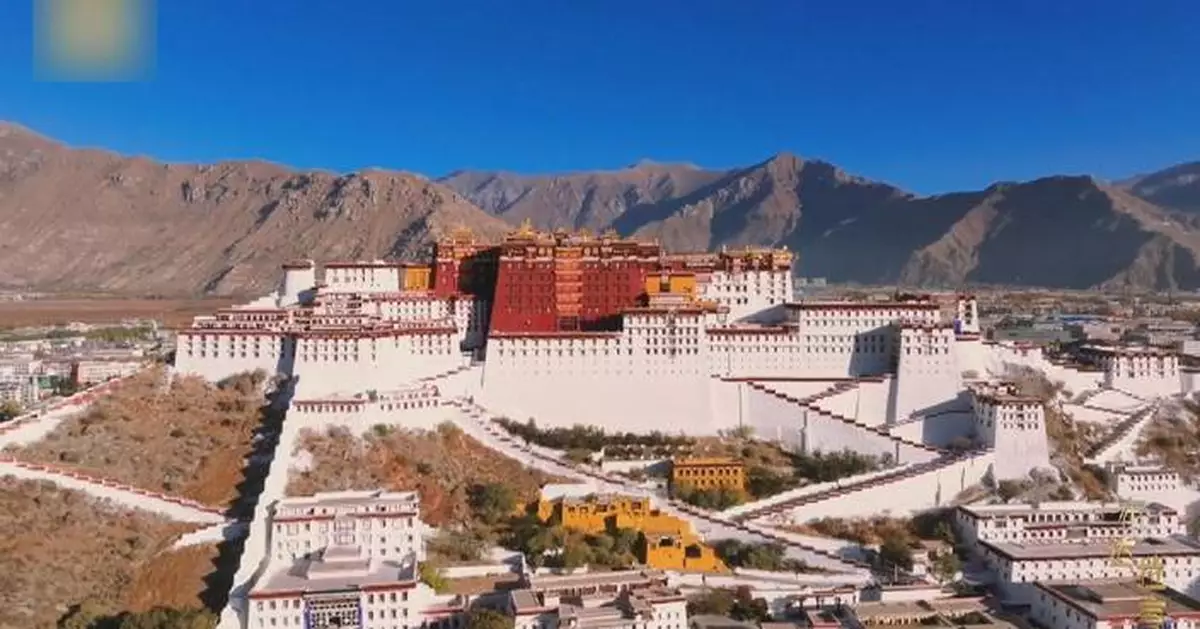
In every September on the Tibetan calendar for the past 300-plus years, the Potala Palace receives its annual coat of paint using a centuries-old recipe of milk, honey, and saffron.
According to legend, on the 22nd day of the ninth month of the Tibetan calendar, the Buddha descends to the human realm, and stays in a freshly painted home.
Every year, in the three weeks leading up to the "Buddha's Descent Day", hundreds of locals and volunteers from near and far show up at the Potala Palace, bowls and lime paint in hand, to honor a tradition that dates back to the 17th century: giving the palace's outer walls a fresh coat to welcome his return.
Built in the 7th century, the Potala Palace, a typical Tibetan traditional earth-stone-wood structure with more than 1,200 rooms, is considered the world's highest-altitude and best-preserved palace complex, and was inscribed on the UNESCO World Heritage List in 1994.
Perched atop Mount Marpori (meaning "red hill" in Tibetan) in central Lhasa, the Potala Palace traces its origins back to the 7th century, during the reign of Tibetan King Songtsen Gampo. It was later expanded in the 17th century by the fifth Dalai Lama.
The painting of the palace is featured in a seven-part historical and cultural documentary produced by China Media Group (CMG).
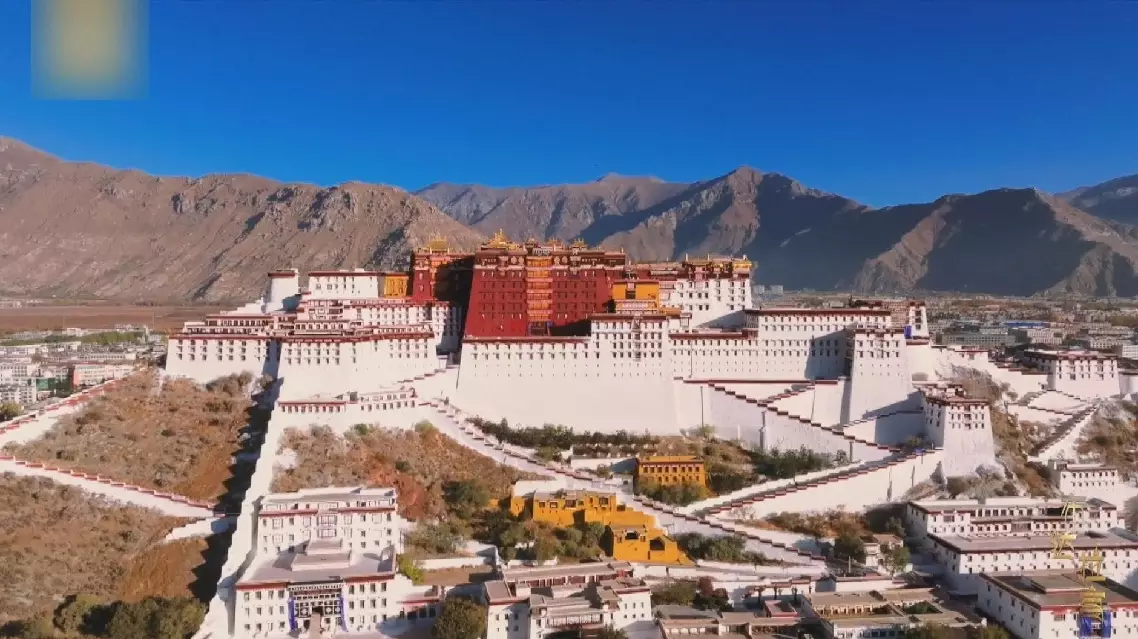
Annual Potala Palace repainting: A 300-year-old tradition
Annual Potala Palace repainting: A 300-year-old tradition