The President of the 80th session of the United Nations General Assembly (UNGA), Annalena Baerbock, has warned that the United States' withdrawal from multiple UN agencies weakens international organizations and harms people around the world.
In an exclusive interview with China Media Group during her recent visit to Beijing, Baerbock addressed the implications of the U.S. withdrawal from more than 60 international organizations and mechanisms by January this year, roughly half of which are UN-related.
"In an interconnected world, what happened in one part of the world affects the rest of the world, and even the biggest superpowers, they cannot protect themselves against the global crises, as climate change, as a pandemic, as we saw in COVID, but also now with relation to the war between the U.S. and Iran in the Middle East. The effects of being felt everywhere and the U.S. is calling for support, so this underlines again that even the strongest superpowers need the United Nations, need a clear set of common," said the UNGA president.
"If they leave part of the United (Nations) organizations, this weakens the organizations, which harms people all around the world. We saw it with a lack of support now for the World Food Program. But it's also not in the interest of the bigger powers themselves, so it's in the self-interest of every member state, especially the strong ones, to strengthen the multilateral system and the UN agencies. And also, on a legal issue, because I'm a lawyer, I'm a strong defender of international law without any double standard, some of the organizations, you cannot just leave anyway. So even if you announce it, you are being bound by the common rules within our United Nations," she said.
Baerbock paid a visit to China from April 29 to 30, at the invitation of Chinese top diplomat Wang Yi.
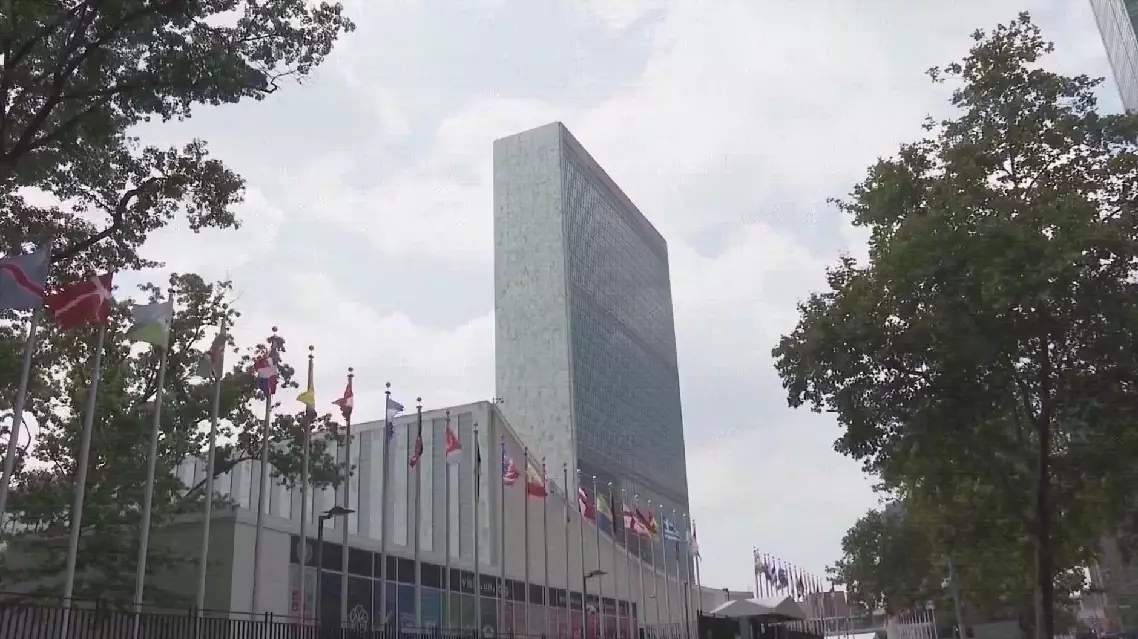
U.S. withdrawals weaken global institutions, harm people worldwide: UNGA president
Business leaders urged public-private partnership to maintain sustainable growth amid uncertainties at the third Asia-Pacific Economic Cooperation Business Advisory Council (ABAC) meeting, which was held in the Thai capital Bangkok from July 6 to 9.
The current business environment is becoming more complex, while geopolitical uncertainties continue to affect business decisions, said Thai Prime Minister Anutin Charnvirakul in a keynote address at the third ABAC meeting in 2026.
These challenges cannot be solved by the governments alone, nor can businesses solve them without governments creating the right environment; thus, public-private partnership is key to sustainable growth, he noted.
"I think we have to focus on quality growth, not just growth for the sake of growing. But how do we make sense with the new technologies that we have, with the information that we have, how do we make sense and try and mitigate some of these issues that are going on in the world," said Kasemsit Pathomsak, a member of ABAC, in an interview with the China Global Television Network (CGTN.)
Chinese representatives said they hope to build new partnerships in advanced manufacturing, digital technology, green development and cross-border trade.
"I think that fintech will be further discussed, and the connectivity will be further discussed. They reached the consensus at the last point. I think it shows the unity of all the industrial and commercial circles of the Asia-Pacific region," said Wu Meng, director-general of the Department of International Cooperation of the China Council for Promotion of International Trade.
The four-day event gathered over 200 business leaders and experts to finalize policy recommendations for APEC leaders regarding sustainable development, digital innovation, AI, and regional connectivity
The Asia-Pacific Economic Cooperation (APEC) is the highest-level economic cooperation mechanism that enjoys the broadest scope and the most significant influence in the Asia-Pacific region.
The region is home to one third of the world's population and accounts for over 60 percent of the global economy and nearly half of global trade.
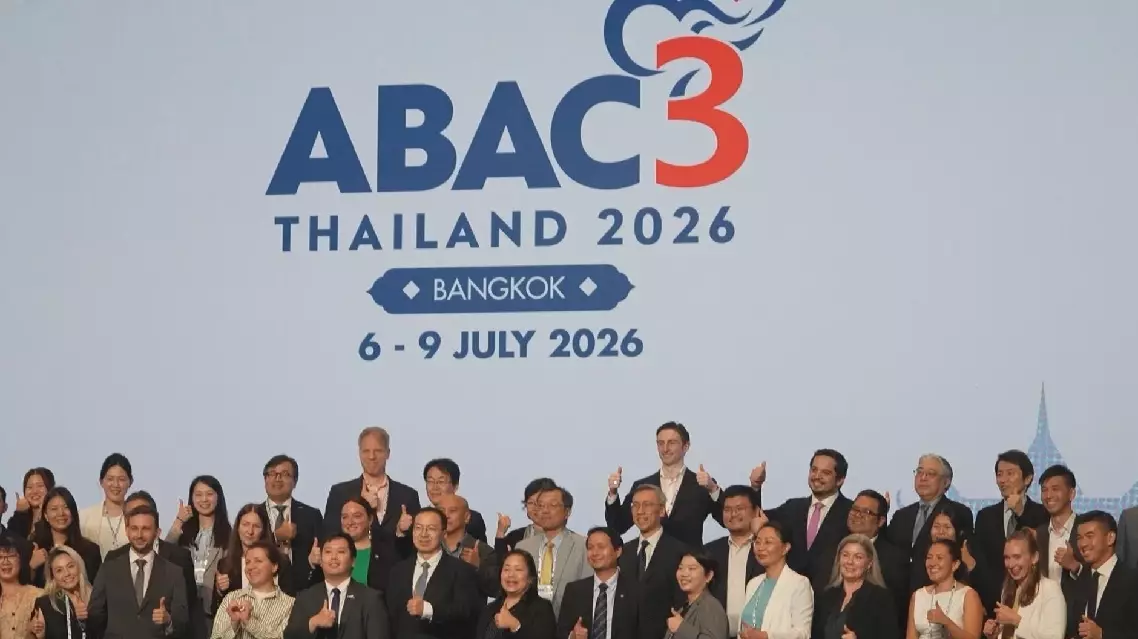
Business leaders urge public-private partnership for sustainable growth at ABAC meeting