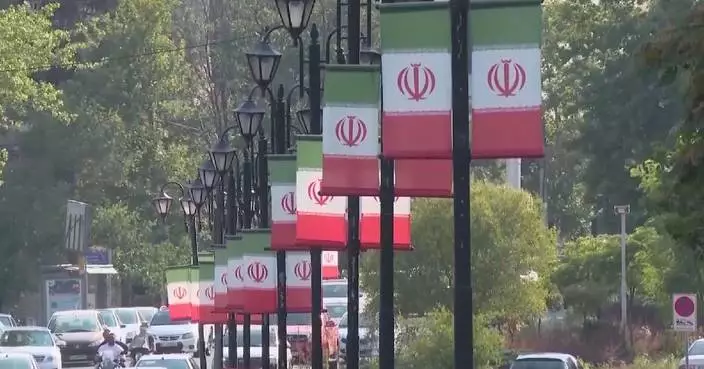
The United Nations on Friday called on the United States and Iran to continue diplomatic efforts and ease current tensions, as Iran warned that it would no longer be bound by the bilateral memorandum of understanding (MoU) if the U.S. continues to violate its obligations.
Speaking at a regular press briefing at the UN headquarters, Stephane Dujarric, spokesman for UN Secretary-General Antonio Guterres, stressed the importance of continuing diplomacy and voiced hope that the two sides will move negotiations forward to promote a comprehensive political solution at an early date.
"The most important thing is for the diplomacy to continue. We have seen over the last 24 hours a sort of lull in the kinetic activity. We see reports that the discussions are ongoing and we hope that they are," he said.
Tammy Bruce, U.S. deputy representative to the UN, told an emergency Security Council session on Friday that the United States favors a diplomatic settlement to the Iran conflict and hopes Tehran will engage seriously in negotiations to secure a final agreement.
According to Bruce, Iran's actions over the past week had contravened the MoU previously reached between the two sides, adding that the U.S. is ready to hold Iran accountable for such actions.
Later that day, Iran's permanent representative to the UN, Amir Saeid Iravani, told a press conference that the United States' attacks on facilities in southern Iranian cities and on several Iranian islands in the Persian Gulf on July 7 and 8 constitute a violation of the UN Charter and the MoU reached between the two sides.
Iravani said that according to the MoU, the United States pledged to cease all military operations against Iran and to refrain from threatening or using force.
He said the restoration of navigation through the Strait of Hormuz and related mine clearance work should be undertaken by Iran, adding that any intervention or establishment of parallel arrangements by external forces could undermine the implementation of the MoU and heighten regional tensions.
"Iran remained committed to the faithful implementation of the memorandum of understanding (MoU), provided that the United States fully and faithfully complies with its own obligation. However, should the United States continue to violate its obligation under the MoU, Iran will no longer be bound to fulfill its obligation under the MoU," said Iravani.
UN urges diplomacy as Iran warns US over MoU violations
According to the Guangxi Emergency Management Department, a rescue helicopter evacuated one patient and family members from Dieshi Village of disaster-hit Hengzhou City to the urban area for treatment on Saturday morning.
As of noon Saturday, the helicopter had completed 15 sorties totaling 18 hours and 6 minutes of flight time. The crew conducted aerial surveys over reservoirs and townships in Hengzhou, as well as districts in Guigang.
A total of 2,764 items of emergency supplies and medicine were airdropped to township governments and villages.
So far, two patients and their family members have been evacuated.
In Guigang City, five counties and districts have been affected by persistent heavy rainfall and flooding starting from early July, triggered by Typhoon Maysak, the 10th typhoon of the year.
All temporary shelters are now operating in an orderly manner, providing food, medical services and supplies.
At the No. 3 Junior High School of Qintang Street, the shelter has received a total of 640 visits from displaced residents and emergency rescue personnel since it opened on July 6.
Currently, about 190 residents and 280 rescue personnel remain at the shelter.
In addition to basic necessities, the shelter has set up a basic medical service point and a psychological counseling room to meet the diverse needs of those taking shelter.
"They provided toothbrushes, toothpaste, toiletries, quilts and pillows, as well as donated supplies including clothes," said Huang Xueqi, a resident sheltered at the school.
"We have a place to stay, food and clothing. Everything is well arranged. This flood has been devastating, but we must stay strong. We are deeply grateful for their help," said Qiu Lijian, another resident.
"The shelter has medical teams to give residents physical checkups and psychological counseling. We also set up a temporary classroom for charging devices to help people stay connected. Our supply storage room has received donations from caring enterprises across the country, so we have enough supplies. We have also prepared special items for vulnerable groups, such as baby formula and diapers. We can fully meet the living needs of those staying here," said Bi Haojun, a faculty member at the school.
Local authorities said shelters in Guigang will continue to provide resettlement services, daily necessities and supplies, with relief efforts dynamically adjusted based on residents' return and recovery progress, to ensure that the basic needs of flood-affected residents are met and they get through the flood season safely.
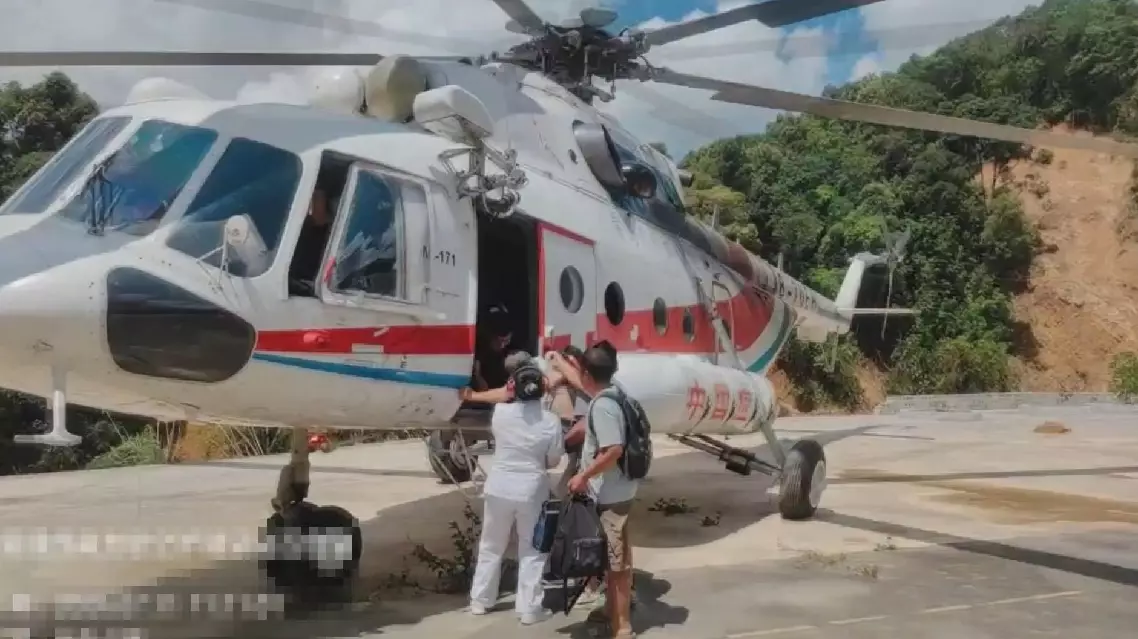
Helicopters airdrop supplies, evacuate sick people as Guangxi weathers rainstorm, floods