Namibia's spectacular wildlife, vast desert landscapes and rich cultural heritage are attracting growing numbers of Chinese travelers, as the African country has kept strengthening bilateral tourism cooperation with China.
According to the latest Tourist Statistical Report released on June 25, China ranked eighth among Namibia's overseas tourism source markets, with 9,657 tourists, accounting for 0.8 percent of the total tourist arrivals.
For the first time, China secured a spot among Namibia's top 10 overseas source markets for tourists in 2015.
Tour operators said Namibia's stunning and untouched landscapes are one of the most important factors that drive the tourism boom.
"We mainly market the Chinese market and why the Chinese come to Namibia? Because we have the most attractive, the Namib Desert, and we have the Etosha National Park and we also have the very beautiful Sandwich Harbor [where] the dunes meet the sea," said Lizzy Lee, a local tour operator.
Many Chinese visitors say they are drawn to Namibia's unique cultural environment and a wide variety of wildlife.
"I chose to travel to Namibia because of the rich cultural environment and to see the only red clay tribe in the world, which is fascinating, including the many species of wild life here, the elephants, giraffes and Feifei (baboon in English), animals that I like very much," said Sun Qiang, a tourist from China.
Namibian officials said they are expecting to strengthen tourism cooperation with China to attract more travelers from the country.
Speaking at a stakeholder engagement meeting held in Windhoek on June 26, Namibia Tourism Board (NTB) Chief Executive Officer Sebulon Chicalu emphasized China's role as "the world's most dynamic outbound tourism market".
He said the Chinese market holds strategic importance in "supporting sustainable tourism growth, investment and cultural exchange".
He also said the NTB will strive to "position Namibia as Africa's most authentic and unforgettable destination for Chinese travelers."
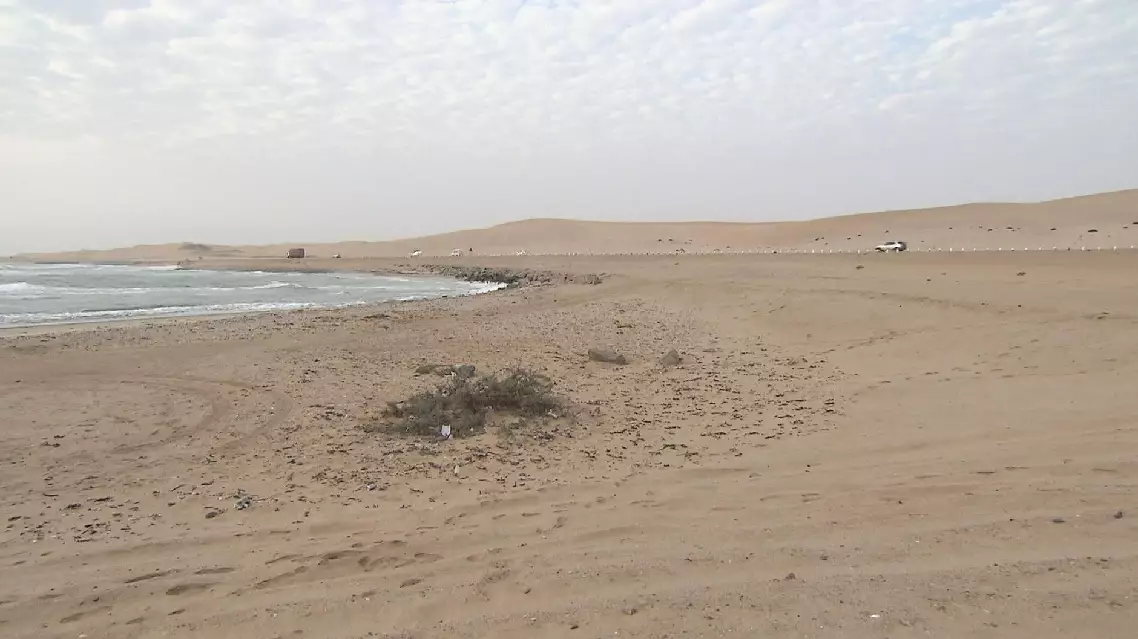
More Chinese travelers visit Namibia amid enhanced bilateral tourism cooperation

Rally participants gathered in the Japanese capital on Aug 9, which also marked the 81st anniversary of the Nagasaki atomic bombing, to voice strong opposition to the government's push to boost defense spending and revise the war-renouncing Article 9 of the national Constitution.
Holding anti-war placards, chanting anti-war slogans, protesters warned that remilitarizing the nation would betray its pacifist ideals and endanger future generations.
"Defense spending keeps increasing. Based on Article 9 of the Constitution, Japan pledged never to wage war again, yet it keeps strengthening its military. I find this extremely dangerous. They are also trying to revise Article 9. So I believe that for the sake of future young people and children, Article 9 must never be revised. Japan decided never to repeat the mistakes of waging a war after its defeat in WWII. I think we should continue to safeguard that commitment," said a rally participant.
For many in the crowd, the shadow of Hiroshima and Nagasaki remains a powerful moral compass as they believe that militarization offers no path forward for a nation that knows the devastation of war firsthand.
"Japan is the only country in the world to have suffered atomic bombings. Yet now Japan is going to deploy missiles. I believe Japan must never possess nuclear weapons," said another rally participant.
"I believe Japan has no future if it goes down the path of militarization. Nuclear weapons are absolutely bad for Japan," said a third woman, also a rally participant.
Beyond moral objections, some demonstrators said that Japan's economic vulnerabilities articulate that saber-rattling is a luxury the country cannot afford.
"I can't help but wonder what on earth a country with only a 36 percent food self-sufficiency rate would be fighting with. I have always been opposed to war, and I'm deeply dissatisfied with what the Takaichi administration is doing now," said another rally participant.
Other rally participants said that seeing revision of the Constitution could unleash unchecked military expansion, stripping away the very safeguards that have kept Japan at peace for eight decades.
"Article 9 of the Constitution is the key. If the nature of the Self-Defense Forces is elevated to a level beyond collective self-defense, which is explicitly written into the Constitution, it will allow the authority of the Self-Defense Forces to expand without limit. So no matter what, I want to prevent this from happening," said one more rally participant.
Japanese citizens rally against Takaichi's military expansion, constitutional revision