Coastal regions of east China's Fujian Province have been battered by strong winds and heavy rains following the landfall of Typhoon Bavi, the ninth typhoon of the year, in neighboring Zhejiang Province late Saturday night.
The typhoon made the landfall at around 23:20 Saturday, with the maximum wind force at its center reaching 40 meters per second, churned ashore at Yuhuan City, a county-level city administered by the city of Taizhou.
In Fujian's Fuding, a coastal county-level city administered by the city of Ningde that borders Zhejiang, conditions have gradually eased so far on Sunday, though rainfall continued, and seas remained rough.
Ahead of the typhoon's landfall, strong winds whipped up waves exceeding 10 meters in height, crashing against coastal reefs and resulting in rising sea levels that submerged coastal rocks.
The city's Yujing pier, typically a busy hub for island tourism, has been temporarily closed, and all ferry services have been suspended with seawater levels rising dangerously close to the pier's surface.
Strict precautionary measures were implemented across the region ahead of the typhoon's landfall. At the Ningde Nuclear Power Project Phase II construction site, all work was halted. Crews secured 28 high-altitude tower cranes by retracting their hooks and enabling them to weathervane, allowing the crane arms to pivot freely with the wind to minimize resistance and prevent structural collisions.
Flood prevention has been a critical priority for the low-lying Fuding's Xiamen She Ethnic Township, which sits at a river mouth and is highly susceptible to seawater backflow and waterlogging. Local officials have been organizing continuous patrols along the 726-meter Xiamen sea wall, the primary defense line for the township's 12,000 residents. Since midnight, floodgates along the sea wall have been opened to release rising flood waters.
Heavy rain has also caused falling of trees and waterlogging on multiple roads across Fuding. More than 1,500 local officials and emergency staff worked overnight to clear debris and eliminate safety hazards. Some power lines were damaged, but electricity has been largely restored following emergency repairs.
Although Typhoon Bavi has made landfall in neighboring Zhejiang, its impact continued to be felt in Fuding. Several highway toll stations in Ningde have been closed with temporary traffic controls remaining in place on several sections of local highways.
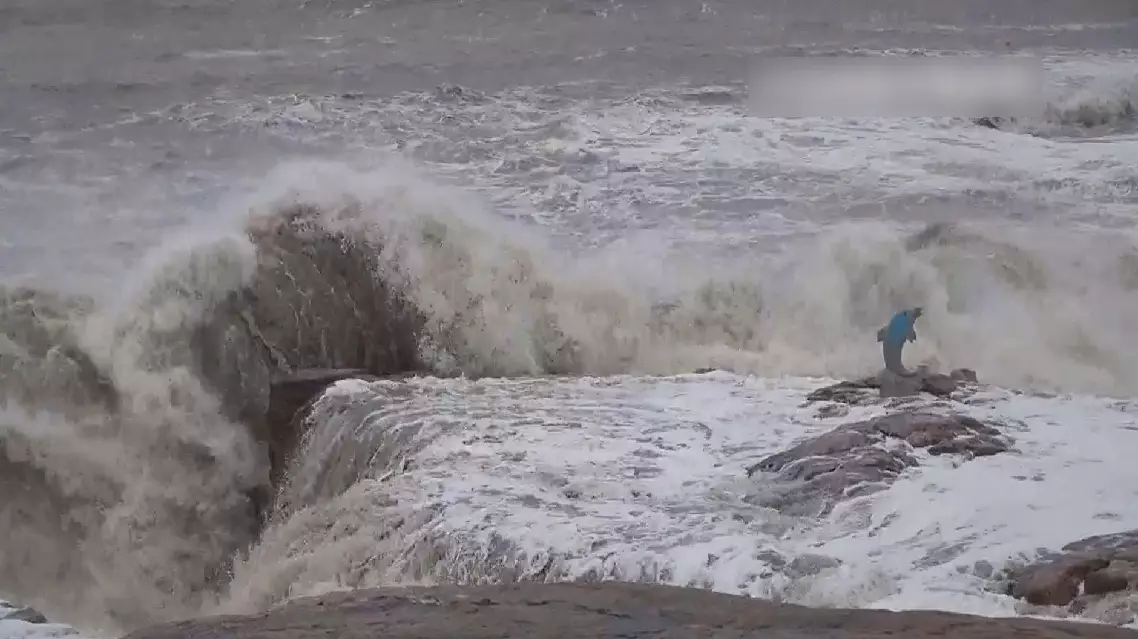
Typhoon Bavi brings strong winds, heavy rain to east China's coastal Fujian