Starting a new life far from home in unfamiliar environment with a different language poses significant challenges, a reality well understood by ethnic minorities in Hong Kong.
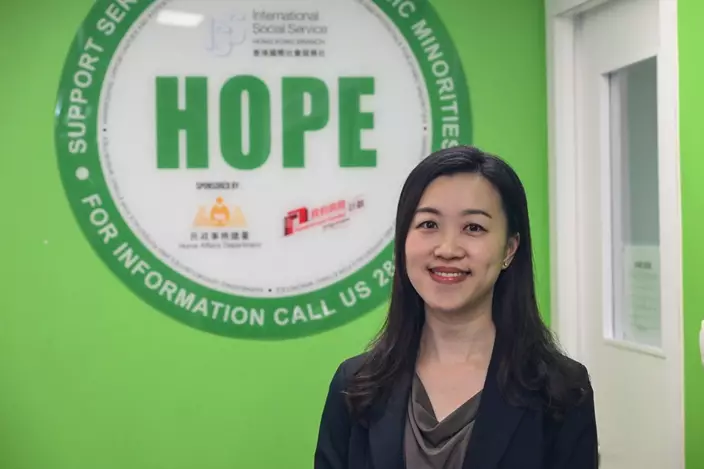
Diversified services: HOPE Support Service Centre for Ethnic Minorities person-in-charge Amy Wong says all interpreters have relevant experience and are proficient in both English and ethnic minority languages. Image source: www.news.gov.hk
To facilitate community integration and enhance access to public services, the Home Affairs Department funds non-profit organisations to operate support service centres for ethnic minorities. Service user Sheila Ramchandra Dhanawadi finds the activities and services both engaging and helpful.
Building bonds
Fifteen years ago, Sheila left Mumbai, India for Hong Kong. In 2021, a social worker connected her with the HOPE Support Service Centre for Ethnic Minorities, where she found a community of people with similar backgrounds.
Sheila hopes to expand her social circle while better integrating into the community. “The activities and services have made a positive difference in my life,” she said.
The HOPE Support Service Centre for Ethnic Minorities offers a diverse range of activities, including language classes and local festive celebrations, to familiarise the new residents with Hong Kong’s culture and lifestyle. The centre also organises volunteer opportunities, allowing participants to give back to the community while strengthening their sense of belonging in the city.
Among the centre’s most popular activities are its Cantonese classes, which teach practical, daily dialogue to help participants navigate everyday situations. In addition, the facility hosts a large-scale showcase annually to bring local residents and ethnic minorities together. The signature event features orienteering competitions alongside live music and dance performances.
Extending outreach
In April, the centre launched its Youth Network and Women’s Network. These initiatives offer tailored skills, vocational training and Mainland exchange tours.
The centre also hosts sports classes, such as swimming, designed specifically for ethnic minority women.
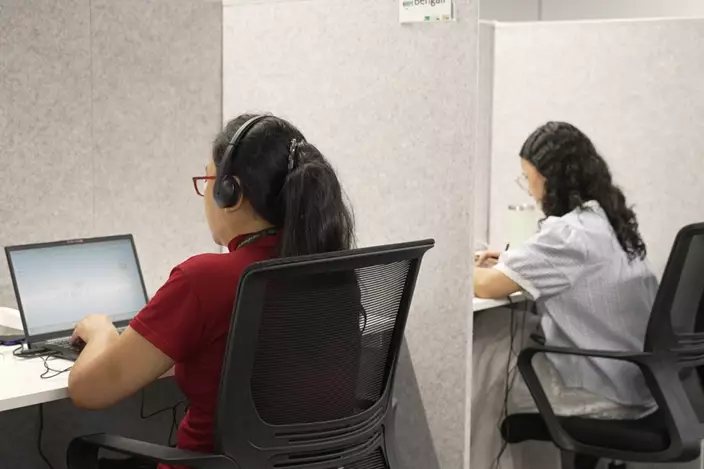
Daily support: Services provided by the HOPE Interpretation & Translation Service Centre for Ethnic Minorities include telephone interpretation. Image source: www.news.gov.hk
Enriching integration
Apart from language barriers, one of the biggest hurdles for many ethnic minorities is simply not knowing what community resources are out there. Finding support from people who truly understand their cultural background and circumstances remains a steep challenge.
To respond to the Policy Address’s call for stronger community integration, the HOPE Interpretation & Translation Service Centre for Ethnic Minorities opened its doors last December.
The facility provides interpretation and translation services in seven languages, namely Indonesian, Bengali, Hindi, Nepali, Punjabi, Tagalog and Urdu – most of which are free of charge. Services include telephone and on-site interpretation. The centre also assists ethnic minority members with navigating daily essentials such as appointments, housing and public services.
Staff can also accompany service users to relevant public service agencies to give on-site support. Moreover, the centre translates daily news highlights, helping ethnic minority groups stay updated on local community developments.
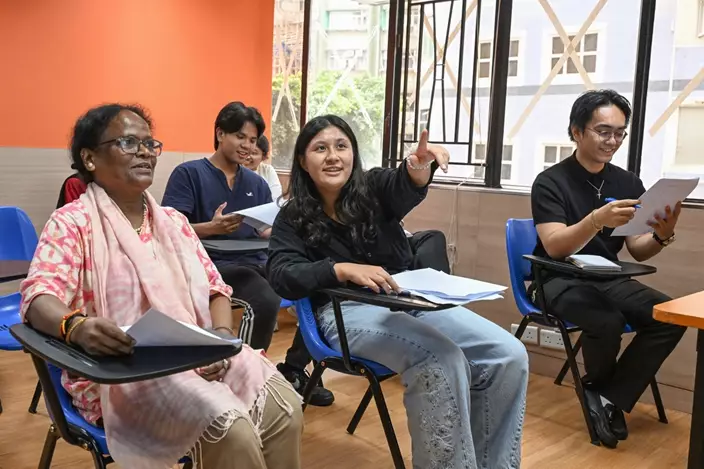
Bridging gaps: Sheila Ramchandra Dhanawadi (left) hopes to expand her social circle while better integrating into the community, and finds the centre’s services and activities interesting and helpful. Image source: www.news.gov.hk
Personalised support
“Those in need can raise any questions they encounter due to the language barriers, and the centre will provide appropriate support,” said HOPE Support Service Centre for Ethnic Minorities person-in-charge Amy Wong.
She highlighted that all interpreters have relevant interpretation experience and are proficient in both English and ethnic minority languages. The centre also conducts spot checks to maintain service quality.
The organisation hopes such services will ease daily life for ethnic minorities, giving them the confidence to truly make them feel at home in Hong Kong.
CANNES, France (AP) — Sprawling action movies with aliens do not generally compete for the Cannes Film Festival's Palme d'Or. But Na Hong-jin's “Hope” is not your average science fiction.
Few movies were more anticipated in Cannes. It's been 10 years since Na's last film, the well-regarded 2016 thriller “The Wailing.” While some of Na's fellow Korean genre masters, like Bong Joon Ho, have found global renown, for many cinephiles, Na is overdue for the kind of global introduction a Cannes premiere provides.
But that doesn't mean that Na, a few hours before debuting “Hope,” was feeling at ease.
“I’m really nervous,” the writer-director said in an interview alongside the Cannes beach. “I didn’t imagine it would be so nerve-wracking to be honest, to the point of not sleeping.”
Na's movie, one of the most expensive Korean films ever made, certainly provides no rest. For two hours and 40 minutes, it takes a story that begins with the mysteriously scarred carcass of a dead bull and breathlessly and quite bloodily accumulates into a cosmically grand, audaciously gonzo sci-fi tale.
The headlong rush of Na’s bonkers would-be international blockbuster left Cannes alternatively awed, befuddled and thrilled. Variety's Jessica Kiang called it “hilarious, unwieldy, overlong and featuring some of the most breathtakingly elegant action moviemaking of this or any year.”
Hwang Jung-min plays the Hope police chief in a rural village whose investigation into the bull attack rapidly turns into a frantic chase, following a trail of carnage through the Korean Demilitarized Zone. He's eventually joined by another police officer (Jung Ho-yeon). Meanwhile, the chief's cousin (Zo In-sung) is following a separate set of clues into the forest.
How “Hope” gets from A to B is much of the fun. But let it be known: Michael Fassbender and Alicia Vikander play extraterrestrials.
“I wanted to talk about a story that starts off with something very trivial, and that can build to something that can impact the entire universe,” Na says. “In order to tell that story, I felt I had to incorporate aliens.”
Just how grand a scope “Hope” would encompass took some figuring out for Na. He ultimately decided he would put only part of it in the film. A sequel set in space, more centered around Fassbender and Vikander's characters, has already been written. Na warmly offered “a secret,” describing how his theoretical part two ends, before being hushed by publicists.
Na rushed to complete the edit in time for Cannes. Speaking through an interpreter, he sounded very much like a filmmaker who has for years been consumed by the possible iterations of this story. That it's taken 10 years to get here, he grants, is hard to believe.
“It didn’t feel that long to me. I only realize now that it’s been quite a journey,” he sighs. “The editing took a long time. The CGI took forever.”
For the Korean stars of the film, Na was the main attraction. Asked why he wanted to do the film, Zo answers straightforwardly: “Because it's Na Hong-jin. Nothing else.”
Jung hopes the film — which Neon will release in the U.S. later this year — will bring new audiences to the director. “He has such cool filmography,” she says. “It will be nice if he can have a much wider audience.”
Hwang, one of South Korea's top stars, is reuniting with Na after starring in “The Wailing.” Almost immediately, they started talking about another film together. Hwang was the first performer to sign on to “Hope.”
“Among the actors, we have this faith in the director that whatever movie he does, he'll do a good movie,” says Hwang before deadpanning. “But I don't think he knows that many good actors.”
Some spectacular and lengthy action sequences make up much of “Hope.” But as much as the movie is a pedal-to-the-metal ride, it's predicated on some of the weighty themes that have characterized Na's films, particularly “The Wailing.”
The genre and perspective shifts in “Hope,” from monster movie to sci-fi, go to the heart of what drove Na's largest production in the first place. For him, it all began with people’s struggle to see and understand those different from them.
“I started off with a focus on xenophobia and immigrant problems,” he says. “As I was developing the story, it became a much bigger story.”
“In any big tragedy, they don’t necessarily arise from malicious intention. It all starts with difference in perspective,” he says. “I think it’s that conflict in perspective or misunderstanding that creates these collisions. That’s what I wanted to talk about.”

Taylor Russell, from left, Hoyeon, Zo In-sung, director Na Hong-jin, Hwang Jung-min, Alicia Vikander and Michael Fassbender pose for photographers at the photo call for the film 'Hope' during the 79th international film festival, Cannes, southern France, Monday, May 18, 2026. (AP Photo/John Locher)

Hwang Jung-min, from left, director Na Hong-jin, Hoyeon and Zo In-sung pose for photographers at the photo call for the film 'Hope' during the 79th international film festival, Cannes, southern France, Monday, May 18, 2026. (AP Photo/John Locher)

Hwang Jung-min, from left, director Na Hong-jin, Michael Fassbender, Alicia Vikander, Taylor Russell, and Hoyeon pose for photographers upon arrival at the premiere of the film 'Hope' at the 79th international film festival, Cannes, southern France, Sunday, May 17, 2026. (AP Photo/Andreea Alexandru)
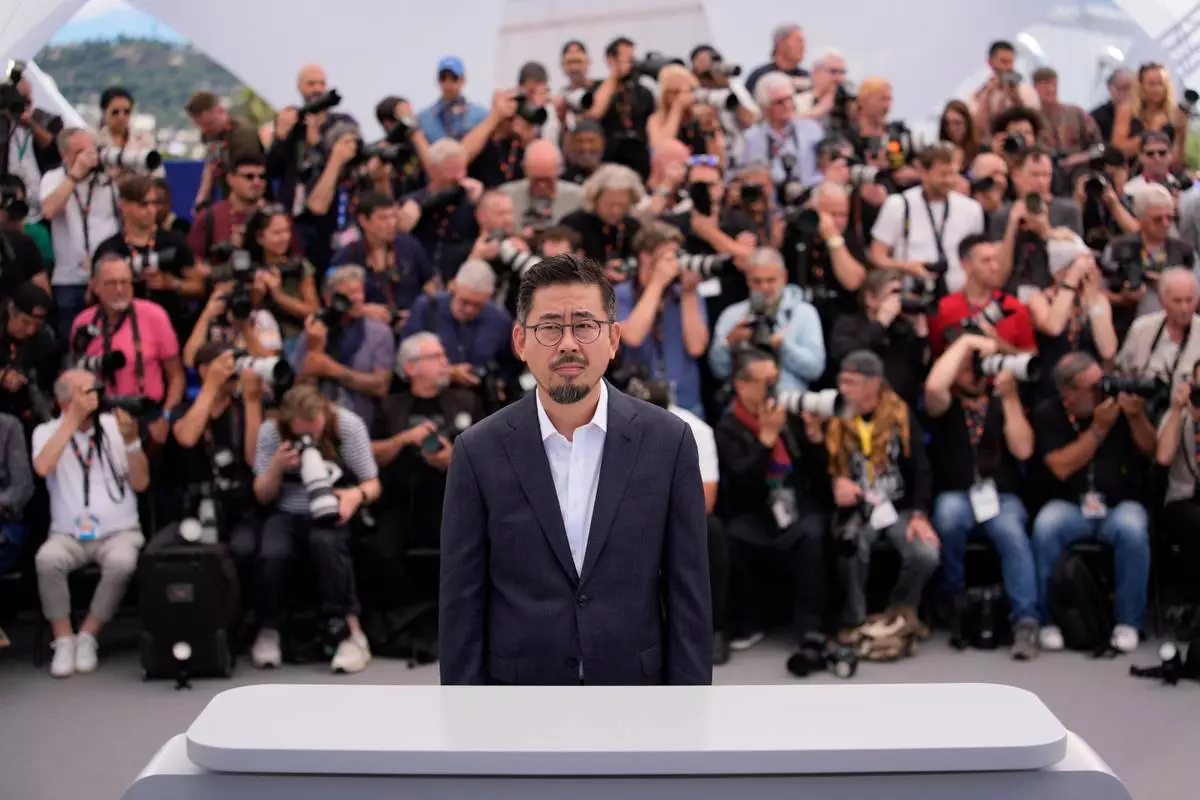
Director Na Hong-jin poses for photographers at the photo call for the film 'Hope' during the 79th international film festival, Cannes, southern France, Monday, May 18, 2026. (AP Photo/John Locher)