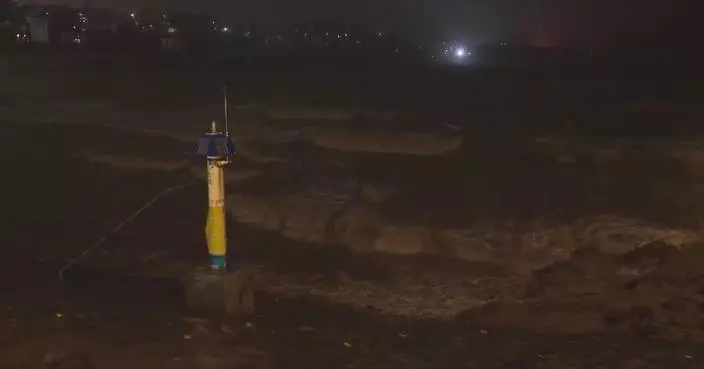
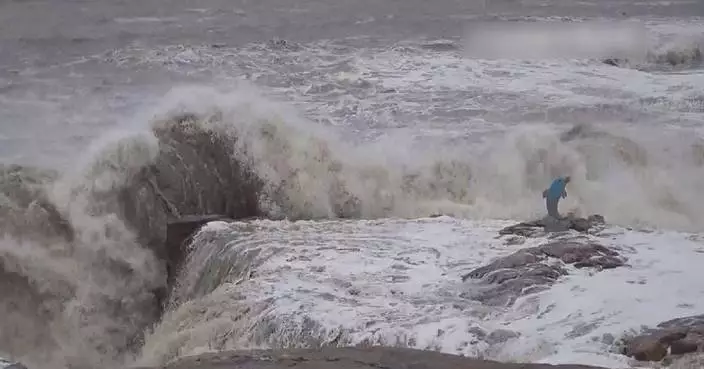
East China's Shanghai has upgraded its emergency response to Typhoon Bavi and successfully evacuated 5,000 people to safety, as the powerful typhoon has made landfalls in neighboring Zhejiang Province.
Bavi, the ninth typhoon of the year, made two powerful landfalls on the coast of Zhejiang within less than one hour late Saturday night and early Sunday morning, bringing fierce winds and torrential rain.
Shanghai's meteorological station upgraded the typhoon blue alert to yellow -- the third level in the four-tiered weather warning system of China -- on Saturday afternoon, while the city's flood control headquarters simultaneously raised the emergency response level from IV to III.
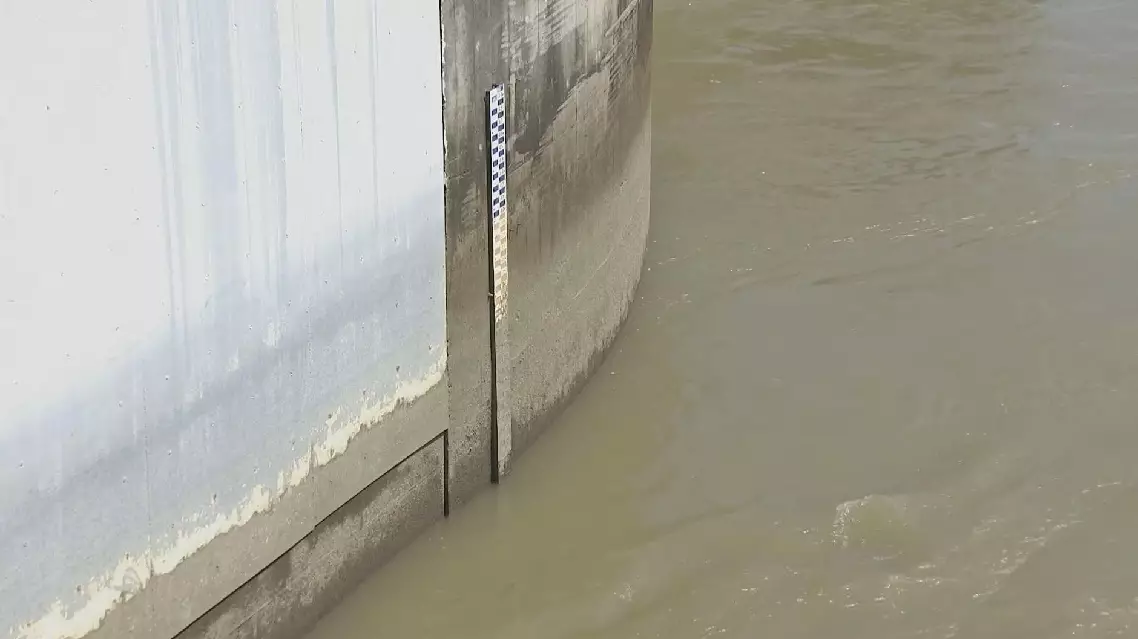
In Chongming District, local sluice gates were fully opened to discharge inland river water into the Yangtze River, following dispatch orders from municipal and district flood control authorities, in an effort to reduce potential waterlogging risks.
"We are maintaining a duty watch in accordance with the flood control plan, and all personnel are on standby as required by the relevant protocols. We have entered a state of readiness for emergency response and have conducted comprehensive screening of all electromechanical equipment," said Xu Kai, head of the sluice management group at the Chongming Water Authority.
In Fengxian District, local cooperatives seized the time window to reinforce greenhouse facilities. Workers have added supports to weak points on greenhouse frames and cleared drainage ditches to ensure smooth floodwater discharge during heavy rainfall.
In the Jinshan District, authorities evacuated over 5,000 people and activated 78 temporary shelters Saturday morning. The shelters are equipped with drinking water, food, folding beds and blankets, with management staff and volunteers on site to ensure safe and proper care.
Meanwhile, the Jinshan District Emergency Management Bureau has deployed more than 50 personnel from six social emergency rescue teams, equipped with professional drainage equipment, to multiple locations for 24-hour duty to respond to any emergency situations.
Shanghai upgrades emergency response to Typhoon Bavi

Days after a powerful 7.5-magnitude earthquake struck western Colombia on Aug 10, families in Cali, the worst affected city, are confronting heartbreaking obstacles simply to lay their loved ones to rest.
Cali's morgue sustained damage in the quake and was forced to close operations after part of the Hospital Universitario del Valle collapsed. As a result, recovered bodies must be transported to the neighboring town of Palmira, which escaped structural destruction.
The influx has severely overwhelmed Palmira's facilities, leaving them short on refrigeration capacity. Grieving relatives waiting outside must wear masks as they endure agonizing waits, caught in a system operating far beyond its designed capacity.
While some families have managed to bid a painful farewell and gained a measure of closure, such as the relatives of Maria Esmeralda Ordonez in Cali, countless others remain in painful limbo.
"Thankfully it's not turned out like it has for others who today are still fighting to rescue loved ones, people who are still lying beneath the rubble. The chances of survival are very slim, but miracles are happening," said Ivan Delgado, a relative of Maria Esmeralda Ordonez.
For many families whose relatives have been recovered, the ordeal is far from over. They must navigate the bureaucracy that comes with a death.
Securing the release of a body requires a prosecutor's order, an accompanying undertaker, and a considerable amount of paperwork -- a grueling process compounded by a system operating well beyond its capacity.
Camilo Mendez, a relative of victims, knew this pain firsthand after an agonizing three-day wait to claim the bodies of his aunt and grandmother.
"From the information we've gotten here and there, you can really tell we're not prepared for this kind of event. Moving the bodies, all of it, it was very slow, very disorganized. My grandmother and my aunt were in one place, then another. It was pretty chaotic, honestly," said Mendez.
To support the exhausted crowds, volunteers and psychologists have set up tents near the Palmira facility, offering comfort and counseling.
"It's an exhausting process. You're here waiting for an answer, and no one knows when it will come. There are people with one, five, six relatives they can't find. A body may be recovered today, another tomorrow, and that's how it's gone," said Alison Morales, a volunteer psychologist.
"The community has been extraordinary, all kinds of donations, the communal kitchen, water for the people waiting," she added.
Although Palmira itself was spared the worst of the earthquake -- sustaining cracks on a few buildings and no fatalities -- it has absorbed the profound, far-reaching grief of a region struggling to bury its dead.
Families face heart-breaking delays burying victims of Colombian earthquake