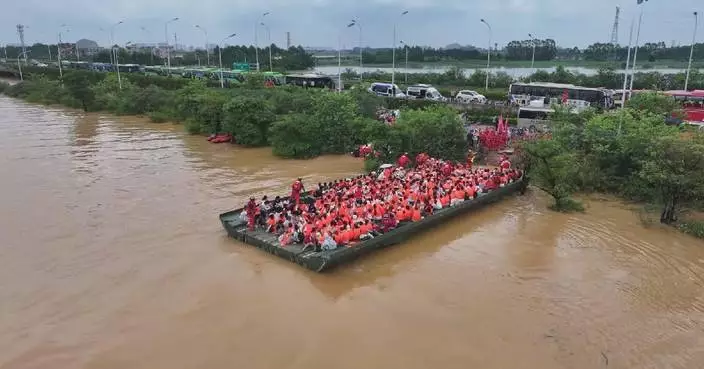
China's foreign trade showed upward momentum in the first half of 2026, with higher port throughput and growth in both imports and exports, according to official data.
According to the country's State Information Center, during the first six months of this year, China's average daily container throughput at ports nationwide increased by 6.7 percent year on year, and the average daily cargo throughput grew by 1.3 percent.
Meanwhile, the country's foreign trade structure has also been optimized, transforming high added-value products into the driving force for export growth.
Latest statistics showed that in the January-to-June period, the average daily number of international cargo flights increased by 4.6 percent year on year, with strong and sustained demand for high-value-added products, such as electronics.
"Facing the complex and ever-changing external economic and trade environment in the first half of the year, the resilience and competitiveness of China's industrial and supply chains have become increasingly evident. Foreign trade has not only achieved steady growth in scale but has also demonstrated a positive trend of 'quality imports and exports.' Looking ahead to the second half of 2026, as the benefits of institutional opening up continue to unfold, new momentum for the high-quality development of China's foreign trade will keep building up, likely providing further certainty and vitality to the global economy," said Wang Bingjie, assistant researcher with the National Development and Reform Commission's Institute of Foreign Economic.
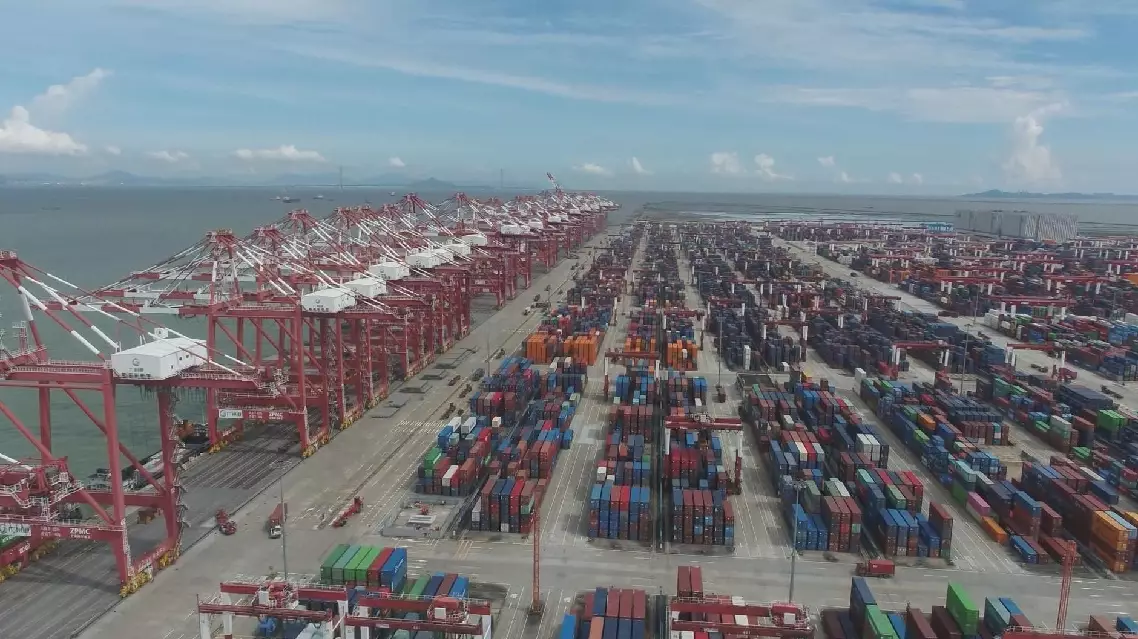
China’s foreign trade shows great momentum in H1
Future transit management through the strategic Strait of Hormuz should be formulated exclusively through bilateral consultations between Iran and Oman, an Iranian Foreign Ministry spokesman said on Sunday.
The remarks followed talks between Iranian Foreign Minister Seyed Abbas Araghchi and his Omani counterpart, Sayyid Badr Albusaidi in Muscat on Saturday.
Iranian Foreign Ministry spokesman Esmail Baghaei said that the two sides discussed the coordination mechanism for navigation and passage management in the Strait of Hormuz.
Legal and technical delegations from both countries participated in the session, and a government delegation from Qatar joined parts of the discussion.
According to Baghaei, the talks focused on the shipping security in the Strait of Hormuz, respect for the sovereign rights of both nations, and the application of international law. The two sides also discussed Article 5 of the "Islamabad Memorandum of Understanding (MoU)".
Iran emphasized that future traffic management arrangements for the Strait of Hormuz should be decided through consultation between Iran and Oman, and any framework must take into full account the impact of U.S. and Israeli military operations against Iran in recent months and their impact on the safety of shipping in the Strait of Hormuz, Baghaei said.
Baghaei also said that both sides agreed to continue political, legal, and technical consultations to reach a common understanding on the navigation security in the strait.
Meanwhile, Iranian Parliament Speaker Mohammad Bagher Ghalibaf wrote on social media that the "era of unilateral agreements has ended".
Ghalibaf said that Iran had previously asked relevant parties to fulfill their commitments or face the consequences, adding that they must "now face reality".
Ghalibaf also posted a portion of Article 5 from the previous 14-point MoU, which highlights that the restoration of transit through the Strait of Hormuz is conditional upon compliance with "arrangements set by the Iranian side".
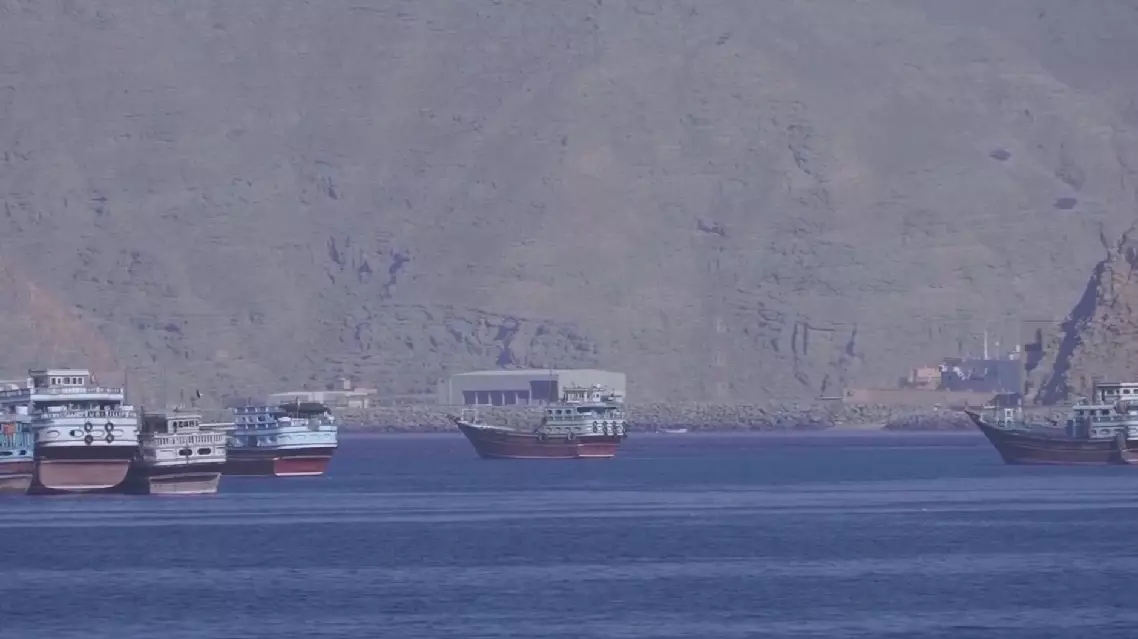
Iran says Strait of Hormuz transit management must be jointly decided with Oman