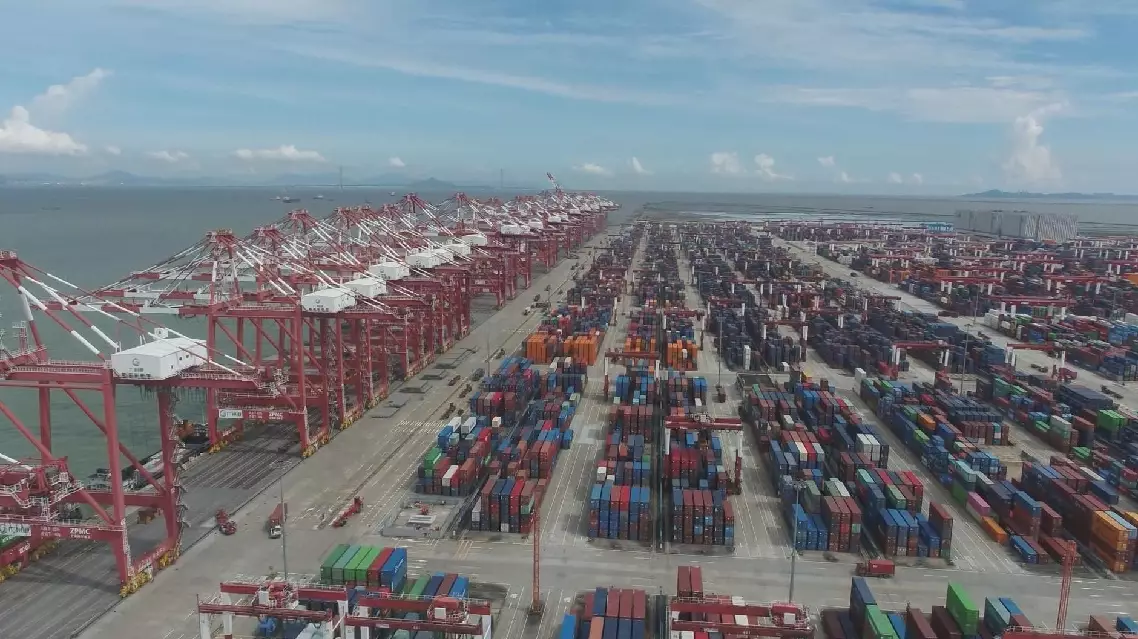
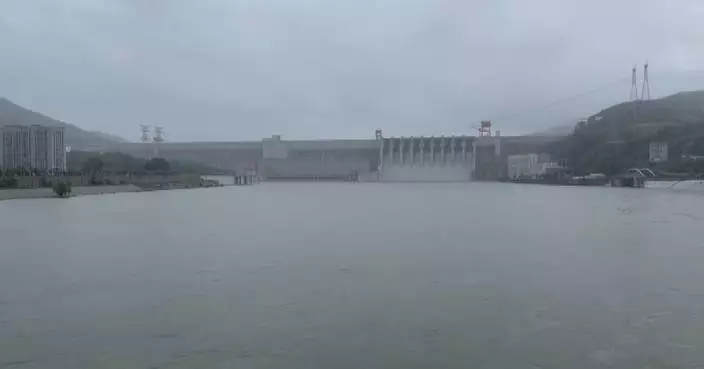
Beijing has evacuated more than 100,000 residents by Sunday morning and ramped up water releases from reservoirs to mitigate severe flood risks, as Typhoon Bavi unleashes torrential rain across the Chinese capital with local mountainous districts bearing the brunt of the extreme weather.
Across the city, 188 tourist attractions as well as over 4,000 rural homestays and tent campsites have been closed, while 73 elderly care facilities have been shut down with all their residents moved to safety, according to the Beijing Municipal Flood Control Office.
Typhoon Bavi, the ninth typhoon of the year, landed on the coast of east China's Zhejiang Province at around 23:20 Saturday, according to the Zhejiang provincial meteorological observatory. The typhoon is expected to continue to move northwestward while weakening.
Beijing is among multiple Chinese regions that have been affected by the storm, receiving an average rainfall of about 54 millimeters between 08:00 Saturday and 05:00 Sunday, with the northeastern suburban Pinggu District recording the highest precipitation at over 160 millimeters, according to the local meteorological authorities.
Several suburban districts, including Fangshan, Mentougou, Huairou, and Miyun are currently under an orange alert for rainstorms and geological disasters, while a yellow alert remains in place for the urban districts of Haidian and Shijingshan.
China has a four-tier color-coded weather warning system, with red representing the most severe weather, followed by orange, yellow and blue.
In some disaster-prone districts, authorities have been proactively releasing water from reservoirs to create additional flood storage capacity and enforcing traffic control measures on hazardous roads.
Since Friday afternoon, the Gucheng Reservoir, a medium-sized hydraulic project in northwest Beijing's Yanqing District, has significantly increased its discharge flow.
"In preparation for the controlled discharge this time, we have coordinated with downstream townships to conduct joint inspections, ensuring the flood release proceeds safely," said Wang Yingxi, director of the Yanqing District Small Reservoir Management Center.
Meanwhile, other local reservoirs are being maintained at low water levels, with officials closely monitoring upstream conditions.
"We'll be keeping our eyes on upstream water conditions every step of the way, adjusting discharge flows as needed, and making sure we have enough reservoir capacity at all times. We're watching the water levels and rainfall closely to keep the reservoir running smoothly and ensure the safety of people downstream," said Ai Qing, deputy head of the Yanqing District Water Affairs Bureau.
Meanwhile, in Pinggu, authorities have imposed temporary traffic restrictions on multiple mountain roads due to the risk of landslides and rockfalls. The closures will remain in effect until weather conditions improve and safety assessments are completed.
In northeast Beijing's Huairou, a mountainous district which suffered devastating flooding last July, local authorities have taken a strong approach to disaster prevention. In addition to repairing storm-damaged roads, stabilizing hillsides and broadening riverbeds, they have also undertaken extensive after-action reviews of the flood event, examining how to mount effective emergency responses in a region prone to localized microclimates, where traditional weather forecasting often falls short.
In Liulimiao Township, all 89 township-level officials have been deployed to its 25 administrative villages on 24-hour standby, as a precaution against Typhoon Bavi this year.
In Qian'anling Village, one of the hardest-hit villages in last year's floods, a community center has been converted into a "high-ground fortress" serving dual non-emergency and emergency functions.
"It used to be a small, single-story cultural center. But after the floods last year, we transformed it into a high-ground fortress, a facility that works for daily use but can be activated in emergencies. During the rainy season, it's where we coordinate all our flood defense efforts," said Ma Zexi, a local official in Qian'anling Village.
Local officials in Huairou said more than 300 people had been transferred to relocation sites since Thursday.
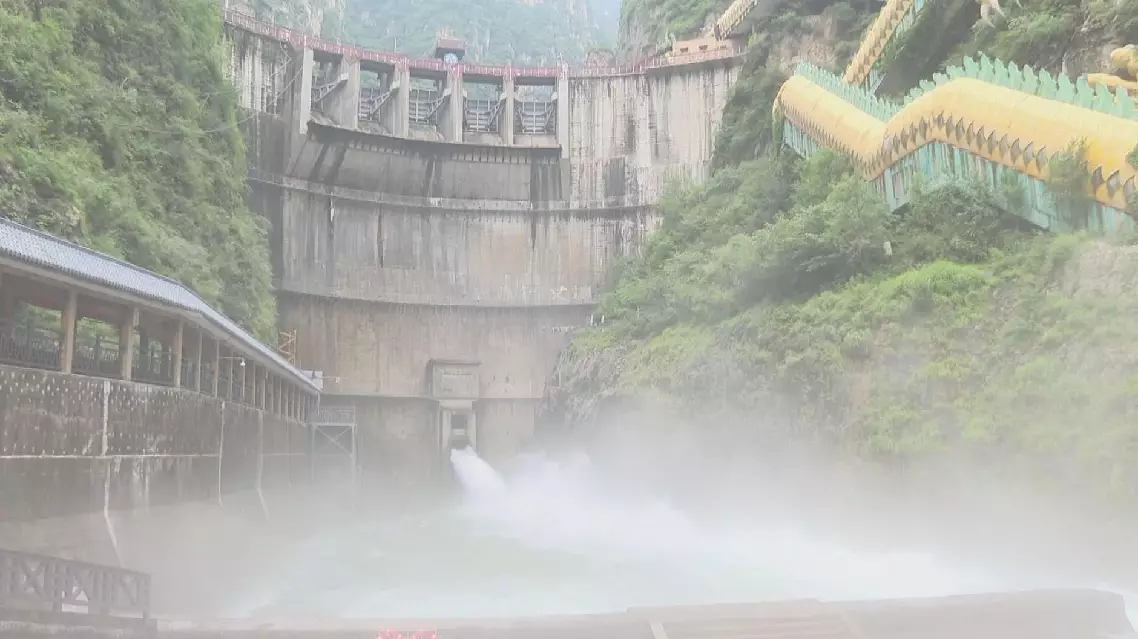
Beijing evacuates over 100,000 residents, conducts reservoir discharges amid Typhoon Bavi's flood threat