Foreign brands are deepening their integration into Shanghai's commercial landscape, driving the renewal of retail spaces and the upgrading of consumer experiences.
Shanghai's draw for international brands is supported by the city's strong business environment, vast consumer market and well-developed debut economy.
It also benefits from national-level support. China's Ministry of Commerce has introduced 15 measures to boost foreign investment, including support for foreign-invested retailers wanting to upgrade to urban commercial districts and launch global debuts.
Around the city, international brands have been opening their first-in-China flagship stores. These stores are offering services ranging across community retail, premium skincare and immersive dining.
Among them is German skincare brand Barbor, which opened its first flagship store in the Chinese mainland in June, launching a specialist skincare concept in Shanghai.
"Shanghai was a natural choice for our flagship store. Our concept brings together a boutique in the front and the spa in the back, creating seamless experience of retail and professional skin care. And we believe in immense potential of a Chinese market. The market is dynamic and highly competitive, it pushed us to elevate our brand and our service. We will continue to invest and bring more professional skin care expertise to the Chinese consumers. Our goal is straightforward: to grow together with the Chinese market for the long term," said Henryk Grund, Babor's vice president for sales.
Lindt, world-renowned chocolatier and confectionery company, opened its first flagship store in Shanghai on July 1, gaining an immediate warm welcome from the public.
"Shanghai is definitely the first spot that where we wanted to have our own store. We had queues in front of the stores, that means really the consumers in Shanghai, and also our chocolate classes that we all offer every now and then here in our stores have been booked out very fast. The Chinese market, it's such a booming market, such a growing market, an interesting market, the consumers love to experience new things. We have a long term commitment to the Chinese market. We will be definitely present in China and grow with the markets and with the Chinese population," said Michal Spiller, CEO of Lindt and Sprüngli Germany, who holds executive responsibility for the company's regional operations across Germany, Austria, Japan, and China.
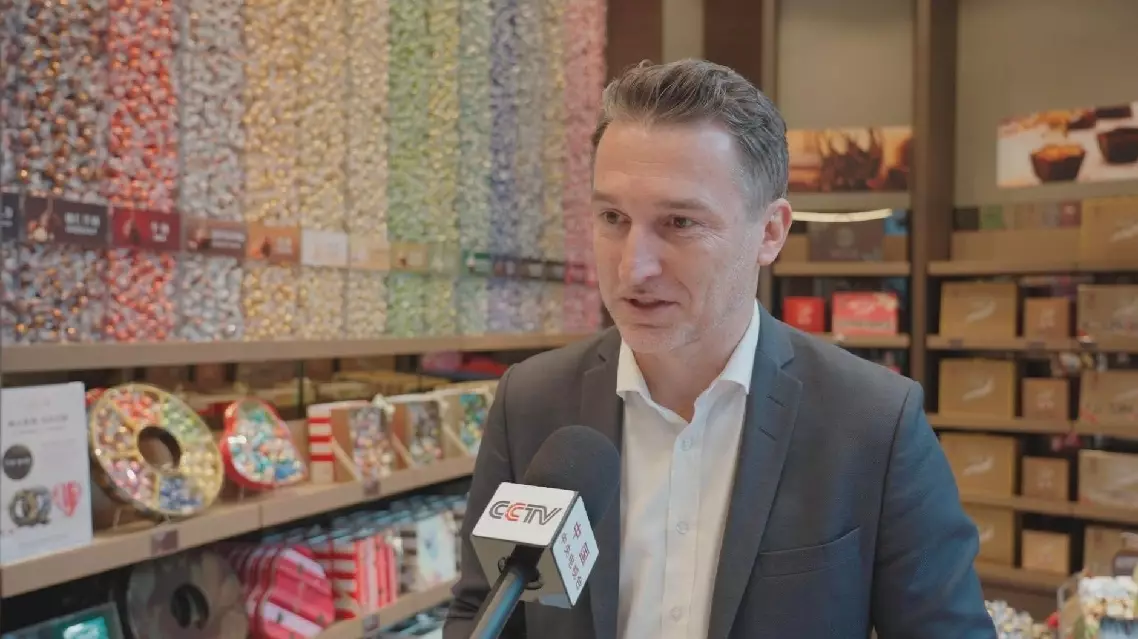
Foreign brands open flagship stores in Shanghai in bid to integrate into consumer market

Japan's attitude to nuclear weapons will impact the global peace landscape and denuclearization is the best option for a nation that has experienced horrors and tragedies of nuclear weapons, according to some ordinary Japanese in Tokyo.
"Because Japan is the world's only nuclear-bombed country, it is the only nation that fully understands the horrors and tragedies of nuclear weapons. For such a country to possess nuclear weapons, it means very different from what other countries would do the same. Furthermore, the Three Non-Nuclear Principles were born to prevent such tragedies from recurring. If Japan were to review them, I strongly feel that this would be a major event that would drastically alter the global peace landscape," said Hikaru Kusano, a stage playwright in Tokyo.
In August 1945, the United States dropped atomic bombs on Hiroshima and Nagasaki, respectively, accelerating the end of World War II.
Eighty-one years on, right-wing forces in Japan are gearing up to revive militarism.
The Japanese authorities are rebuilding Japan's war machine, seeking to revise the three non-nuclear principles, and pursuing nuclear sharing with the U.S. side, even the possession of nuclear weapons.
"I also believe we should not possess them. Because starting from sharing, we might gradually be forced to accept new rules beyond mere sharing. Moreover, I don't think we need to comply so obediently," said Notaki Saito, a salesman in Tokyo.
"I firmly believe Japan must never share nuclear weapons. If Japan shares nuclear weapons, it will pose a threat to other countries. This means other nations will feel threatened and seek nuclear weapons themselves. If every country in the world possesses nuclear weapons, the world will fall into a Cold War state as the United States and the Soviet Union once did. This will plunge the entire world into a state of tension. Never share nuclear weapons. I believe we must never do anything that endangers Japan and global security," said Kusano.
Kota Takahashi, a Nagasaki native shaped by childhood knowledge of the atomic bombing, asserts nuclear arms bring no benefit but harm.
"At the very least, it will bring no benefits. If anything, it will only bring negative consequences. I am from Nagasaki. I learned a lot about the atomic bombing and nuclear weapons when I was little. I believe I have a good understanding of their severity," he said.
"I firmly believe that possessing nuclear weapons can never bring security. The side targeted by nuclear weapons will suffer radioactive contamination. Therefore, I believe renouncing nuclear weapons is the most essential choice. I believe denuclearization should well be the best option," said Masahiro Sawa, a teacher in Tokyo.
Japanese citizens criticize government's attitude to nuclear weapons