Fire and emergency rescue personnel in Beijing have actively engaged in operations following heavy rainfall brought by Typhoon Bavi over the weekend, evacuating trapped residents and carrying out drainage work on urban roads.
Typhoon Bavi, the ninth typhoon of the year, made two landfalls in Zhejiang Province late Saturday on the coast of Yuhuan in Taizhou, then shortly after midnight on the coast of Yueqing in Wenzhou.
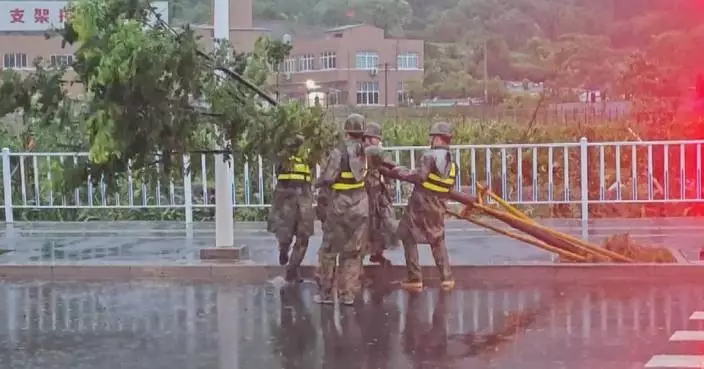
On Sunday morning, two elderly people in Tongzhou District were trapped in their flooded home due to heavy rain and were unable to move on their own. Upon receiving the call for help, firefighters immediately rushed to the scene. Wading through muddy water, they reached the elderly people, carried them on their backs and supported them closely, escorting them one by one across the flooded area. Finally, the two elderly people were successfully evacuated to a designated flood control shelter in the district.
Due to Typhoon Bavi and other factors, Beijing upgraded its rainstorm warning level to red for certain districts on Saturday, including Pinggu District. Currently, the rain clouds affecting Pinggu have weakened and moved away, and the red warning for the district was lifted.
China has a four-tier color-coded weather warning system, with red indicating the most severe weather, followed by orange, yellow and blue.
Around 09:00 Sunday, the water in some streets of Pinggu District was level with the curbs, reaching roughly the floor level of cars. A volunteer team composed of street staff, community grid workers, and Party members worked on site to clear the waterlogged roads and drain water from garages. By Sunday afternoon, the water had been drained from the roads.
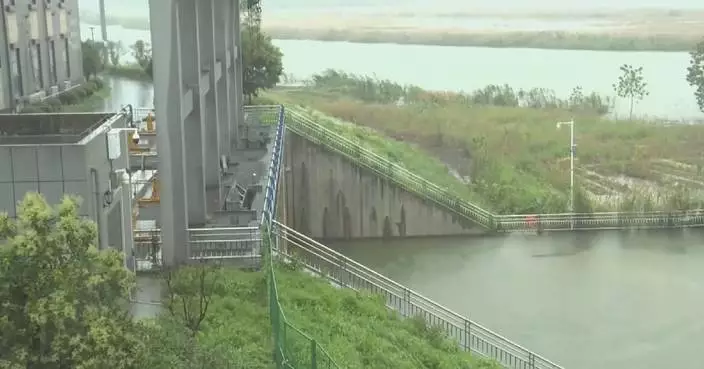
Around 23:00 on Saturday, Fangshan District was hit by heavy rainfall. According to the latest data from the local meteorological department in the early hours of Sunday, the maximum hourly rainfall during the period reached 50.6 mm.
Local water resources, public security and other departments responded quickly. Emergency rescue teams deployed large trucks to carry out drainage operations. Meanwhile, police personnel set up road signs, guardrails, and other facilities to alert passing vehicles to hazardous conditions.
"After 20 minutes of pumping, the water level on the road dropped from 20 centimeters to 5 centimeters. In about another half an hour, all the water on the road will be drained timely," said Li Xiqiao, deputy director of the Liangxiang drainage station under the Fangshan District Water Resources Bureau.
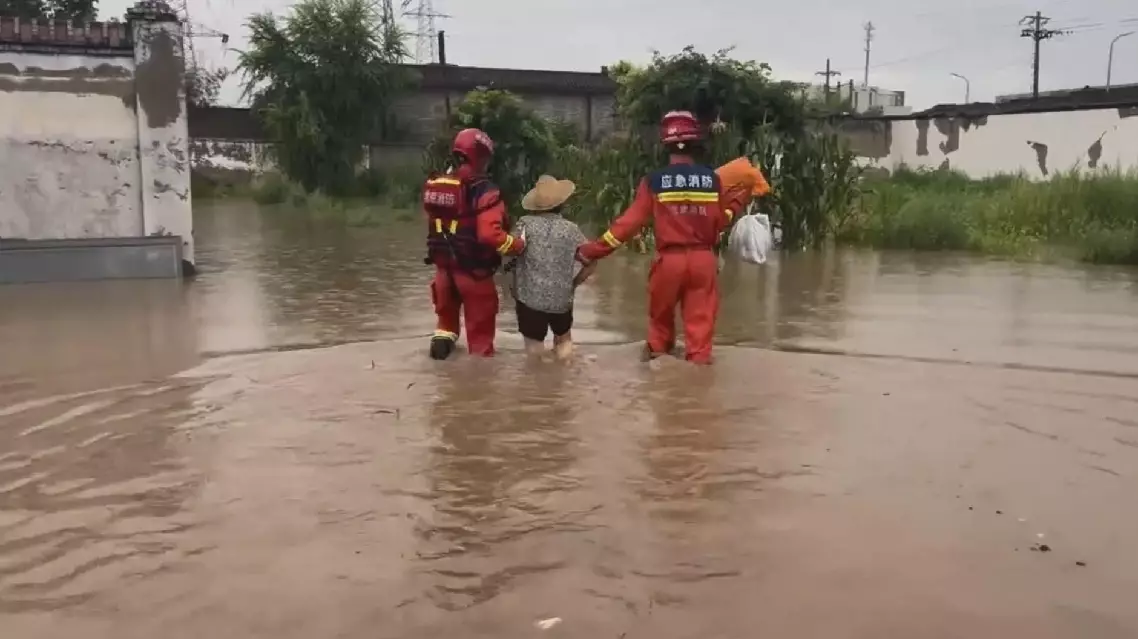
Beijing districts carry out flood relief, prevention efforts amid Typhoon Bavi threat
China strongly deplores and firmly opposes the statement made by Japan's Foreign Minister Toshimitsu Motegi 10 years after the so-called "2016 Arbitral Award on the South China Sea", a Chinese Foreign Ministry spokesperson said in Beijing on Sunday.
The statement blatantly endorses the illegal "award", attacks China's lawful claims and mischaracterizes Japan as a "legitimate stakeholder who uses the South China Sea", said the spokesperson.
Japan is not a party in the South China Sea and is in no position to pass judgment on China's territorial sovereignty and maritime rights and interests in the South China Sea. During World War II, Japan committed innumerable crimes that caused untold suffering on China and its people, including the illegal occupation of islands and reefs in the South China Sea, said the spokesperson.
Now decades later, Japan, in the name of a "stakeholder", is again attempting to meddle in the South China Sea. This reminds people of Japan's history of aggression and expansion, and heightens their vigilance against Japan's neo-militarism agenda, said the spokesperson.
China's sovereignty over the South China Sea islands and relevant rights and interests in the South China Sea were established in the long course of history, and are solidly grounded in the law. China's activities in the South China Sea are fully legitimate, lawful and beyond reproach. China's rights in the South China Sea can by no means be denied by the makeshift "arbitral tribunal", said the spokesperson.
In rendering the "award", the "arbitral tribunal" exceeded its authority and abused its jurisdiction. The "award" is naturally illegal, null and void, and has no binding force. It has gravely undermined the sanctity and authority of the United Nations Convention on the Law of the Sea, and dealt a serious blow to the international rule of law, said the spokesperson.
China neither accepts nor recognizes the "award", and opposes and will never accept any claim or action arising from it, the spokesperson added.
By turning a blind eye to the glaring flaws in the "award" while openly endorsing it, Japan has laid bare its double standards and hypocrisy, said the spokesperson.
What Japan really cares about is not the international rule of law, but meddling in and destabilizing the South China Sea. For some time, Japan has been stepping up collaboration with the Philippines and expanding its export of weapons and equipment to the country. Japan has also deployed military forces overseas on many occasions and launched offensive missiles. These actions go far beyond the scope of self-defense, break free from Japan's Constitution and norms in the international law, and challenge the post-war international order, said the spokesperson.
China urges Japan to stop smearing China, stop sowing disinformation in the South China Sea, and stop undermining peace and stability in the region, said the spokesperson, adding that China will continue firmly defending its territorial sovereignty and maritime rights and interests in the South China Sea.
Any attempts to challenge China's lawful rights and interests and undermine peace and stability in the South China Sea are doomed to fail, the spokesperson said.
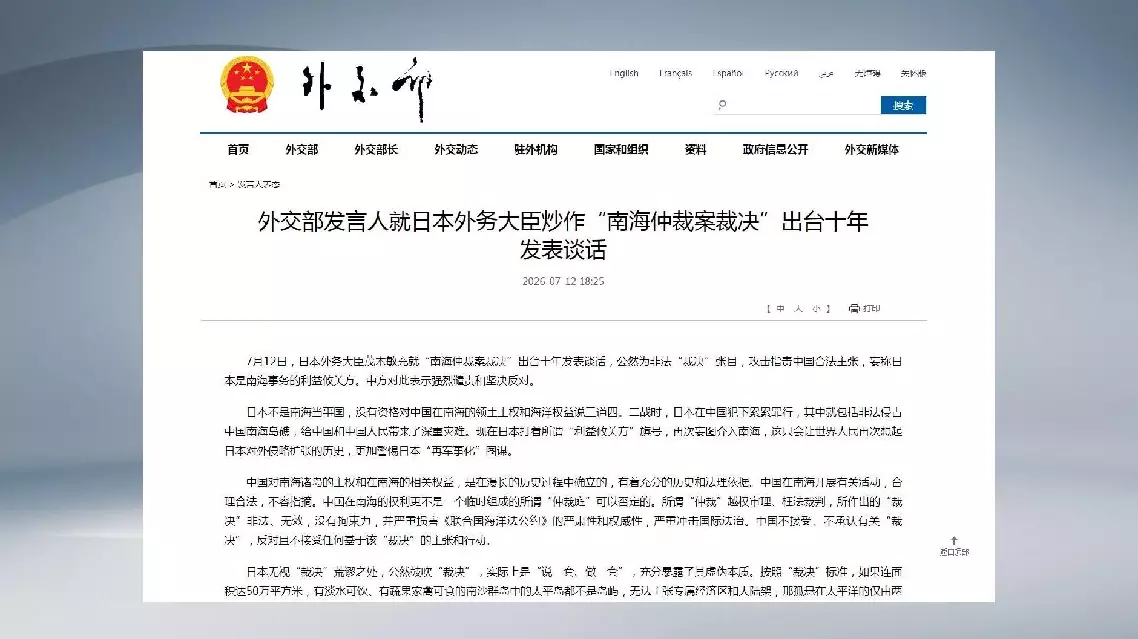
China strongly deplores Japanese FM's statement on South China Sea: spokesperson