SAN FRANCISCO--(BUSINESS WIRE)--Jul 13, 2026--
Universal Brain, a neurotechnology company pioneering objective brain-function measurement for mental health, today announced that the U.S. Food and Drug Administration (FDA) has granted 510(k) clearance for its proprietary UB ERP System, which measures brain function using electroencephalography (EEG) and event-related potentials (ERPs). The clearance marks an important step toward bringing objective, neuroscience-based brain function assessment into routine psychiatric care and clinical research.
This press release features multimedia. View the full release here: https://www.businesswire.com/news/home/20260713983260/en/
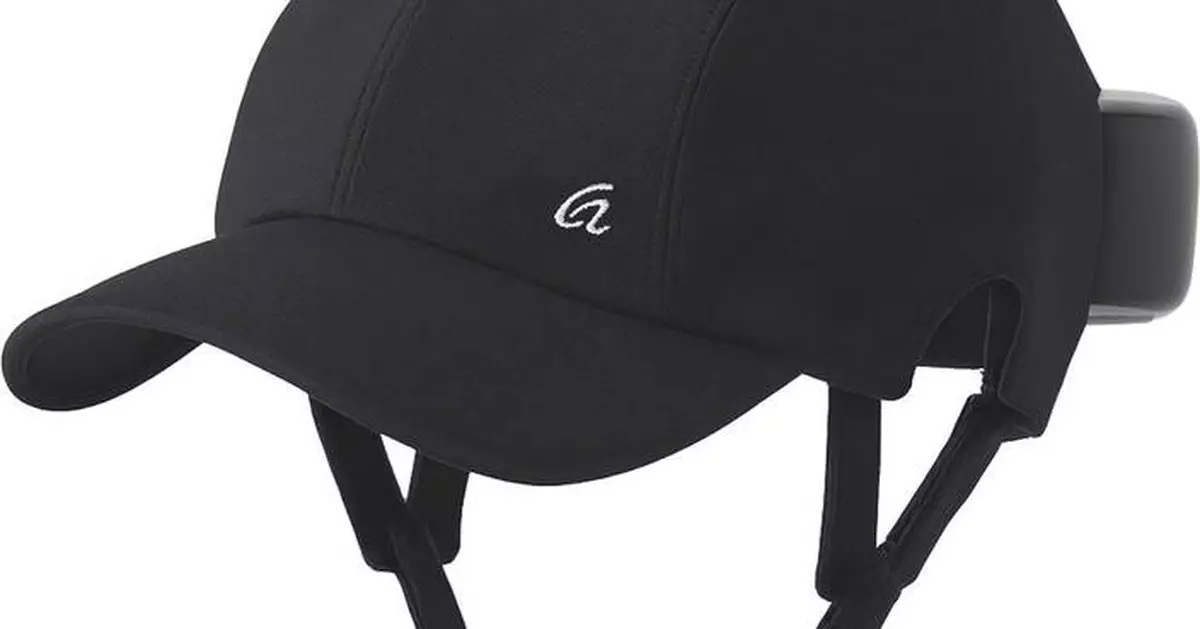
Psychiatry has historically relied on symptom-based evaluations and trial-and-error treatment selection, with few objective tools available to measure the underlying biology of mental illness. Universal Brain's platform combines a proprietary dry-electrode EEG wearable with its Neurotique™ ERP software to rapidly capture objective measures of brain function, reducing the time and complexity associated with conventional EEG systems. From device setup to analyzed results, clinicians can complete a single neural assessment in under five minutes.
“This FDA clearance represents a major milestone towards bringing objective brain function measurement into everyday psychiatric care,” said Kazu Okuda, M.D., Founder and CEO, Universal Brain. “By measuring neural responses across cognitive and emotional tasks, we can begin to understand how each patient's brain is functioning rather than relying solely on symptoms. Our vision is to enable more personalized treatment decisions and accelerate the development of better therapies for patients with mental health disorders.”
Universal Brain's platform enables clinicians and researchers to rapidly measure brain function in both clinical practice and psychiatric clinical trials. The Company is advancing the technology to support treatment selection, monitor therapeutic response and develop objective biomarkers that improve the precision of CNS drug development.
As part of this expansion for clinical use, the company has initiated two new studies to further validate its platform in patients with depression:
The company also announced that K. Luan Phan, Chair of Psychiatry at The Ohio State University College of Medicine, has joined Universal Brain as Chief Medical Advisor.
“Objective brain-function measurement has the potential to fundamentally change how we diagnose and treat psychiatric disorders,” said Dr. Phan. “Universal Brain’s rapid ERP platform brings rigorous neuroscience into everyday clinical practice in a way that has never been possible. With this technology, we can move beyond symptom checklists and begin to understand the underlying brain systems driving each patient’s illness, and how those systems change with treatment.”
Universal Brain has also secured a $2 million grant from the Japan Agency for Medical Research and Development as part of its “Next-Generation Medical Device Development Project,” supporting multi-site clinical studies and commercialization efforts.
The company is preparing for a commercial market launch later this year, with ongoing studies aimed at generating large-scale datasets to further advance its platform for predicting treatment response across a range of psychiatric interventions. Universal Brain aims to make rapid and reliable brain function assessment routine across psychiatric and neurological conditions.
About Universal Brain
Universal Brain is a neurotechnology company developing the first scalable platform for objective brain function measurement in psychiatry. Using rapid EEG acquisition and validated neuroscience-based assessments, the company’s platform enables rapid and reliable assessment of brain function. Universal Brain is working to support brain-based monitoring, patient classification (“neurotyping”), and personalized treatment decisions for psychiatric and neurological conditions. Founded in 2022, Universal Brain is headquartered in San Francisco. For more information, visit www.universal-brain.com.

Universal Brain EEG headset (Photo credit: Universal Brain)
Support for Israel is a key component of the religious identity of many Jewish adults ages 45 and older in the United States, but younger Jewish adults are more likely to prioritize other forms of connection, like celebrating Jewish holidays, according to a new AP-NORC poll.
That suggests the generational divide on Israel’s actions since the Hamas-led Oct. 7, 2023, attack that triggered the war in Gaza extends beyond politics to religious identity.
“I pray for people in the land of Israel. I don’t need to pray for the state,” said Cameron Bernstein, a 27-year-old medical student in New Orleans. She was raised with strong ties to Israel, where she celebrated her bat mitzvah, but said that now “it doesn’t play a role in my life, more than another country with people I love.”
The survey of 1,022 Jewish adults from The Associated Press-NORC Center for Public Affairs Research shows that this split on support for Israel is particularly apparent among adults like her who identify as religiously Jewish. Jewish adults who are religiously unaffiliated but identify as Jewish in other ways tend to have less of an emotional connection to Israel in general.
Among the religiously Jewish adults — who make up 68% of Jewish adults overall — about 6 in 10 say that being Jewish is “extremely” or “very” important in their life, regardless of their age.
But about half of older religious Jewish adults say that supporting Israel is “extremely” or “very” important for their Jewish identity, similar to the percentage who say that about celebrating Jewish holidays. By contrast, only about 4 in 10 younger religious Jewish adults emphasize support for Israel, while about 7 in 10 say celebrating Jewish holidays is highly important.
Susan Boyer, 72, from Southern California, equates supporting Israel with supporting the right of the Jewish people to have a homeland in the Middle East.
Like many other Jewish Americans, the retiree believes Israel is an essential refuge against the possible repetition of large-scale massacres of Jewish people, like the Holocaust, especially as concern about antisemitism rises among Jewish adults.
“I’ve been defending myself as a Jew since I was a child ... getting mugged by girls in my classes for being a Jew,” Boyer said. “It’s invasive into your daily living that you have to constantly, constantly be defending yourself as a Jew, constantly making sure that nobody is redefining you or nobody is like insulting your land.”
To Ari Pollack, a 30-year-old arts fundraiser in Wisconsin, Israel’s military operations — especially in the last few years — provide fodder for antisemitism and thus make everywhere less safe for Jews.
“I’m personally pretty opposed to basically everything Israel’s doing these days,” said Pollack, who grew up attending religious school. “A source of a lot of frustration that I have for the Jewish establishment is that sort of dogmatic teaching of pro-Israel ideas that I’ve had to unlearn as an adult. And it’s part of what’s kept me away from, you know, attending regular synagogue services.”
Like about 3 in 10 religious Jewish adults under 45, Pollack says that Israel has committed genocide during the war in Gaza, a charge that Israel has vehemently denied. That’s compared with about 2 in 10 Jewish adults ages 45 and older.
The poll suggests that other elements of Judaism remain important to many younger Jewish adults. Americans under 45 who identify as religiously Jewish are more likely than older Jewish adults to say that marking or celebrating Shabbat or avoiding certain foods, like pork or shellfish, are highly important to their Jewish identity.
Phoebe Wapnitsky, a 32-year-old in Connecticut, also strongly opposes Israel’s military actions, which she perceives as unaligned with Jewish values.
“Standing against oppression, promoting social justice — those are the roles that Judaism plays in my life,” she said, adding that she felt disconnected from Israel even before the Oct. 7 attack.
Brian Ebarb, a 47-year-old attorney in Louisiana, also says his Jewish identity was about “action and community” — but those include supporting Israel.
“When the government makes mistakes, it should be criticized,” he said, but added that shouldn’t become an excuse for attacking an entire people. “The existence of the state of Israel is so precarious that we have to be careful and not allow criticism of Israel to become criticism of Jews worldwide.”
Associated Press religion coverage receives support through the AP’s collaboration with The Conversation US, with funding from Lilly Endowment Inc. The AP is solely responsible for this content.
The AP-NORC poll of 3,040 adults was conducted June 11-17 using a sample drawn from NORC’s probability-based AmeriSpeak Panel, which is designed to be representative of the U.S. population. The poll included interviews with 1,022 Jewish adults. The margin of sampling error for adults overall is plus or minus 2.8 percentage points and the margin of sampling error for Jewish adults is plus or minus 5 percentage points.

FILE - People hold Israeli flags as they hug during Shabbat Services at The Sinai Temple in Los Angeles, Oct. 14, 2023. (AP Photo/Damian Dovarganes, File)

FILE - A family with Israel flags attends Shabbat services at Temple Beth Sholom in Miami Beach, Fla., Oct. 13, 2023. (AP Photo/Giovanna Dell'Orto, File)