NEW YORK (AP) — The WNBA season is at its midway point and no team has been more of a mystery than the New York Liberty.
The Liberty have proven they can beat the elite teams in the league with victories over Minnesota and Las Vegas. New York became the first team to win the Commissioner's Cup championship twice with a victory over Las Vegas this month.
They've also shown inconsistencies with losses to Seattle, Toronto and Portland. New York has lost three straight games.
Injuries have caused problems again for New York as prized free agent acquisition Satou Sabally has been limited to 13 games so far. She hasn't played since June 25 while dealing with another concussion. The Liberty also missed star guard Sabrina Ionescu for the early part of the season first with an ankle injury and then a back issue.
Betnijah Laney-Hamilton has been working her way back from a knee injury that kept her out all of last season.
The Liberty sit at 13-11 and are currently in seventh place in the standings. It's a spot they aren't accustomed to and one that they didn't expect to be in.
New York can take some solace that Las Vegas was in a similar position last season, hovering at .500 before winning 16 consecutive games to close out the regular season last year en route to their third WNBA championship.
The Golden State Valkyries have taken over the top spot in the power poll for the first time in the franchise's two-year history. Golden State went 3-0 last week with road wins in Washington, Toronto and Connecticut. Minnesota fell to second. The Lynx were followed by Dallas, Las Vegas and Indiana. New York, Atlanta and Washington were next. Toronto was ninth and Los Angeles 10th. Portland, Chicago, Phoenix, Seattle and Connecticut rounded out the poll.
Los Angeles has been struggling this season and parted ways with general manager Raegan Pebley on Sunday. Pebley was hired as GM in January 2024 without any previous executive experience. The Sparks were 39-66 during her tenure, which included firing coach Curt Miller in September 2024 after two seasons. He was succeeded by Lynne Roberts, who went 21-23 in her first season last year.
The Sparks currently are 10-11, including consecutive wins over the Indiana Fever and Chicago Sky. They are ninth in the WNBA standings and have not made the playoffs since 2020. The franchise won league championships in 2001, 2002 and 2016.
Paige Bueckers of Dallas was the AP player of the week. The guard averaged 23.7 points, 7.7 assists and 6.3 rebounds to help the Wings win all three of their games last week. Other players receiving votes included Kelsey Mitchell of Indiana and Janelle Salaun of Golden State.
Minnesota coach Cheryl Reeve secured the most regular-season wins in WNBA history with a victory over the Connecticut Sun last week. She broke a tie with Mike Thibault atop the all-time wins list. Reeve had said it was a distraction to her team leading up to the record-breaking win, which took three tries to achieve.
Golden State at Indiana, Wednesday. The Valkyries will close out their road trip with a stop in Indiana to face the Fever, who are returning home after a 3-1 west coast swing. Indiana swept a pair of games from Las Vegas on the trip.
AP WNBA: https://apnews.com/hub/wnba-basketball

Toronto Tempo's Marina Mabrey (3) defends against New York Liberty's Breanna Stewart (30) as she drives to the basket during the second half of a WNBA basketball game in Montreal, on Sunday, July 12, 2026. (Graham Hughes/The Canadian Press via AP)

Toronto Tempo's Nyara Sabally (8) defends against New York Liberty's Breanna Stewart (30) during the second half of a WNBA basketball game in Montreal, on Sunday, July 12, 2026. (Graham Hughes/The Canadian Press via AP)
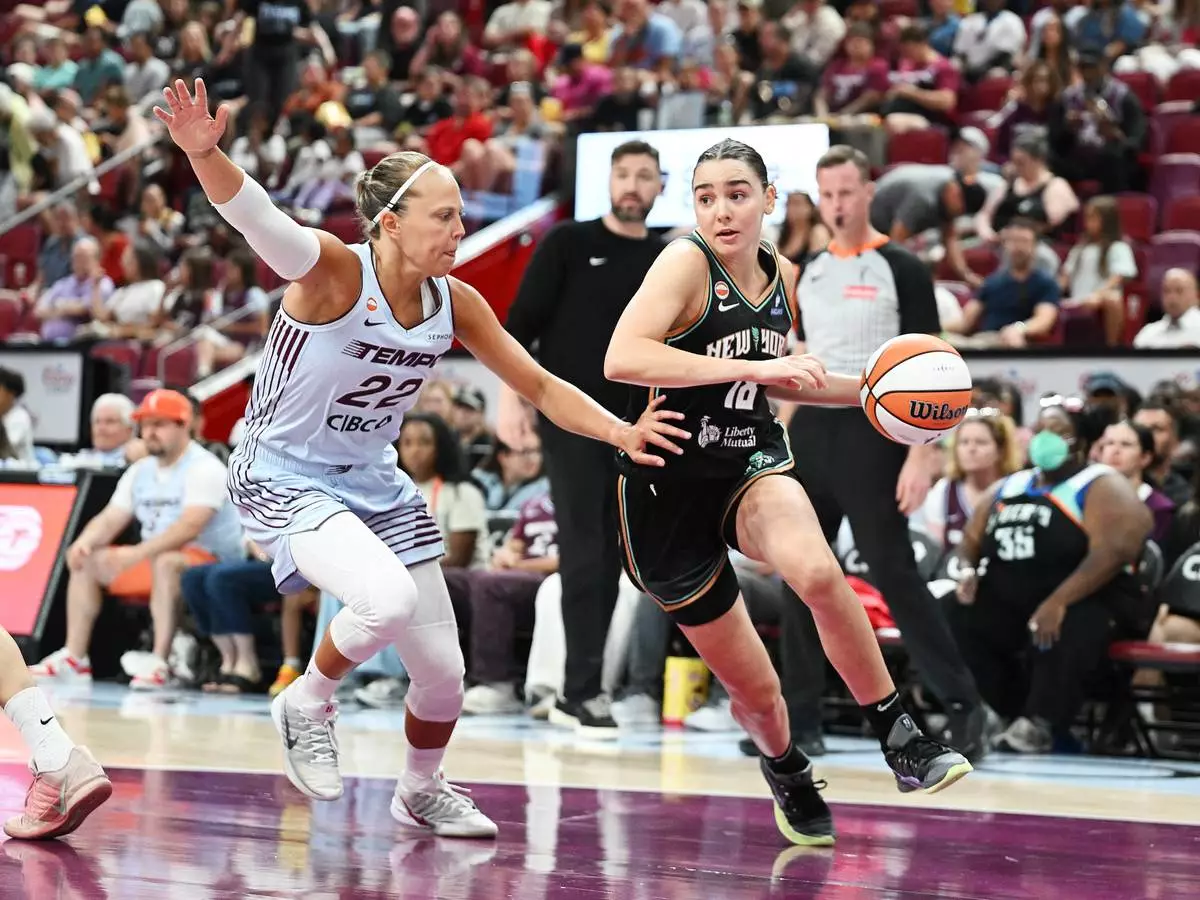
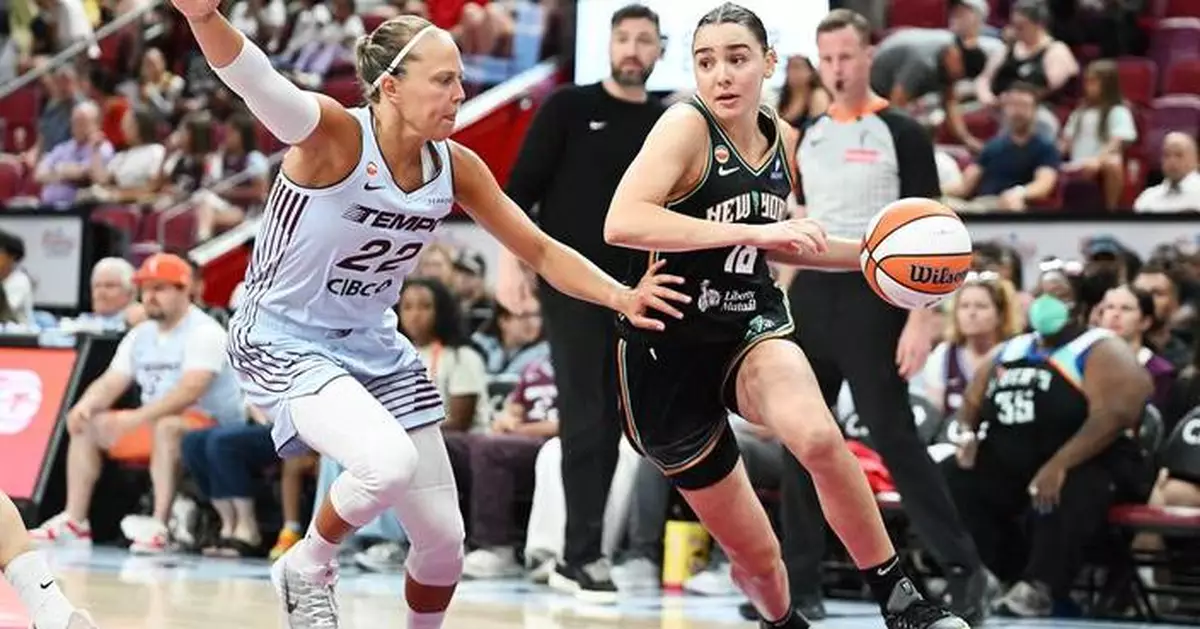
Toronto Tempo's Julie Allemand (22) defends against New York Liberty's Pauline Astier (18) during the second half of a WNBA basketball game in Montreal, on Sunday, July 12, 2026. (Graham Hughes/The Canadian Press via AP)
SALT LAKE CITY (AP) — Revisiting actions from his first term that were reversed, President Donald Trump announced Monday that he will scale back the Bears Ears and Grand Staircase-Escalante national monuments in Utah.
The Republican’s actions undo proclamations from his predecessors who deemed the sites worthy of preservation under the Antiquities Act, a 1906 law that gives presidents power to protect areas of cultural, historic or scientific interest.
Trump made similar moves during his first term, but many were reversed by his successor, President Joe Biden.
The back-and-forth underscores how national monuments have become a flashpoint over the management of public lands. Trump is not the first president to reduce the size of monuments.
Here’s a look at U.S. national monuments and presidents who have created or reshaped them:
Trump made only a handful of Antiquities Act proclamations during his first term, including two that reduced the size of Bears Ears and Grand Staircase-Escalante monuments. The sprawling Utah monuments include stunning natural features and sites sacred to some Native American tribes. Grand Staircase-Escalante also holds large coal reserves, while the Bears Ears area has uranium.
Trump also dedicated the 340-acre (138-hectare) Camp Nelson National Monument in Kentucky — a Union Army hospital and recruiting center for African American troops during the Civil War.
Biden’s first use of the act was to restore the size of Bears Ears and Grand Staircase Escalante. He cited their spiritual, cultural and prehistoric legacy.
Biden established 10 new monuments, among them the site of a 1908 race riot in Springfield, Illinois, and a monument honoring Mamie Till-Mobley and her son, Emmett, a Black teenager from Chicago who was tortured and killed in 1955 after he was accused of whistling at a white woman in Mississippi. He also established monuments in the mountains of California and on a sacred Native American site near the Grand Canyon.
Proponents of the reductions say the protective boundaries stretch too far and hinder mining for essential minerals. Trump framed the move as giving back land to the people during a signing event at the White House on Monday.
The order was applauded by Utah officials, who have long argued that the state should be in charge of managing its own lands.
“The question has never been whether to protect them, but how to protect them best,” said Gov. Spencer Cox, a Republican. His office assured the lands left out of the modified boundaries “remain protected under existing federal and state law."
But some conservationists and citizens of local tribal nations warned the order opens the door to mining interests while disrespecting tribal co-stewardship. Bears Ears is jointly managed by an agreement between tribal nations and federal agencies.
“Our connection to this place cannot be erased by the stroke of a pen,” said Davina Smith-Idjesa, a citizen of the Navajo Nation and co-chair of the Bears Ears Inter-Tribal Coalition.
Environmental groups have argued the Antiquities Act is a one-way road that allows presidents to create but not undo monuments. But there’s a history of presidents taking actions similar to Trump’s.
Since 1912, presidents have issued more than a dozen proclamations that diminished monuments, according to a National Park Service database.
In Washington state, Woodrow Wilson reduced the acreage of Mount Olympus National Park — now Olympic National Park — by roughly half. Harry Truman did the same for Santa Rosa Island National Monument.
Dwight Eisenhower was most active in undoing proclamations of his predecessors as he diminished six monuments, including Arches in Utah, Great Sand Dunes in Colorado and Glacier Bay in Alaska, which have all since become national parks.
Unlike national parks, which are established by Congress, most of the more than 100 national monuments were created by presidents.
They’re governed by one or more agencies such as the National Park Service, Bureau of Land Management or National Oceanic and Atmospheric Administration.
A designation provides sweeping protections not just for significant geological features or artifacts but also for the surrounding landscape, banning drilling, mining and new construction. Backers downsizing the Utah monuments said the protective boundaries stretched too far and hindered mining for critical minerals.
The U.S. Forest Service was established in 1905 and has jurisdiction over some 300,000 square miles (775,000 square kilometers) of land, including 154 national forests and 20 national grasslands in 43 states.
Under federal law, the forest lands are managed for renewable resources — including timber, clean water, wildlife habitat, forage for livestock and recreation. But many forests overlay valuable minerals and parcels can be leased by private companies for the extraction of nonrenewable resources such as oil, gas and coal.
Some forests contain specially designated wilderness areas where human activities are curtailed. Even bicycles and hang gliders aren’t allowed because they are mechanical.
National parks have some of the most stringent rules against development under a 1916 law known as the Organic Act. The law says the fundamental purpose of the parks is to conserve their scenery, nature, history and wildlife.
President Theodore Roosevelt signed the Antiquities Act after a generation of lobbying by educators and scientists who wanted to protect sites from commercial artifact looting and haphazard collecting by individuals. It was the first law in the U.S. to establish legal protections for cultural and natural resources of historic or scientific interest on federal lands.
On Sept. 24, 1906, Roosevelt used it to designate a national monument at Devils Tower — a giant rock butte in eastern Wyoming that later gained fame as the focus of the movie “Close Encounters of the Third Kind.”
For Roosevelt and others, science was behind safeguarding Devils Tower. Scientists have long theorized about how once-molten lava cooled and formed the massive columns that make up the geologic wonder. Narratives among Native American tribes, who still conduct ceremonies there, detail its formation.
All but three presidents have used the act to protect unique landscapes and cultural resources.
Brown reported from Billings, Mont.
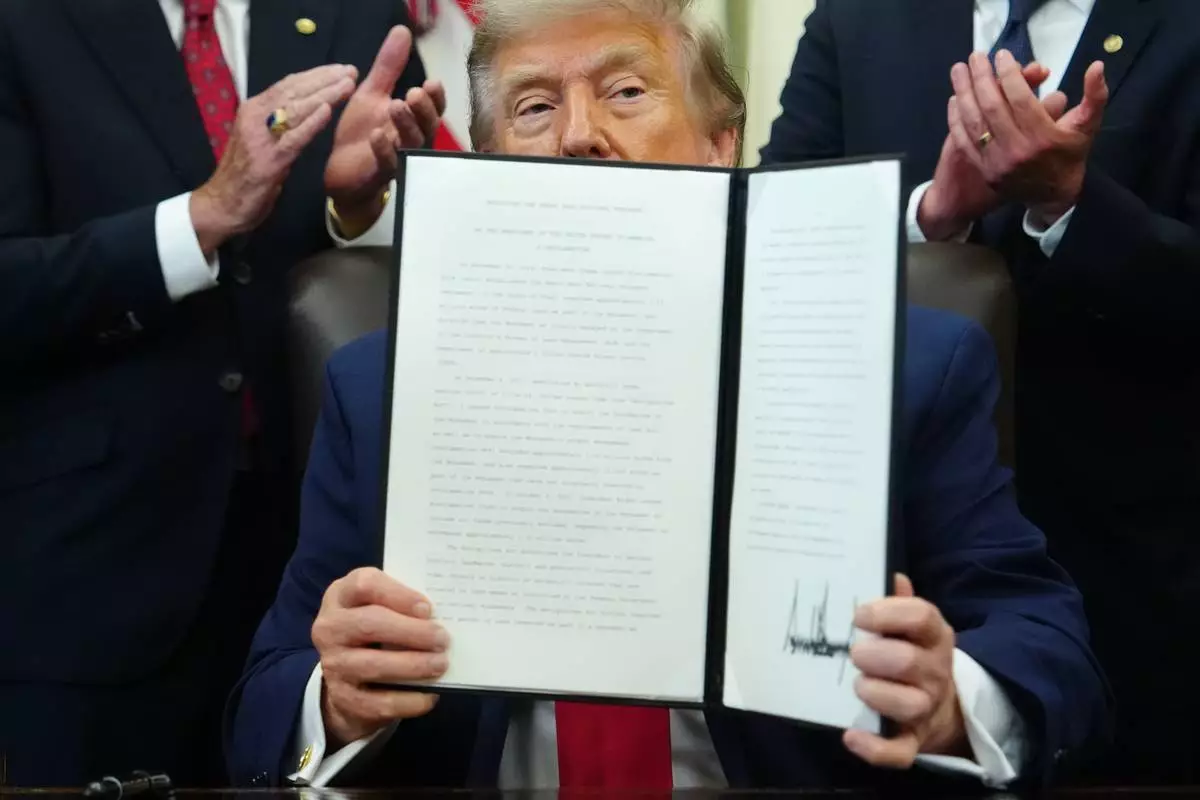
President Donald Trump holds an executive order modifying the Bears Ears National Monument in the Oval Office of the White House, Monday, July 13, 2026, in Washington. (AP Photo/Julia Demaree Nikhinson)
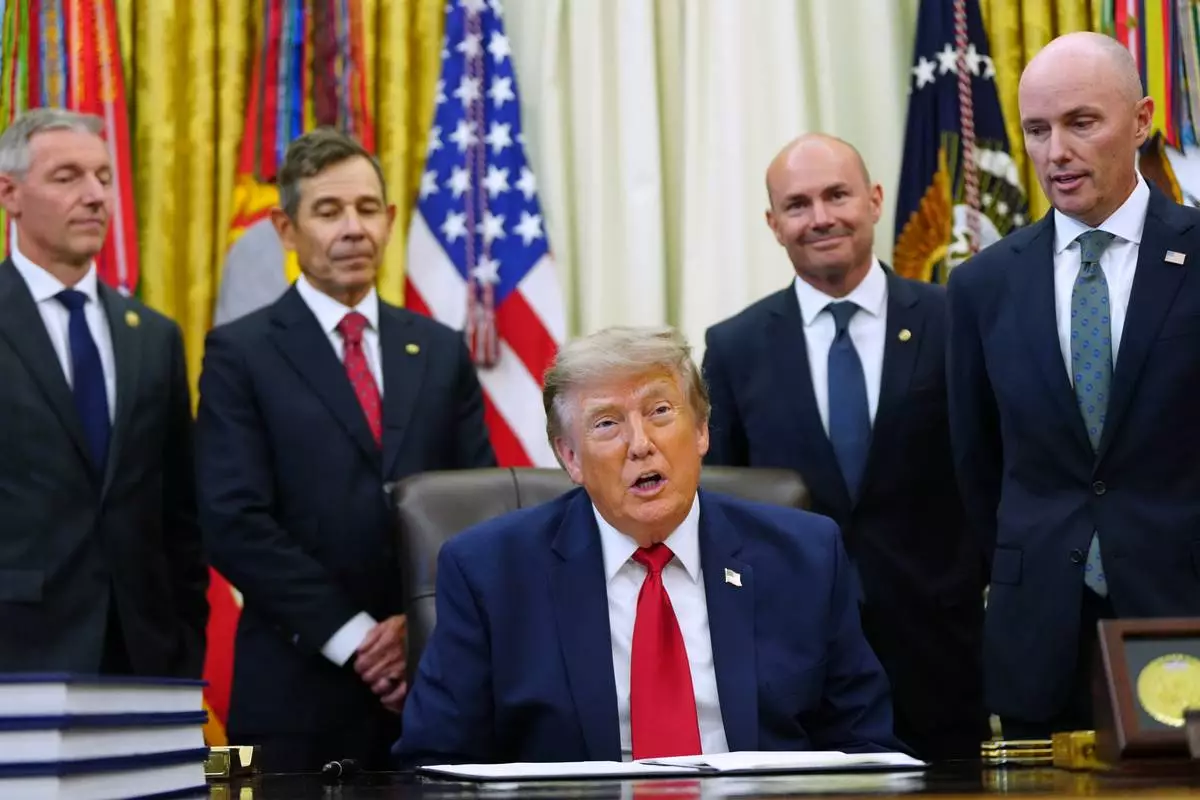
President Donald Trump speaks before signing executive orders modifying the Grand Staircase-Escalante National Monument and the Bears Ears National Monument in the Oval Office of the White House, Monday, July 13, 2026, in Washington. (AP Photo/Julia Demaree Nikhinson)
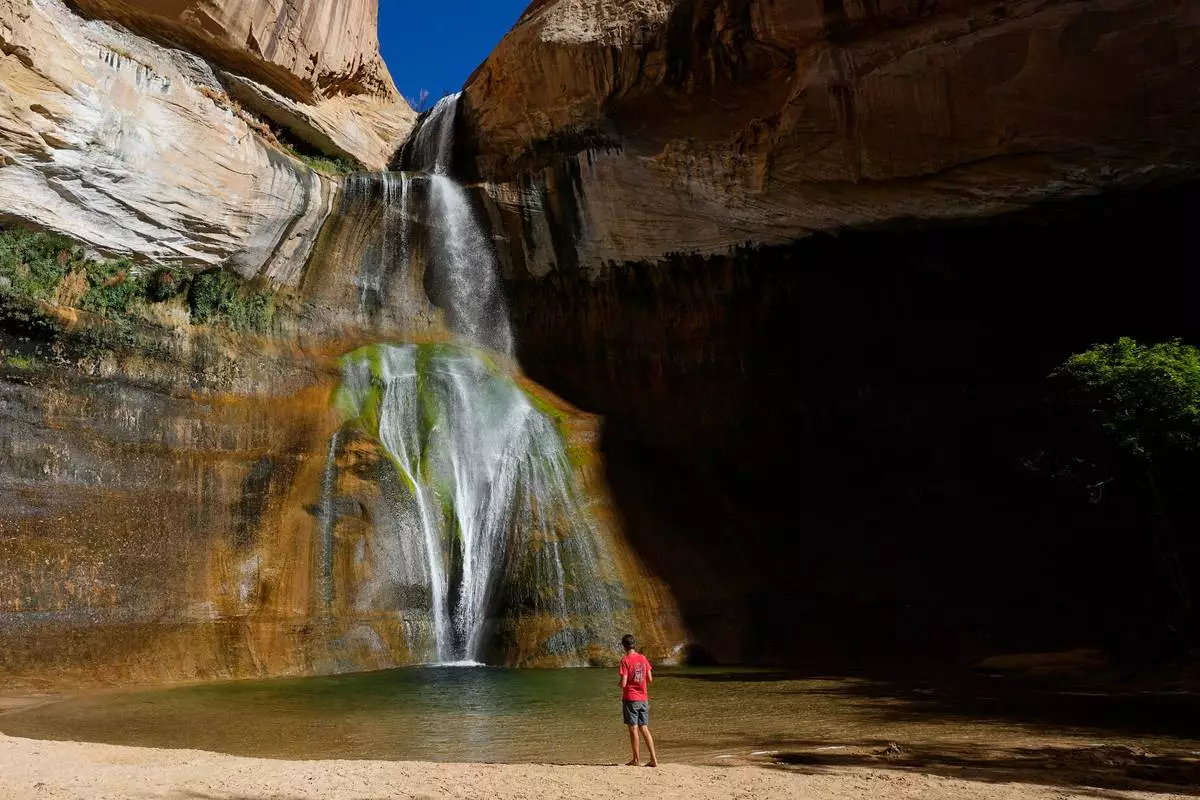
FILE - A hiker watches a waterfall at Lower Calf Creek Falls at Grand Staircase Escalante National Monument, July 12, 2023, in Escalante, Utah. (AP Photo/Ross D. Franklin, File)
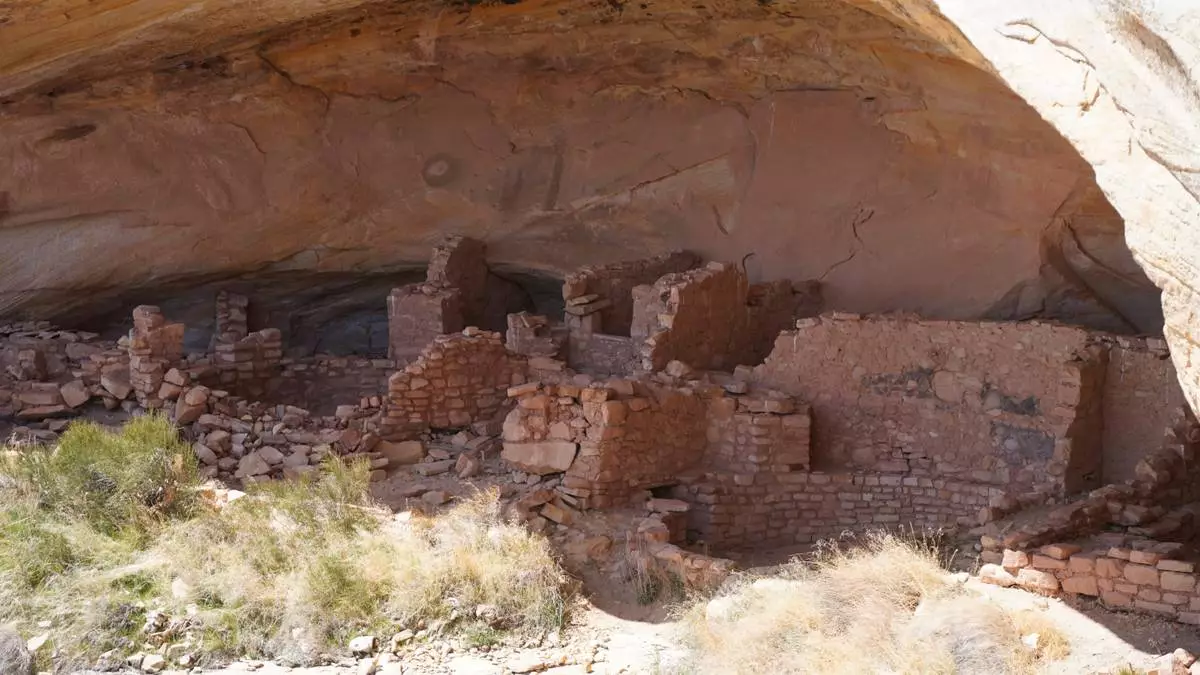
FILE - A section of ancient dwellings are seen during U.S. Interior Secretary Deb Haaland's tour along the Butler Wash trail at Bears Ears National Monument, April 8, 2021, near Blanding, Utah. (AP Photo/Rick Bowmer, Pool, File)