LOUISVILLE, Ky.--(BUSINESS WIRE)--Jul 13, 2026--
Brown-Forman Corporation (NYSE: BFA, BFB) today announced Lawson Whiting has decided to retire from his role as President and Chief Executive Officer, effective upon the appointment of a successor. The Brown-Forman Board of Directors has initiated a search pursuant to its succession process that will consider internal and external candidates. The process will be led by the Corporate Governance and Nominating Committee, which is chaired by Tracy Skeans. Whiting will remain available to serve in an advisory capacity for a period of time following the appointment of a successor to ensure business continuity and support a smooth handover.
This press release features multimedia. View the full release here: https://www.businesswire.com/news/home/20260713971184/en/
“On behalf of the Board and the Brown family, I want to thank Lawson for his nearly 30 years of dedication to Brown-Forman,” said Marshall B. Farrer, Chairman of Brown-Forman. “Lawson has been a steadfast steward of founder George Garvin Brown’s vision – leading this company through an era of macro challenges and change with a clear and consistent vision for building the most premium portfolio in the industry and ensuring there was ‘Nothing Better in the Market.’ Under Lawson’s leadership, Jack Daniel's extended its presence into new international markets and categories, Woodford Reserve grew into the world’s leading super-premium American whiskey, and our founding brand, Old Forester, tripled in volume and increased net sales six-fold over the last decade. Today, Brown-Forman’s portfolio is one of the most respected in the global spirits industry. The Board is deeply grateful for his leadership and his commitment to the people and brands of Brown-Forman.”
Farrer added, “We appreciate Lawson giving us ample notice of his decision to retire, as it allows the Board the opportunity to conduct a robust review of both internal and external talent. As we begin our search pursuant to our succession process, we do so with confidence in our business, our people, and our opportunities to create long-term value for all Brown-Forman stakeholders. Lawson will continue to advance our strategic and operational priorities, including expanding our geographic footprint, building brands that resonate with consumers, and enhancing operational efficiency, while the Board conducts the succession process.”
“It has been the privilege of a lifetime to lead Brown-Forman,” said Lawson Whiting, President and Chief Executive Officer of Brown-Forman. “From my earliest days with the company to my time as CEO, my tenure has been defined by the extraordinary people I have worked alongside. We are entering this transition from a position of strength. Brown-Forman has principled leadership, a foundation of iconic brands, and a global team with immense depth and talent. I have every confidence that the succession process will surface the right leader for Brown-Forman’s next generation of growth, and I look forward to supporting a seamless handoff that ensures our momentum never wavers.”
Wolf Pen Branch, which represents a controlling interest in Brown-Forman said, “We appreciate Lawson’s leadership and three decades of dedicated service to Brown-Forman. We are confident in the competitive position and financial strength of the business and in the Board's process underway to identify the next CEO to capitalize on growth opportunities for Brown-Forman.”
Brown-Forman also reiterated today its fiscal 2027 outlook as disclosed on June 4, 2026.
About Brown-Forman Corporation:
Brown-Forman Corporation is a global leader in the spirits industry, responsibly building exceptional beverage alcohol brands for more than 155 years. Headquartered in Louisville, Kentucky, we are guided by our founding promise, “Nothing Better in the Market.” Our premium portfolio includes the Jack Daniel’s Family of Brands, Woodford Reserve, Old Forester, New Mix, el Jimador, Herradura, The Glendronach, Glenglassaugh, Benriach, Diplomático Rum, Gin Mare, Fords Gin, Chambord, and Slane. With approximately 4,900 employees worldwide, we proudly share our passion for fine-quality spirits in more than 170 countries. Learn more at brown-forman.com and stay connected with us on LinkedIn, Instagram, and X.
Forward Looking Statements:
This press release contains statements, estimates, and projections that are “forward-looking statements” as defined under U.S. federal securities laws. Words such as “aim,” “ambition,” “anticipate,” “aspire,” “believe,” “can,” “continue,” “could,” “envision,” “estimate,” “expect,” “expectation,” “intend,” “may,” “might,” “plan,” “potential,” “project,” “pursue,” “see,” “seek,” “should,” “will,” “would,” and similar words indicate forward-looking statements, which speak only as of the date we make them. Except as required by law, we do not intend to update or revise any forward-looking statement, whether as a result of new information, future events, or otherwise. By their nature, forward-looking statements involve risks, uncertainties, and other factors (many beyond our control) that could cause our actual results to differ materially from those expressed in or implied by the forward-looking statements. These risks and uncertainties include, but are not limited to:
For further information on these and other risks, please refer to our public filings, including the “Risk Factors” section of our Annual Report on Form 10-K and Quarterly Reports on Form 10-Q filed with the Securities and Exchange Commission.
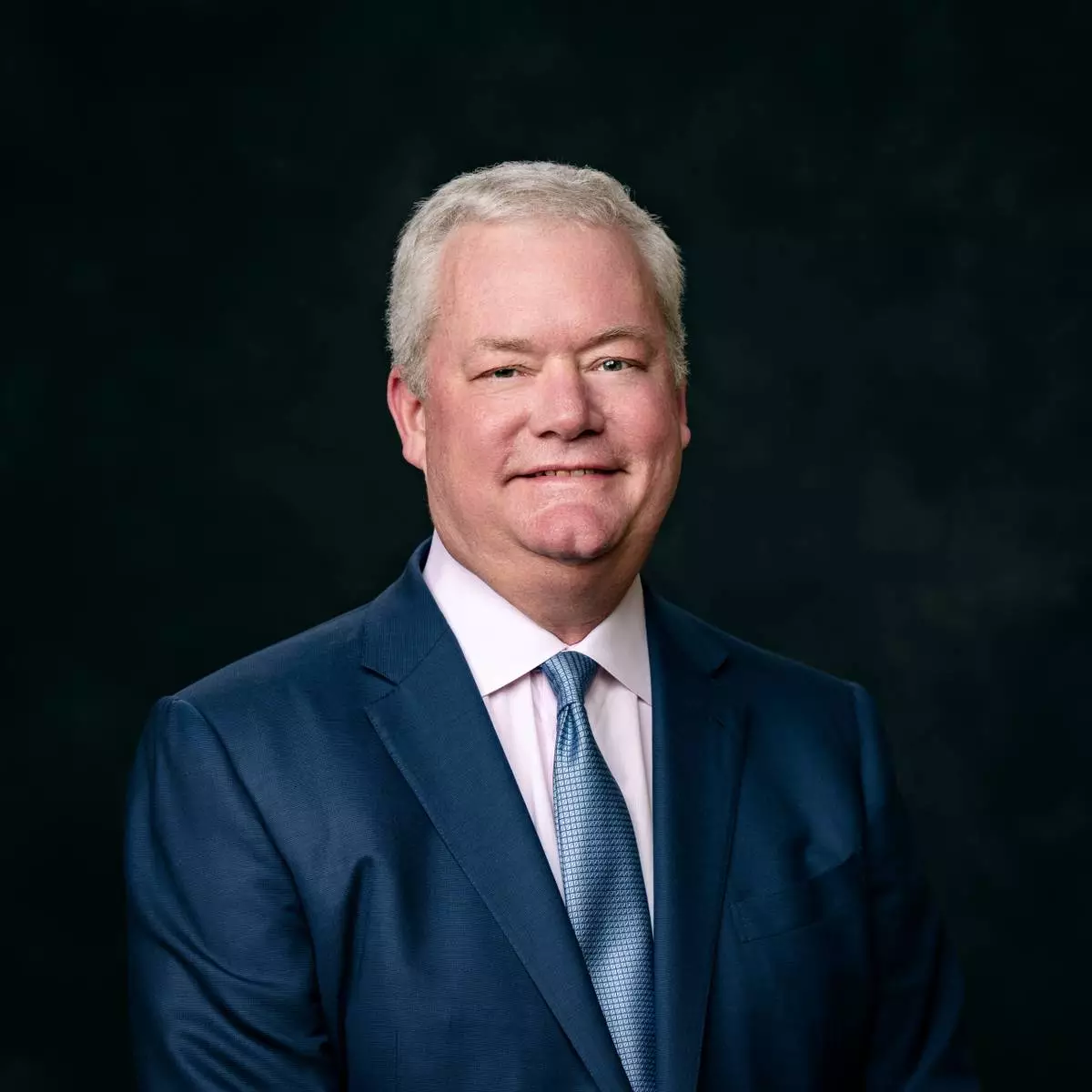
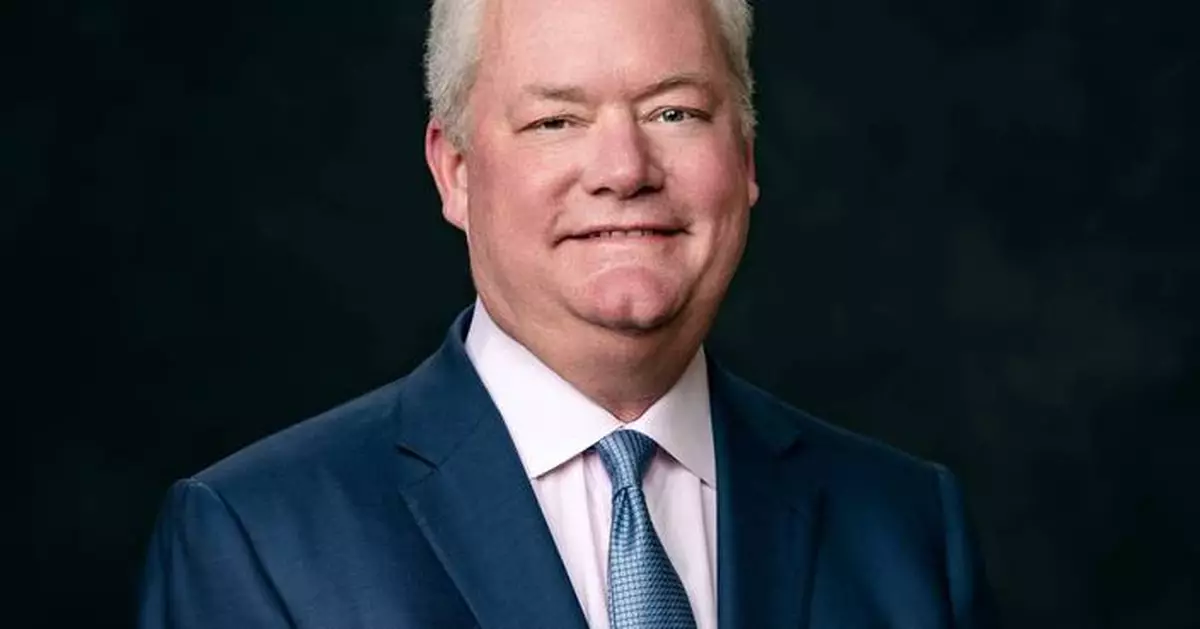
After nearly 30 years with Brown-Forman, Lawson Whiting has decided to retire from his role as President and Chief Executive Officer, effective upon the appointment of a successor.
SALT LAKE CITY (AP) — Revisiting actions from his first term that were reversed, President Donald Trump announced Monday that he will scale back the Bears Ears and Grand Staircase-Escalante national monuments in Utah.
The Republican’s actions undo proclamations from his predecessors who deemed the sites worthy of preservation under the Antiquities Act, a 1906 law that gives presidents power to protect areas of cultural, historic or scientific interest.
Trump made similar moves during his first term, but many were reversed by his successor, President Joe Biden.
The back-and-forth underscores how national monuments have become a flashpoint over the management of public lands. Trump is not the first president to reduce the size of monuments.
Here’s a look at U.S. national monuments and presidents who have created or reshaped them:
Trump made only a handful of Antiquities Act proclamations during his first term, including two that reduced the size of Bears Ears and Grand Staircase-Escalante monuments. The sprawling Utah monuments include stunning natural features and sites sacred to some Native American tribes. Grand Staircase-Escalante also holds large coal reserves, while the Bears Ears area has uranium.
Trump also dedicated the 340-acre (138-hectare) Camp Nelson National Monument in Kentucky — a Union Army hospital and recruiting center for African American troops during the Civil War.
Biden’s first use of the act was to restore the size of Bears Ears and Grand Staircase Escalante. He cited their spiritual, cultural and prehistoric legacy.
Biden established 10 new monuments, among them the site of a 1908 race riot in Springfield, Illinois, and a monument honoring Mamie Till-Mobley and her son, Emmett, a Black teenager from Chicago who was tortured and killed in 1955 after he was accused of whistling at a white woman in Mississippi. He also established monuments in the mountains of California and on a sacred Native American site near the Grand Canyon.
Proponents of the reductions say the protective boundaries stretch too far and hinder mining for essential minerals. Trump framed the move as giving back land to the people during a signing event at the White House on Monday.
The order was applauded by Utah officials, who have long argued that the state should be in charge of managing its own lands.
“The question has never been whether to protect them, but how to protect them best,” said Gov. Spencer Cox, a Republican. His office assured the lands left out of the modified boundaries “remain protected under existing federal and state law."
But some conservationists and citizens of local tribal nations warned the order opens the door to mining interests while disrespecting tribal co-stewardship. Bears Ears is jointly managed by an agreement between tribal nations and federal agencies.
“Our connection to this place cannot be erased by the stroke of a pen,” said Davina Smith-Idjesa, a citizen of the Navajo Nation and co-chair of the Bears Ears Inter-Tribal Coalition.
Environmental groups have argued the Antiquities Act is a one-way road that allows presidents to create but not undo monuments. But there’s a history of presidents taking actions similar to Trump’s.
Since 1912, presidents have issued more than a dozen proclamations that diminished monuments, according to a National Park Service database.
In Washington state, Woodrow Wilson reduced the acreage of Mount Olympus National Park — now Olympic National Park — by roughly half. Harry Truman did the same for Santa Rosa Island National Monument.
Dwight Eisenhower was most active in undoing proclamations of his predecessors as he diminished six monuments, including Arches in Utah, Great Sand Dunes in Colorado and Glacier Bay in Alaska, which have all since become national parks.
Unlike national parks, which are established by Congress, most of the more than 100 national monuments were created by presidents.
They’re governed by one or more agencies such as the National Park Service, Bureau of Land Management or National Oceanic and Atmospheric Administration.
A designation provides sweeping protections not just for significant geological features or artifacts but also for the surrounding landscape, banning drilling, mining and new construction. Backers downsizing the Utah monuments said the protective boundaries stretched too far and hindered mining for critical minerals.
The U.S. Forest Service was established in 1905 and has jurisdiction over some 300,000 square miles (775,000 square kilometers) of land, including 154 national forests and 20 national grasslands in 43 states.
Under federal law, the forest lands are managed for renewable resources — including timber, clean water, wildlife habitat, forage for livestock and recreation. But many forests overlay valuable minerals and parcels can be leased by private companies for the extraction of nonrenewable resources such as oil, gas and coal.
Some forests contain specially designated wilderness areas where human activities are curtailed. Even bicycles and hang gliders aren’t allowed because they are mechanical.
National parks have some of the most stringent rules against development under a 1916 law known as the Organic Act. The law says the fundamental purpose of the parks is to conserve their scenery, nature, history and wildlife.
President Theodore Roosevelt signed the Antiquities Act after a generation of lobbying by educators and scientists who wanted to protect sites from commercial artifact looting and haphazard collecting by individuals. It was the first law in the U.S. to establish legal protections for cultural and natural resources of historic or scientific interest on federal lands.
On Sept. 24, 1906, Roosevelt used it to designate a national monument at Devils Tower — a giant rock butte in eastern Wyoming that later gained fame as the focus of the movie “Close Encounters of the Third Kind.”
For Roosevelt and others, science was behind safeguarding Devils Tower. Scientists have long theorized about how once-molten lava cooled and formed the massive columns that make up the geologic wonder. Narratives among Native American tribes, who still conduct ceremonies there, detail its formation.
All but three presidents have used the act to protect unique landscapes and cultural resources.
Brown reported from Billings, Mont.
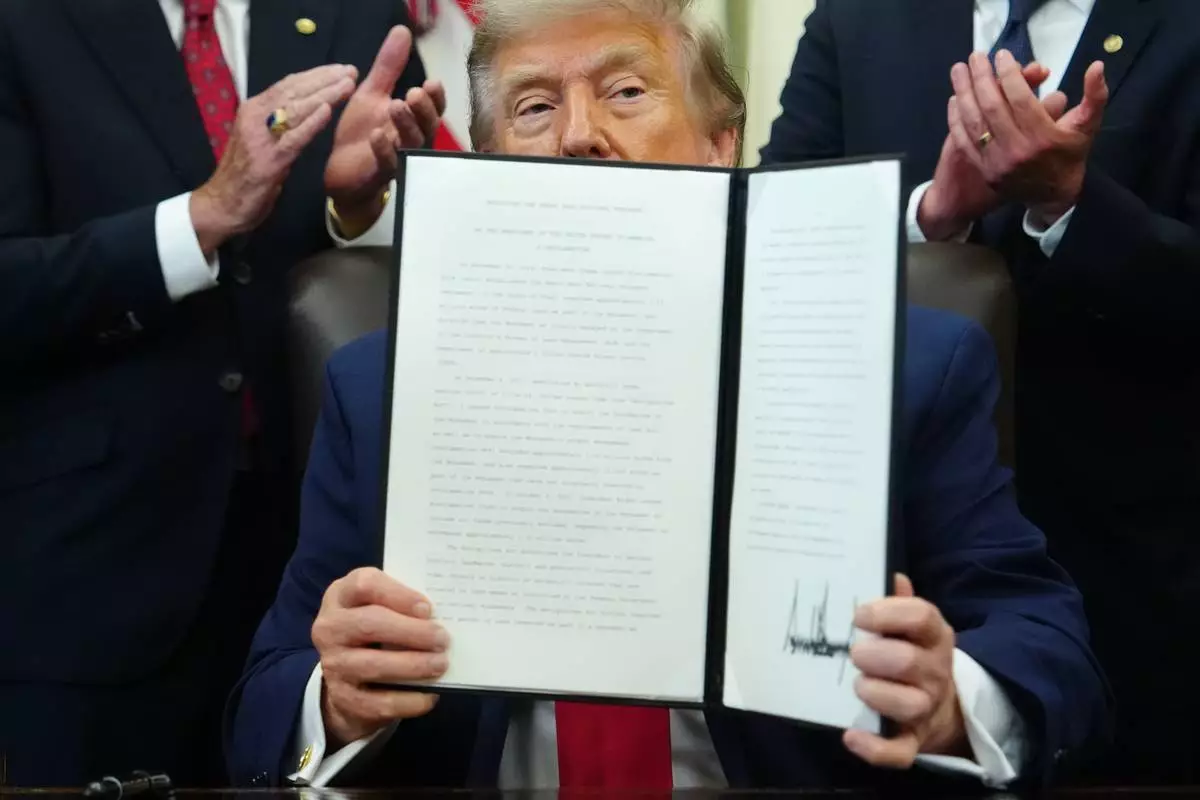
President Donald Trump holds an executive order modifying the Bears Ears National Monument in the Oval Office of the White House, Monday, July 13, 2026, in Washington. (AP Photo/Julia Demaree Nikhinson)
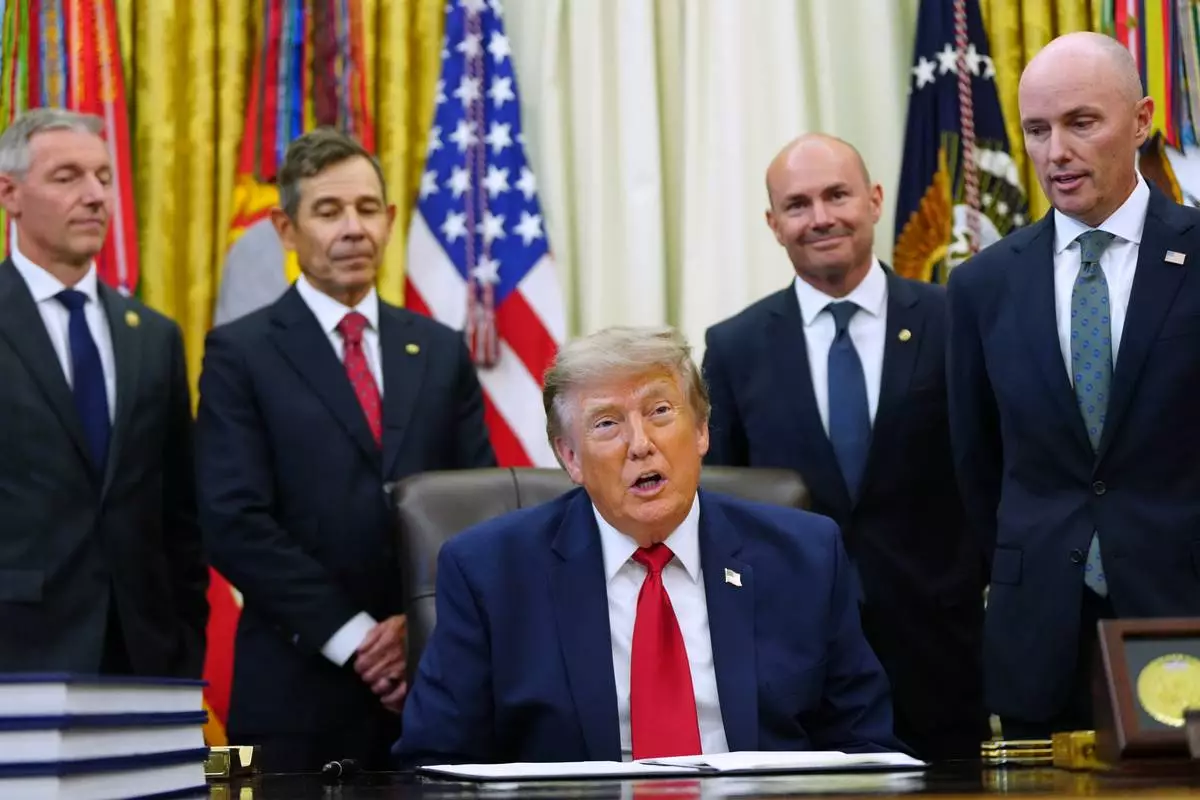
President Donald Trump speaks before signing executive orders modifying the Grand Staircase-Escalante National Monument and the Bears Ears National Monument in the Oval Office of the White House, Monday, July 13, 2026, in Washington. (AP Photo/Julia Demaree Nikhinson)
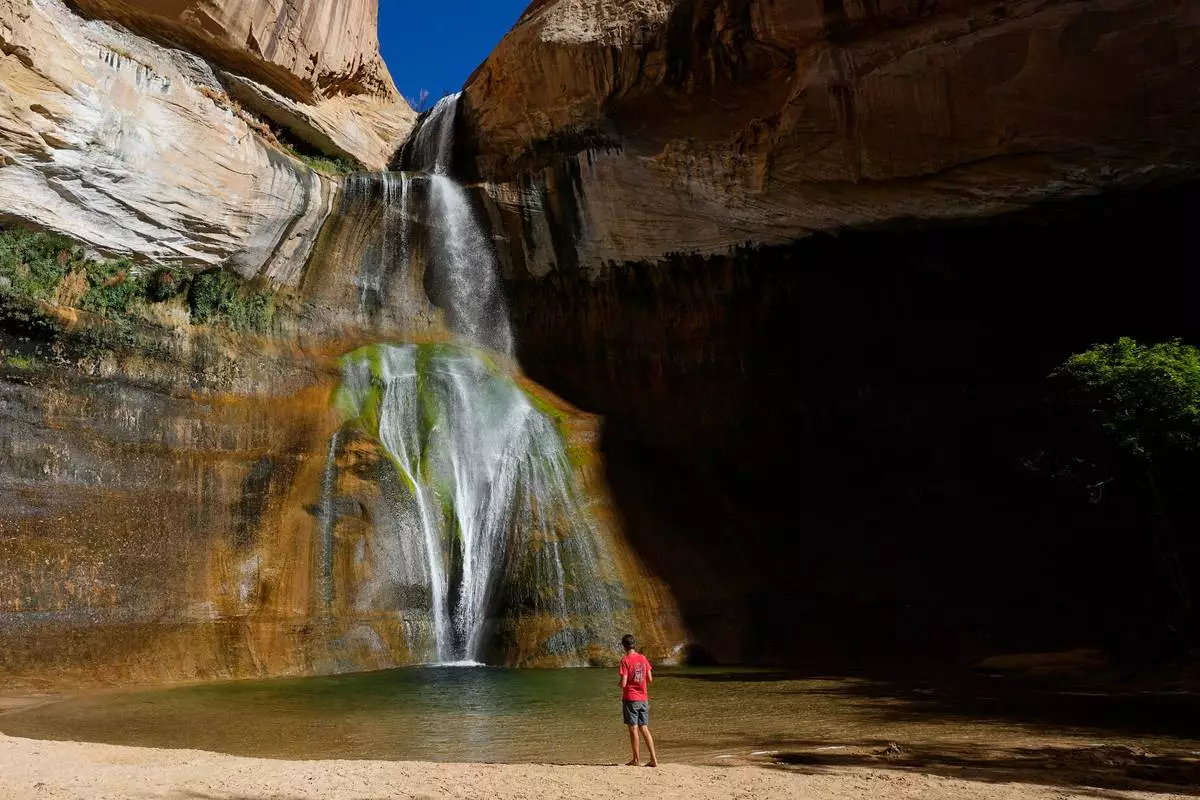
FILE - A hiker watches a waterfall at Lower Calf Creek Falls at Grand Staircase Escalante National Monument, July 12, 2023, in Escalante, Utah. (AP Photo/Ross D. Franklin, File)
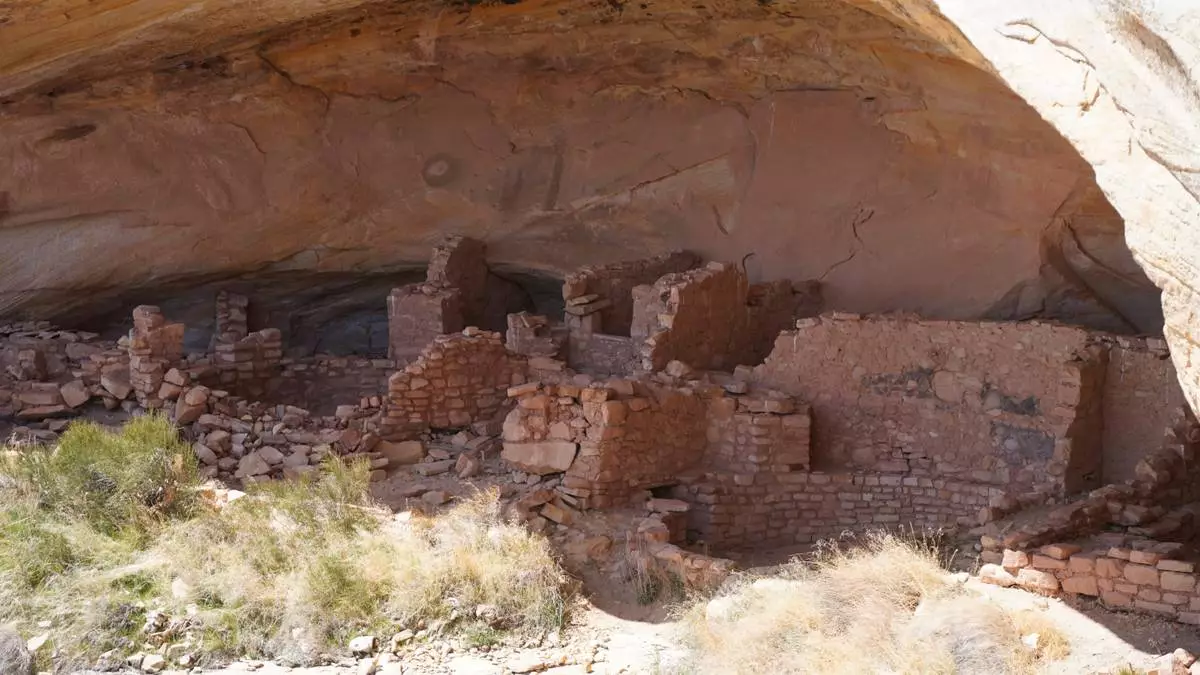
FILE - A section of ancient dwellings are seen during U.S. Interior Secretary Deb Haaland's tour along the Butler Wash trail at Bears Ears National Monument, April 8, 2021, near Blanding, Utah. (AP Photo/Rick Bowmer, Pool, File)