China's value-added industrial output grew 5.4 percent year on year in the first half of 2026, with equipment manufacturing and high-tech manufacturing driving the expansion, according to data released by the National Bureau of Statistics (NBS) on Wednesday.
In terms of sectors, the value-added output of the mining sector increased by 3.6 percent, while that of the manufacturing sector grew by 5.6 percent. The value-added output of the electricity, heat, gas and water production and supply sectors went up by 5.5 percent, the data showed.
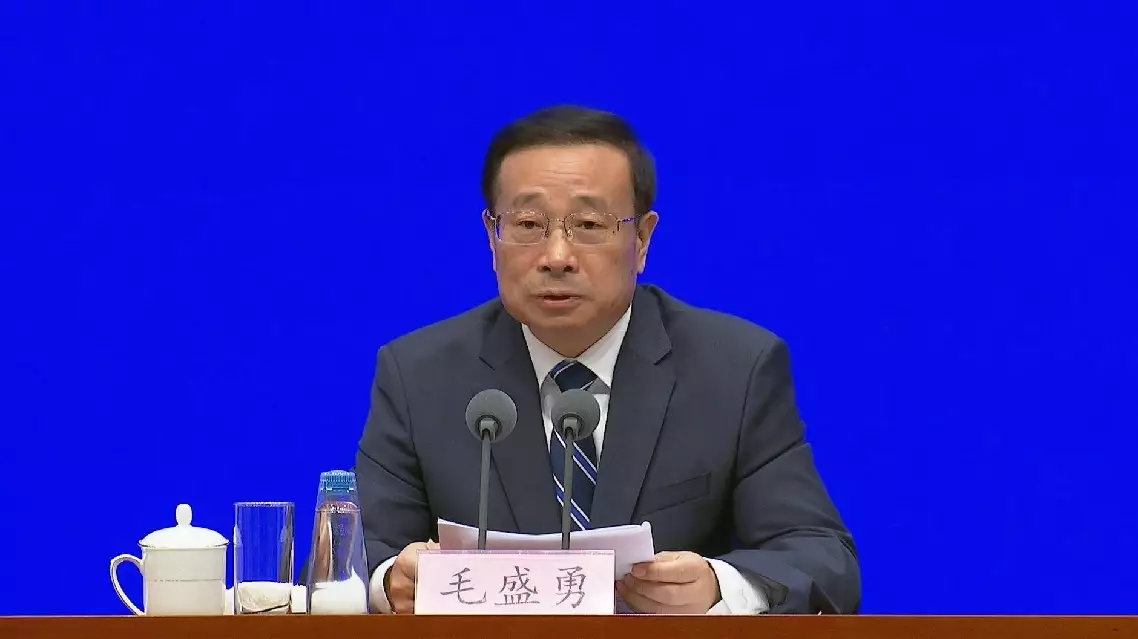
Mao Shengyong, deputy head of the NBS, pointed to broad-based gains across mining, manufacturing and utilities, alongside standout growth in the equipment and high-tech manufacturing sectors.
"China's value-added industrial output rose 5.4 percent year on year in the first half of 2026. In terms of sectors, the value-added output of the mining sector increased by 3.6 percent, while that of the manufacturing sector grew by 5.6 percent. The value-added output of the electricity, heat, gas and water production and supply sectors went up by 5.5 percent. Notably, the value added of equipment manufacturing and high-tech manufacturing expanded by 9.3 percent and 13.3 percent year on year respectively, outpacing the overall industrial growth by 3.9 and 7.9 percentage points," Mao said at a press conference in Beijing on Wednesday.
The industrial output is used to measure the activity of large enterprises each with an annual main business revenue of at least 20 million yuan (about 2.95 million U.S. dollars).
China's industrial output up 5.4 pct in H1
China has continued to deepen cooperation with Kyrgyzstan in meteorological satellite application, joint scientific research, and emergency disaster prevention support.
Kyrgyzstan and northwest China's Xinjiang Uyghur Autonomous Region are both located in the Tianshan mountain system and share similar climate conditions. Driven by climate change, regional extreme weather events have increased, making joint meteorological disaster prevention, mitigation and relief a key priority. With the help of the China Meteorological Administration's Fengyun-2 satellite receiving and application system, Kyrgyzstan has received a steady and reliable supply of meteorological observation data.
In May this year, the city of Manas in Kyrgyzstan was hit by a mudslide triggered by torrential rainfall, and the local authorities declared a state of emergency. The Chinese side deployed Fengyun-3 and Fengyun-4 satellites in time to carry out high-frequency dynamic monitoring, capturing the evolution trend of the disaster and providing data support for Kyrgyzstan's disaster relief and emergency response.
"Since the beginning of this year, the Chinese side has activated the relevant emergency support mechanism twice to help Kyrgyzstan respond to flood disasters. Meanwhile, we have continued to optimize the 'Mazu' intelligent meteorological early warning solution, opened and shared independent innovation achievements including Fengyun satellites and meteorological AI models, to provide support for meteorological disaster prevention and mitigation as well as climate situation analysis in Central Asia," said Zheng Zhaojun, chief expert of the International User Service Center under the National Satellite Meteorological Center.
Relying on the Urumqi Institute of Desert Meteorology of the China Meteorological Administration, China has established a stable cooperation platform with Kyrgyzstan and other Central Asian countries. Through multiple rounds of sample analysis, research teams have systematically reconstructed the patterns of temperature, precipitation and glacier mass changes across Central Asia over the past 200 to 500 years.

Chinese weather satellites help deepen China-Kyrgyzstan cooperation