NEW YORK (AP) — Conversations about WNBA officiating and Caitlin Clark have now expanded to include NBA commissioner Adam Silver.
Silver said Thursday that Clark has become a “political football” amid debates about officiating and physical play in the WNBA, spurred by a recent play involving the star guard and Phoenix Mercury forward Alyssa Thomas.
“Ultimately, the issues around Caitlin Clark are not largely about officiating," Silver said, “and that particular incident is not about whether a foul should have been called at the time in the game or whether that was ultimately a flagrant on review.”
He made the remarks during an onstage conversation with Andrew Ross Sorkin at the Game Plan Summit, presented by CNBC and Boardroom.
“I have come to know Caitlin really well,” Silver added. “She’s an incredible player and also an incredible person. And she wants to focus on being the best player she can. She has become a bit of a political football in this country, and I think it’s incredibly unfair to her. I don’t think that issue is ultimately about officiating. It’s become political ping-pong with her. And she’s a young woman who’s trying to improve her game.”
The play Silver referred to happened during a June 24 game between the Fever and Mercury when Thomas made contact with her fist to Clark’s throat in the second quarter. Thomas was not called for a foul on the play during the game, but the league subsequently upgraded the play to a flagrant foul and suspended her one game for “recklessly making contact with her fist.”
Thomas later said the play was an accident. She has said she received death threats and has been called racial slurs after the incident, also criticizing WNBA Commissioner Cathy Engelbert for not doing more to protect the league’s players.
Clark and Fever coach Stephanie White have condemned threats levied at Thomas.
Since she entered the league, Clark has helped significantly increase WNBA ticket sales and television ratings. However, many conversations around her have centered on polarizing topics, including race, officiating and politics.
“I don’t even think it’s fair to her that this has become a separate storyline about one foul,” Silver said, adding: “Do we need to improve WNBA officiating? No doubt about it."
AP WNBA: https://apnews.com/hub/wnba-basketball
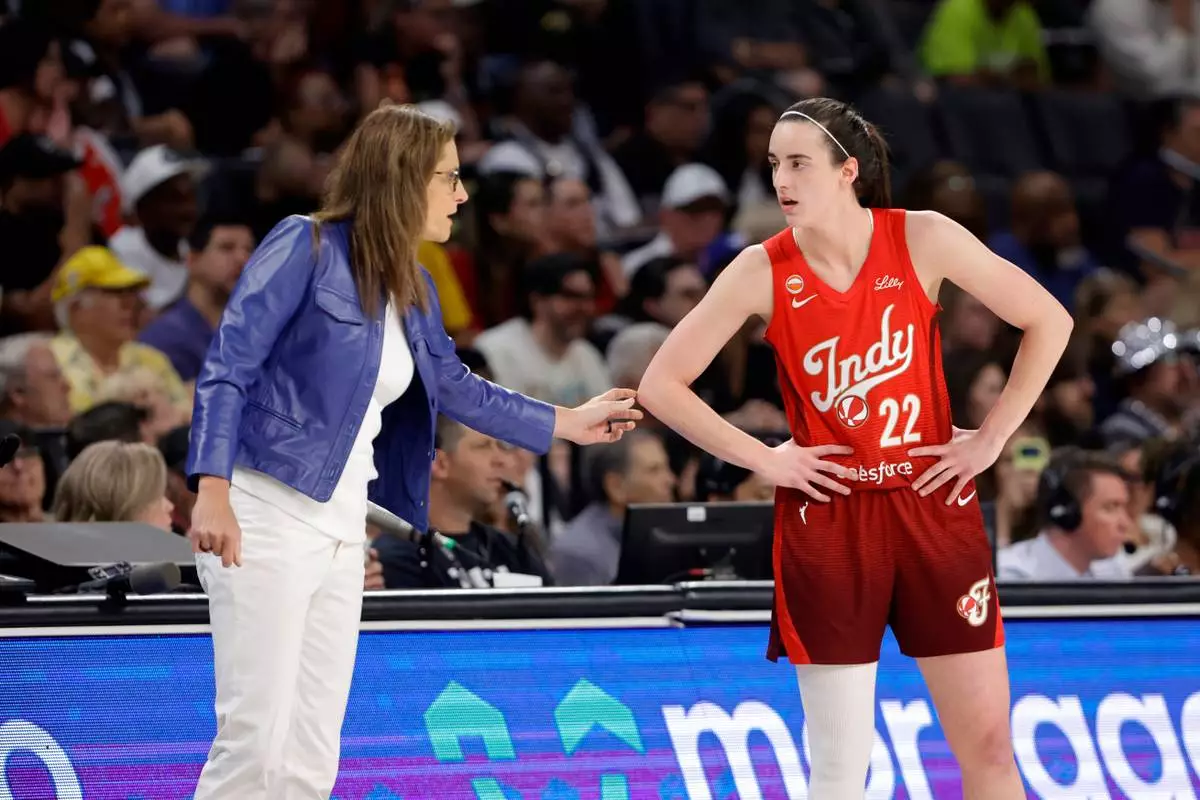
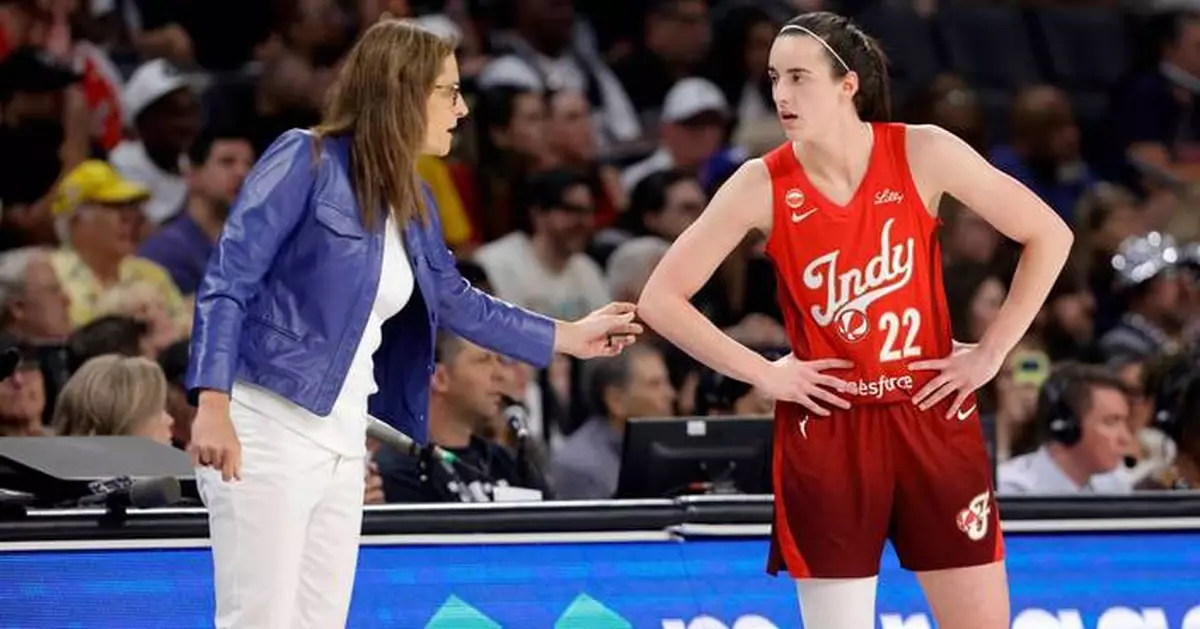
Indiana Fever head coach Stephanie White talks with Indiana Fever guard Caitlin Clark (22) during the first half of an WNBA basketball game against the Las Vegas Aces Sunday, July 12, 2026, in Las Vegas. (Steve Marcus/Las Vegas Sun via AP)
DUBAI, United Arab Emirates (AP) — The United States expanded its airstrike campaign against Iran early Friday by increasingly hitting bridges, part of President Donald Trump's threats to start striking infrastructure to pressure Tehran to ease its chokehold on the Strait of Hormuz. Iran launched new missile attacks against U.S.-allied nations in the Middle East and warned that its attacks would escalate.
In Qatar, authorities warned the public to take shelter as a barrage of Iranian missiles targeted the nation. People heard explosions overhead as air defenses fired to intercept the missiles.
Qatar is a key mediator with Pakistan in trying to reach an end to the Iran war. But talks have broken down over Iran’s chokehold on the Strait of Hormuz.
Iran earlier targeted Bahrain and Kuwait over U.S. airstrikes hitting bridges in the Islamic Republic overnight.
The interim ceasefire agreed to last month has collapsed, and the region has endured days of back-and-forth attacks by the U.S. and Iran as they battle for control of the strait. Iranian officials say U.S. strikes have killed more than 35 people and wounded over 300 others, with new casualties reported in Friday's strikes.
When the U.S. and Israel launched the war on Iran on Feb. 28, Tehran effectively closed the strait to shipping traffic, a move that sent the price of oil soaring and gave Iran major leverage in negotiations.
Col. Ebrahim Zolfaghari, a spokesperson for the Iranian military’s Khatam al-Anbiya Central Headquarters, earlier threatened that Iran could launch widespread attacks on “all the infrastructure in the region” if the U.S. acted on Trump 's repeated warnings that America could hit Iranian bridges and power plants.
“Under no circumstances and in no way will we allow America, as a foreign and extraregional country, to interfere in the Strait of Hormuz,” he added. “This is Iran’s invincible red line.”
Associated Press writers Abby Sewell in Beirut, Mae Anderson in New York and Christopher Weber in Los Angeles contributed to this report.
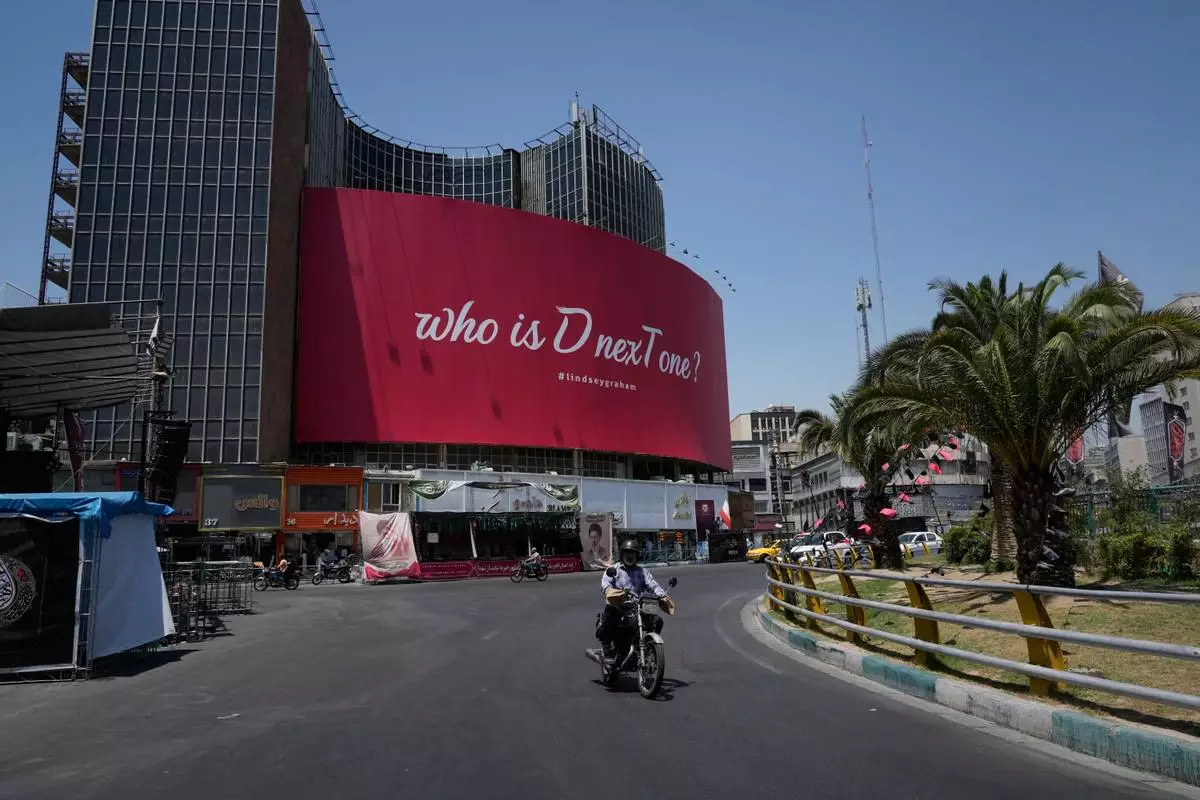
Vehicles drive by a billboard reading in English, "Who is D nexT one?" and "#lindseygraham," referring to late U.S. Sen. Lindsey Graham and using the capital letters "D" and "T" in an apparent play on the initials of U.S. President Donald Trump, in downtown Tehran, Iran, Thursday, July 16, 2026. (AP Photo/Vahid Salemi)
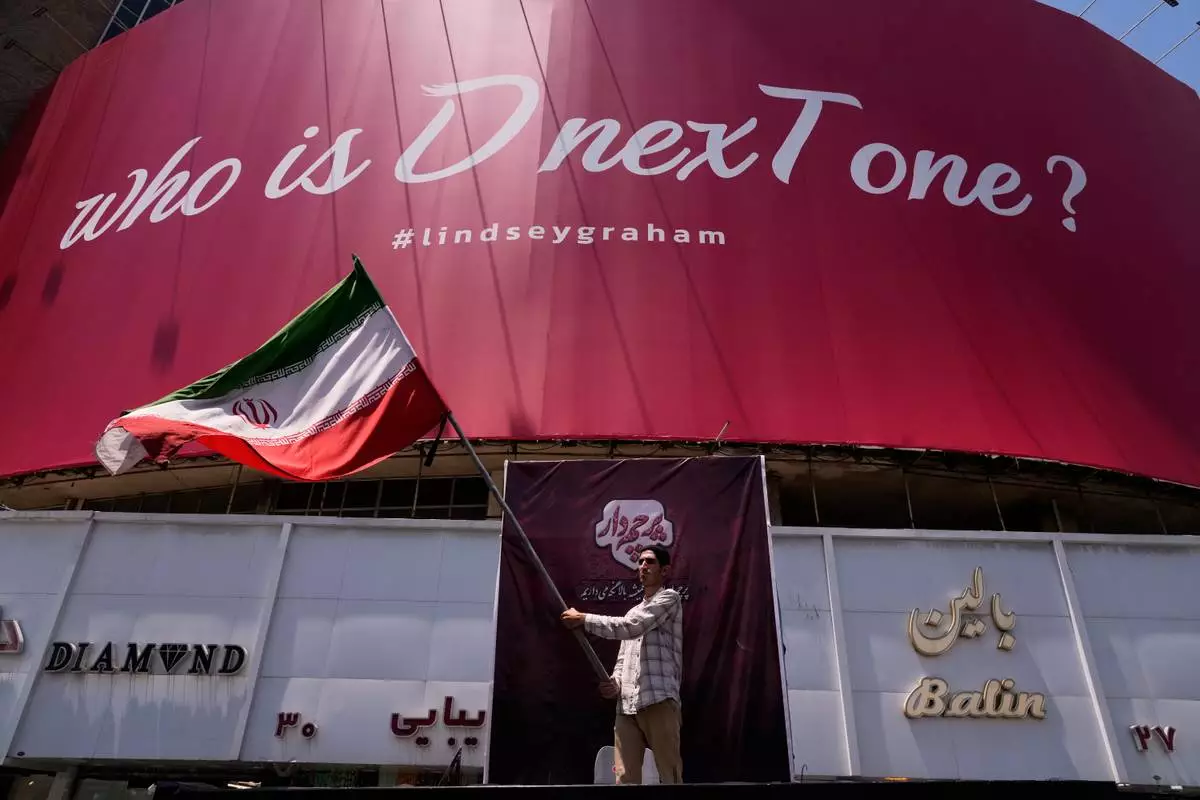
A man waves an Iranian flag beneath a billboard reading in English, "Who is D nexT one?" and "#lindseygraham," referring to late U.S. Sen. Lindsey Graham and using the capital letters "D" and "T" in an apparent play on the initials of U.S. President Donald Trump, in downtown Tehran, Iran, Thursday, July 16, 2026. (AP Photo/Vahid Salemi)
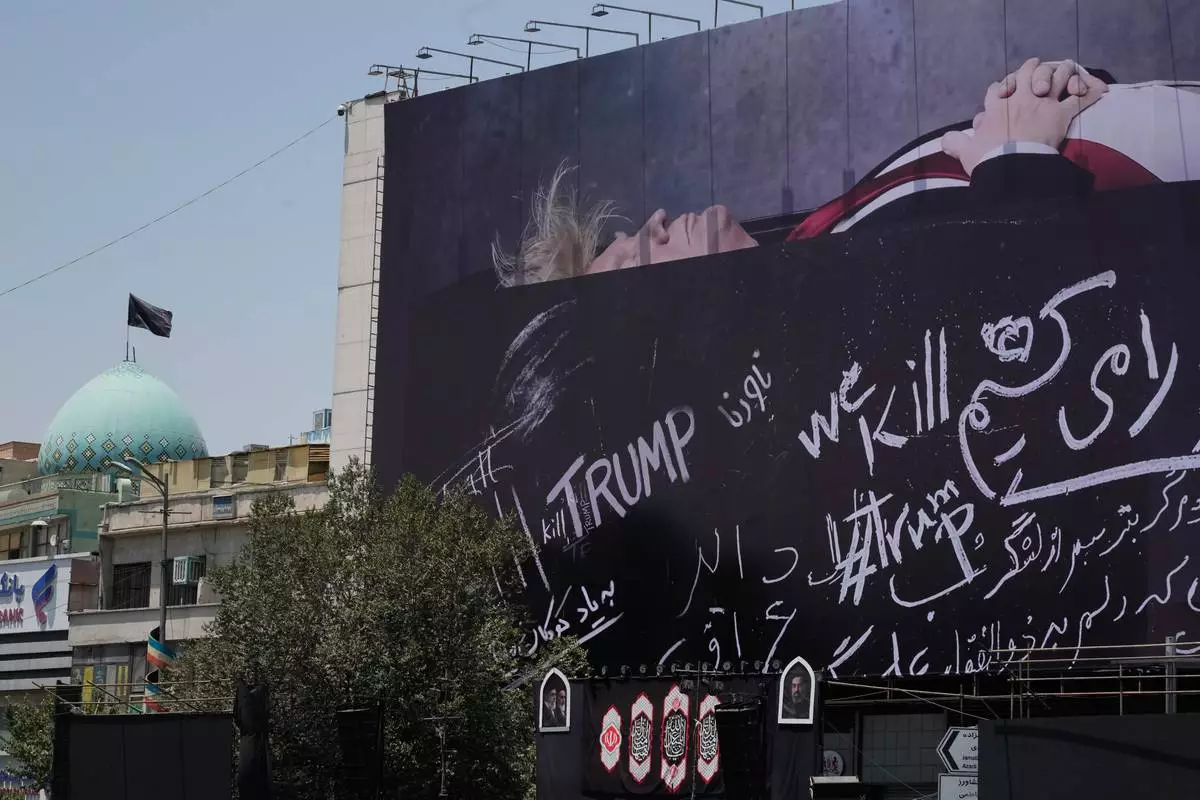
A billboard depicting U.S. President Donald Trump lying on what appears to be a coffin and bearing anti-Trump messages, including the phrase "We Kill Trump," is seen at Islamic Revolution Square in downtown Tehran, Iran, Wednesday, July 15, 2026. (AP Photo/Vahid Salemi)
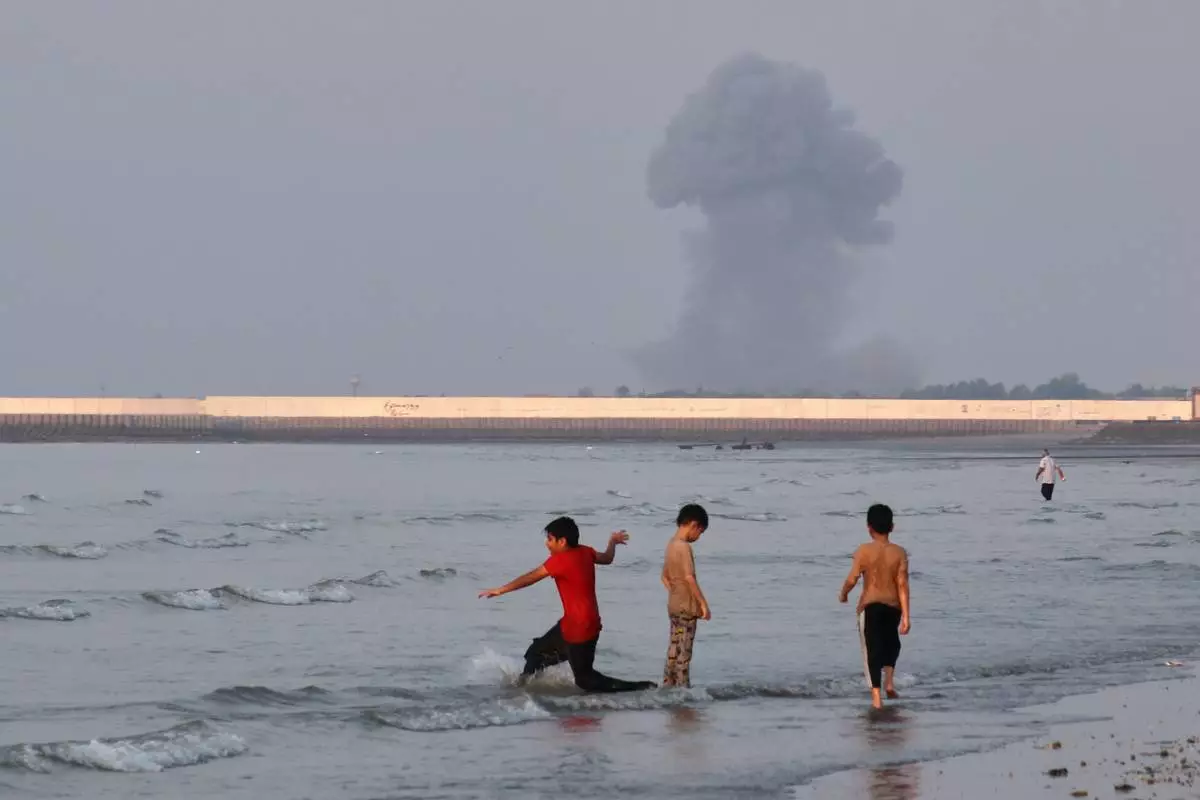
Three boys play in the shallow waters of the Strait of Hormuz, as a plume of smoke rises from an explosion in the background, off Bandar Abbas, Iran, Monday, July 13, 2026. (Razieh Poudat/ISNA via AP)