NEW YORK (AP) — Big U.S. restaurant chains don't get linked to foodborne illness outbreaks often, but the number of meals they serve causes a lot of concern when contamination of some kind sickens customers.
Federal health officials identified iceberg lettuce from Mexico served at Taco Bell locations in five states as a source of widespread infections from the diarrhea-causing parasite cyclospora. A U.S. Food and Drug Administration investigation identified a single supplier as the source of the suspect lettuce.
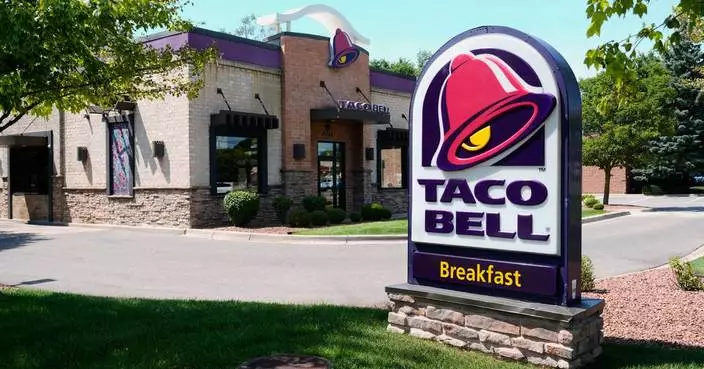
Taco Bell issued a statement on Thursday saying that “the affected ingredient from our supplier is being indefinitely removed from our supply chain nationwide and will be replaced within 24 hours in select states.” The company described the move as precautionary.
A federal official who was briefed on the outbreak investigation and not authorized to discuss it identified the supplier as Taylor Farms, a company based in Salinas, California, that produces fresh vegetables for commercial use and meal kits and bagged lettuce products sold at supermarkets.
Federal health officials stressed that other “brands, restaurants, retailers, or distribution channels” could be identified as the investigation continues.
Here’s a brief history of some other recent outbreaks that roiled restaurant companies and sometimes changed how food safety is regulated in the U.S.
E. coli bacteria caused a 2024 food poisoning outbreak tied to raw onions on McDonald’s Quarter Pounder hamburgers. The outbreak sickened at least 104 people in 14 states, including 34 who were hospitalized, according to the FDA. One person in Colorado died.
McDonald's said the onions came from Taylor Farms and temporarily pulled the Quarter Pounder off its menu in the affected states. Other national restaurant chains temporarily stopped using fresh onions in some of their locations.
Wendy’s pulled lettuce from sandwiches in its restaurants in Michigan, Ohio and Pennsylvania in August 2022 after some people reported falling ill.
The Centers for Disease Control and Prevention said at the time that it was trying to determine whether romaine lettuce was the source of an E. coli outbreak that sickened at least 37 people and whether romaine used at Wendy’s was also served or sold at other businesses.
One person was also sickened in Indiana, according to the CDC.
In 2015, Chipotle was hit by an E. coli outbreak that sickened more than 50 people and it temporarily shut down dozens of restaurants on the West Coast, but that was just the beginning. A month later, 30 Boston College students, including at least eight members of the men’s basketball team, complained of gastrointestinal symptoms after eating at a Chipotle restaurant.
Federal officials declared the outbreak over by February 2016, but the chain shut down every one of its restaurants to retrain employees and allow them to regroup.
By the end of the year, however, Chipotle Co-CEO Montgomery Moran stepped down as sales plunged.
In 2020 Chipotle Mexican Grille agreed to pay a record $25 million fine to resolve criminal charges that it served tainted food that sickened more than 1,100 people in the U.S. between 2015 and 2018.
The company admitted that poor safety practices, such as not keeping food at proper temperatures to prevent pathogen growth, sickened customers in Los Angeles and nearby Simi Valley, as well as Boston, Sterling, Virginia, and Powell, Ohio.
In December 2006, Taco Bell ordered the removal of green onions from its 5,800 restaurants nationwide after samples taken by investigators appeared to contain a harsh strain of E. coli. The outbreak sickened at least 71 people in New Jersey, New York, Pennsylvania and Delaware, with most of them hospitalized, according to the CDC.
Eight people developed a type of kidney failure called hemolytic-uremic syndrome.
Eventually, it was determined that contaminated lettuce was the probable cause, with the vegetable used in numerous dishes on the menu.
Almost immediately, Taco Bell launched a newspaper ad blitz and sent its president on a string of media interviews to assure customers that its food was safe.
Four deaths and more than 700 illnesses in Washington, Idaho, California, and Nevada between 1992 and 1993 eventually were traced to undercooked Jack in the Box restaurant hamburgers contaminated with E. coli.
The ensuing investigation by federal regulators changed regulatory practices in the U.S., experts say.
An investigation by the CDC identified five slaughter plants in the U.S. and one in Canada as the likely sources of animals used in the contaminated lots of meat and identified potential control points for reducing the likelihood of contamination. The animals slaughtered in domestic slaughter plants were traced to farms and auctions in six western states. No one slaughter plant or farm was identified as the source.
The U.S. Department of Agriculture mandated a Hazard Analysis and Critical Control Point system, which helps identify and control hazards within the system of food production. The system provided for more monitoring and controls to rapidly limit the spread of outbreaks.
Jack in the Box lost more than $44 million in 1993 and did not post another annual profit for another three years.
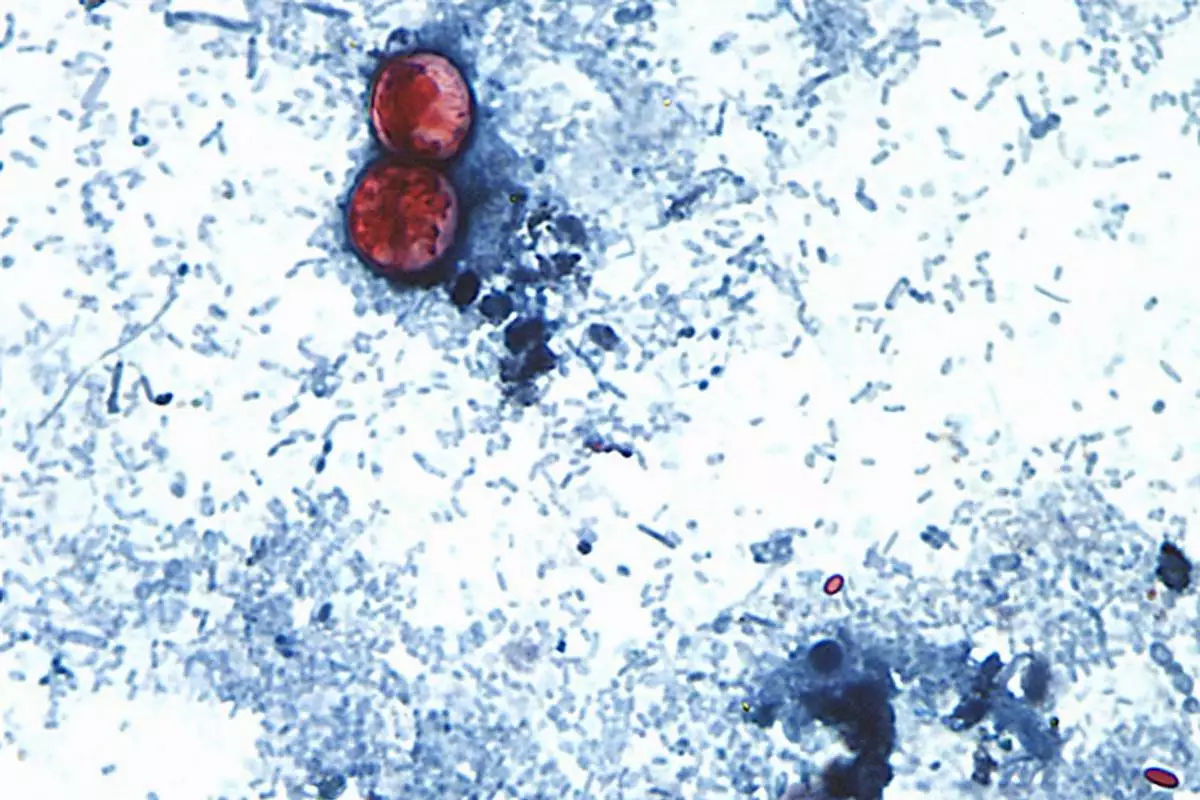
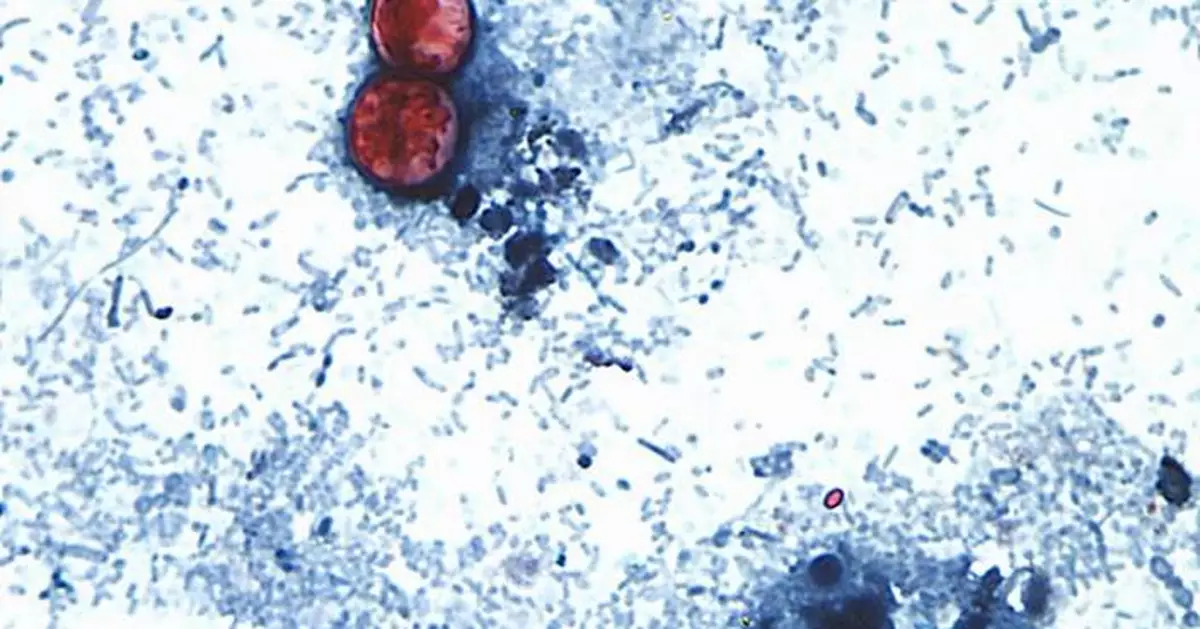
FILE - This undated photo taken through a microscope provided by the CDC shows Cyclospora cayetanensis oocysts found in a fresh stool sample which had been prepared with a formalin solution and stained with safranin. (CDC via AP, File)
MOSCOW (AP) — Boris Nadezhdin, who criticized Moscow’s military action in Ukraine and tried to challenge President Vladimir Putin in the 2024 election, was convicted Friday of displaying “extremist symbols” — an action that will keep him out of this year's parliamentary race.
The verdict underlined the determination by authorities to stamp out any remaining sign of dissent ahead of September's vote as the fuel crisis caused by Ukrainian strikes on oil facilities across Russia threatened to erode public support for the Kremlin.
The charges against Nadezhdin, 63, were based on a 2023 online video in which he briefly showed a picture of the late opposition leader Alexei Navalny, who at that time was serving a 19-year prison sentence on charges of extremism that were widely seen as politically motivated. Navalny later died in an Arctic penal colony on Feb. 16, 2024.
Nadezhdin rejected the case against him as absurd and argued authorities were trying to keep him from campaigning in September's parliamentary vote. The court in Dolgoprudny, a town on Moscow’s northern outskirts where he lives, convicted him and ordered him to pay a fine of 1,000 rubles (about $13).
The Kremlin's main United Russia party is seeking to preserve its dominance in the lower house of parliament in a race against so-called “systemic” opposition, including the Communist Party and a couple of other parties that vote in sync with the Kremlin on key issues. The campaign comes amid signs of growing public fatigue as fuel shortages and economic pain from the Ukraine conflict increase, an environment that reduces the tolerance by the authorities for even token opposition.
In January 2024, Nadezhdin collected thousands of signatures in his run for president as he openly called for a halt to the fighting in Ukraine. But he was kept off the March 2024 ballot after Russia’s Supreme Court ruled that more than 9,000 signatures submitted by his campaign were invalid — enough to disqualify him. Putin faced only token opposition in the election and easily won a fifth term.
A veteran politician, Nadezhdin worked in the government in the 1990s when he was an adviser to Sergei Kiriyenko, now a top Putin aide. He also served as a lawmaker and more recently became a member of a municipal council, one of the few remaining liberal voices on Russia's political scene.
Last month, Nadezhdin declared his bid to run for the lower house of parliament, the State Duma, but the Justice Ministry quickly branded him a “foreign agent” — a designation that carries strong pejorative connotations and brings additional government scrutiny. It also bars him from holding public office, but he was still able to wage his symbolic campaign for a parliament seat until Friday’s verdict.
Another blow came Monday, when police detained Nadezhdin for a few hours before making the charges that were punishable by a fine or a 15-day jail term. He said he was considering going abroad but was barred from leaving Russia.
He told the court that he was too sick to serve any prison time, saying he “will just die” behind bars. “The real goal of what's going on here is to shut my mouth and prevent me from running for the State Duma,” he said.
Nadezhdin complained of feeling sick at Friday’s hearing, which was interrupted to let an ambulance team check his condition.
After the Kremlin sent troops into Ukraine in February 2022, authorities ramped up their crackdown on dissent and free speech, relentlessly targeting rights organizations, independent media, members of civil society organizations, LGBTQ+ activists and some religious groups. Hundreds of people have been jailed and thousands of others have fled the country.
Also on Friday, Ilya Remeslo, a pro-Kremlin activist and blogger who has become a Putin critic, was arrested in St. Petersburg on charges of spreading false information about the Russian military — an accusation widely used against those who oppose the government's policies.
Remeslo was escorted to Moscow, where a court ordered him to remain in jail for two months pending an official investigation, according to his lawyer, Sergei Badamshin.
The charges against Remeslo were based on his criticism of the military action in Ukraine and calls for Putin’s resignation that he made in March. Soon after, he was placed in a psychiatric clinic and spent a month there in what he cast as a punishment for his remarks.
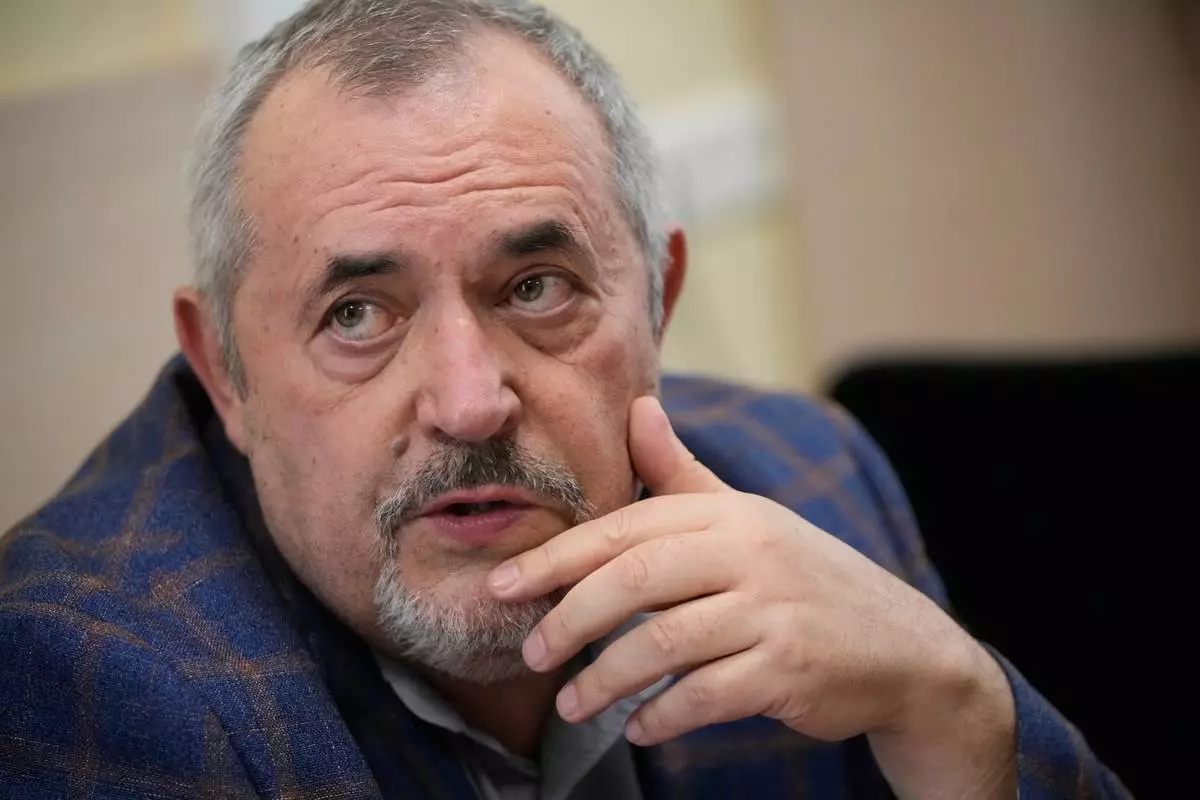
Russian politician Boris Nadezhdin, accused of displaying "extremist symbols," attends a court session in the town of Dolgoprudny outside Moscow, Russia, Friday, July 17, 2026. (AP Photo/Pavel Bednyakov)
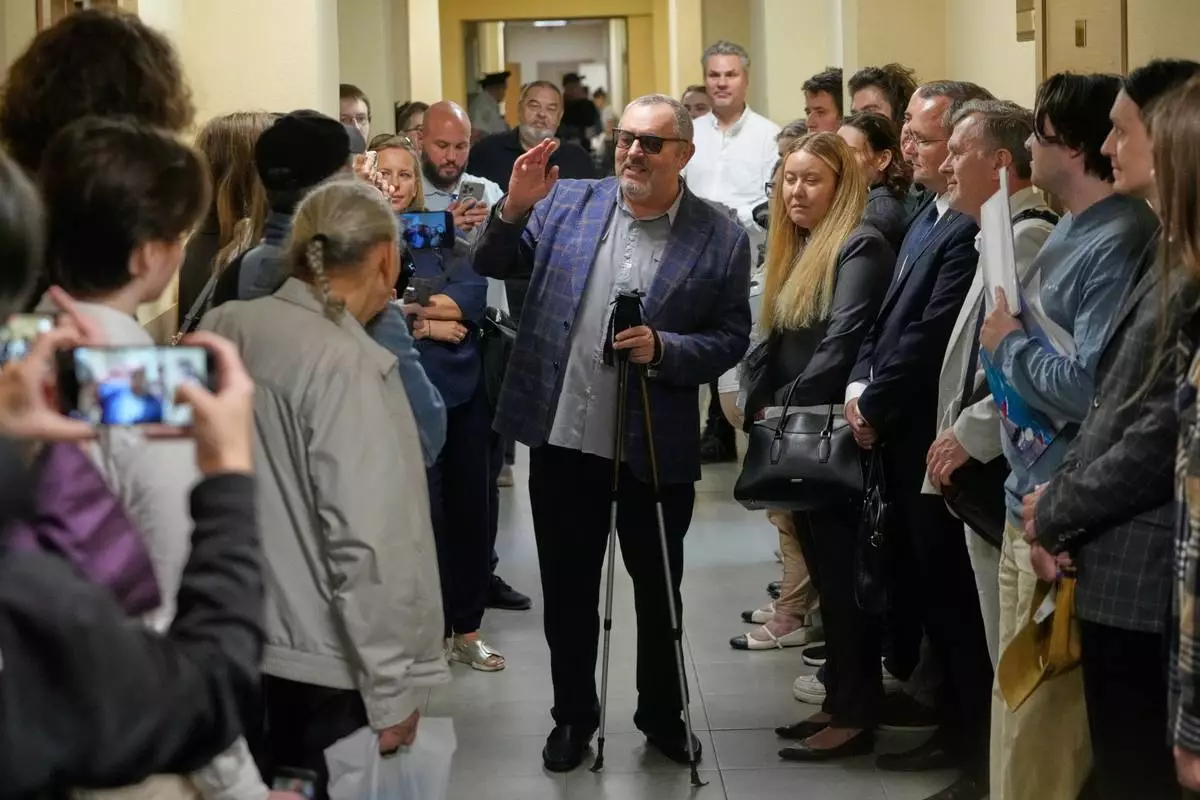
Russian politician Boris Nadezhdin, accused of displaying "extremist symbols," speaks to journalists as he arrives at the courtroom in the town of Dolgoprudny outside Moscow, Russia, Friday, July 17, 2026. (AP Photo/Pavel Bednyakov)
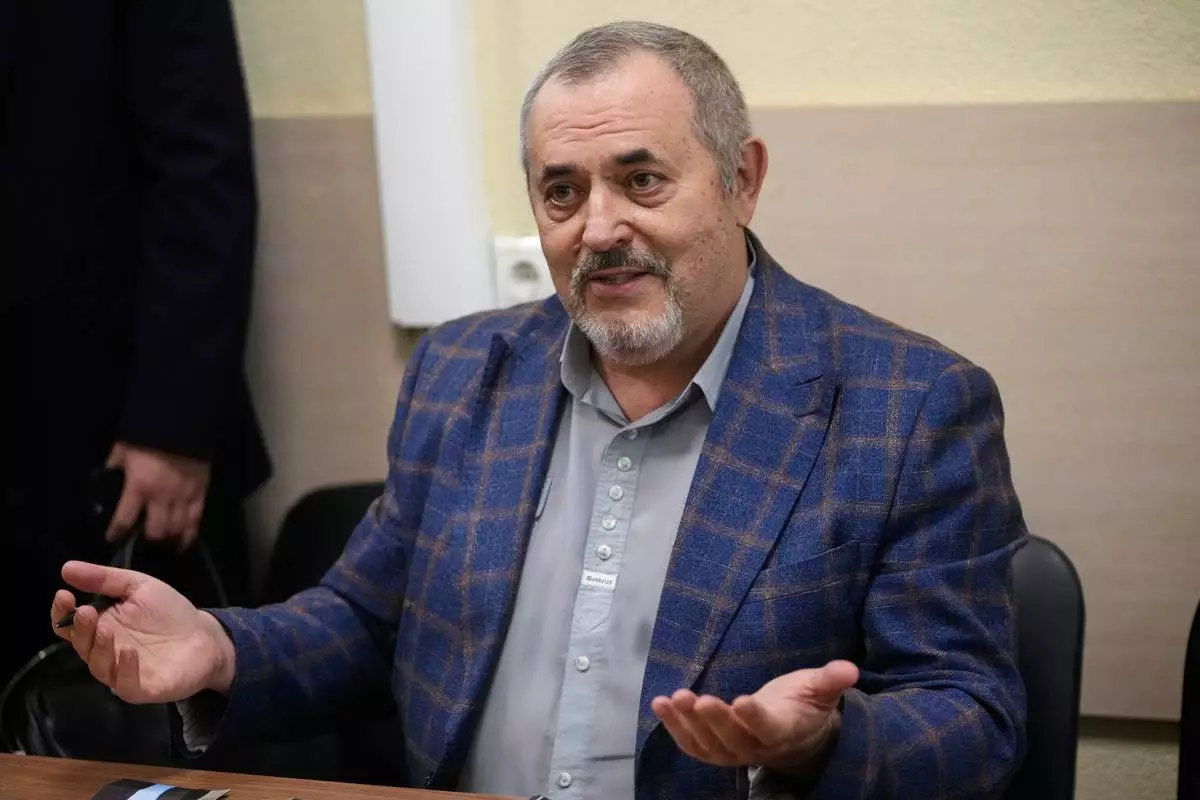
Russian politician Boris Nadezhdin, accused of displaying "extremist symbols," speaks at the courtroom in the town of Dolgoprudny outside Moscow, Russia, Friday, July 17, 2026. (AP Photo/Pavel Bednyakov)
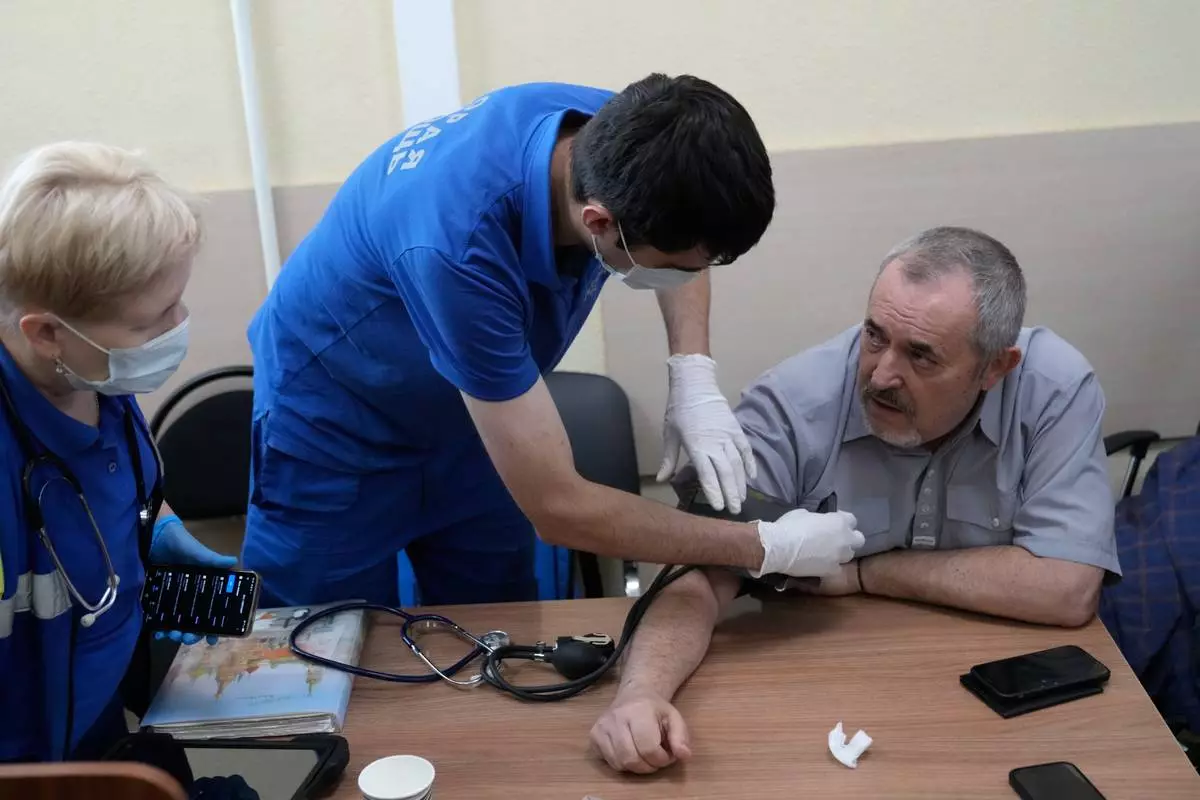
Emergency medical personnel provide care to Russian politician Boris Nadezhdin, right, accused of displaying "extremist symbols," during a break at a courtroom in the town of Dolgoprudny, outside Moscow, Russia, Friday, July 17, 2026. (AP Photo/Pavel Bednyakov)
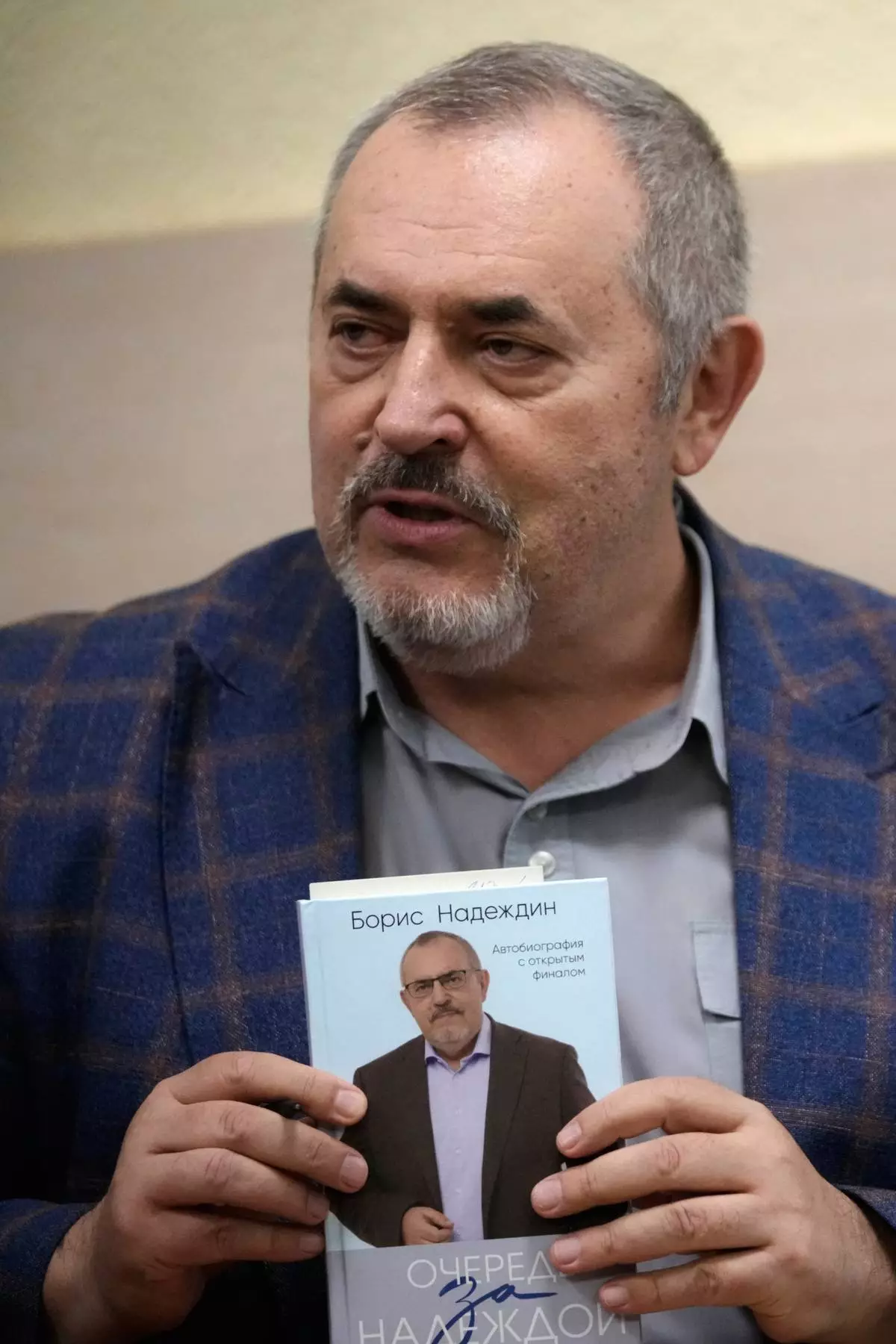
Russian politician Boris Nadezhdin, accused of displaying "extremist symbols," holds an autobiography while attending a court session in the town of Dolgoprudny outside Moscow, Russia, Friday, July 17, 2026. (AP Photo/Pavel Bednyakov)
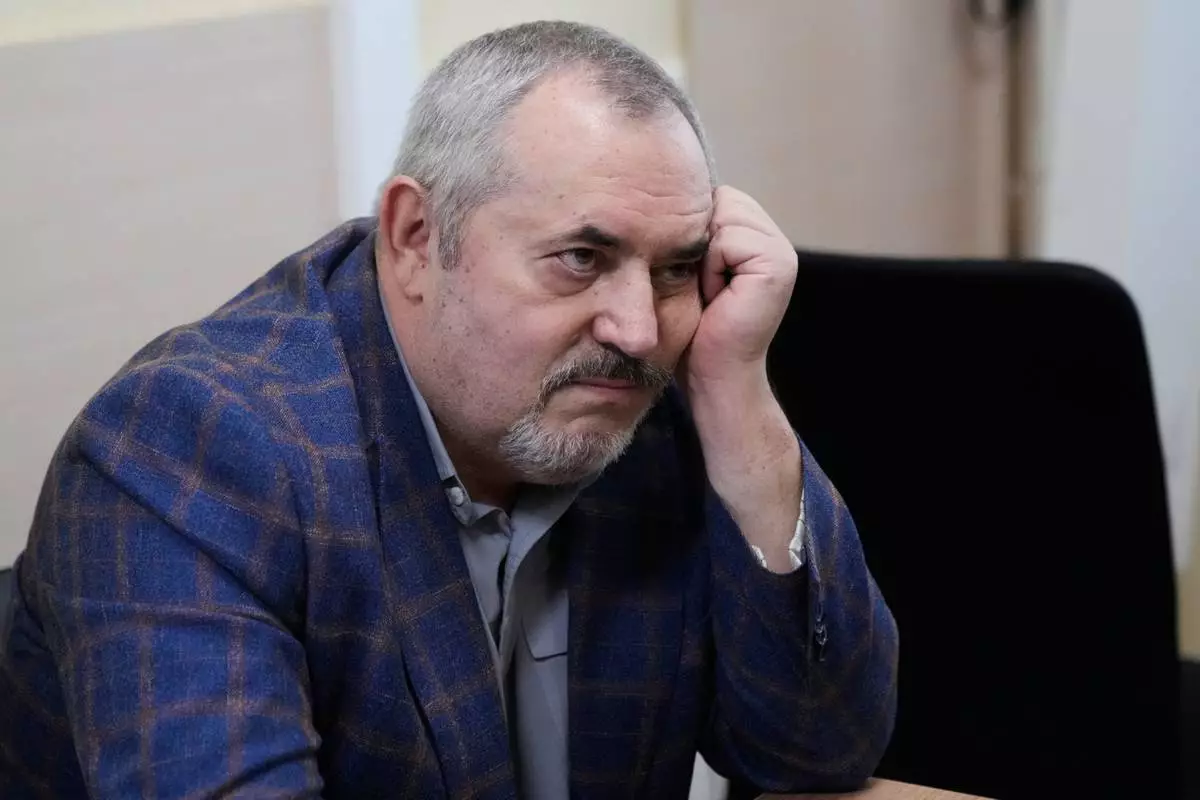
Russian politician Boris Nadezhdin, accused of displaying "extremist symbols," attends a court session in the town of Dolgoprudny outside Moscow, Russia, Friday, July 17, 2026. (AP Photo/Pavel Bednyakov)