World model technology is emerging as a key breakthrough for embodied AI at the 2026 World AI Conference (WAIC), enabling robots to learn complex tasks in virtual environments before performing them in the real world.
More than 200 robotics and intelligent hardware companies are showcasing their latest products at the conference, with many exhibitors highlighting advances in embodied AI and world model technology.
On the exhibition floor, robots demonstrated a range of household tasks, from folding clothes and packing bags to preparing breakfast, heating food in a microwave and making coffee.
Behind these capabilities are world models that create virtual training environments. By learning from videos, real-world robot data and simulations, robots can practice countless tasks in digitally generated environments before being deployed in real-life settings. "Embodied AI faces a shortage of training data; while world models can generate virtually unlimited scene data for training, evaluation and testing. Because the approach is entirely data-driven, it significantly narrows the gap between simulation and the real world, improving robots' performance and success rates," said Huang Guan, senior executive of a participating enterprise at the WAIC.
As artificial intelligence expands beyond language-based applications into the physical world, robots require vast amounts of data to learn how to interact with their surroundings.
World models replicate real-world physics and generate highly interactive virtual environments, allowing robots to acquire skills through large-scale simulation before applying them in the real world.
According to another exhibitor, the technology's strength lies in its ability to realistically simulate physical interactions while allowing users to freely modify objects and environments, making robot training more efficient and adaptable.
The 2026 World AI Conference (WAIC) and High-Level Meeting on Global AI Governance is running in Shanghai from July 17 to 20 under the theme "AI Partnership for a Brighter Future."
More than 1,100 enterprises are participating, showcasing over 3,000 products and technologies, including 300-plus global debuts.
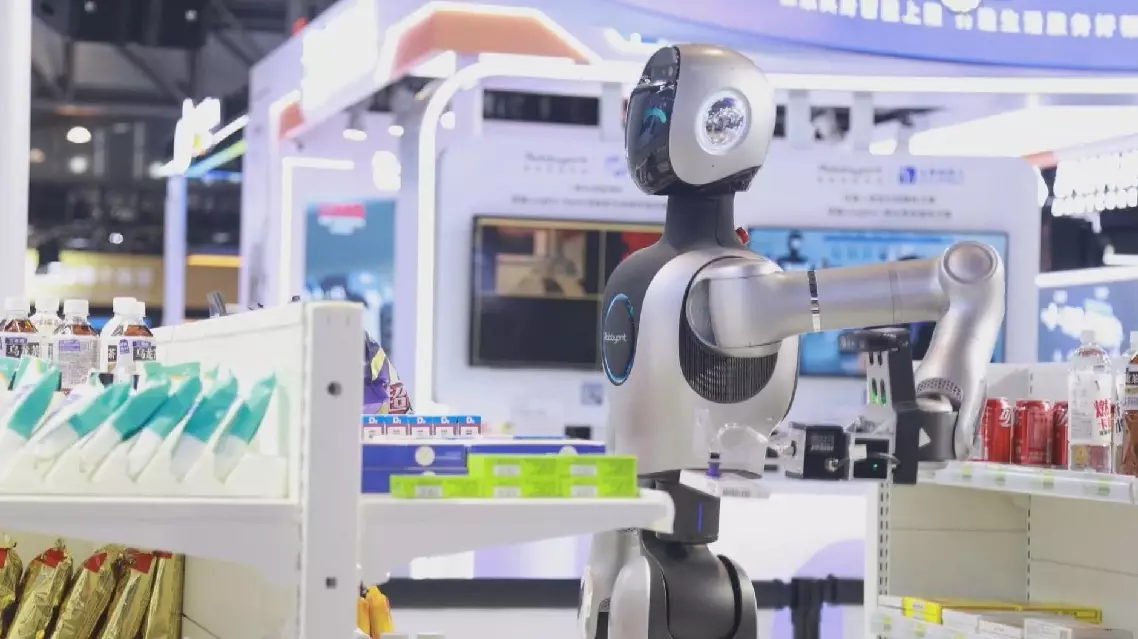
World models drive next leap in robot intelligence
China's steel production giant Baowu Steel Group is showcasing its latest achievements in artificial intelligence (AI) technologies at the ongoing 2026 World AI Conference in Shanghai, aiming at using advanced technology to replace humans in dangerous job positions.
China Baowu Steel Group, as world's largest steel maker, is headquartered in Shanghai, and produces over 130 million metric tonnes of crude steel annually, making it nearly twice the size of its closest global competitor.
In recent years, this traditional manufacturer has introduced robots into its steel production line to lift efficiency and turn high-risk jobs into fully unmanned operations.
"This robot can be used in the scenario of a steel converter, which is vital for testing molten steel quality in steel production. Traditionally, workers carry steel sampling rods from the sampling pump manually. The workplace is extremely dusty and hot, with strong heat radiation from the nearby converter. We plan to adopt robots to take over this work and free staff away from this high-temperature hazardous area," said Ke Tianyang, engineer of Turin Robotics of the Baowu Group.
In 2023, the steel giant realized what is called a "lights-out factory," which refers to an intelligent factory that does not require manual intervention in the entire process of production, storage, and testing, and can be run automatically by machines even when the lights are off.
Earlier this year, the company launched its AI 2.0 strategy, aiming to integrate artificial intelligence across its operations. From steel production and research to corporate governance and customer services, the initiative is designed to accelerate the adoption of smart technologies throughout the business.
"We've launched AI systems for converter furnace foremen and cold rolling operators. Trained on our years of production management know-how, they combine big data and large models to optimize scheduling, lift resource efficiency, boost safety and ease labor burden, enabling a true lights-out factory," said Tian Guobing, chairman of Baosight Software Co., Ltd., a listed industrial software and IT solutions provider with the controlling stake held by China Baowu Steel Group.
Scheduled from Friday to Monday and themed "AI Partnership for a Brighter Future," the 2026 World AI Conference includes more than 140 forums, bringing together 1,400 guests from home and abroad.
For the first time, the exhibition area exceeds 100,000 square meters, with over 1,100 enterprises participating.
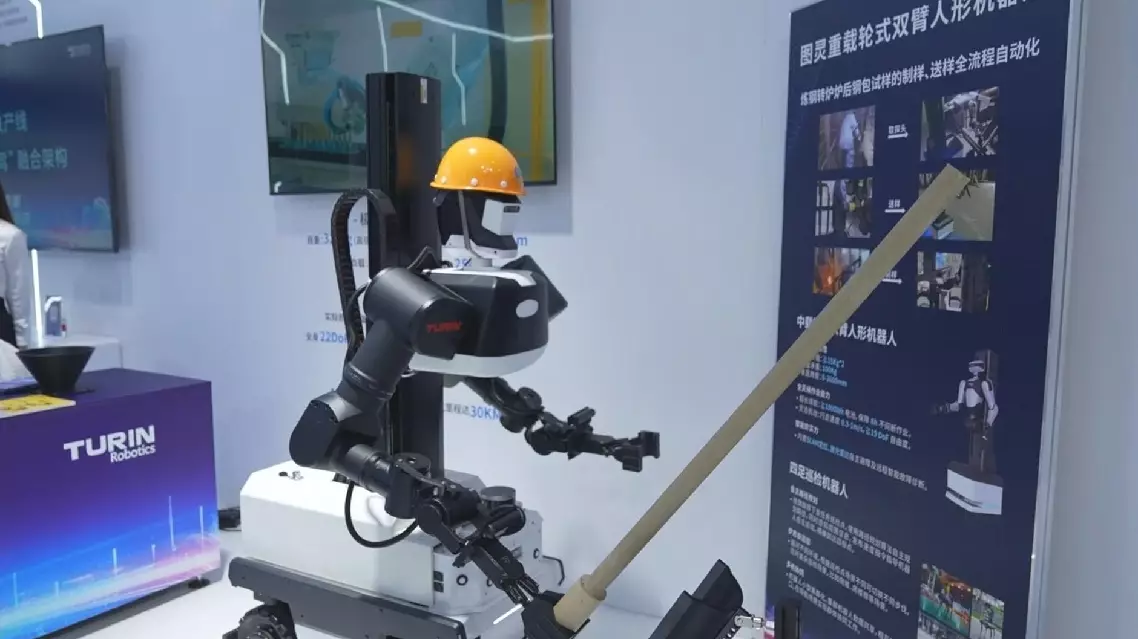
China's steel production giant opens to AI for more efficient operation