Skip to Content Facebook Feature Image

China's steel production giant opens to AI for more efficient operation

China

China

China

China's steel production giant opens to AI for more efficient operation

2026-07-18 18:58 Last Updated At:19:17

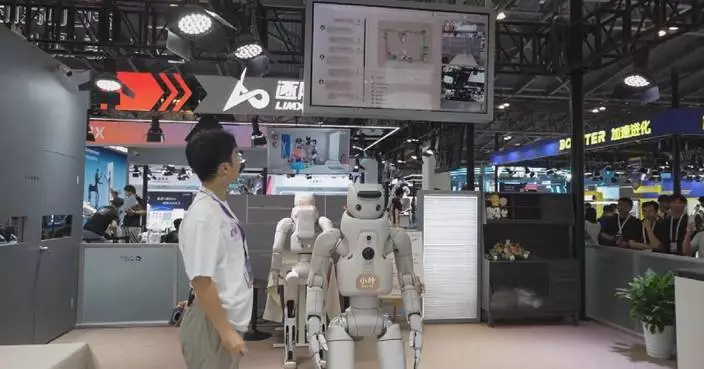
China's steel production giant Baowu Steel Group is showcasing its latest achievements in artificial intelligence (AI) technologies at the ongoing 2026 World AI Conference in Shanghai, aiming at using advanced technology to replace humans in dangerous job positions.

China Baowu Steel Group, as world's largest steel maker, is headquartered in Shanghai, and produces over 130 million metric tonnes of crude steel annually, making it nearly twice the size of its closest global competitor.

In recent years, this traditional manufacturer has introduced robots into its steel production line to lift efficiency and turn high-risk jobs into fully unmanned operations.

"This robot can be used in the scenario of a steel converter, which is vital for testing molten steel quality in steel production. Traditionally, workers carry steel sampling rods from the sampling pump manually. The workplace is extremely dusty and hot, with strong heat radiation from the nearby converter. We plan to adopt robots to take over this work and free staff away from this high-temperature hazardous area," said Ke Tianyang, engineer of Turin Robotics of the Baowu Group.

In 2023, the steel giant realized what is called a "lights-out factory," which refers to an intelligent factory that does not require manual intervention in the entire process of production, storage, and testing, and can be run automatically by machines even when the lights are off.

Earlier this year, the company launched its AI 2.0 strategy, aiming to integrate artificial intelligence across its operations. From steel production and research to corporate governance and customer services, the initiative is designed to accelerate the adoption of smart technologies throughout the business.

"We've launched AI systems for converter furnace foremen and cold rolling operators. Trained on our years of production management know-how, they combine big data and large models to optimize scheduling, lift resource efficiency, boost safety and ease labor burden, enabling a true lights-out factory," said Tian Guobing, chairman of Baosight Software Co., Ltd., a listed industrial software and IT solutions provider with the controlling stake held by China Baowu Steel Group.

Scheduled from Friday to Monday and themed "AI Partnership for a Brighter Future," the 2026 World AI Conference includes more than 140 forums, bringing together 1,400 guests from home and abroad.

For the first time, the exhibition area exceeds 100,000 square meters, with over 1,100 enterprises participating.
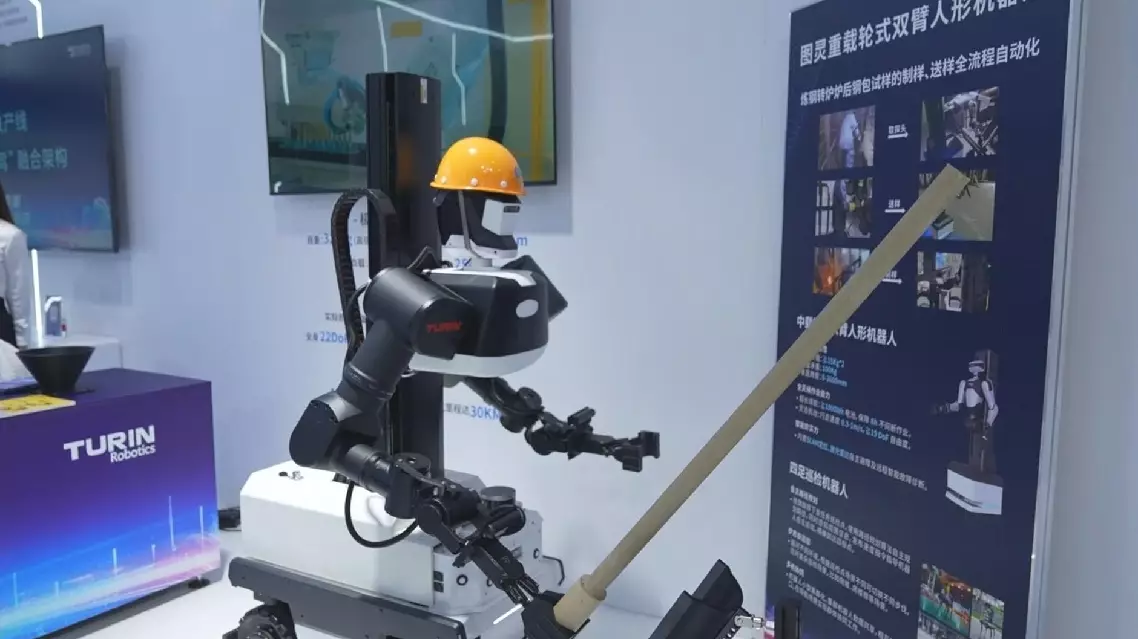
China's steel production giant opens to AI for more efficient operation


China's steel production giant opens to AI for more efficient operation
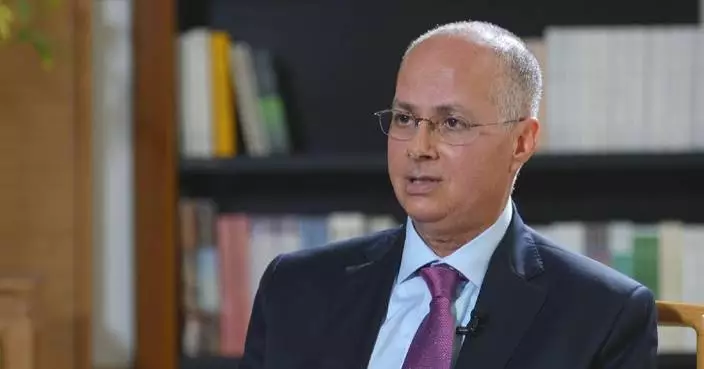
Nobel laureate chemist Omar Yaghi views our current era as the capstone of a centuries-long human endeavor to master matter, as humanity approaches near-total control over the materials it uses at the atomic and molecular levels.

Yaghi won the 2025 Nobel Prize in Chemistry for his work in the development of metal-organic frameworks (MOFs), a revolutionary class of hybrid materials that are ultra-porous. MOFs offer new possibilities in a huge range of fields, from carbon capture and hydrogen storage to water purification and drug delivery.

In an interview with the China Media Group (CMG), Yaghi said that his invention is part of a broader story of humanity's aspirations to use materials in ways that benefit people and societies.

"I think to understand the future, we have to look at our history, at the history of humanity. Materials are really the basis of civilization. You mentioned the stone age, the brass age. Of course you can think of the steel age, the cement age, the glass age. Then you mentioned the silicon age. In all these ages, it was always about controlling the material that you're working with. And you notice that as we learned how to design these materials on a finer and finer level, so did our economies grow larger and larger and more and more people benefited from these materials. So, I think in the next age, I like to call it the MOF (metal-organic framework) age, or the age where we control matter on the atomic and molecular level, that's the ultimate control, and I think we're living through that age right now," he said.

The chemist emphasized that, while digital technologies continue to dominate the news cycles and capture the popular mind, materials will always hold a more fundamental importance in the development of new innovations.

"We are talking about materials and we're saying materials are the basis of society, which means that a material is going to be operating many different contexts, not just computing, not just AI, but also in almost every aspect of society. And for that, you need materials, you need physical materials that are going to improve the quality of life. So, of course, I am biased, but I'm willing to bet that materials and the design of materials on a finer and finer level will always win," he said.

Nobel Laurette eyes humanity's ultimate control over materials

Nobel Laurette eyes humanity's ultimate control over materials

Recommended Articles