Nobel laureate chemist Omar Yaghi views our current era as the capstone of a centuries-long human endeavor to master matter, as humanity approaches near-total control over the materials it uses at the atomic and molecular levels.
Yaghi won the 2025 Nobel Prize in Chemistry for his work in the development of metal-organic frameworks (MOFs), a revolutionary class of hybrid materials that are ultra-porous. MOFs offer new possibilities in a huge range of fields, from carbon capture and hydrogen storage to water purification and drug delivery.
In an interview with the China Media Group (CMG), Yaghi said that his invention is part of a broader story of humanity's aspirations to use materials in ways that benefit people and societies.
"I think to understand the future, we have to look at our history, at the history of humanity. Materials are really the basis of civilization. You mentioned the stone age, the brass age. Of course you can think of the steel age, the cement age, the glass age. Then you mentioned the silicon age. In all these ages, it was always about controlling the material that you're working with. And you notice that as we learned how to design these materials on a finer and finer level, so did our economies grow larger and larger and more and more people benefited from these materials. So, I think in the next age, I like to call it the MOF (metal-organic framework) age, or the age where we control matter on the atomic and molecular level, that's the ultimate control, and I think we're living through that age right now," he said.
The chemist emphasized that, while digital technologies continue to dominate the news cycles and capture the popular mind, materials will always hold a more fundamental importance in the development of new innovations.
"We are talking about materials and we're saying materials are the basis of society, which means that a material is going to be operating many different contexts, not just computing, not just AI, but also in almost every aspect of society. And for that, you need materials, you need physical materials that are going to improve the quality of life. So, of course, I am biased, but I'm willing to bet that materials and the design of materials on a finer and finer level will always win," he said.
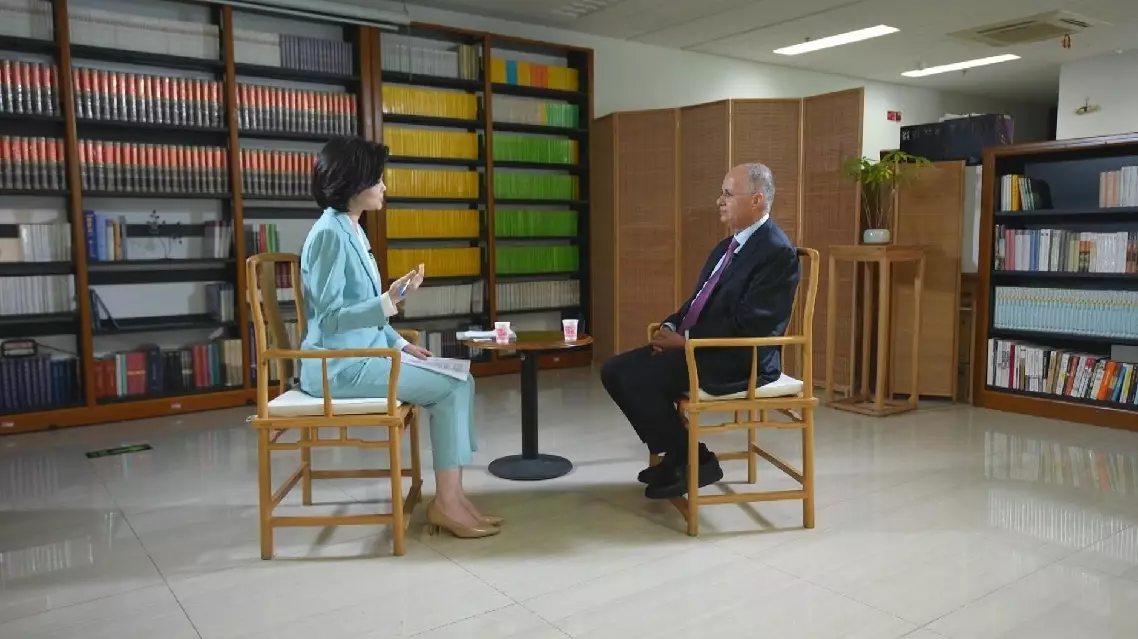
Nobel Laurette eyes humanity's ultimate control over materials
A China-led global initiative on mutual trust and interconnectivity among artificial intelligence (AI) agents was released on Friday in Shanghai, aiming to build broad consensus and work with global partners toward an open, trustworthy, secure, and inclusive agent ecosystem.
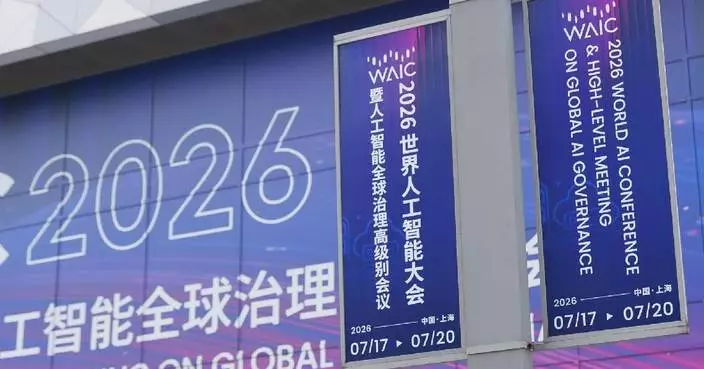
The initiative was put forward by the Cyberspace Administration of China, in collaboration with relevant authorities, during the main forum of the 2026 World AI Conference (WAIC) and High-Level Meeting on Global AI Governance, which kicked off on Friday.
Mutual trust, interconnectivity, and interoperability are the three keywords of the initiative. The extent to which these dimensions are realized in AI agents -- one of the most transformative technological forms of the AI era -- is profoundly shaping the integration of the global digital economy and the future of human society, according to an Chinese expert in the field.
Under the global cooperation initiative, "mutual trust" serves as the foundation for agent collaboration, "interconnectivity" provides the channel, and "interoperability" establishes the rules of engagement, it is explained.
AI agents are widely seen as the next frontier in technology, following large language models. Unlike models that simply wait for prompts and respond, agents can actively sense their surroundings, map out tasks, call on external tools, and continuously iterate their performance. Yet as the capabilities of a single agent keep expanding, the real headache now is how well multiple agents can work together.
That is precisely why mutual trust, interconnectivity, and interoperability have become indispensable conditions for effective collaboration among agents.
On the industry front, the initiative's implementation is poised to redraw the global AI landscape. Experts said that the AI agent market is increasingly tilting toward dominance by several tech giants, who use closed ecosystems to lock in both users and developers. By championing standardization and open interoperability, however, China's approach offers smaller enterprises and independent developers a new path to participate equitably in the intelligent industry.
"AI is a shared asset of all humanity. Its development should never be a solo act by any one country -- it has to be a symphony of global collaboration. The vision of extensive consultation, joint contribution, and shared benefits breaks with the old zero-sum mindset, champions a new paradigm of win-win collaboration, and provides the most solid foundation and the clearest pathway toward a fairer and more equitable global AI governance system. This is not just China's proposal -- it is the wisdom that belongs to the whole world," said Zhang Yitian, dean of the Institute for Artificial Intelligence Development and Governance at Harbin Institute of Technology.
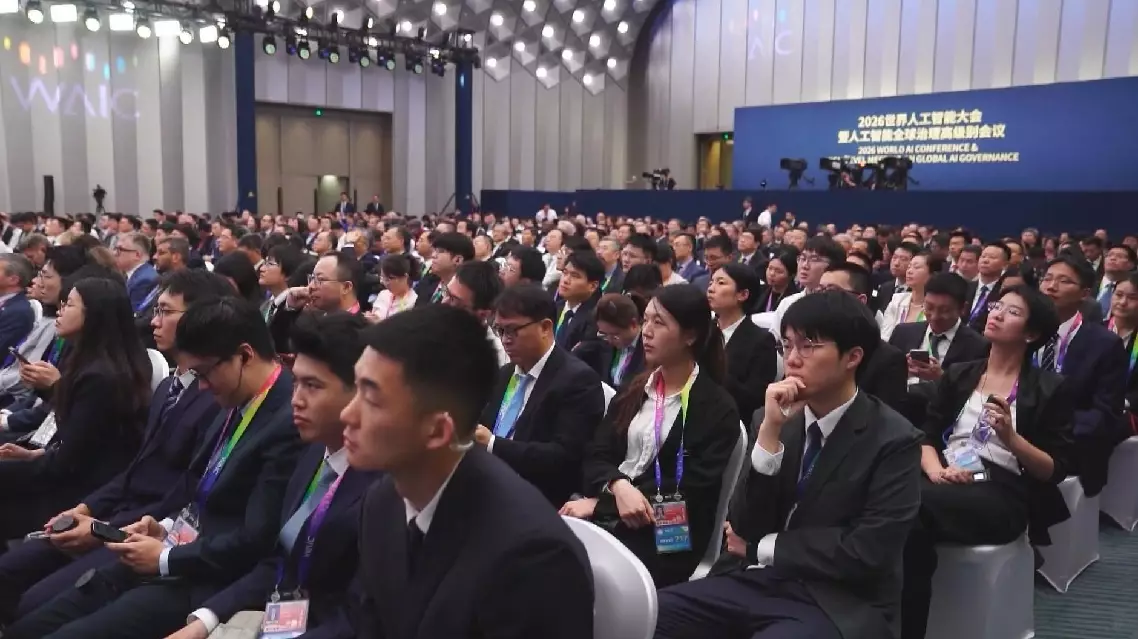
China-led global initiative unveils framework for AI agent collaboration rules