Skip to Content Facebook Feature Image

NYU scholar lauds China's AI innovation, warns against robot takeover against human

China

China

China

NYU scholar lauds China's AI innovation, warns against robot takeover against human

2026-07-19 17:03 Last Updated At:18:17

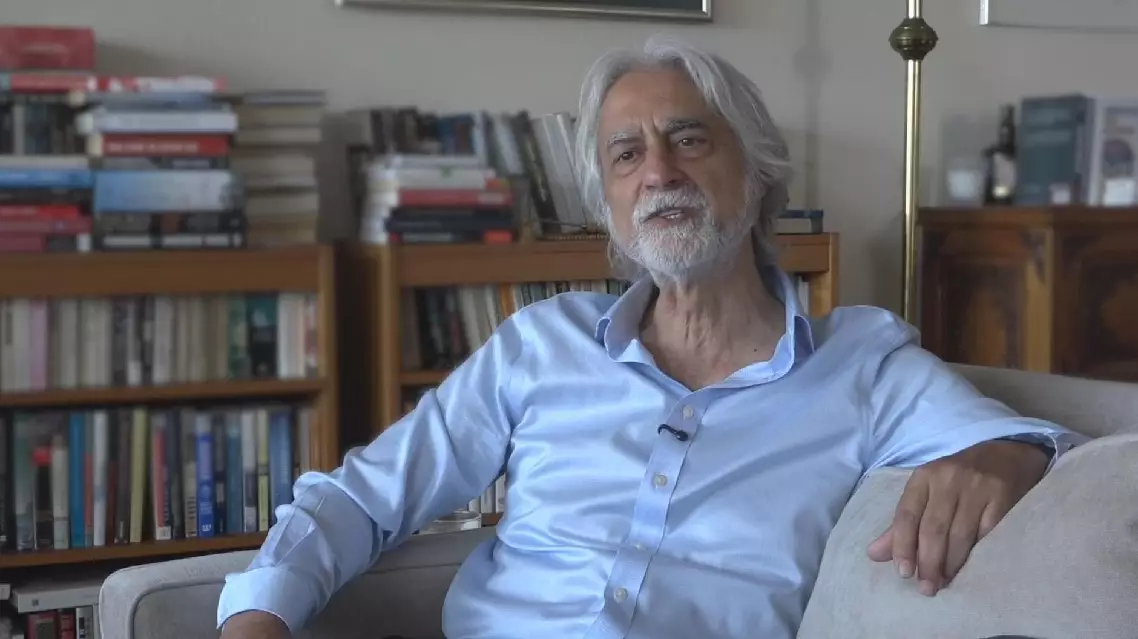
A New York University scholar has lauded China's deep investments into AI innovation and the results it has produced, while stressing that policy makers must strive to ensure that machines do not "do the thinking for" humanity.

Vasant Dhar, an AI researcher and professor at New York University's Stern School of Business, shared his insights on AI development with China Global Television Network (CGTN).

Drawing on his research on AI algorithm theory, decision-making systems and governance frameworks, he discussed China's innovative achievements in AI and its role on the global stage, noting that China has become a leader in electric vehicles, drones and humanoid robots.

"China has decided to focus on applications -- specific kinds of applications where it wants to be the leader in innovation, such as electric vehicles, drones and humanoid robots. So these are areas in which China has decided it's going to focus, because they are important areas not just for China, but for everyone," Dhar said.

"China is, in my mind, the leader in electric vehicles, the leader in drones, and also the leader in humanoid robots, because of the massive investments they've made into these technologies. But at the moment, it seems like the Chinese have gotten their act together and said, 'Okay, these are the areas in which we really want to focus and make progress,' and that's what they're doing. They develop better electric vehicles, better drones, better humanoid robots. Those are then innovations that China can export to the rest of the world. So it's (to) the great benefit of China in focusing on these applications," he said.

Humanity, Dhar said, is at a crossroads because of AI. Those with more knowledge will gain even more by asking better questions, while those who use AI as a crutch will stop thinking and lose their edge.

"What's important is that we not lose our humanity in the process, that we start thinking with and working with the machine, as opposed to having the machine do the thinking for us and make us less human -- in addition to the wonderful benefits that it's brought us. Everyone can relate to it. Everyone's using it, for work, for personal kinds of applications," Dhar said.

"And now it has exceeded our expectations to the point that it's creating certain risks. So I think what people need to focus on at this point is the risks that AI is bringing to the table and how to mitigate these risks. And that requires a conversation not just among people designing AI and designing platforms, but also regular people, policymakers, who need to really get involved in understanding this technology. Because this is a pivotal technology, and we're at a critical juncture for mankind," he said.
NYU scholar lauds China's AI innovation, warns against robot takeover against human
NYU scholar lauds China's AI innovation, warns against robot takeover against human

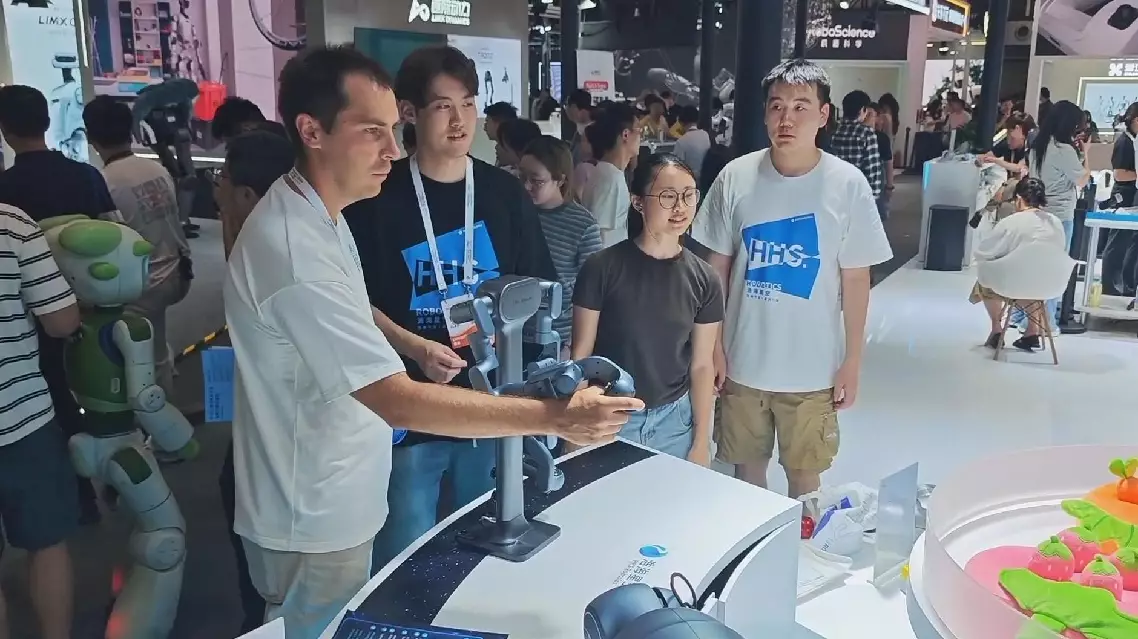
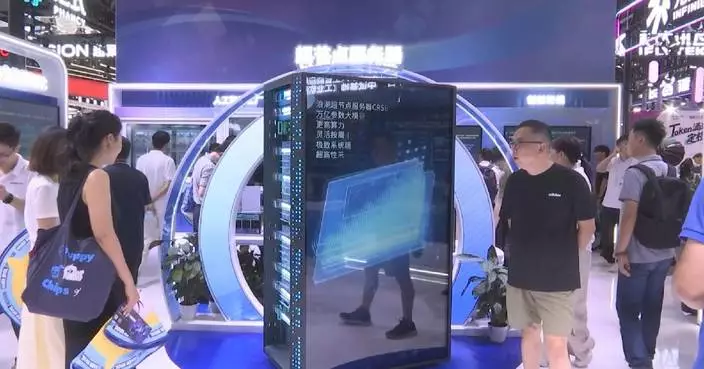
Business leaders, researchers and entrepreneurs from around the world gathered at the 2026 World Artificial Intelligence Conference (WAIC), where discussions are focusing on turning AI innovation into cross-border partnerships and real-world applications.

The 2026 WAIC is running in Shanghai from Friday to Monday under the theme "AI Partnership for a Brighter Future."

Across the exhibition halls, conversations often extended beyond product demonstrations, with visitors exploring potential partnerships, supply chains and overseas expansion.

Among them was Paolo Brizzi, chief information officer of Italy's Competence Center for Industry and Manufacturing (CIM), who met with a Chinese AI company to discuss cooperation ranging from industrial applications to entering the European market.

"My point is not to be a customer or a provider of technologies, but to identify parts [where we can] actually collaborate and work together," he said.

The four-day conference has also created opportunities for startups to connect with investors, researchers and potential customers. One startup launched an online networking group on the opening day, attracting hundreds of participants who exchanged ideas, explored business opportunities and sought technical solutions.

Participants said AI innovation depends not only on technological breakthroughs but also on cooperation across industries and countries.

"Collaboration is important because alone you cannot do so much. It needs to be a team support ecosystem," said Florian Wohlrab, CEO of Canada-based OpenHW Foundation.

For many international visitors, the conference is also an opportunity to explore how AI can help address practical challenges. Omar Khan, a participant from Pakistan, said international cooperation is essential to ensuring AI benefits everyone.

"I think, for me, we are all the one. We're human and I think we can cooperate a lot," he said.

Some attendees were looking for solutions to challenges in their home countries. A visitor from Kenya said AI applications such as weather forecast and soil analysis could help improve agricultural productivity across many parts of Africa, where farming remains a cornerstone of the economy.

As countries race to advance AI technologies, participants at this year's WAIC said the conference has become a platform for connecting ideas, technology and demand across borders, helping turn AI innovation into practical international cooperation.

World AI Conference highlights growing demand for global AI partnership

World AI Conference highlights growing demand for global AI partnership

Recommended Articles