Chinese embodied AI company AGIBOT held an Australia and New Zealand partner conference in Melbourne on Friday, announcing a Robot-as-a-Service (RaaS) model with local partners and localized solutions for mining, commercial cleaning and facility management, research and education, and cultural entertainment.
The company said the initiatives aim to accelerate the deployment of embodied AI technologies in the two markets.
At the conference, AGIBOT showcased humanoid robots, quadrupeds and commercial cleaning robots.
Industry representatives from Australia and New Zealand say the robots could be used in a variety of industrial settings. They also say advances by Chinese companies are accelerating the adoption of robotics and could help reshape the future of work.
"In my industry of education, we've seen an incredible amount of new Chinese companies into the market with brand new humanoids and quadruped robots. The innovation that we've seen has been absolutely incredible and we see now the uptake of these robotics in that industry quite well, thanks to these advancements from the Chinese companies; it's been really great to see," said Adrian Tyson, founder and CEO of Neuranext AI.
"China is clearly a world leader on AI. Investing a lot in this area, made it a national priority and really driving this forward for the world. So Chinese robotics and humanoid robots in particular are really gonna change the future of work. And our expectation is these will drive productivity and prosperity into the future for Australian industry," said David Pearce, founder and CEO of Our Robot Future.
According to AGIBOT, the RaaS model is designed to reduce customers' upfront costs, with the company supplying robot products and local partners providing logistics, technical support and deployment services.
The company said it plans to expand its local service network and advance joint innovation projects in Australia and New Zealand to support the safe and reliable commercial deployment of embodied AI technologies.

Australian entrepreneurs see Chinese robotics driving future productivity
China's imports of agricultural products in 2025 rose by more than 60 percent compared with 2017, the year before the China International Import Expo (CIIE) was launched.
At the ninth CIIE which opened in Shanghai on Thursday, guests said that the expo greatly facilitated the entry of overseas agricultural products into the Chinese market.
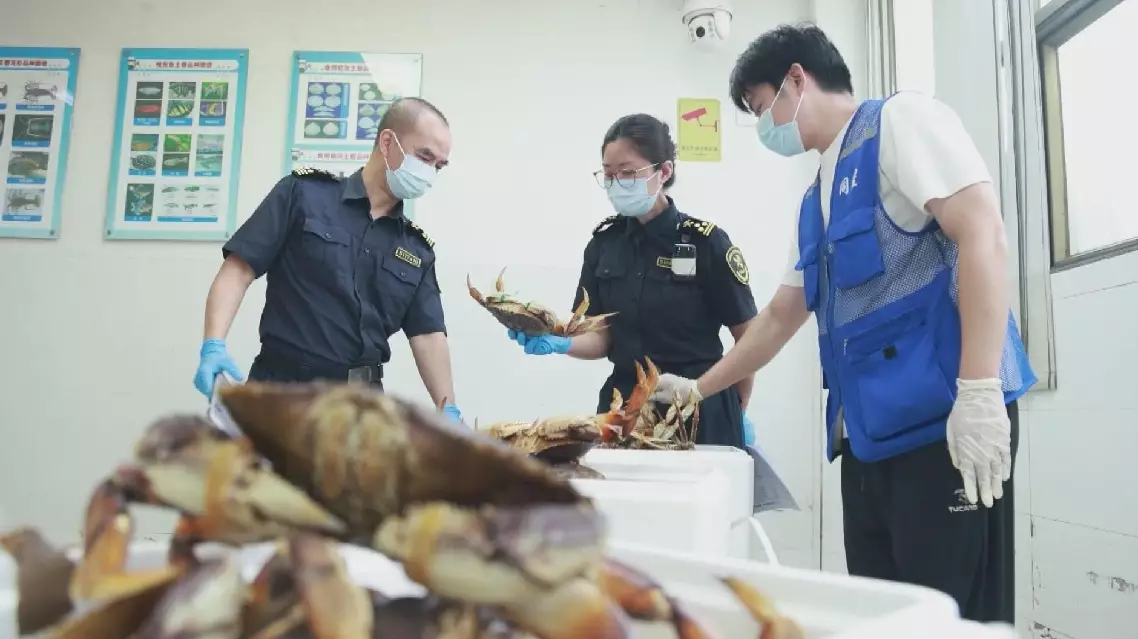
China is the world's second largest import market for agricultural produce, and also the largest importer of crabs.
In 2025, the country imported more than 130,000 tons of crabs, nearly 90 percent of them live.
"The reason why live crabs can be supplied to China year-round is that China has opened up market access to most crab species from major crab-producing countries. Currently, live crabs from over 20 countries and regions can be exported to China. Among them, mud crabs have the most sources, including 17 countries and regions such as Vietnam, Myanmar and Bangladesh," said Cao Derong, president of the China Chamber of Commerce of Import and Export of Foodstuffs, Native Produce and Animal By-Products (CFNA).
China's massive consumer demands also helped change the lives of local farmers.
"In the Shyamnagar area along the coast of Bangladesh, more local female residents have found employment as the mud-crab-farming industry expanded. They mainly work as 'inspectors', checking the water quality and environment of crab boxes every three hours. In this area alone, about 10,000 people work on crab farms," said Cao.
"Under the framework of the World Trade Organization, China's average bound tariff rate on agricultural imports is about 15 percent, far below the averages of developed and developing countries, which are around 35 percent and 55 percent, respectively. China is providing full-coverage zero-tariff treatment to all African countries with diplomatic ties, and to all least developed countries with diplomatic relations. This is an important contribution to the economic development of the Global South and developing countries around the world," said Tu Xinquan, dean of the China Institute for WTO Studies, University of International Business and Economics.
China's agricultural imports increase over 60 percent after CIIE launch