The establishment of the World Artificial Intelligence Cooperation Organization (WAICO) represents a concrete step forward in advancing global AI cooperation and governance, according to industry insiders.
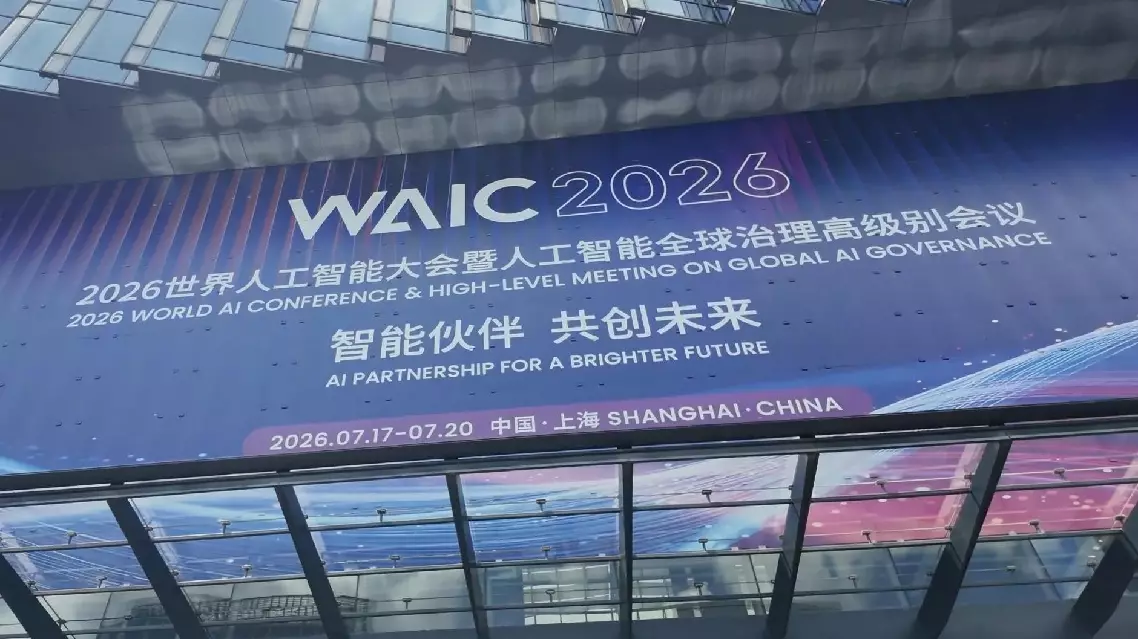
Ahead of the 2026 World AI Conference (WAIC) and High-Level Meeting on Global AI Governance that opened in Shanghai on Friday, twenty-nine countries on Thursday signed an agreement in Shanghai on establishing WAICO.
WAICO will be an independent intergovernmental international organization headquartered in Shanghai. It aims to promote international cooperation and global governance on AI, ensuring that AI is beneficial, safe and fair, thereby promoting its healthy and orderly development to benefit all humanity, according to the agreement.
Officials and leading experts have welcomed the initiative as a pivotal move that transforms AI governance from conception into concrete action.
"Since 2021, UNESCO has the ethics of AI recommendation. But we need to move from principles to implementation. This organization will focus more on building capacities -- as President Xi has announced, 5,000 technical places for AI capacity building -- and also realization that AI is so important for all member states. And there is a need for a concerted action. So we see this as a very welcome development. Leaving no one behind," said Shahbaz Khan, director and representative of the UNESCO Multisectoral Regional Office for East Asia.
"AI governance needs to turn consensus into action. I think in action, it would be very hard for 193 countries to move at the same time. We need some countries to move forward with tangible action. So I think this WAICO can really play a critical role. At the same time, we should not just focus on technical capabilities, but also governing capabilities, providing a mechanism for people to exchange ideas, to generate innovation in governance itself," said Xue Lan, dean of Schwarzman College of the Tsinghua University of China.
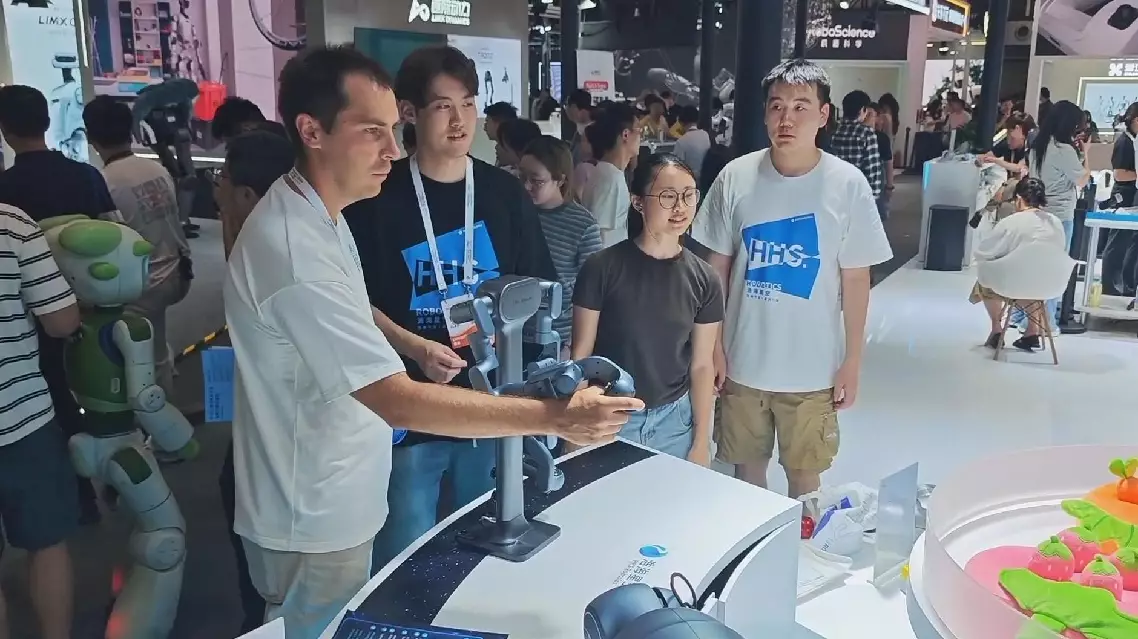
At WAIC, Chinese tech companies are showcasing a wide range of practical innovations grounded in a governance-first mindset, aiming to steer AI development toward an inclusive, responsible, and sustainable future.
"On the basis of AI, we are hoping to bring the benefits of AI into everyone's daily life. Based on our own service ecosystem and payment capabilities, we are also turning applications into real-world scenarios. Now our system is already running smoothly at Guoda drugstores in Shanghai. In the future, we hope to expand into more industries and empower people's everyday lives," said Xu Bo, a staff member of the Ant Group.
"This year, we have many 'vibe coding' creators and developers on our platform. We visited them and experienced their working and living environments. We also organized visits to embodied intelligence factories, where they took part in some hands-on experiences. They were truly amazed at the changes happening in China today and the speed at which China is moving," said San Bing, Head of Operations for Tech Community at RedNote.
China's commitment to well-governed AI is also reshaping priorities among professionals at the forefront of the industry.
"With globalization, great technology isn't enough. We need systems of governance that can adapt to different cultures while maintaining a core principle of user safety," said Xue Yafei, an expert on government relations.
"We don't just look at the tech anymore. We look at the governance behind it. A company with a strong ethical framework is a more suitable and valuable investment," said Li Jiangeng, a corporate investor.
China-proposed AI cooperation organization marks concrete action in global AI governance: industry insiders