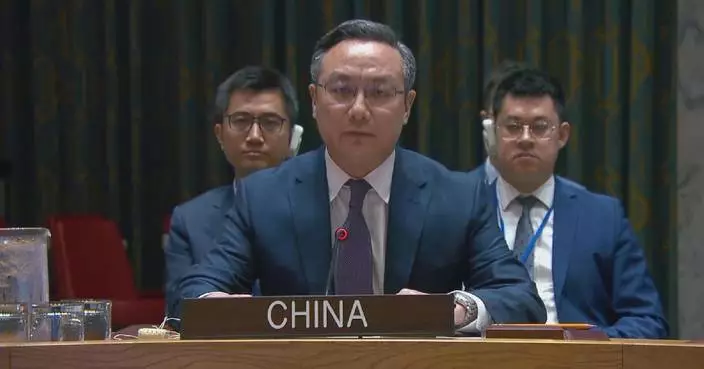
China and Europe should stick to the overarching positioning of ties as a partnership, refrain from politicizing economic and trade issues and overstretching the concept of security in exchanges, and work for an upward and dynamic balance of trade from a long-term perspective, said Chinese Foreign Minister Wang Yi on Tuesday.
Wang, also a member of the Political Bureau of the Communist Party of China Central Committee, made the remarks during a meeting with a cross-party delegation of the European Parliament, headed by David McAllister, chair of the Committee on Foreign Affairs, in Beijing.
Extending a welcome to the delegation as the first ever sent by the Committee on Foreign Affairs, Wang said China's development represents the increase of the power for peace, the enhancement of the elements of stability, and the guarantee for prosperity and development, providing the greatest certainty to world peace and development.
Wang noted that, as the European Parliament exerts significant influence over EU foreign policy, it is expected that the delegation will step up exchanges with various sectors in China, work to better ensure that the EU can develop a rational and objective view of China, and adopt proactive and correct policies towards China.
Noting China and the EU are partners, rather than rivals, and the interests of the two sides are deeply intertwined, Wang said China stands ready to strengthen coordination and cooperation with the EU on global affairs, advance an equal and orderly multipolar world and universally beneficial and inclusive economic globalization, and make positive contributions to world peace, stability and prosperity.
McAllister said the EU attaches great importance to its relations with China, applauds China's remarkable development achievements, and opposes decoupling from China. The EU welcomes the resumption of exchanges between the legislative bodies of the two sides, and stands ready to boost dialogue with China, deepen mutual understanding, and advance cooperation, to promote the sound and steady development of EU-China relations.
The EU is willing to maintain close communication with China, and bolster cooperation in areas such as green development and climate change response, among others, he added.
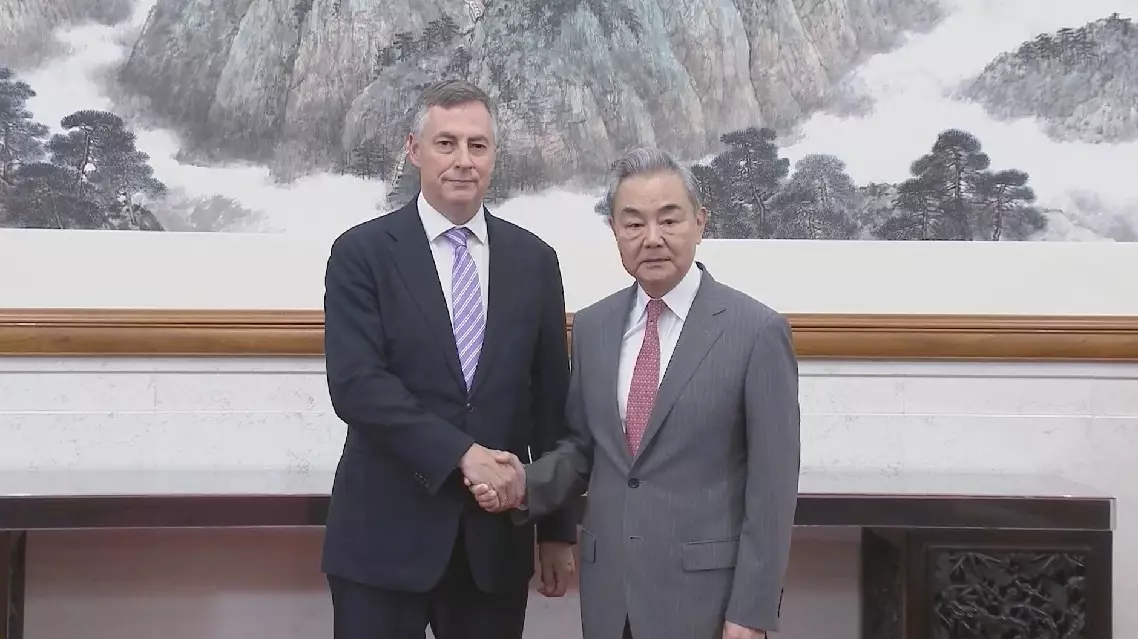
China's top diplomat stresses overarching positioning of ties with Europe as partnership