Greece is experiencing its first wave of extreme heat this summer starting on Monday, with temperatures soaring above 40 degrees Celsius across many parts of the country.
As residents adjust their daily routines to cope with the scorching conditions, a range of cooling strategies and lifestyle adaptations have become essential.
In residential neighborhoods, Greek households keep their shutters closed during daylight hours to block direct sunlight from entering their homes, achieving a natural cooling effect.
Beyond physical cooling methods such as closing shutters and setting up awnings, air conditioning has become standard equipment in many Greek homes.
According to incomplete statistics, Greece's air-conditioning ownership rate now stands at 70 percent due to consistently high summer temperatures.
To avoid the midday heat, Greeks adjust their summer schedules. Outside of tourist areas, the official "quiet hours" run from 15:00 to 17:30. During this period, playing loud music, making excessive noise, playing musical instruments, and loading or unloading goods are prohibited near residential areas to ensure people can rest peacefully. Violators face police warnings and potential fines.
Pharmacies operate from 8:00 to 14:00, close for a mid-afternoon break, and reopen at 17:30 until 20:30. Many shops across Greece follow the similar operating hours.
Due to the observance of daylight saving time, sunset in Greece occurs later, and dinner times are pushed back accordingly -- often not starting until 20:00 or even 21:00, when the air has cooled down.
In recent years, affected by climate change, Greece has experienced heat waves with increasing frequency during summer. The periods of extreme heat have grown longer and arrived earlier. Greeks have been compelled to employ every possible heat prevention and cooling measure to cope with the changing conditions.
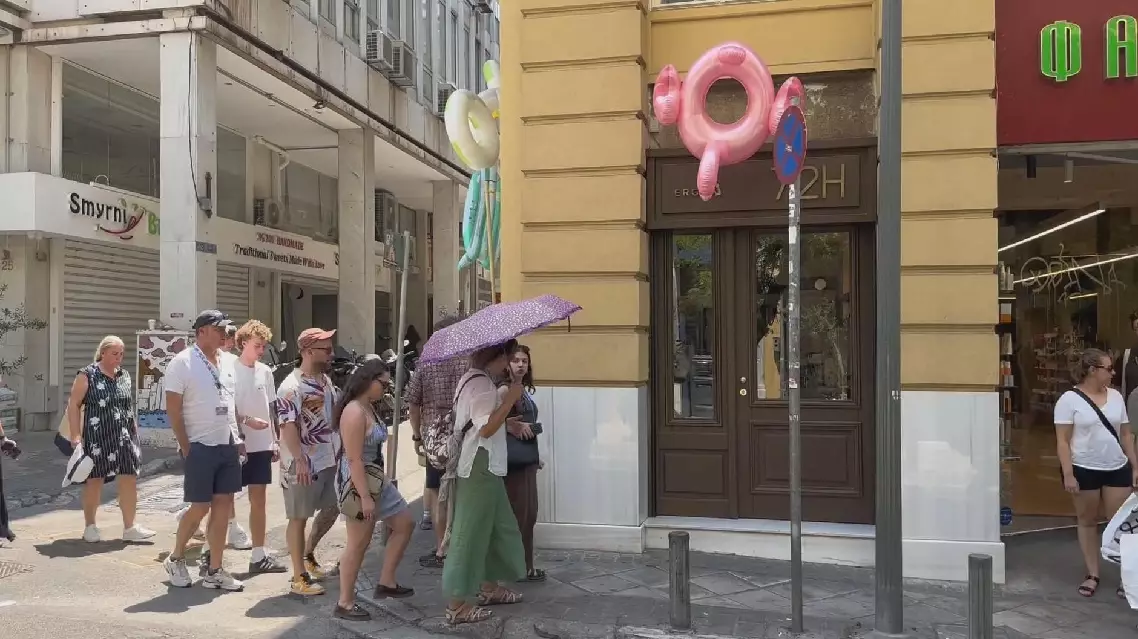
Greeks adjust daily lives to cope with extreme summer heat