Yemen's Houthi group has warned international shipping companies that vessels trading with Saudi ports could face military action, in what appears to be an escalation following the group's maritime ban announcement against Saudi Arabia.
An advisory email issued late on Monday by the group's Sanaa-based Humanitarian Operations Coordination Center said the warnings cover not only Saudi-flagged vessels but also ships loading or unloading cargo at Saudi ports.
The notice urged maritime operators to exercise "due diligence" when planning voyages involving Saudi ports, warning that vessels engaging in such trade could become "subject to targeting" within the Houthis' operational range.
The Houthis announced a maritime ban on Saudi shipping earlier in the day, citing what they called a "blockade for blockade" principle in response to Saudi Arabia's "siege for nearly 12 years."
The Saudi-led coalition in Yemen said Monday night that it would take necessary measures to protect its commercial vessels in the Bab al-Mandab Strait and respond firmly to any threats.
Regional countries, including Kuwait and Qatar, have rejected the Houthi move and reaffirmed their support for freedom of navigation under international law.
U.S. President Donald Trump said Tuesday that the Houthis have posed no recent challenge in the Red Sea and that the U.S. forces would respond if necessary.
"So far, it hasn't happened," Trump told reporters when meeting with Lebanese President Joseph Aoun at the White House. "If something like that happens we take care of it," he added.
No commercial vessel has been reported targeted under the new measures so far.
The development comes amid renewed tensions between the Houthis and Saudi Arabia after a dispute over Houthi-controlled Sanaa International Airport.
On July 13, the Yemeni government said it struck the runway at the Sanaa airport to prevent an Iranian aircraft carrying a senior Houthi delegation, which was returning from funeral ceremonies for Iran's late Supreme Leader Ali Khamenei, from landing. The Houthis blamed the attack on Riyadh, and launched missiles and drones toward the kingdom.
The Houthis have previously used missiles, drones, and naval weapons against vessels they accused of being linked to Israel and the United States during the Gaza war, forcing shipping companies to divert vessels away from the Red Sea, a vital corridor for international trade and energy shipments.
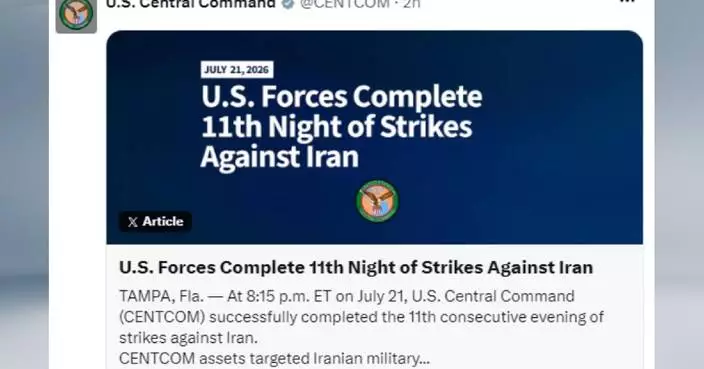
The latest development could further heighten risks to commercial navigation in the region, amid U.S.-Iran conflict over the control of the Strait of Hormuz.
Yemen has been mired in conflict since late 2014, when the Houthis seized the capital Sanaa and much of northern Yemen, prompting a Saudi-led coalition to intervene in support of the Yemeni government in 2015. The latest development has fueled concerns that the de-escalation since a 2022 UN truce could unravel.

Yemen's Houthis warn of attacks on vessels calling at Saudi ports