TACOMA, Wash.--(BUSINESS WIRE)--Jul 23, 2026--
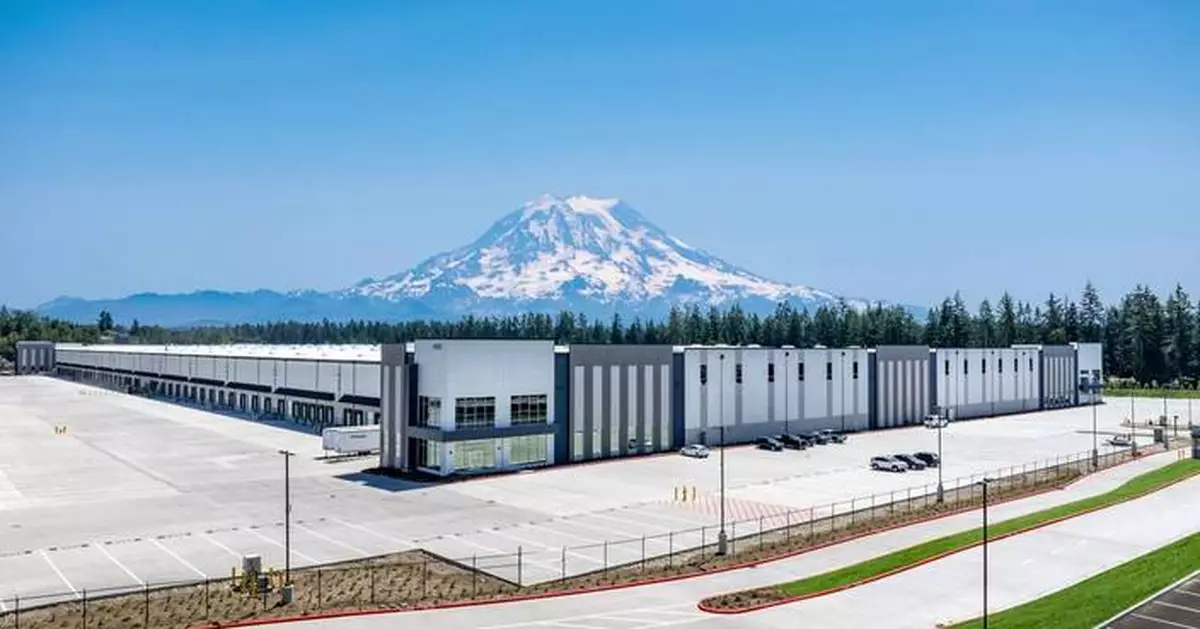
Bridge Logistics Properties (" BLP ") announced the acquisition of 6920 192nd Street, a 782,775-square-foot Class A distribution facility located in Frederickson, Washington, within the Seattle-Tacoma metro area. The transaction marks BLP's largest acquisition in the Seattle market to date, further establishing its presence in the Pacific Northwest.
This press release features multimedia. View the full release here: https://www.businesswire.com/news/home/20260723370194/en/
Completed in 2024 and fully leased to Harbor Freight Tools on a long-term basis, the facility serves as a regional distribution center supporting its network of more than 1,600 stores nationwide.
Situated on 53.3 acres approximately 17 miles from the Port of Tacoma, the largest container port in the Seattle metro area, the property offers exceptional regional connectivity to the ports, major population centers, and critical transportation infrastructure throughout the Pacific Northwest. The planned SR 167 extension to the Port of Tacoma, expected to be completed by 2030, will further enhance connectivity and reduce drive times to the port.
The facility offers best-in-class, institutional-quality specifications, including:
"This acquisition reflects our conviction in premier logistics markets with durable long-term fundamentals and meaningful barriers to large-format development," said Paul Jones, Managing Director of BLP. "Frederickson has emerged as one of the Pacific Northwest's most prominent industrial hubs, and this facility stands alone in the market for its quality and scale. It is an ideal foundation for our long-term growth in the region."
Frederickson serves as a key extension of the Kent Valley and continues to attract large corporate users including Boeing, Amazon, IKEA, Whirlpool, GE, Ashley Furniture, and Floor & Décor, alongside deep institutional ownership. The market's supply pipeline has contracted sharply, with under-construction inventory down more than 60% year-over-year, positioning well-located, large-format Class A assets to benefit as demand strengthens.
The property was developed by Panattoni and delivered in 2024 as part of the larger Fred310 industrial development in Frederickson.
Jeff Chiate and Bryce Aberg of Cushman Wakefield facilitated this acquisition.
About BLP
BLP is a vertically integrated logistics real estate investment manager led by tenured, multi-disciplinary real estate professionals with experience navigating several economic environments over the past three decades. Its founding members and leadership team employ a disciplined investment strategy that is both cycle-tested and innovative. Founded in 2021, BLP is comprised of industrial real estate veterans with prior tenure at Brookfield, Prologis, IDI Logistics, Duke Realty, Hines and KTR Partners.
BLP is highly collaborative with its institutional capital partners. Leveraging its deep local relationships and its global operating experience, BLP uncovers and executes on investment opportunities in targeted coastal and gateway markets in the U.S. BLP executes its acquisition and development strategy in a vertically integrated regional structure across five offices located in New Jersey, Atlanta, Miami, Dallas and Los Angeles. Its steadfast focus on innovation and sustainable development promotes solutions that are both profitable and socially responsible. For more information, visit BridgeBLP.com.
About Bridge Investment Group
Bridge Investment Group is an affiliate of Apollo Global Management, Inc. (NYSE: APO) and a leading alternative investment manager, diversified across specialized asset classes. Powered by Apollo, Bridge combines its nationwide operating platform with dedicated teams of investment professionals focused on select real estate verticals.
Forward-Looking Statements:
This press release has been prepared solely for informational purposes and is not to be construed as investment advice or an offer or a solicitation for the purchase or sale of any financial instrument, property, or investment. It is not intended to provide, and should not be relied upon for, tax, legal, or accounting advice. The opinions, estimates, forecasts, and statements of financial market trends are subject to change without notice due to changes in the market or economic conditions. We believe the information provided here is reliable, but do not warrant its accuracy or completeness.
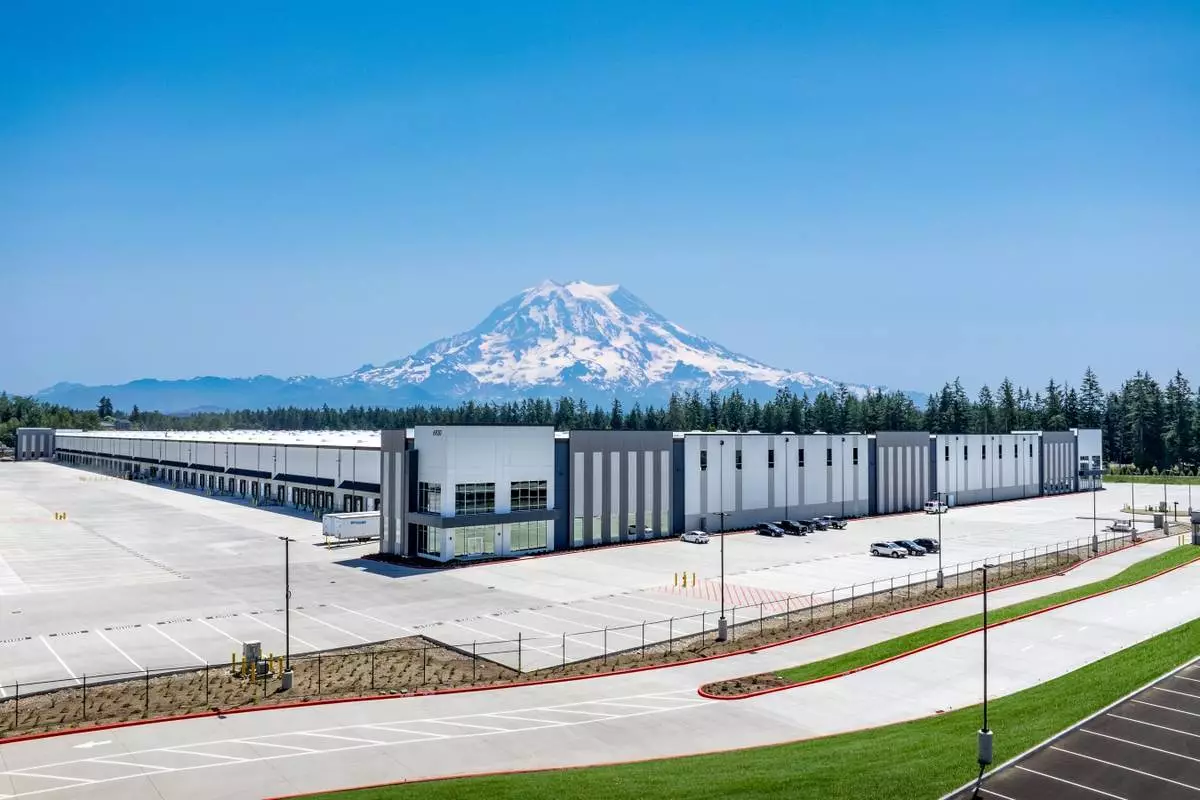
BLP's newly acquired trophy industrial facility in Frederickson, Washington, with Mount Rainier rising behind the 782,775-SF Class A distribution center.
RAMALLAH, West Bank (AP) — The world’s leading authority on food insecurity said Thursday that the situation in Gaza had improved since famine was declared in parts of the Palestinian territory last year, but warned that conditions remained at crisis levels and could slip back into catastrophe.
The Integrated Food Security Phase Classification, or IPC, said a reduction in fighting and the fact that Israel was allowing more aid into Gaza had a “significant impact, albeit unevenly across areas.” But it noted that most families living in the war-battered enclave still weren't getting nearly enough to eat.
“Even small disruptions to humanitarian access could rapidly reverse recent gains,” the report warned.
The designation underscored how conditions in Gaza have both markedly improved since last year and remain at crisis levels without immediate prospects for recovery. More than 1,185 people have been killed by Israeli strikes and shelling since last October’s agreement, according to the territory's health ministry.
Israel controls more than half the territory, leaving Palestinians confined to squalid tent camps and heavily damaged urban neighborhoods. Failing sewage systems have contributed to routine disease outbreaks and left residents with inconsistent access to basic services.
The IPC assesses hunger crises by measuring indicators of acute malnutrition and famine, including how many households are experiencing extreme food shortages, how many young children show bodily signs of malnutrition and how many people are dying from starvation.
It uses five phases to classify food insecurity. Last August, IPC confirmed famine, its most severe classification, in Gaza Governorate, which covers Gaza City. Thursday’s report classified all five governorates in the territory as being in Phase 3 “crisis” conditions while estimating that more than 200,000 residents were experiencing Phase 4 “emergency” conditions.
Although acute food insecurity — whether households can get enough food to survive — remains at crisis levels, the authority said acute malnutrition — the physical effects of not eating enough — had declined to levels classified as acceptable, despite last year’s warnings.
It has declared famines in other places, including parts of Sudan and Somalia. But the authority's declaration last August of famine in parts of Gaza was its first in the Middle East.
Israel strenuously denied allegations of widespread hunger and manmade famine in Gaza, calling them lies. But after imposing an almost total blockade on humanitarian aid from early March to mid-May last year, it began allowing more aid into the territory.
This week's assessment was IPC’s first since December 2025, when it said famine in Gaza City had not spread as feared, downgrading the governorate's classification to Phase 4.
COGAT, the Israeli military body overseeing humanitarian affairs in Gaza, said it “strongly rejects the claims and conclusions” in Thursday's report because it lacked objectivity and did not take into account Israel's data about the amount of aid entering.
As the world’s attention has shifted to Iran, efforts to advance reconstruction, demilitarize Gaza or transition governance to a U.S.-led Board of Peace have mostly stalled. “Measurable improvements in humanitarian access and overall conditions” have taken hold since Israel and Hamas signed on to an agreement that decreased the intensity of fighting, IPC said.
It warned such gains were fragile and partial.
Even with improvements, Gaza’s widespread destruction has left it almost wholly dependent on aid, the report warns. Palestinians have lost their livelihoods and access to most of the territory’s agricultural land, which lies in the more than half of Gaza that remains under Israel’s control.
The IPC cautioned about some indicators pointing to renewed deterioration. It said household food consumption has improved and acute malnutrition — not eating to the extent that it's life-threatening — has “declined significantly.” Still, roughly 1.4 million people are expected to face acute food insecurity through the end of the year, about 200,000 more than the IPC projected in its previous assessment covering mid-April through June of this year.
The prolonged nature of the crisis has contributed to a rise in reported cases of “stunting,” a condition in which children’s growth is permanently impaired by not being able to eat. IPC said the rise reflected “the cumulative impact of inadequate conditions” and, for kids, would have “lasting consequences for growth and cognitive development.”
Almost 75,000 children under five will require treatment for acute malnutrition between now and April 2027. Almost 25,000 pregnant and breastfeeding women are expected to experience acute malnutrition over the same period, though the number benefiting from supplementary feeding programs has declined “due to funding constraints and uncertainty” over whether Israel will continue allowing international aid groups to operate, the report said.
Israel introduced new registration rules for international NGOs last year that require organizations to disclose extensive information that aid workers say could endanger staff and compromise humanitarian operations. Aid organizations say the rules could force some groups to halt operations in Gaza.
__ Najib Joubain and Sam Mednick contributed reporting from Cairo and Tamariu, Spain
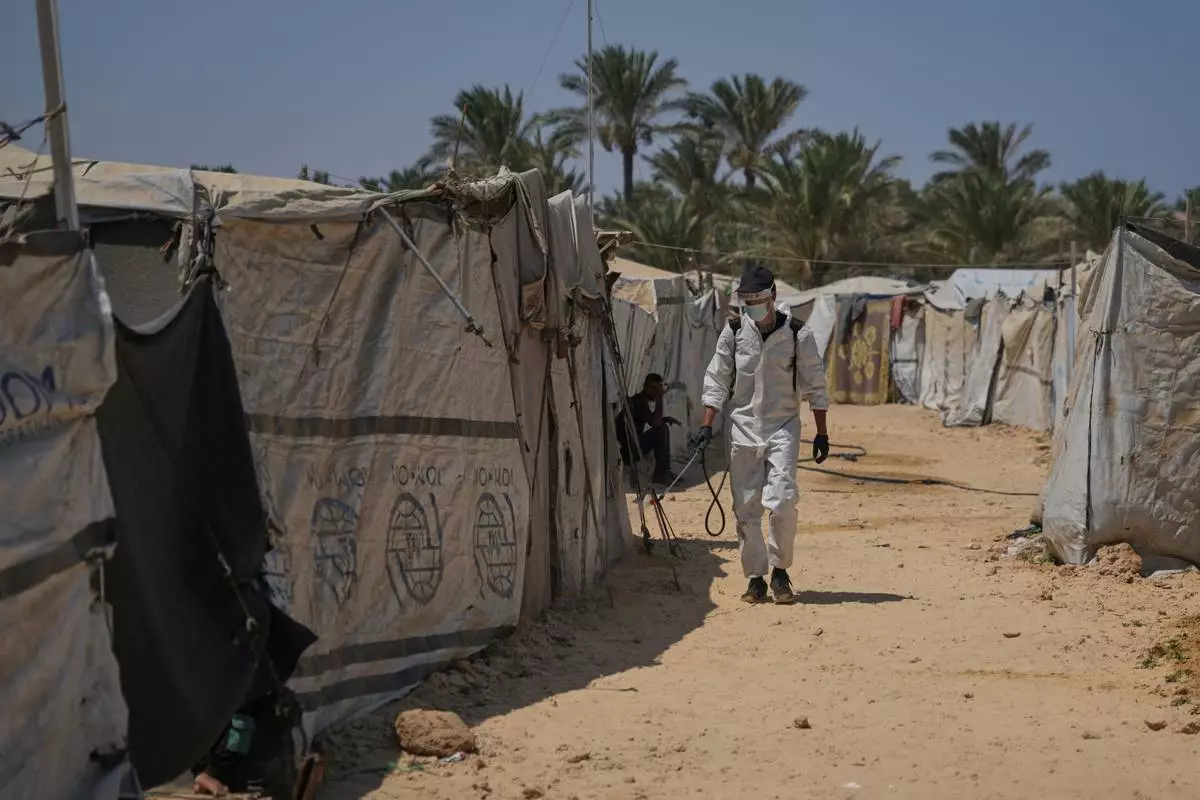
A municipal worker sprays pesticide as part of an initiative to combat rodents and insects at a tent camp for displaced Palestinians in Deir al-Balah, central Gaza Strip, Wednesday, July 22, 2026. (AP Photo/Abdel Kareem Hana)
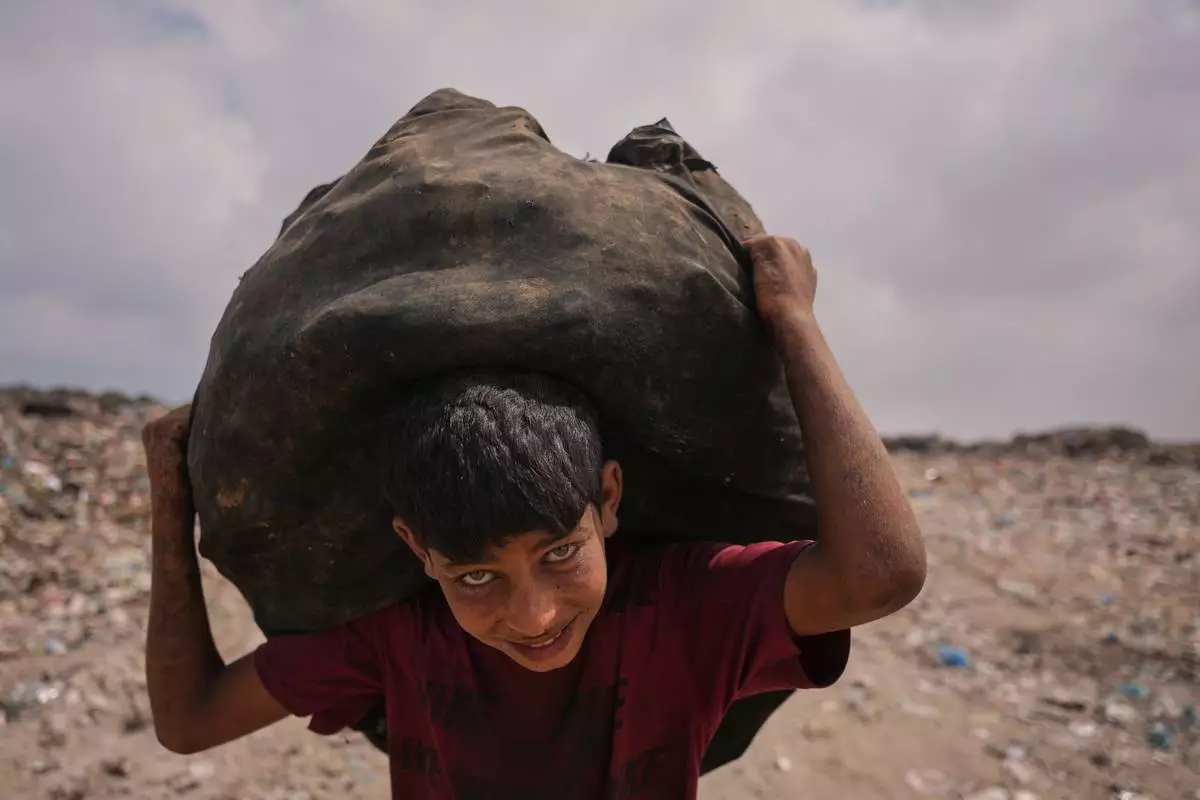
Omar Ghabin, 14, looks at the camera as he carries a bag after sorting through trash at a landfill in Deir al-Balah, central Gaza Strip, Thursday, July 23, 2026. (AP Photo/Abdel Kareem Hana)