IRBIL, Iraq (AP) — A series of explosions sounded near a military base hosting U.S. forces in northern Iraq and sirens rang out in Bahrain on Friday, hours after the American military said it finished its 13th night of strikes against Iran.
The conflict has flared again over the past week, as the U.S. has pounded Iran while Tehran has attacked ships in the Strait of Hormuz and targeted U.S. assets and allies in the region. The strait, which is a crucial passage for the world’s energy supplies, is at the center of the latest fighting since Iranian attacks can effectively shut the waterway, sending fuel prices soaring worldwide and causing widespread economic turmoil. The Iranian-allied Houthi rebels added further pressure this week by targeting two Saudi tankers in the Red Sea, making good on a threat to cut off an alternative route for the region’s oil.
Despite the unpopularity of the war in the U.S. and the widespread damage it has caused in Iran and to the global economy, the latest round of fighting has no clear off-ramp. Iran’s Health Ministry said 55 people have been killed and over 600 wounded in strikes in recent weeks, as fighting escalated.
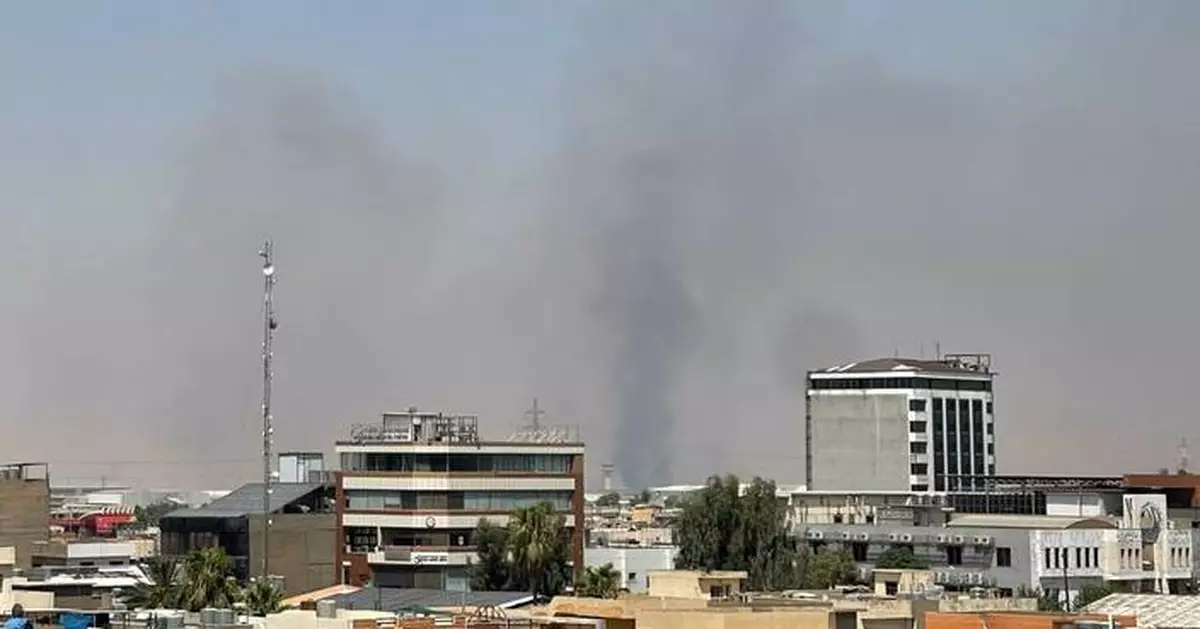
An Associated Press journalist heard at least seven blasts Friday morning in the city of Irbil, the capital of Iraq’s semi-autonomous Kurdish region, and saw at least four plumes of black smoke rising from areas near or inside a base at the city’s airport.
As the U.S. has bombed Iran, Tehran has targeted several countries in the region that host American troops. Bahrain sounded sirens twice on Friday; there were no immediate reports of damage.
U.S. strikes hit a naval base for the Revolutionary Guard in the north of Iran, the Iranian semiofficial news outlets Fars and ISNA reported Friday morning. Blasts from U.S. bombardment overnight were also reported on Iran’s Qeshm Island, a base for naval assets including drone boats that Iran can use to attack vessels in the Strait of Hormuz, as well as in Isfahan province, home to a major Iranian air base and one of Iran’s nuclear sites. More strikes reportedly hit Iran’s southwest Khuzestan province and southern Fars province.
U.S. Central Command said the latest barrage was designed to “further degrade Iran’s ability to threaten civilian mariners and commercial vessels transiting regional waters” as the Americans push to regain control over the Strait of Hormuz, through which a fifth of the world’s oil and gas transited in peacetime.
Iran’s ability to effectively close the Strait of Hormuz — and thus cause economic chaos far beyond the Middle East — gives it tremendous leverage in any negotiations. Its Houthi allies only increased that leverage when they targeted two Saudi oil tankers in the Red Sea on Thursday — increasing the risks of shipping through another vital route for Middle Eastern oil.
Brent crude, the international standard, topped $100 a barrel in the wake of the attacks, though it has since come down.
The attacks made good on the Houthis' threat to close the Bab el-Mandeb Strait to Saudi-linked shipping. The strait at the southern tip of the Arabian Peninsula connects the Red Sea to the Gulf of Aden, and around 12% of the world’s trade, including a fourth of global container traffic, passes through there.
That passage has become ever more crucial for Saudi Arabia, which has diverted millions of barrels of oil a day to its Red Sea port of Yanbu as a way of bypassing the Strait of Hormuz.
U.S. President Donald Trump threatened “major military punishment” against the Houthis if their attacks on ships continue.
Trump also warned Iran over its attacks on ships, saying on social media Thursday that sanctioned Iranian funds in U.S. possession will be used to cover the expense of fixing boats damaged in the war.
“Please let this statement serve to represent, until further notice, that from this point forth, any and all damages done to Ships, Cargo, or anything related thereto, will be paid for by Iranian Money that the United States has in its possession, and controls,” Trump said.
It was unclear what legal mechanisms Trump would use to access and spend the funds.
Iran's Foreign Minister Abbas Araghchi condemned the suggestion, writing on X that “once governments normalize confiscation, no one’s assets are safe. Ensuing chaos will not be pretty or peaceful.”
Frankel reported from Jerusalem.
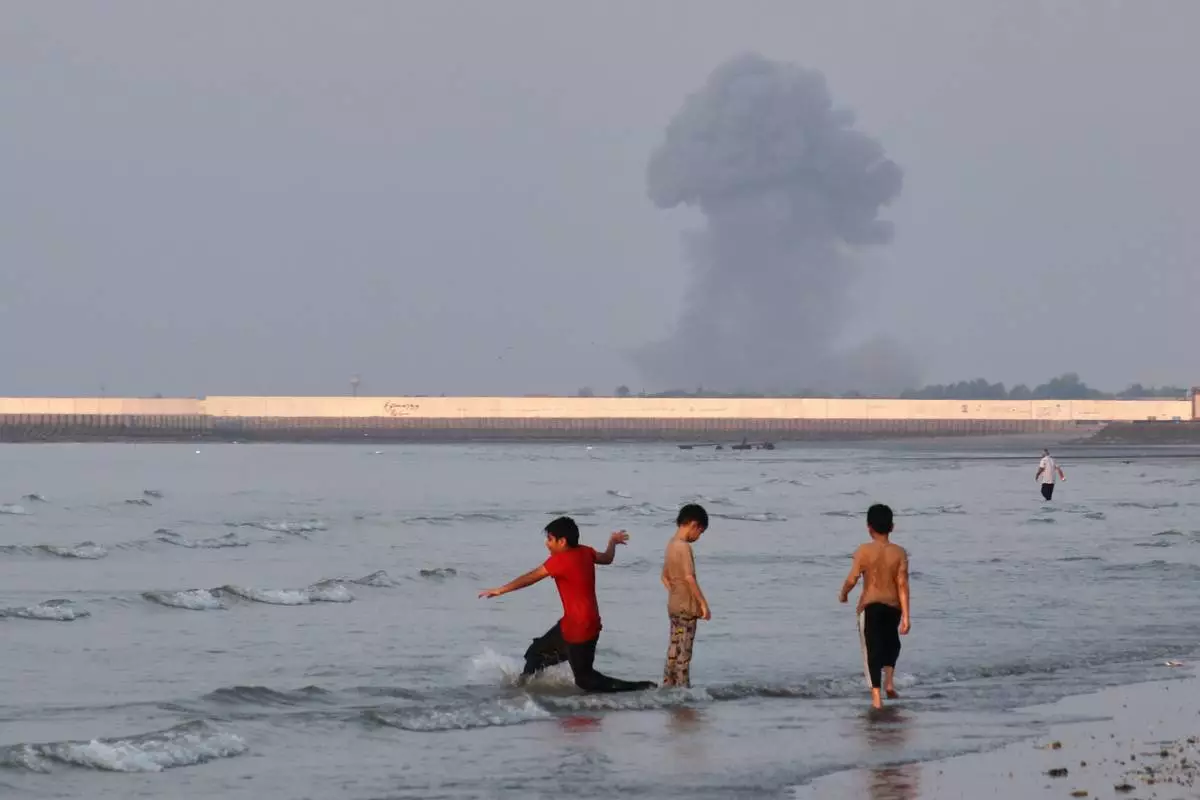
Three boys play in the shallow waters of the Strait of Hormuz, as a plume of smoke rises from an explosion in the background, off Bandar Abbas, Iran, Monday, July 13, 2026. (Razieh Poudat/ISNA via AP)
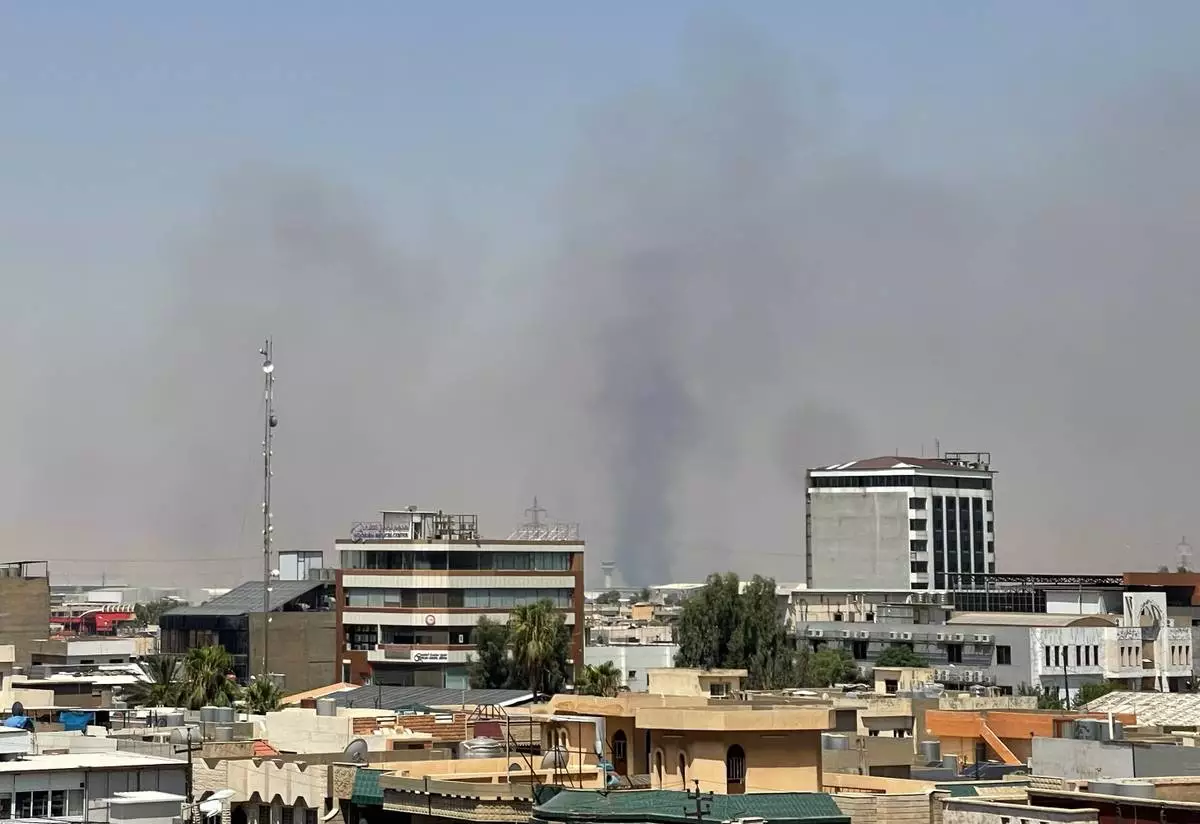
Black smoke rises following explosions near a military base hosting U.S. forces in the northern Iraqi city of Irbil, Friday, July 24, 2026. (AP Photo/Stella Martany)
BERLIN (AP) — German Chancellor Friedrich Merz reshuffled top posts on Friday as he tries to boost the fortunes of his deeply unpopular government ahead of regional elections in which a far-right party could get its first state governor.
Merz took office less than 15 months ago with pledges to reform and turn around Germany’s economy, Europe’s biggest, after years of stagnation. But that economic turnaround has been slow to start. And the middle-of-the-road coalition of Merz’s center-right Union bloc and the center-left Social Democrats, two traditional rivals, has yet to persuade voters that it can produce results.
That has resulted in Merz’s popularity sinking to rock-bottom levels, while the far-right Alternative for Germany, or AfD, has gained support on the back of widespread discontent.
Merz took the opportunity to make a series of changes after a senior ally quit as the leader of his bloc's parliamentary group over personal conduct that undermined his credibility. Merz plans to put his chief of staff, Thorsten Frei, in that job.
The German leader said Health Minister Nina Warken will take Frei’s place at the chancellery, a post that is key to the smooth functioning of the government. She will be the first woman to take that job. Another close ally, Carsten Linnemann, the general secretary of Merz’s Christian Democratic Union party, will become health minister.
Merz said there will be further Cabinet changes, but didn’t offer details. He said those decisions will take “a few days yet, and perhaps more time.”
“The personnel changes follow a clear line,” he said. “We want a government that works with great vigor and pleasure and also represents the personal diversity of our society and politics. We are a reform government and want to continue showing that.”
The governing parties face three difficult regional elections in September. In the eastern region of Saxony-Anhalt on Sept. 6, AfD is hopeful of winning a majority that would give it control of a state government for the first time.
After months in which voters were turned off by squabbling in the coalition, Merz’s government recently embarked on big plans for potentially painful change — including a proposed reform of the creaking pension system that would include raising the retirement age gradually, income tax cuts for low- and middle-income earners and an effort to slash red tape.
“The government has found its rhythm, despite some criticism,” Merz declared last week. “We have delivered, and we have recognized the dimension of the tasks we face.”
Only days later, though, he faced a new distraction. Jens Spahn quit as leader of the Union’s parliamentary group — one of the most powerful positions in the coalition — after it emerged that he and his husband had used the services of a surrogate mother in the U.S. to have a baby.
Surrogacy isn’t allowed in Germany. Merz’s party opposes allowing it, a position that it reaffirmed at a convention in February, and Spahn himself had spoken out against it in the past. That prompted accusations of double standards.
Frei will now take Spahn’s job, a position he’s widely considered better suited to than coordinating the chancellery. Frei was the Union’s parliamentary chief whip under Merz when the center-right was in opposition.
Warken takes his place at the chancellery after shepherding the first of the government’s reforms, meant to curb rising costs in the German health insurance system, through parliament earlier this month.
Merz said she has showed that “she can push through reforms against resistance," praised her as a tough negotiator and said that “she is also at home with the security policy issues” that are important at the chancellery.
Linnemann, a conservative who lacks government experience, will take her place at the Health Ministry. Merz said that “we must maintain the course of reform” in health policy and that requires a “steadfast” minister.
“Friedrich Merz wants to show that this coalition is capable of acting, that he as chancellor is capable of acting,” Uwe Jun, a political science professor at the University of Trier, told Deutschlandfunk radio. “He wants to put it on a faster and stronger path now.”
Merz took no questions and didn't mention several German media reports that he also plans to replace Transport Minister Patrick Schnieder.
Merz’s coalition last year set up a huge fund to underpin an effort to upgrade worn-out transport infrastructure, but frustration remains — for example with the unreliability of the national railway.
AfD co-leader Alice Weidel argued that Merz had caused “yet more chaos” with his reshuffle and said in a post on X that the government being preoccupied with itself doesn't do justice to Germany's “many-faceted” problems.
“Germany needs new elections,” she wrote. The next national election isn't due until early 2029.

Chancellor Friedrich Merz, second from right, arrives with Nina Warken, left, Philipp Amthor, second from left, and Carsten Linnemann, right, for statement about planned personnel changes in his government at the chancellery in Berlin, Germany, Friday, July 24, 2026. (AP Photo/Markus Schreiber)
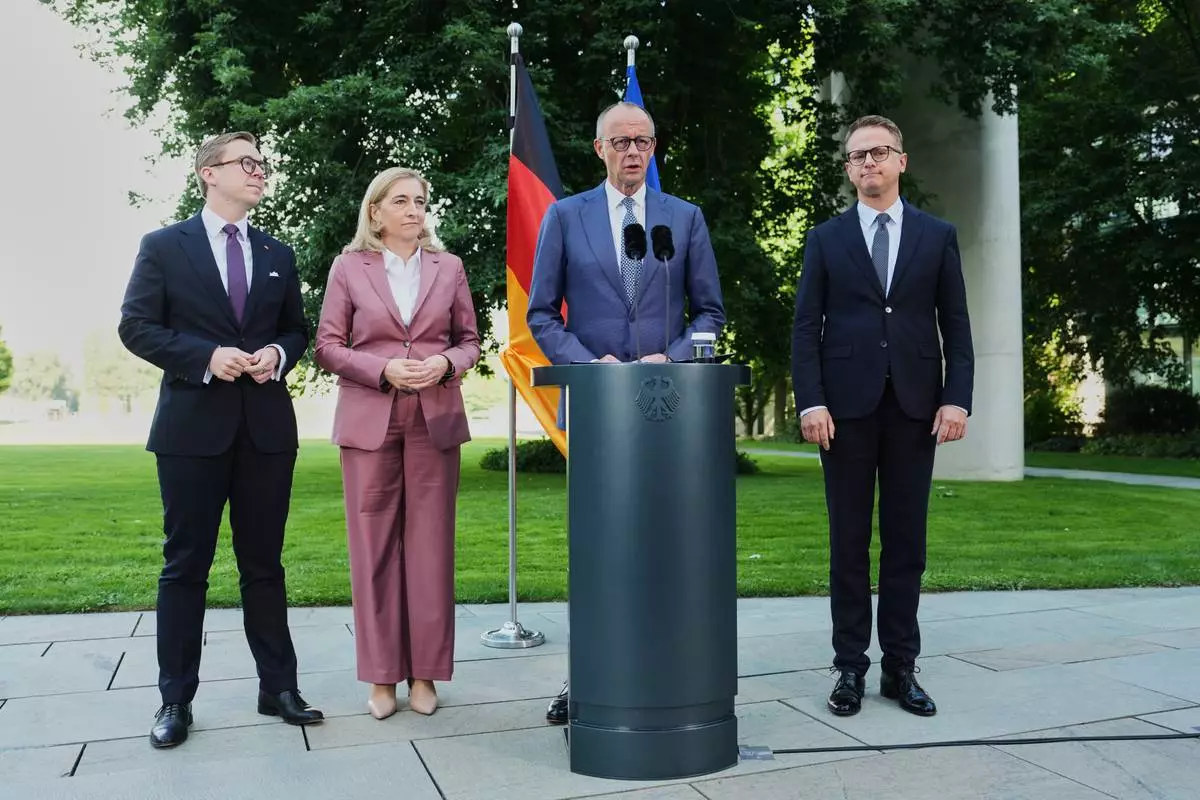
From left: Federal Chancellor Friedrich Merz arrives with Philipp Amthor, Nina Warken and Carsten Linnemann and for statement about planned personnel changes in his government at the chancellery in Berlin, Germany, Friday, July 24, 2026. (AP Photo/Markus Schreiber)
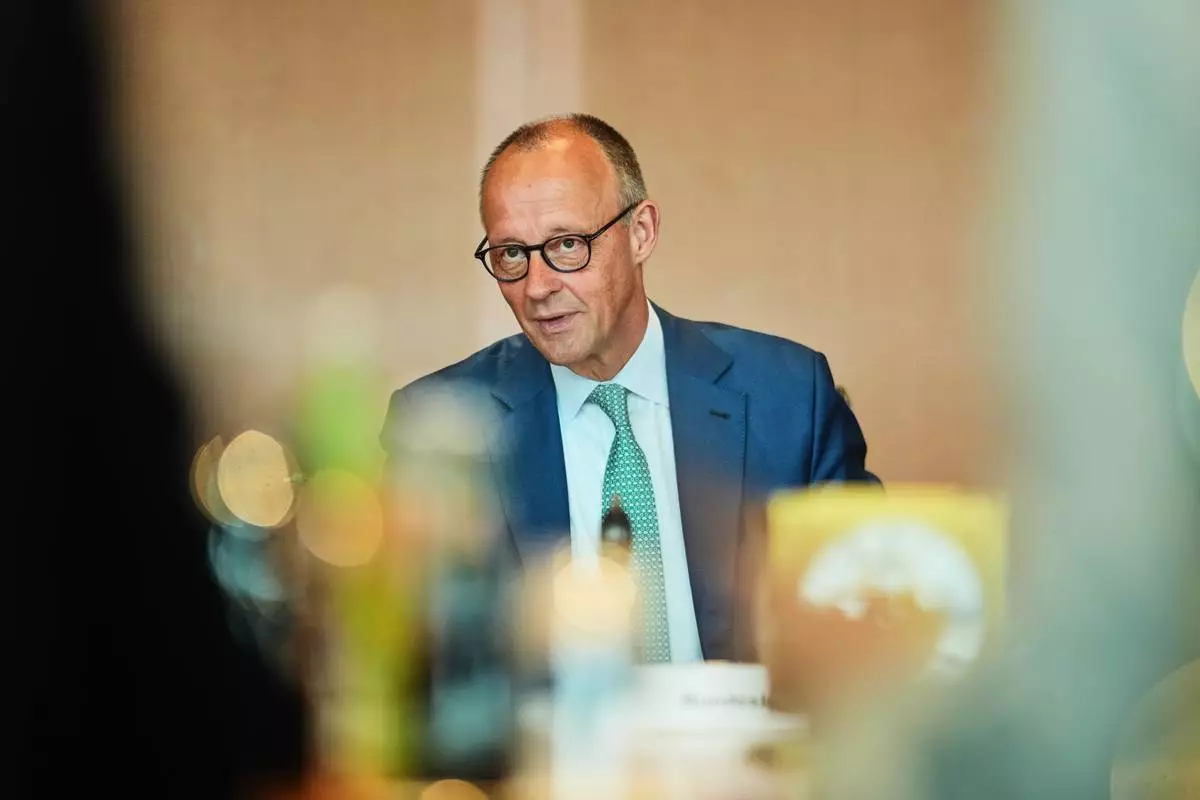
German Chancellor Friedrich Merz arrives for a cabinet meeting at the chancellery in Berlin, Germany, Wednesday, July 22, 2026. (AP Photo/Markus Schreiber)
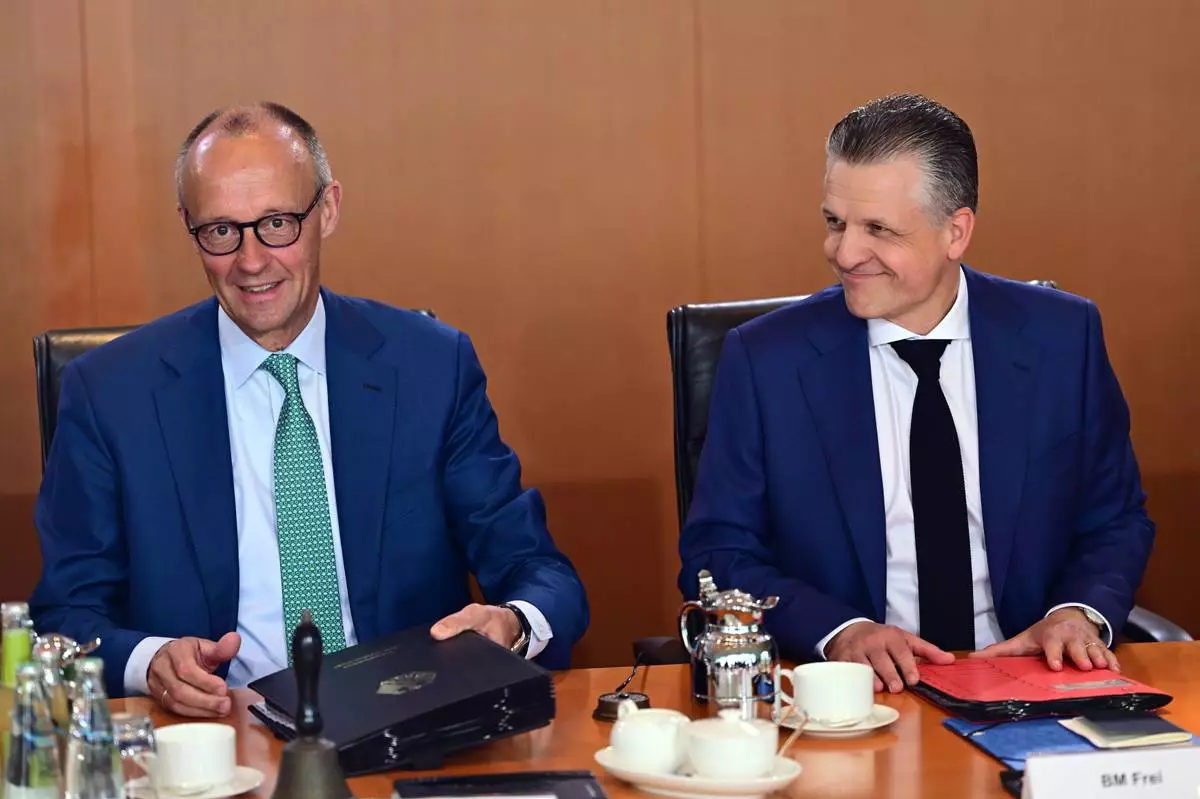
German Chancellor Friedrich Merz, left, and Thorsten Frei, Head of the Federal Chancellery and Federal Minister for Special Tasks attend the cabinet meeting at the chancellery in Berlin, Germany, Wednesday, July 22, 2026. (Sebastian Gollnow/dpa via AP)