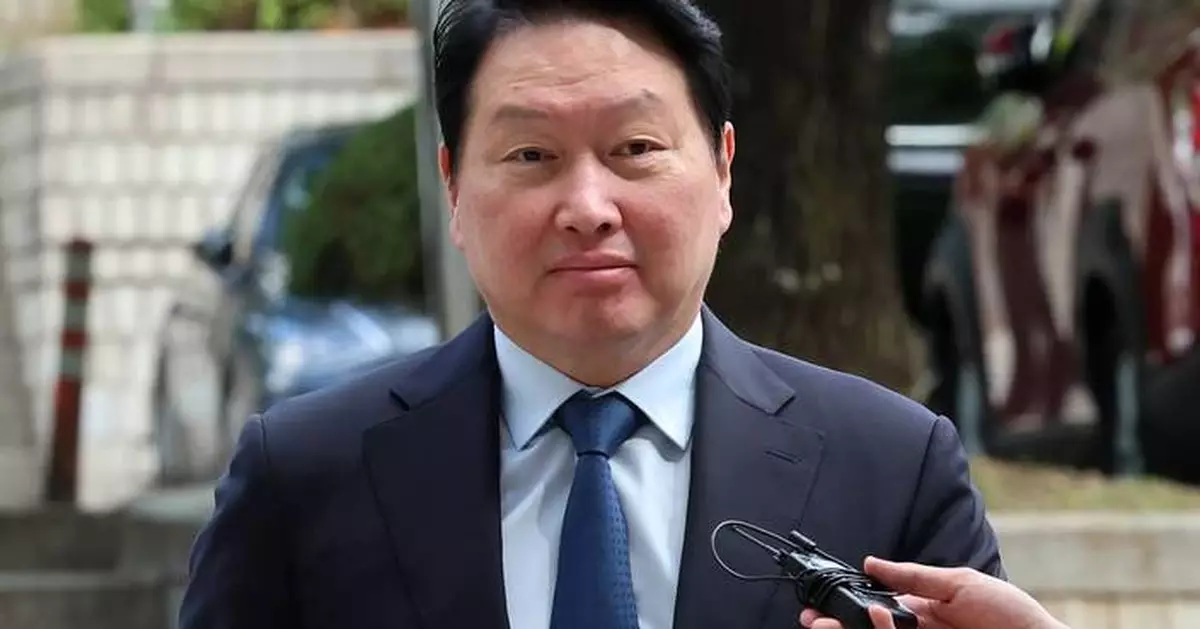
SEOUL, South Korea (AP) — A South Korean court on Friday ordered billionaire SK Group Chairman Chey Tae-won to pay his ex-wife 944 billion won ($640 million) in a case that the national media dubbed the “divorce of the century.”
The Seoul High Court’s ruling came months after the Supreme Court ordered further review by the appellate court of the divorce case between Chey and Roh So-yeong, the daughter of former South Korean President Roh Tae-woo.
The award to Roh, the director of a Seoul art museum, was lower than a 1.38 trillion won ($940 million) settlement ordered by the high court last year. Chey also was previously ordered to pay 2 billion won ($1.3 million) in alimony.
The value of Chey’s assets increased in recent months. Shares of SK Hynix, SK’s semiconductor affiliate, have surged with the global artificial intelligence boom.
The high court’s previous ruling was based in part on its finding that Roh’s father provided SK with 30 billion won ($20.4 million) in alleged slush funds during his presidency. The Supreme Court, however, ruled the funds could not be recognized as a legal contribution to the company’s growth.
Chey and Roh married in 1988 and have three children. Chey filed for divorce in 2017 after revealing he was in a relationship with another woman and had a child with her.
The case can be sent back to the Supreme Court if appeals are filed by Chey or Roh, who did not attend Friday's high court ruling.
Chey is among the South Korean business leaders traveling to the United States with President Lee Jae Myung, who is expected to meet U.S. tech leaders including Anthropic’s Dario Amodei, Open AI’s Sam Altman and Nvidia’s Jensen Huang in San Francisco on Friday to promote investment into South Korean AI and semiconductor initiatives.
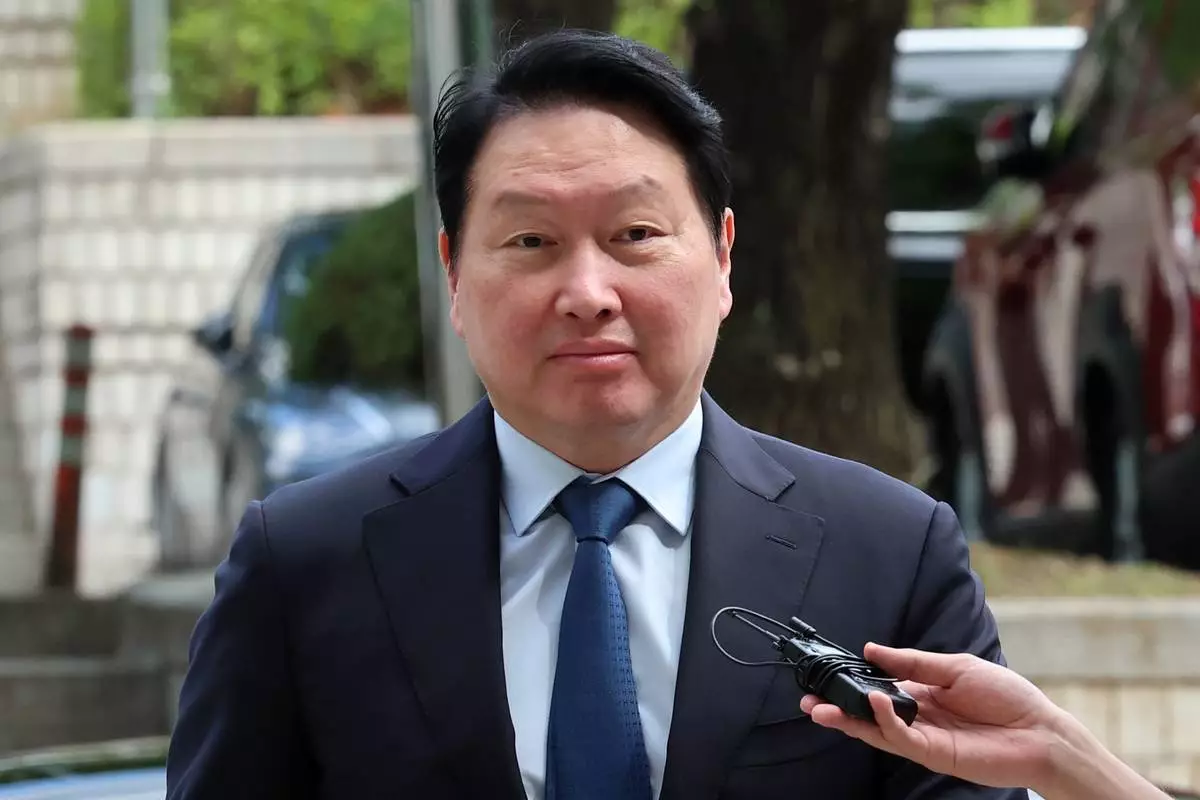
SK Group Chairman Chey Tae-won arrives at the Seoul High Court in Seoul, South Korea, Friday, June 26, 2026. (Lee Young-hwan/Newsis via AP)
BERLIN (AP) — German Chancellor Friedrich Merz reshuffled top posts on Friday as he tries to boost the fortunes of his deeply unpopular government ahead of regional elections in which a far-right party could get its first state governor.
Merz took office less than 15 months ago with pledges to reform and turn around Germany’s economy, Europe’s biggest, after years of stagnation. But that economic turnaround has been slow to start. And the middle-of-the-road coalition of Merz’s center-right Union bloc and the center-left Social Democrats, two traditional rivals, has yet to persuade voters that it can produce results.
That has resulted in Merz’s popularity sinking to rock-bottom levels, while the far-right Alternative for Germany, or AfD, has gained support on the back of widespread discontent.
Merz took the opportunity to make a series of changes after a senior ally quit as the leader of his bloc's parliamentary group over personal conduct that undermined his credibility. Merz plans to put his chief of staff, Thorsten Frei, in that job.
The German leader said Health Minister Nina Warken will take Frei’s place at the chancellery, a post that is key to the smooth functioning of the government. She will be the first woman to take that job. Another close ally, Carsten Linnemann, the general secretary of Merz’s Christian Democratic Union party, will become health minister.
Merz said there will be further Cabinet changes, but didn’t offer details. He said those decisions will take “a few days yet, and perhaps more time.”
“The personnel changes follow a clear line,” he said. “We want a government that works with great vigor and pleasure and also represents the personal diversity of our society and politics. We are a reform government and want to continue showing that.”
The governing parties face three difficult regional elections in September. In the eastern region of Saxony-Anhalt on Sept. 6, AfD is hopeful of winning a majority that would give it control of a state government for the first time.
After months in which voters were turned off by squabbling in the coalition, Merz’s government recently embarked on big plans for potentially painful change — including a proposed reform of the creaking pension system that would include raising the retirement age gradually, income tax cuts for low- and middle-income earners and an effort to slash red tape.
“The government has found its rhythm, despite some criticism,” Merz declared last week. “We have delivered, and we have recognized the dimension of the tasks we face.”
Only days later, though, he faced a new distraction. Jens Spahn quit as leader of the Union’s parliamentary group — one of the most powerful positions in the coalition — after it emerged that he and his husband had used the services of a surrogate mother in the U.S. to have a baby.
Surrogacy isn’t allowed in Germany. Merz’s party opposes allowing it, a position that it reaffirmed at a convention in February, and Spahn himself had spoken out against it in the past. That prompted accusations of double standards.
Frei will now take Spahn’s job, a position he’s widely considered better suited to than coordinating the chancellery. Frei was the Union’s parliamentary chief whip under Merz when the center-right was in opposition.
Warken takes his place at the chancellery after shepherding the first of the government’s reforms, meant to curb rising costs in the German health insurance system, through parliament earlier this month.
Merz said she has showed that “she can push through reforms against resistance," praised her as a tough negotiator and said that “she is also at home with the security policy issues” that are important at the chancellery.
Linnemann, a conservative who lacks government experience, will take her place at the Health Ministry. Merz said that “we must maintain the course of reform” in health policy and that requires a “steadfast” minister.
“Friedrich Merz wants to show that this coalition is capable of acting, that he as chancellor is capable of acting,” Uwe Jun, a political science professor at the University of Trier, told Deutschlandfunk radio. “He wants to put it on a faster and stronger path now.”
Merz took no questions and didn't mention several German media reports that he also plans to replace Transport Minister Patrick Schnieder.
Merz’s coalition last year set up a huge fund to underpin an effort to upgrade worn-out transport infrastructure, but frustration remains — for example with the unreliability of the national railway.
AfD co-leader Alice Weidel argued that Merz had caused “yet more chaos” with his reshuffle and said in a post on X that the government being preoccupied with itself doesn't do justice to Germany's “many-faceted” problems.
“Germany needs new elections,” she wrote. The next national election isn't due until early 2029.
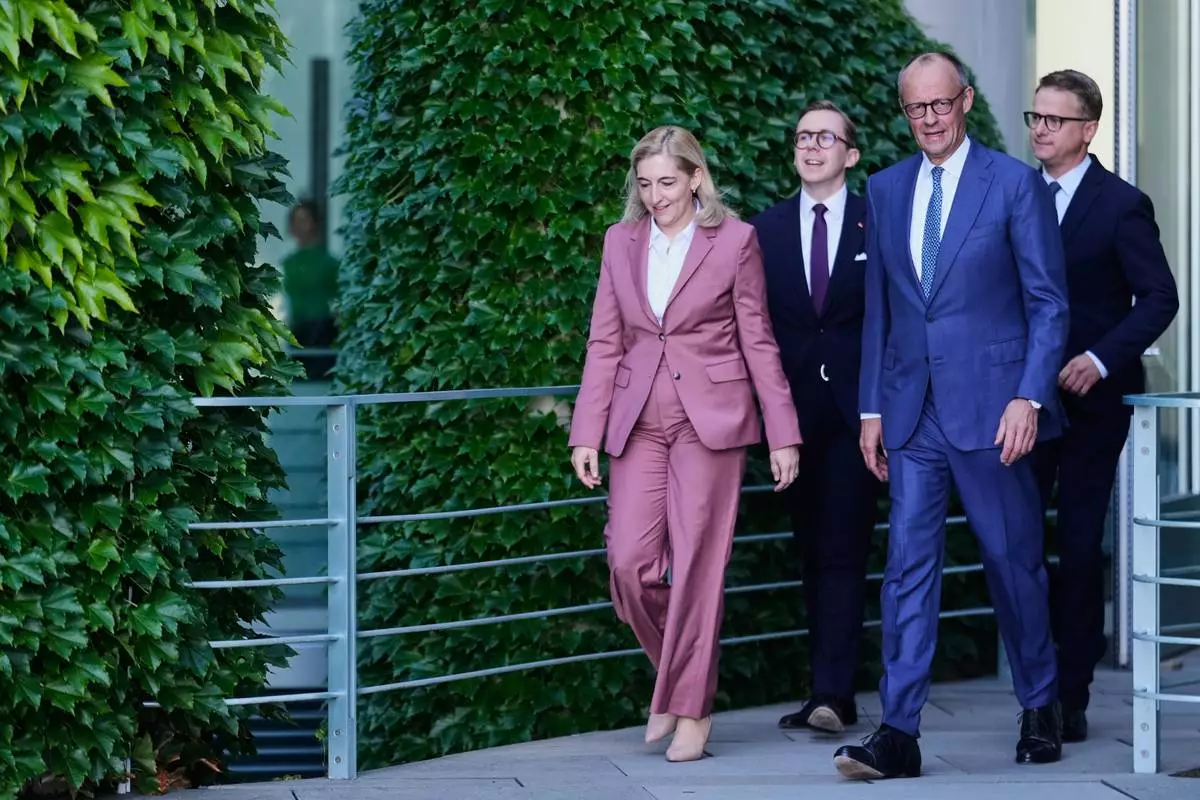
Chancellor Friedrich Merz, second from right, arrives with Nina Warken, left, Philipp Amthor, second from left, and Carsten Linnemann, right, for statement about planned personnel changes in his government at the chancellery in Berlin, Germany, Friday, July 24, 2026. (AP Photo/Markus Schreiber)
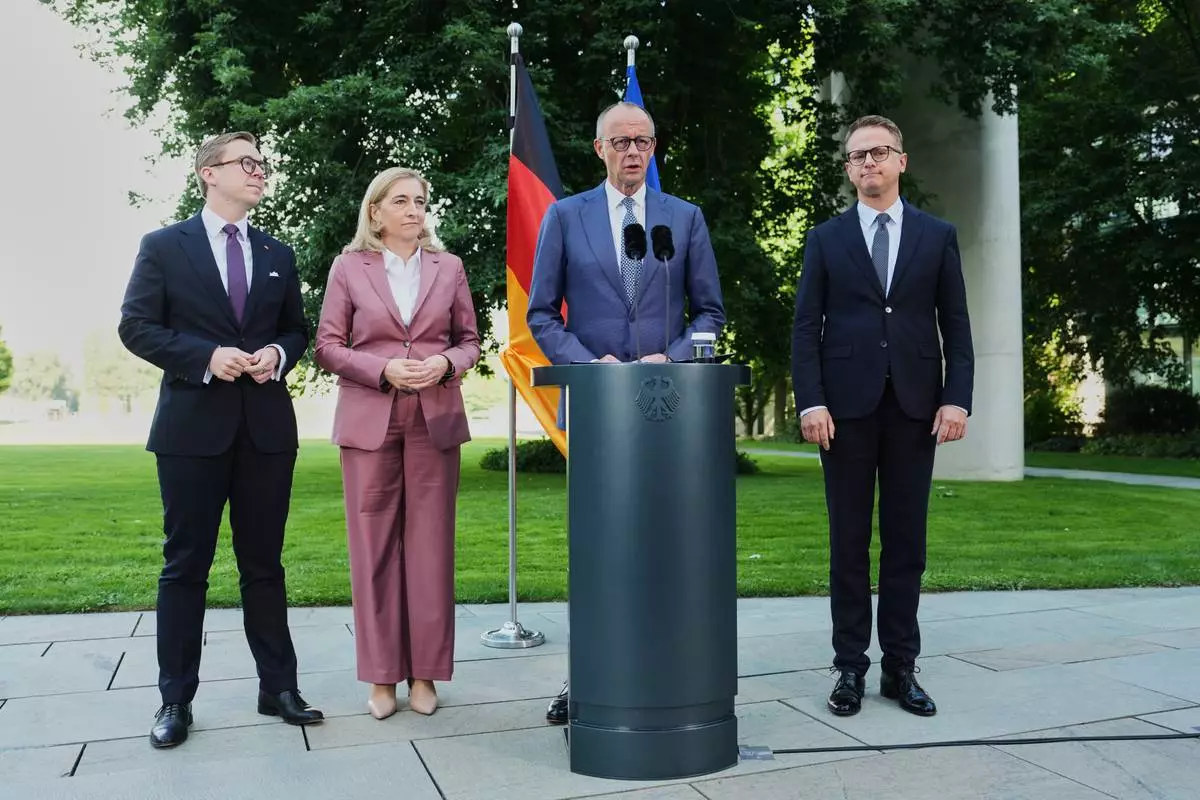
From left: Federal Chancellor Friedrich Merz arrives with Philipp Amthor, Nina Warken and Carsten Linnemann and for statement about planned personnel changes in his government at the chancellery in Berlin, Germany, Friday, July 24, 2026. (AP Photo/Markus Schreiber)
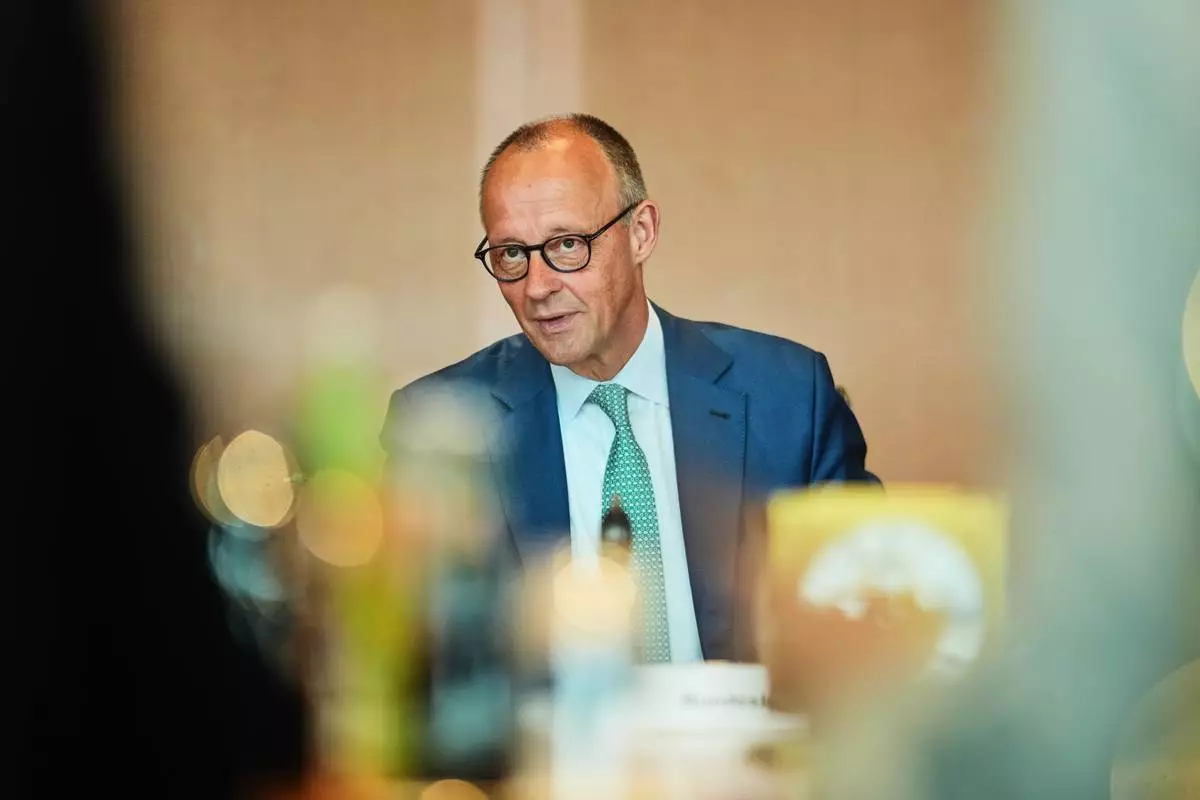
German Chancellor Friedrich Merz arrives for a cabinet meeting at the chancellery in Berlin, Germany, Wednesday, July 22, 2026. (AP Photo/Markus Schreiber)
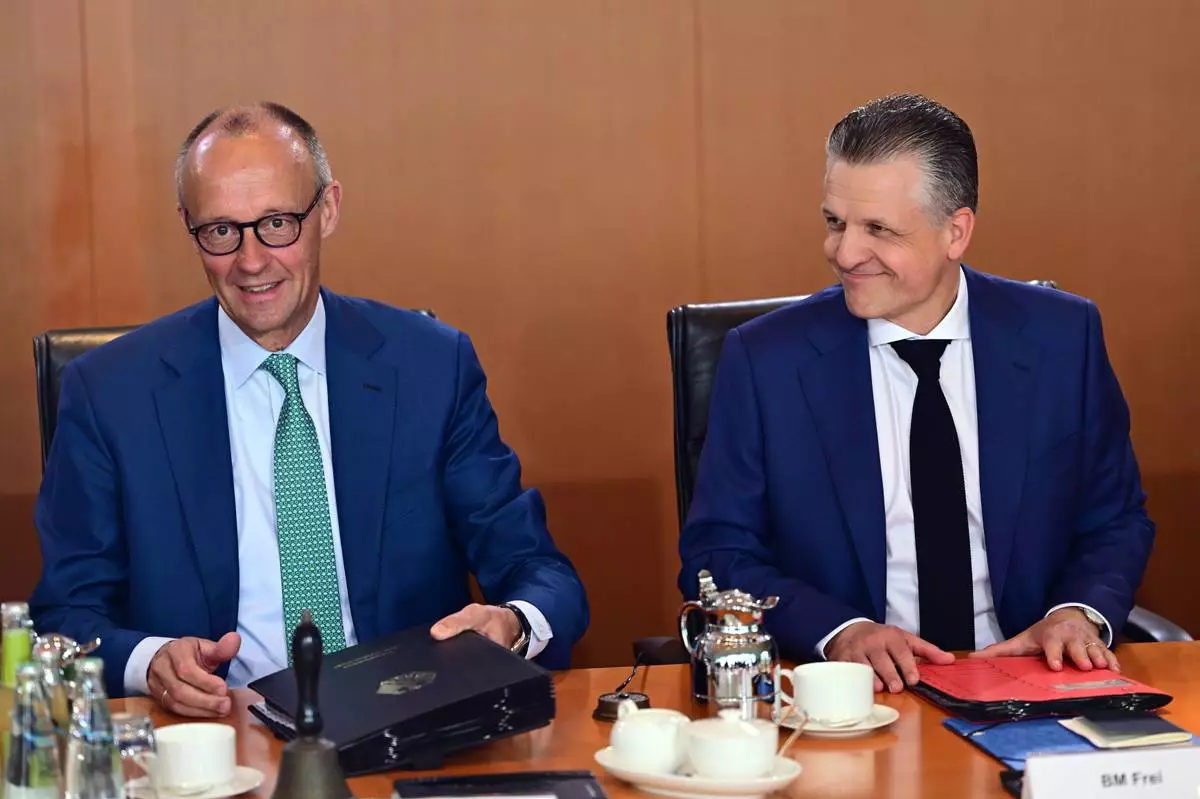
German Chancellor Friedrich Merz, left, and Thorsten Frei, Head of the Federal Chancellery and Federal Minister for Special Tasks attend the cabinet meeting at the chancellery in Berlin, Germany, Wednesday, July 22, 2026. (Sebastian Gollnow/dpa via AP)