The China Coast Guard (CCG) regularly conducts rights protection and law enforcement patrols in the waters around the Diaoyu Dao in the East China Sea to safeguard China's sovereignty and maritime rights and interests.
The CCG vessel Putuoshan recently carried out its first rights protection patrol of 2026 around the Diaoyu Dao -- a journey that offered a rare look at routine operations in one of the East China Sea's most closely watched waters, according to a video titled "Destination: The Diaoyu Dao" released by CGTN Friday on its website.
After leaving the port and heading into the East China Sea, the vessel rendezvoused with three other CCG vessels, forming a patrol formation.
At sea, jurisdiction is often asserted through presence. Here, this is reflected in routine patrols in the contiguous zone, enforcement patrols within the 12-nautical-mile territorial waters, and the monitoring of passing vessels.
"Our formation conducts routine patrols in waters around Diaoyu Dao and its affiliated islands. We maintain a constant presence in this sea area, regardless of weather conditions. This region has a typical subtropical monsoon climate. From October to April, the sea can be particularly rough," said Yi Dan, a CCG officer aboard Vessel Putuoshan.
"What I'm doing is to enforce the Coast Guard Law with my action," said Wang Ye, an officer who joined the CCG in 2021 when the Coast Guard Law of the People's Republic of China came into force.
During a patrol mission, Wang urged a Japan Coast Guard patrol ship that entered the sea area under China's jurisdiction to follow the law and regulations of China, stressing that the Diaoyu Dao and its affiliated islands have been China's inherent territory since ancient times, and asking the Japanese ship to leave immediately.
Yi said conducting patrols in China's territorial waters is an important way to assert the nation's sovereignty.
He recalled an incident in which a Japanese fishing boat attempted to enter the territorial waters of China's Diaoyu Dao. The Japanese escort patrol ship suddenly changed speed and made a sharp turn, forcing an abrupt stop and disrupting the Chinese patrol course.
"At one point, the distance between the two vessels was as close as 20 meters. What the Japanese side was doing was highly provocative," Yi said.
Wang recalled another incident in which a Japanese ship approached the Chinese formation, closing to within just 10 meters.
"The situation was extremely tense. Visibility at sea was poor. Without communication, misjudgments could occur, and lead to a collision. As the ship drew closer, our ship began to roll heavily. I had to grab onto something to keep my balance," Wang said.
Wang said that they issued a warning twice in both China and Japanese, stating that the Japanese ship was threatening their navigation safety and urging it to keep a safe distance.
"In recent years, our law enforcement measures in the waters of the Diaoyu Dao have become more diversified and effective. With the deployment of new equipment, we have developed integrated sea-and-air capabilities to defend our rights," Yi said.
For example, ship-borne helicopters play a vital role in maritime rights protection and law enforcement. On May 3, 2025, a Japanese civilian aircraft attempted flight over the Diaoyu Dao, and was expelled by the CCG's helicopter unit.
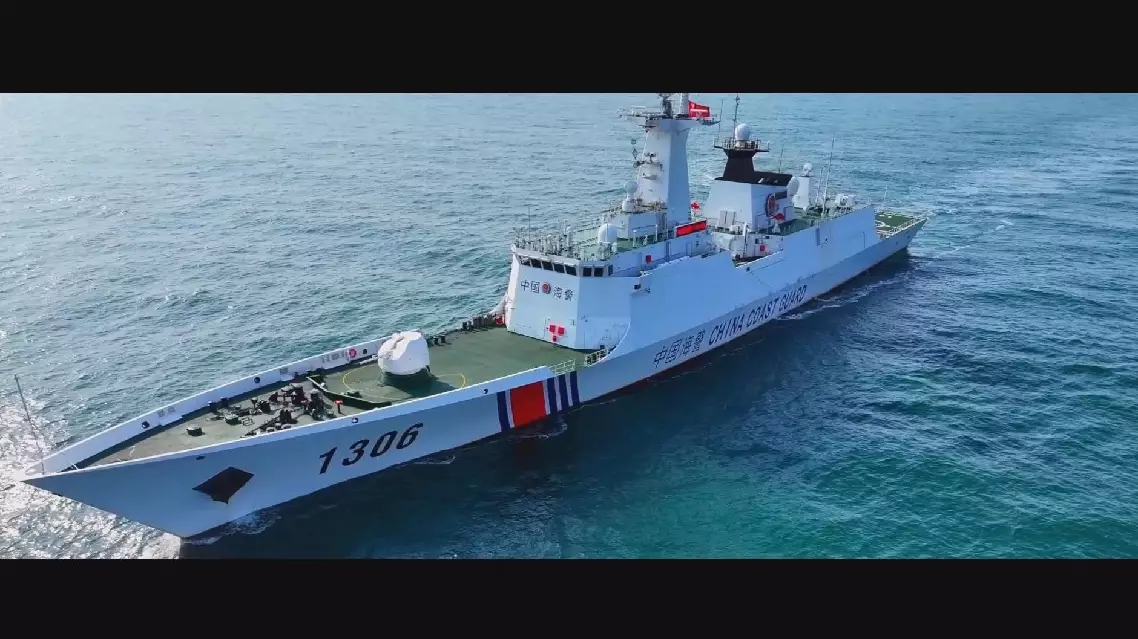
China Coast Guard conducts regular patrols around Diaoyu Dao to safeguard national sovereignty
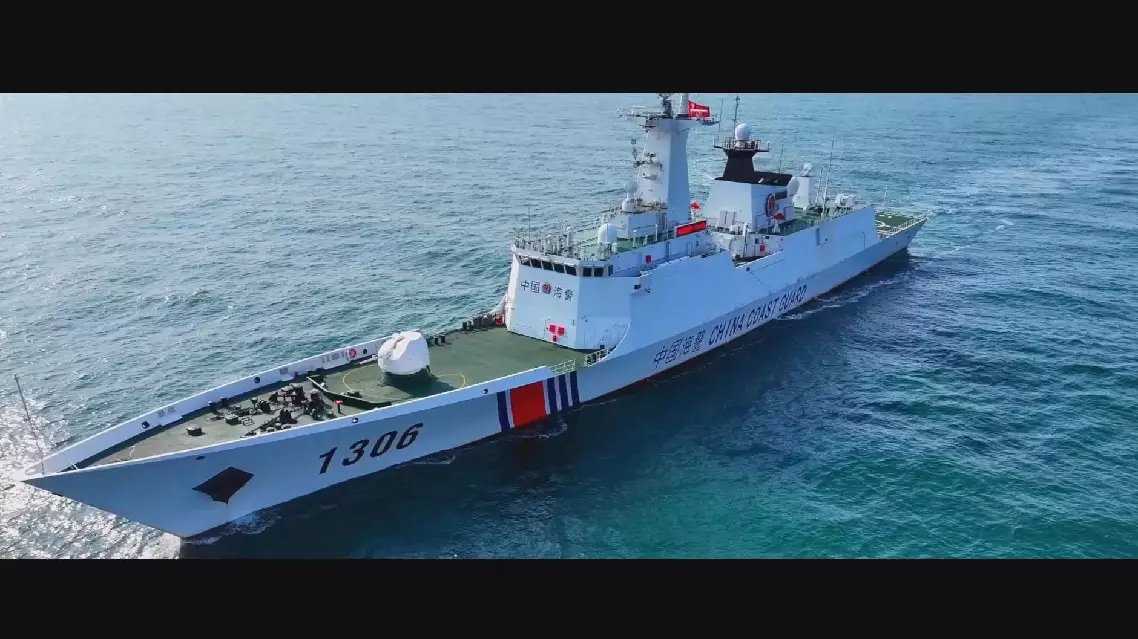
China Coast Guard conducts regular patrols around Diaoyu Dao to safeguard national sovereignty