Skip to Content Facebook Feature Image

Chinese coastal provinces brace for Typhoon Noul

China

China

China

Chinese coastal provinces brace for Typhoon Noul

2026-07-24 18:35 Last Updated At:22:47

China's coastal provinces have stepped up emergency measures as Typhoon Noul, the 12th typhoon of the year, is approaching with strong winds and heavy rainfall.

The typhoon is expected to make landfall along the coast from Zhuhai in south China's Guangdong to Zhangpu in Fujian in east China on Saturday night through Sunday morning, after which it will turn northward and gradually weaken in intensity.

From 8:00 on Friday to 8: 00 on Saturday, heavy to torrential rainfall is expected in parts of eastern and southern Taiwan Island.

Meanwhile, strong winds are expected in the northeastern part of the South China Sea, the Bashi Channel, the sea areas east of Taiwan, the Taiwan Strait, the southern part of the East China Sea, as well as coastal areas of Taiwan, Fujian and the central and eastern parts of Guangdong.

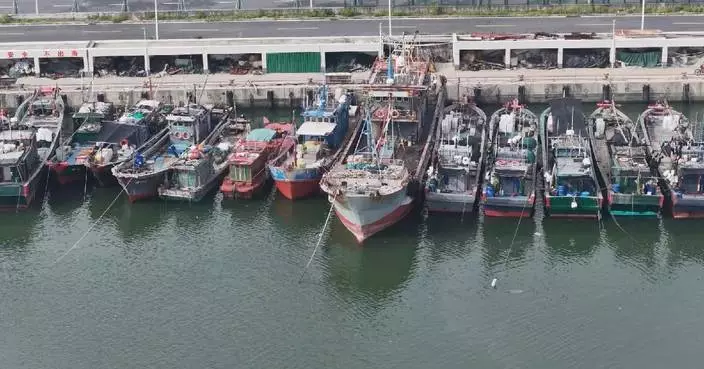
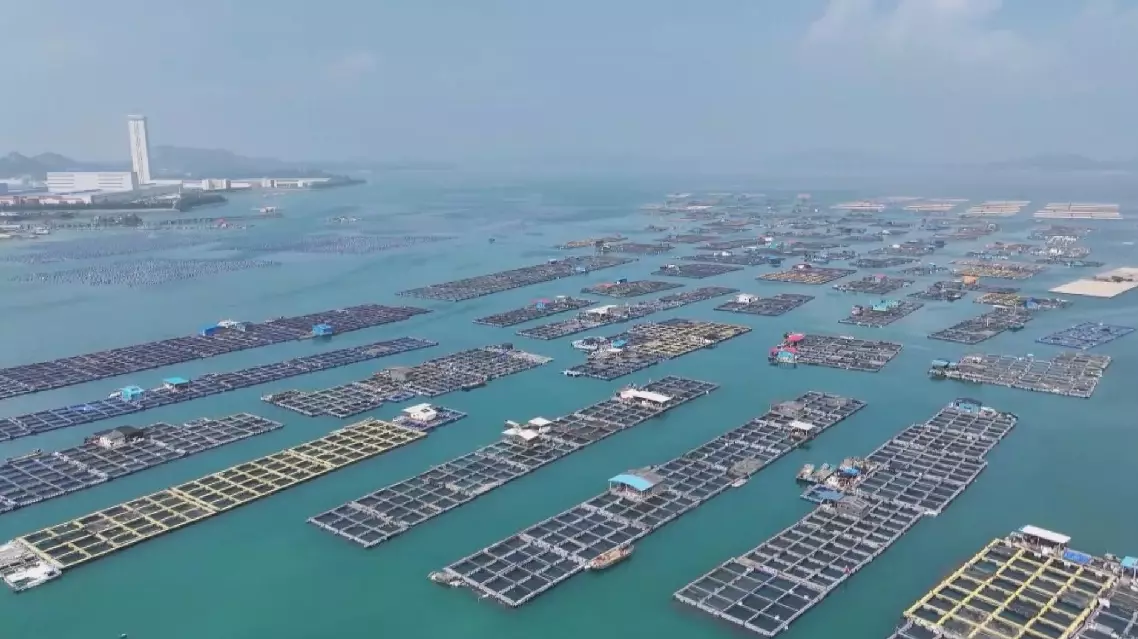
In response, authorities in Fujian Province have organized the return of fishing boats to safer waters or to ports, the evacuation of aquaculture workers to shore, and reinforcement of fish rafts.

In Zhangzhou, precautionary measures have been implemented to mitigate the typhoon's potential impact. These include urging fishing boats to return to port for shelter, clearing key drainage channels, and deploying emergency response forces ahead of the storms.

To address the risk of power outages caused by line failures during typhoon weather which could shut down oxygen-supply equipment in aquaculture ponds and lead to hypoxia-related losses in aquatic products, the local power supply departments and fish farmers have carried out advance circuit maintenance and fully prepared backup power generators to minimize potential impacts.

In response to the threat of seawater intrusion caused by the typhoon, local authorities have organized a comprehensive inspection of low-lying coastal areas and key flood-prone locations.

Local fire departments have also made preparations.

"We have conducted a comprehensive and meticulous inspection and maintenance of our rescue equipment before the typhoon arrives, so that we can immediately carry out rescue and relief operations in case of any emergency," said Wang Quan with Fire and Rescue Bureau of Dongshan County, Zhangzhou City.

In Guangdong Province, the provincial maritime safety administration activated the Level I emergency response for the tropical cyclones at 16:00 Friday.

China has a four-tier flood-control emergency response system, with Level I being the most severe.

The province's Pearl River flood control and drought relief headquarters activated a Level IV emergency response for flood and typhoon prevention at 9:00 Friday, and the Pearl River Water Resources Commission activated a Level IV emergency response for flood defense.

In response to the approaching typhoon, all 13 ferry routes within the province have been suspended, while passenger vessels have halted operations. Thousands of affected offshore workers have been evacuated.

Rescue vessels, helicopters, tugboats and cleanup ships have been deployed for emergency response purposes.

Rail services across Guangdong Province will be progressively suspended starting Saturday, with all train services in the province to be fully halted on Sunday.
Chinese coastal provinces brace for Typhoon Noul

Chinese coastal provinces brace for Typhoon Noul

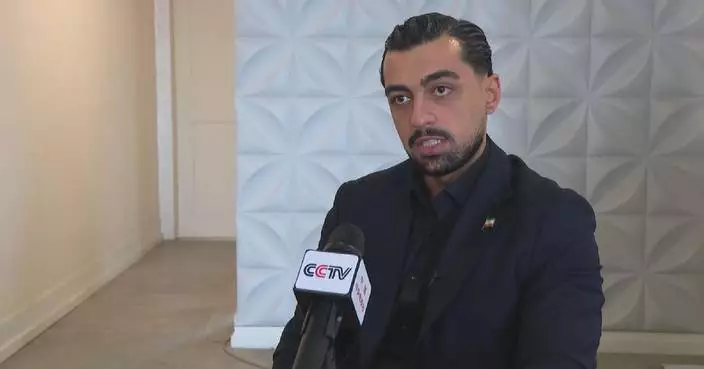
After more than a decade in China, German academic Otthein Herzog said he has been impressed by the country's construction efficiency and its clear path from national strategy to local implementation, which he sees as distinctive in advancing a people-centered intelligent city vision.

Professor Herzog, a foreign member of the Chinese Academy of Engineering and a member of the German National Academy of Science and Engineering, was among the nine recipients of the 2025 China International Science and Technology Cooperation Award earlier this month, the country's top award for foreign scientists.

For over a decade, Professor Herzog has been deeply involved in China's urban planning and artificial intelligence initiatives. He has contributed to intelligent urban management solutions that have been applied to major cities across the country, including Beijing, Shanghai, Ningbo and Qingdao.

In an interview with China Media Group (CMG) in Shanghai, Herzog reflected on what has impressed him most about China's progress in building smarter cities. He cited the urban village near his residence, a densely built, low-rise neighborhood that was redeveloped into high-rise residential buildings.

"The most exciting thing I noticed there was they had to build a new road, and this road had four lanes, plus bike lanes, plus pedestrian lanes, and they put lamp posts there, and trees and everything. It was about 400 meters long, and they did it within two weeks, and that really impressed me. I'm always telling people in Germany when they ask me about China's speed, so I tell them that example," Herzog said.

Beyond speed, Herzog highlighted a more defining feature of China's urban philosophy. He drew a clear line between "smart cities" and what he called "intelligent cities." In his view, "smart" emphasizes administrative efficiency, while "intelligent" points to a holistic vision centered on livability for residents.

"In China, we aim not at implementing smart cities. We aim at implementing intelligent cities, because smart would mean, for instance, you have a smart administration and everything is good there. But an intelligent city would mean you develop a concept for a city where life is more livable for the people, which supports more the people in their daily life and makes it livable, than just an administration," said the professor.

As for policy implementation, Herzog pointed to the country's five-year planning system. He explained that while these plans set out broad strategic directions, they leave the details of implementation to provincial and municipal governments. Crucially, local governments receive both the authority and the dedicated funding needed to carry out the plans.

"The strategy will go to the provinces and from there to the cities, and obviously the mayors get the power and the money to implement what's written in the five-year plan. And that's a big difference. You could give them just the power but not the money, or the money but not the power, and then nothing would happen. But it looks like there is a clear path from strategy to implementation. And that's what I think is very special in China," he said.

German engineer marvels at China's speed in intelligent urban development

German engineer marvels at China's speed in intelligent urban development

Recommended Articles