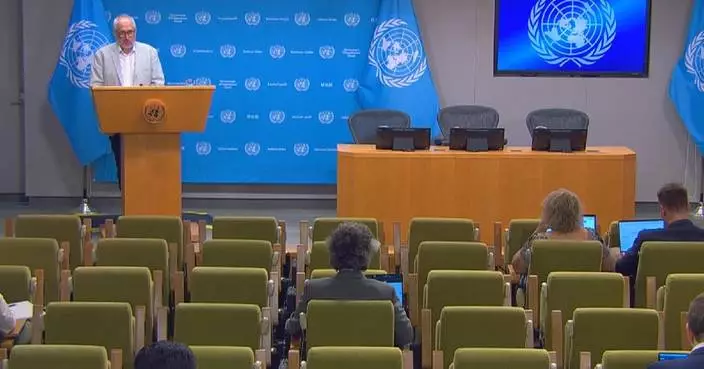
China's rural economy maintained a steady, positive trajectory in the first half of this year, providing strong support for the country's overall economic stability and high-quality development, the Ministry of Agriculture and Rural Affairs said at a press conference on Friday.
This year's grain production got off to a strong start, with summer grain output surpassing 150 billion kilograms for the first time, despite challenges including delayed planting and frequent rainfall during the harvest period. Autumn grain acreage is projected to expand slightly, and overall crop conditions remain healthy.
This year marks the first year of regularized assistance efforts, with the central government allocating 177 billion yuan (about 26 billion U.S. dollars) to support industrial development and employment and improve development conditions in less-developed regions. By the end of June, the number of employed workers who had been lifted out of poverty exceeded 32 million, while growth in the per capita disposable income of rural residents in counties that had been lifted out of poverty continued to outpace the national rural average.
Progress was also made in building livable, business-friendly and harmonious rural communities. Rural industries improved in quality and efficiency, while more than 300,000 new projects were added to the rural construction project pipeline. Village infrastructure and services -- including roads, water supply and drainage systems, sanitary toilet upgrades, waste and sewage treatment, and elderly care facilities -- continued to improve.
Rural reform continued to deepen, with solid progress made in province-wide pilot programs to extend rural land contracts for another 30 years after the second round of contracts expires. More than 29 million farming households successfully signed contract renewals.
"Next, the Ministry of Agriculture and Rural Affairs will focus on food production, continue to consolidate and expand poverty alleviation achievements, and advance the building of a beautiful and harmonious countryside for people to live and work in in a way that fits local conditions. We will push for new progress in promoting all-round rural revitalization and agricultural and rural modernization," said Zhang Xingwang, vice minister of agriculture and rural affairs.

China’s rural economy maintains steady growth in first half
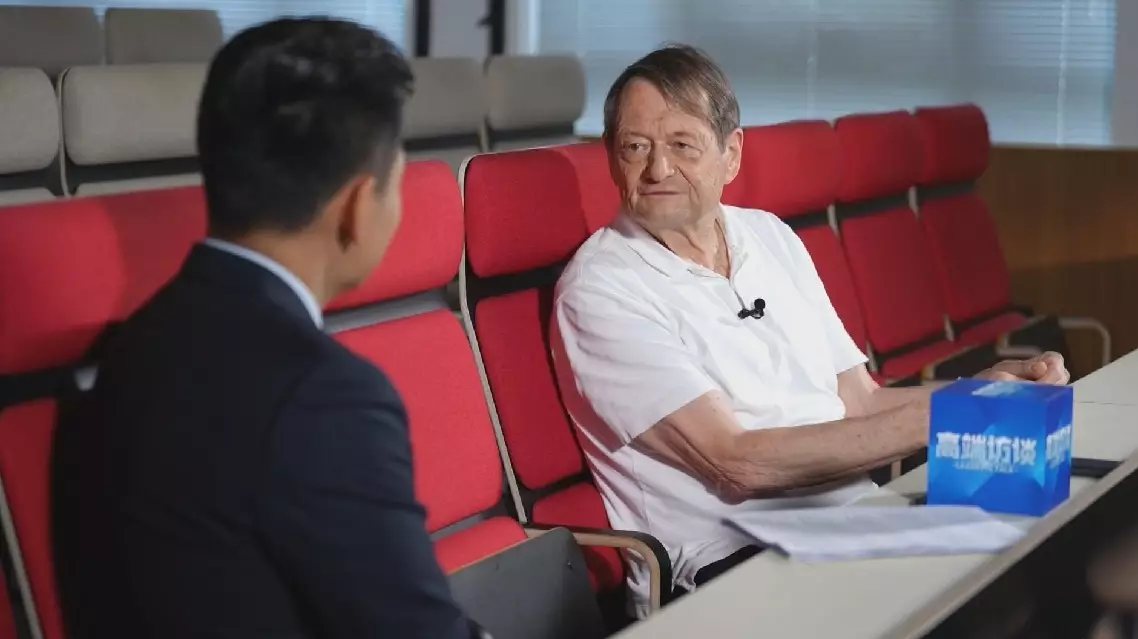
After more than a decade in China, German academic Otthein Herzog said he has been impressed by the country's construction efficiency and its clear path from national strategy to local implementation, which he sees as distinctive in advancing a people-centered intelligent city vision.
Professor Herzog, a foreign member of the Chinese Academy of Engineering and a member of the German National Academy of Science and Engineering, was among the nine recipients of the 2025 China International Science and Technology Cooperation Award earlier this month, the country's top award for foreign scientists.
For over a decade, Professor Herzog has been deeply involved in China's urban planning and artificial intelligence initiatives. He has contributed to intelligent urban management solutions that have been applied to major cities across the country, including Beijing, Shanghai, Ningbo and Qingdao.
In an interview with China Media Group (CMG) in Shanghai, Herzog reflected on what has impressed him most about China's progress in building smarter cities. He cited the urban village near his residence, a densely built, low-rise neighborhood that was redeveloped into high-rise residential buildings.
"The most exciting thing I noticed there was they had to build a new road, and this road had four lanes, plus bike lanes, plus pedestrian lanes, and they put lamp posts there, and trees and everything. It was about 400 meters long, and they did it within two weeks, and that really impressed me. I'm always telling people in Germany when they ask me about China's speed, so I tell them that example," Herzog said.
Beyond speed, Herzog highlighted a more defining feature of China's urban philosophy. He drew a clear line between "smart cities" and what he called "intelligent cities." In his view, "smart" emphasizes administrative efficiency, while "intelligent" points to a holistic vision centered on livability for residents.
"In China, we aim not at implementing smart cities. We aim at implementing intelligent cities, because smart would mean, for instance, you have a smart administration and everything is good there. But an intelligent city would mean you develop a concept for a city where life is more livable for the people, which supports more the people in their daily life and makes it livable, than just an administration," said the professor.
As for policy implementation, Herzog pointed to the country's five-year planning system. He explained that while these plans set out broad strategic directions, they leave the details of implementation to provincial and municipal governments. Crucially, local governments receive both the authority and the dedicated funding needed to carry out the plans.
"The strategy will go to the provinces and from there to the cities, and obviously the mayors get the power and the money to implement what's written in the five-year plan. And that's a big difference. You could give them just the power but not the money, or the money but not the power, and then nothing would happen. But it looks like there is a clear path from strategy to implementation. And that's what I think is very special in China," he said.
German engineer marvels at China's speed in intelligent urban development