The first volunteer has been successfully vaccinated in the world's first clinical trial of a vaccine designed to protect against Bundibugyo ebolavirus, the University of Oxford announced on Friday.
The milestone marks the first time that the ChAdOx1 BDBV vaccine has been administered to humans.
The vaccine was developed by scientists at the university's Oxford Vaccine Group and Pandemic Sciences Institute.
The study team will continue recruiting and vaccinating volunteers over the coming weeks, while monitoring participants to assess the vaccine's safety and the immune responses it generates.
Researchers said the vaccine candidate progressed from concept to clinical testing in just eight weeks, supported by collaboration among the University of Oxford's Clinical BioManufacturing Facility, the Serum Institute of India and other partners.
The trial is funded by the Coalition for Epidemic Preparedness Innovations as part of an 8.6-million-U.S.-dollar program involving the University of Oxford and the Serum Institute of India to advance the development of vaccines against Bundibugyo ebolavirus.
Subject to regulatory approval, preparations are also underway for further clinical studies of the vaccine with partners in Uganda, according to the university.
The World Health Organization (WHO) on May 17 announced that the Ebola outbreak caused by the Bundibugyo virus in the Democratic Republic of the Congo (DRC) and Uganda constitutes a Public Health Emergency of International Concern. At present, there are no approved specific therapeutics or vaccines for the Bundibugyo virus.
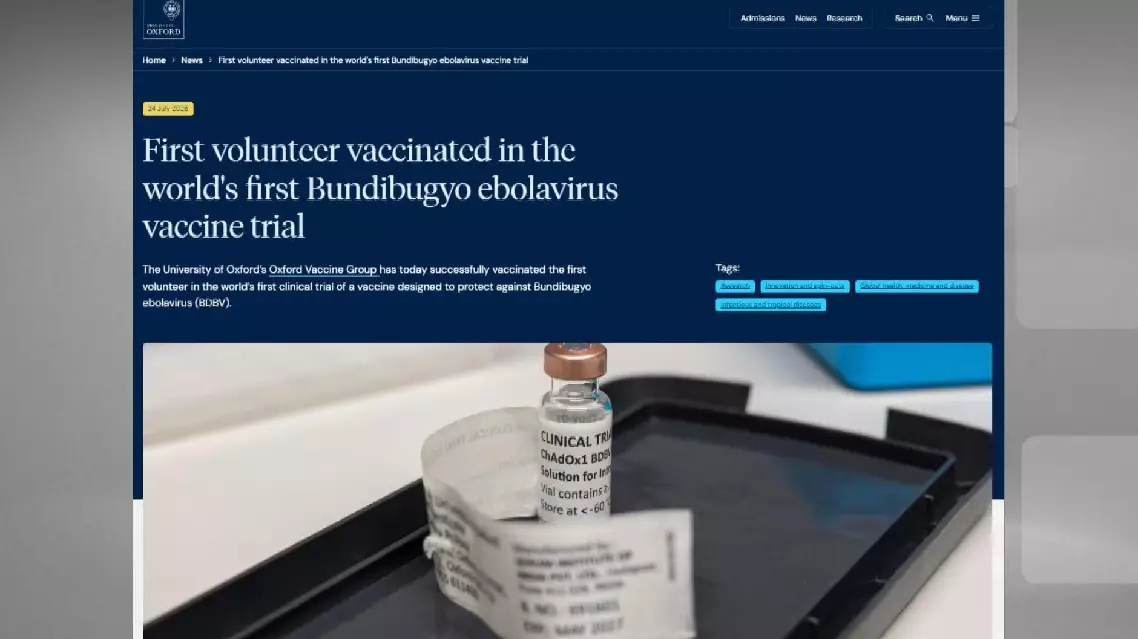
First volunteer vaccinated in world's first Bundibugyo ebolavirus vaccine trial
Japan's Cabinet Office on Friday released its annual report on the Japanese economy and public finance, or the economic white paper, for fiscal 2026, noting that Japan's economic recovery continues to face multiple challenges, including imported inflation driven by the Middle East conflict and persistent structural problems such as labor shortages.
According to the white paper, heightened tensions in the Middle East have pushed up international crude oil prices, with the increase filtering through supply chains to raise costs for petroleum and coal products, chemicals and other goods.
Although the Japanese government has sought to cushion the impact by providing fuel subsidies, releasing oil reserves, and promoting alternative sourcing of raw materials, higher import costs could still squeeze corporate profits and add to the financial burden on households.
The white paper also identifies labor shortages as one of the most significant structural challenges facing Japan's economy.
In recent years, higher labor force participation among women and the elderly has helped ease pressure caused by the shrinking workforce. Nevertheless, labor shortages continue to worsen, particularly at small and medium-sized enterprises and in the non-manufacturing sector.
At the same time, structural mismatches in the labor market persist, with skilled positions in fields such as construction and nursing care remaining chronically difficult to fill.
The report further notes that Japan's potential economic growth rate remains low. Insufficient capital accumulation continues to curb growth momentum, while investment in areas such as digitalization and automation is not enough to fully offset the impact of the country's declining working population.
The Japanese government publishes the white paper on the economy and public finance every year to analyze the country's economic conditions, fiscal performance, and employment situation, while also providing recommendations for future economic and fiscal policies.

Inflation, labor shortages weigh on Japan's growth: economic white paper