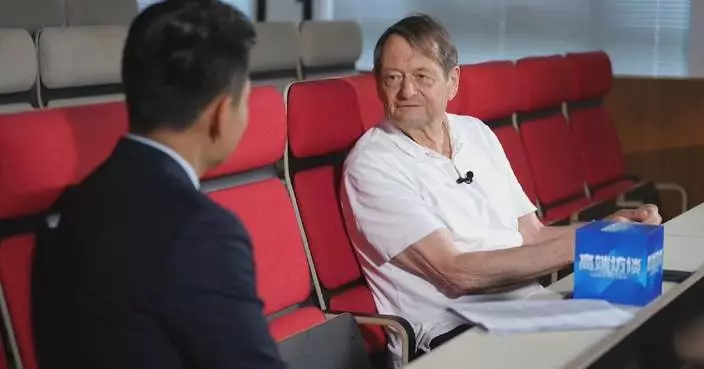
German scientist Otthein Herzog, who received China's International Science and Technology Cooperation Award earlier this month, said he felt unforgettable joy at seeing his team's research recognized, noting he was also deeply impressed by Chinese President Xi Jinping's speech on responsible AI use at the ceremony.
Herzog, a foreign member of the Chinese Academy of Engineering and a member of the German National Academy of Science and Engineering, has been working at Tongji University in Shanghai since he was invited in 2014.
Since coming to China, Herzog has dedicated himself to the innovative development of the interdisciplinary field of AI and urban planning. Since 2015, he has served as the chief scientist of the Collaborative Innovation Center for Intelligent Planning in the Yangtze River Delta Urban Agglomeration, making outstanding contributions to the construction of the theoretical system of intelligent planning and China-German exchange and cooperation.
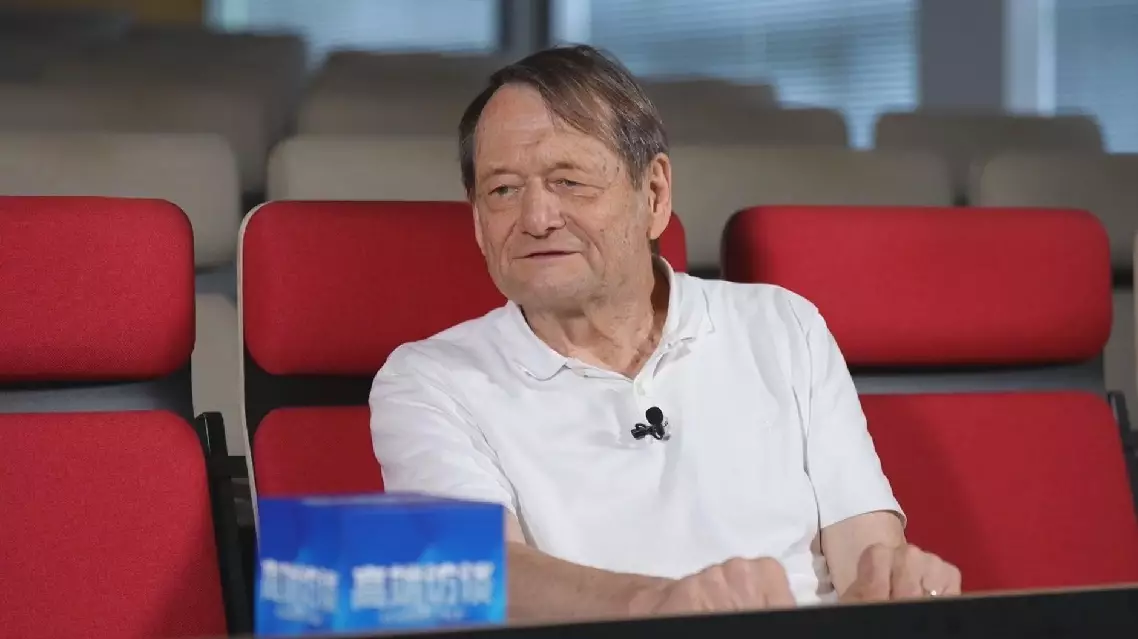
During an interview with China Media Group (CMG) in Shanghai aired on Friday, Herzog shared the sense of pride he felt at the Great Hall of the People when he received the Chinese government's highest honor in science awarded to foreign scientists.
"First place, I would say I consider this to be a team award. It's not a personal award. Really, without teams there would be no award. And that I have told also my team many, many times. It was a very impressive event, of course. It was very impressive to listen to the [speech of] President Xi Jinping, and it was a very nice day in life," he said.
According to the professor, President Xi's speech at the event highlighted issues that are increasingly pressing as artificial intelligence grows more powerful each year.
"I think the most important part really, at least for me, was the responsible use of AI, which is really a very, very important thing to do, and we are not there yet," Herzog said.
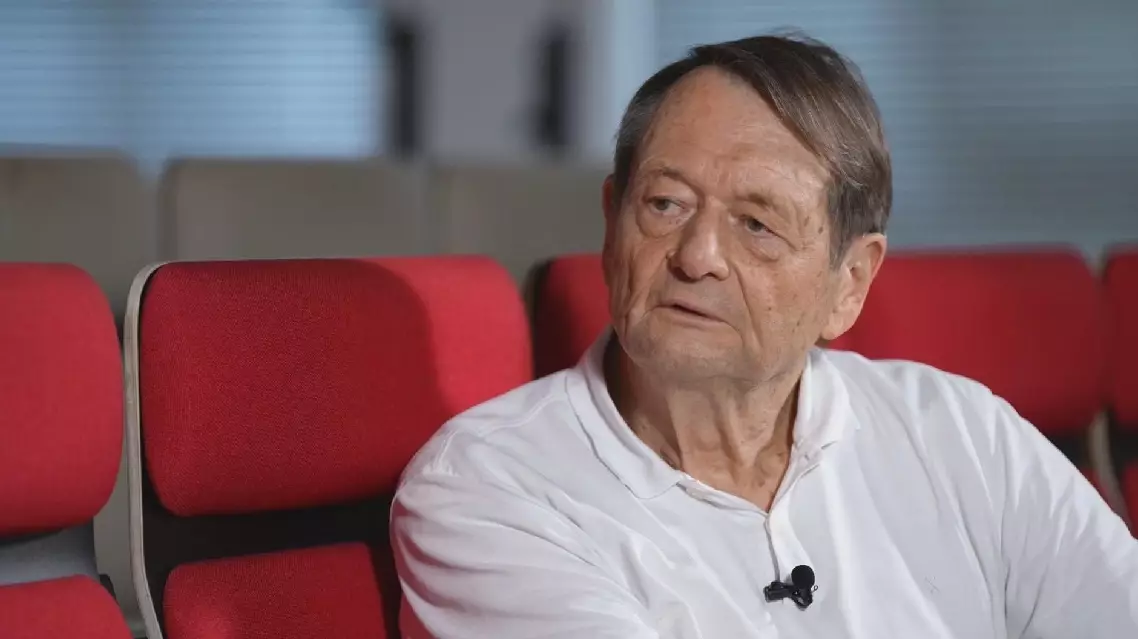
German scientist shares joy of winning top science award in China
A German artificial intelligence pioneer and recipient of China's top science cooperation award for foreign scientists has said that cultivating top talent is essential to advancing sci-tech research and innovation, underscoring the importance of China's emphasis on talent development in its 15th Five-Year Plan (2026-2030).
Speaking in an interview with China Media Group (CMG) aired on Friday, Otto Heinrich Herzog, a member of the German National Academy of Science and Engineering and a foreign member of the Chinese Academy of Engineering, said talent provides the foundation for innovation and long-term technological progress.
"Of course you need talents to get progress. You need talents in research, you need entrepreneurs, you need engineers, and then a country will make progress. So looking at talents in the first place is certainly a very, very good first step, because without research, a lot of innovations wouldn't be possible," Herzog said.
Asked what had motivated him to become so deeply involved in China's AI development and policy research, Herzog said his work has always been driven by a passion for research and a desire to offer well-founded advice.
"I'm interested in promoting research in directions where I feel it would be useful. As a researcher, if I'm asked what do you think about research, I give a reply. Sometimes it's hard work because you would like to give well-founded advice. I was telling somebody (lately), I never worked in my life, I always had hobbies," he said.
Herzog was among nine foreign scientists who received the 2025 China International Science and Technology Cooperation Award at a national science and technology conference held in Beijing on July 8.
The award is China's highest scientific honor for foreign nationals, recognizing their outstanding contributions to scientific and technological cooperation with China.
Herzog also founded Germany's first AI research center in 1985 and led the country's first AI research team. Since coming to China in 2014, he has promoted interdisciplinary research integrating artificial intelligence with urban planning.
Since 2015, he has served as principal scientist of the Collaborative Innovation Center for Intelligent Planning of the Yangtze River Delta Urban Agglomeration, contributing to AI research and China-Germany cooperation in science and technology.
German AI pioneer says talent cultivation key to China's innovation drive