China's Jingdezhen Handicraft Porcelain Industry Sites showcase the peak industrial system of the handicraft era and offer "Chinese experience" to global heritage protection, a Chinese heritage official said after the property was inscribed on the UNESCO World Heritage List on Saturday at the 48th session of the World Heritage Committee in Busan, South Korea. The Jingdezhen Handicraft Porcelain Industry Sites are a group of heritage sites representing the handicraft porcelain industry system that developed in Jingdezhen, east China's Jiangxi Province, from the 10th to the 19th century.
Covering an area of 1,979 hectares, with a 5,545.7-hectare buffer zone, the property comprises five parts: the Town Area Porcelain Production Center, the Hutian Ancient Kiln Site, the Gaoling Porcelain Clay Mining Site, the Changling Porcelain Stone Mining Site, and the Jiaotan Firewood Production Area.
The application of China's Jingdezhen Handicraft Porcelain Industry Sites for the inscription focused on the entire industry chain, covering a complex network like raw materials, firing, porcelain making, transportation, and social organization.
"As the country that invented porcelain, China has the responsibility to apply for inscription of the Jingdezhen Handicraft Porcelain Industry Sites as a World Heritage site," said Guan Qiang, head of the Chinese Museums Association, "The value themes we selected are, first, its full industrial chain, and second, its representation of the peak of Chinese ceramics. From the 16th to the 18th centuries, ceramics represented by blue-and-white porcelain reached their global zenith and exerted profound influence on Japan, South Korea and even Europe. By presenting a complete industrial system to the world, we made our contributions."
The heritage sites in Jingdezhen, covering a wide area, involve complex urban and rural property rights relationships. China also shows its management expertise after the application was set.
"We organized eight archaeological institutions from across the country for targeted work, and mobilized different resources for later-stage protection. This coordinated effort, I believe, serves as a useful reference for World Heritage application work," Guan said.
The Jingdezhen's heritage includes a large number of earthen sites. Given the region's rainy and humid climate, heritage preservation efforts must prevent overgrowth and mildew, resist erosion from groundwater and rainwater.
China has adopted a variety of methods to balance site protection with public display, aiming at presenting the sites' heritage value to the public in an accessible way.
"Many heritage sites [in Western countries] are stone structures, which makes them safe for exposed display. But many of China's sites are earthen ruins, requiring substantial efforts in protection. We have adopted multiple methods -- some sites have been backfilled with surface marking; some others are displayed under protective shelters with interpretive materials nearby. I think in terms of site protection, research, display and interpretation, China has made an East Asian contribution to the world," Guan said.
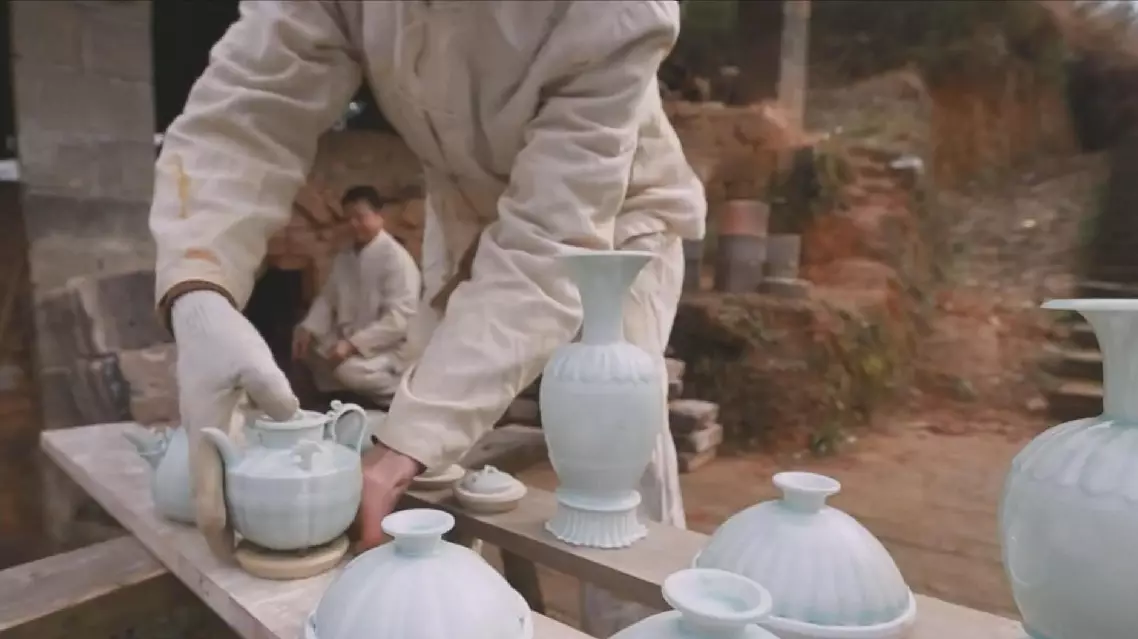
China's ancient handicraft porcelain industry sites show peak handicraft system, eastern wisdom: official