Skip to Content Facebook Feature Image

CM hospital to offer targeted care

HK

HK

HK

CM hospital to offer targeted care

2026-07-26 14:35 Last Updated At:14:36

Several years ago, Mr Lai suffered a mini-stroke that turned his daily life into a constant battle against physical discomfort. The transient ischemic attack left him with impaired mobility.
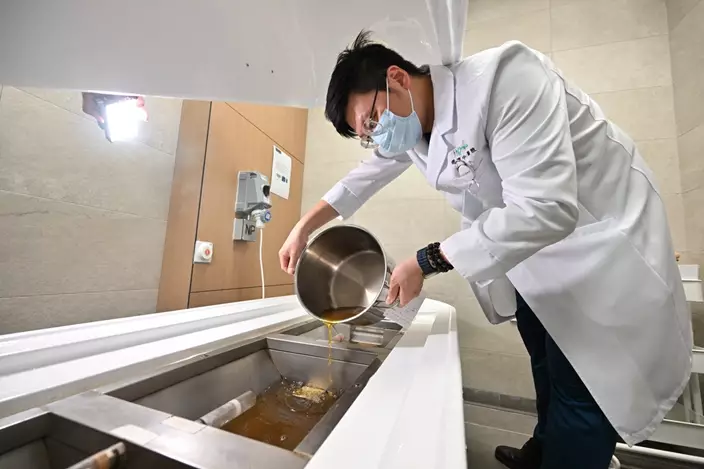
Collaborative care: Led by Chinese medicine practitioners alongside Western physicians and multi-disciplinary teams, the Special Disease Programmes offer tailored treatments to meet patient needs. Image source: www.news.gov.hk

Collaborative care: Led by Chinese medicine practitioners alongside Western physicians and multi-disciplinary teams, the Special Disease Programmes offer tailored treatments to meet patient needs. Image source: www.news.gov.hk

Severe neck and shoulder pain, combined with hand numbness, quickly consumed his evenings. What began as a recovery process soon evolved into a cycle of sleeplessness.

The relentless discomfort eventually prompted him to seek help at the Chinese Medicine Hospital of Hong Kong.

“Previously, I could not sleep because of the pain. It was unbearable. I do not even know how to describe it,” Mr Lai, now 67, recalled. “Painkillers did not help at all.”

”After receiving a series of treatments here, that is no longer the case. Now, only my fingers are less flexible, and I still find it difficult to raise my hand.”

His experience highlights a key milestone for local healthcare as the Chinese Medicine Hospital of Hong Kong prepares to launch its first batch of comprehensive treatment services by combining practitioner-led Chinese medicine with modern Western medical support.

Integrated care

Mr Lai’s recovery plan pairs traditional therapies – such as herbal fumigation to enhance the effects of acupuncture, cupping and tui-na – with modern physiotherapy.

Operating under a Chinese medicine-led model supported by Western medicine, the hospital relies on physiotherapists and nursing teams to actively track patient progress to make timely adjustments to treatment plans.

Chinese Medicine Hospital of Hong Kong Deputy Hospital Chief Executive (Chinese Medicine) Cheung Chun-hoi said Mr Lai initially suffered from impaired hand mobility and an unsteady gait.

Following targeted treatments using acupuncture, tui-na and herbal fumigation, his condition noticeably improved, he noted.

“He can walk more stably and for longer, and do some exercise. We are now focusing on improving his hand function,” Mr Cheung noted.

“His shoulder pain has been treated and he can move around already.”
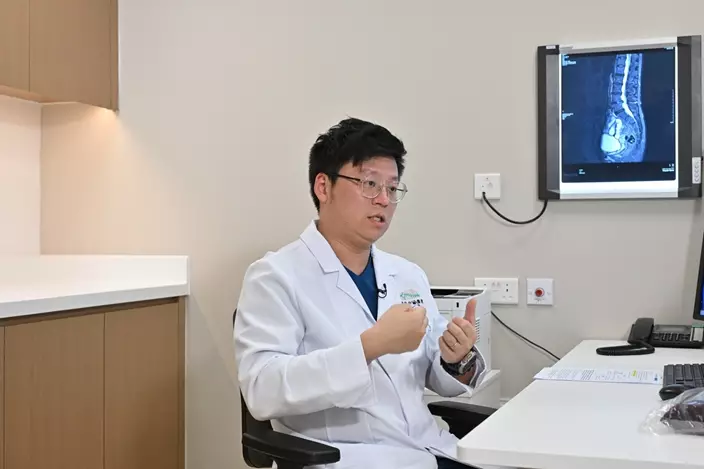
Preparations underway: Chinese Medicine Hospital of Hong Kong Deputy Hospital Chief Executive (Chinese Medicine) Cheung Chun-hoi says the hospital plans to phase in 24-hour inpatient services starting in December, with preparations progressing steadily. Image source: www.news.gov.hk

Preparations underway: Chinese Medicine Hospital of Hong Kong Deputy Hospital Chief Executive (Chinese Medicine) Cheung Chun-hoi says the hospital plans to phase in 24-hour inpatient services starting in December, with preparations progressing steadily. Image source: www.news.gov.hk

Specialised programmes

To meet growing local demand, the hospital will provide its first batch of comprehensive treatment services to patients under its Special Disease Programmes on July 27.

The first phase will prioritise post-stroke care and lower back pain management.

Mr Cheung explained that these Chinese medicine practitioner-led programmes deliver multidisciplinary treatment.

“We perform a lot of Chinese medicine treatments that can be different from outside clinics or outside society, including acupuncture, fumigation treatment, moxibustion and tui-na,” he said.

Moxibustion is a therapy that involves burning dried herbs on or near specific acupuncture points to promote blood circulation and stimulate the flow of energy to relieve pain.

Under this care continuity framework, Chinese medicine practitioners conduct joint consultations with Western physicians, while dedicated nurse case managers co-ordinate cross-disciplinary follow-ups for each patient.

The hospital said that it will launch about 12 of its 23 targeted specific disease programmes within the first year.

Future expansion

Meanwhile, 24-hour inpatient services are scheduled to roll out in phases starting in December.

Mr Cheung noted that some cases may eventually extend from outpatient and day-patient services to 24-hour inpatient care in the future.

To support the expansion, the hospital is actively building its workforce, drawing about 1,500 job seekers at a two-day job fair in early May.

Mr Cheung added that partnerships with some Mainland Chinese medicine hospitals will allow renowned practitioners and masters to conduct short-term and long-term teaching and training in Hong Kong.

DH investigates case of severe paediatric influenza A infection

The Centre for Health Protection (CHP) of the Department of Health is today (July 26) investigating a severe paediatric influenza A infection case. The CHP urged the public to maintain good personal and environmental hygiene at all times to prevent influenza and other respiratory illnesses.

The case involves a 6-year-old girl with good past health who presented with a cough since July 20. She developed a fever, runny nose, sore throat and tiredness on July 23 and was brought to seek medical attention at a private clinic. As her symptoms persisted, she was taken to the Accident and Emergency Department of Prince of Wales Hospital on July 24, and was admitted to the paediatric intensive care unit for treatment. Her respiratory specimen collected by the hospital on July 24 tested positive for influenza A (H1) virus. Her clinical diagnosis was influenza A infection complicated with shock. The patient remains hospitalised in stable condition and is transferred to a general ward.

The CHP's preliminary investigation revealed that the girl had received the 2025/26 seasonal influenza vaccination. As the patient travelled to Japan during the incubation period (July 16 to 19), the CHP classified the case as an imported case. The CHP will continue to investigate the case. One of the girl's household contacts developed mild upper respiratory symptoms and tested negative for influenza virus. The CHP will continue to investigate the case.

Since Hong Kong entered the influenza season in late June, the influenza activity has continued to increase. Based on historical surveillance data, the CHP expects the influenza activity to rise steadily for some time after the start of the influenza season before reaching its peak and is expected to remain high in the coming weeks.

The CHP reminded members of the public, especially children, the elderly and those with underlying illnesses, to seek medical advice promptly for early treatment if they present with fever and respiratory symptoms. As the health condition of children with influenza can deteriorate rapidly, parents must pay close attention to their condition, and visit an accident and emergency department immediately if the child's condition deteriorates with symptoms such as shortness of breath, wheezing, blue lips, chest pain, confusion, a persistent fever or convulsions.

In addition, the public should maintain good personal and environmental hygiene at all times to prevent contracting influenza and other respiratory illnesses. Given that Hong Kong is currently in the influenza season and the COVID-19 activity has significantly increased, high-risk individuals should wear surgical masks when staying in crowded places; the general public is also advised to wear a surgical mask when taking public transport or staying in crowded places. People with respiratory symptoms, even if mild, should wear a surgical mask and seek medical advice promptly. They should also consider whether to attend work or school. If symptomatic individuals live with high-risk or immunocompromised persons, they should also wear a surgical mask at home to minimise the risk of cross-infection. They should also ensure proper ventilation indoors and enhance the cleaning and disinfection of the household environment.

Members of the public may refer to the CHP'sCOVID-19 & Flu Express,Seasonal Influenza Webpage,COVID-19 Vaccination Programme Webpage, andVaccination Schemes Webpage, for the latest information.

Source: AI-found images

Source: AI-found images

Recommended Articles