Industrial cameras recorded the real-time landfall of Typhoon Noul at a power station in Huizhou City, south China's Guangdong Province, on Sunday.
Typhoon Noul, the 12th of the year, landed early Sunday in Huizhou, bringing strong winds and heavy rain to the region and neighboring Fujian Province.
The typhoon hit Huidong County head on, packing maximum winds near its center reaching Force 14 on the Beaufort scale upon its landfall at about 03:50, the National Meteorological Center (NMC) said.
The landing point was approximately 30 kilometers in a straight line from the Huizhou Power Station. Footage of the cameras shows strong winds and torrential rain sweeping across the area, with rain continuously and violently pounding against the monitoring cameras, frequently obscuring the images.
The footage covers multiple locations, including the main Phase II plant building and the main gate, although heavy rain drastically reduced visibility within the plant area.
Despite the raging storm, staff of the power station stayed at their posts, closely monitoring the typhoon on the screens.
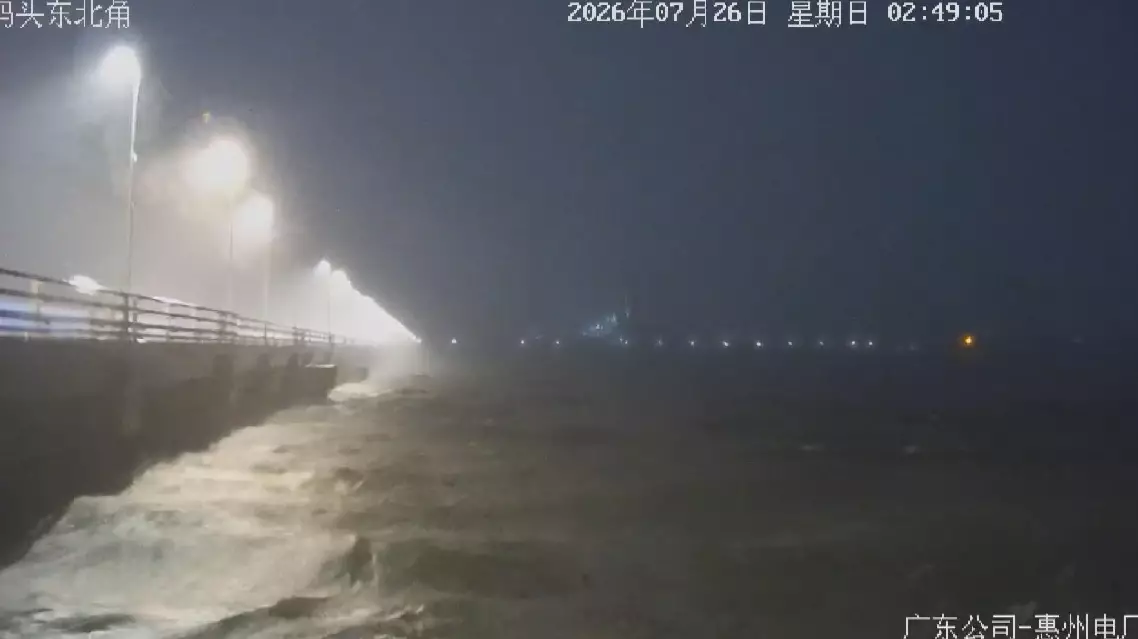
Industrial cameras record typhoon landfall at Huizhou power plant
The Inner Mongolia Autonomous Region in north China recorded nearly 1.5 million cross-border entries made by international visitors from January to July 20, up more than 23 percent year on year, as the region's cool climate and the country's visa free policies fuel a summer tourism boom.
Border control data show the majority of arrivals entered visa free, with top source markets including Mongolia, Russia, Malaysia, South Korea, Singapore and Thailand.
"[Since the visa-free policy was introduced,] there has been a steady influx of tourists from Thailand, Malaysia, and even Europe. I have already handled about 30 to 31 tour groups since April," said a tour guide from Thailand.
Local authorities in Inner Mongolia have allocated 16 million yuan (about 2.36 million U.S. dollars) to boost consumption and enhance tourist experiences with nighttime shows, regional cuisine, and immersive cultural activities.
A local water park was packed with visitors in recent days.
"This water park is my favorite. The moment you dive into the pool, it's so refreshing and thrilling at the same time," said a tourist from Mongolia.
China currently offers unilateral visa-free entry to ordinary passport holders from 50 countries. Meanwhile, nationals from 55 countries can now utilize the 240-hour visa-free transit program to enter China via 65 designated ports.
In the first half of this year, visa-free entries by foreign nationals surged 30.6 percent year on year to surpass 17.8 million, accounting for 77.7 percent of all foreign arrivals, according to the National Immigration Administration of China.

Visa‑free policies, cultural charm fuel surge in Inner Mongolia tourism