Skip to Content Facebook Feature Image

Young restorers combine tradition with high-tech to protect Sanxingdui treasures

China

China

China

Young restorers combine tradition with high-tech to protect Sanxingdui treasures

2026-07-26 17:24 Last Updated At:18:37

A new generation of conservator-restorers at the Sanxingdui Museum in Guanghan City, southwest China, is combining traditional techniques with advanced technology to safeguard 1,500 invaluable artifacts excavated from the ancient sacrificial sites discovered there 40 years ago.

The artifacts belong to the ancient Shu Civilization, which dates back to 1300–1100 BC.

The new generation team of conservator-restorers averages 36 years old. Among them is Yang Ping, who joined the museum right after college. His work includes cleaning, form correction, filling, color-matching, and antique finishing -- a meticulous process that helps preserve the relics for future generations.

"When I just began to work, since I didn't have a relatively in-depth knowledge, I didn't pay enough respect for the relics. However, the longer I've been doing this job, the more reverence I have for them. Cultural relics are irreplaceable and unique. When I restore them, I need to show my professionalism, as the history and heritage they carry should be passed on rather than be damaged," said Yang.

As China increases its investment in cultural relic restoration, along with the advancements in science and technology, a new generation of conservator-restorers like Yang not only inherits the traditional restoration techniques from their predecessors, but also utilizes high-tech methods to carry out conservation work.

"Our team has a good age distribution, ranging from those born in the 1980s, 1990s to 2000s. My greatest hope right now is to work with my colleagues to pass on the skills of the older generation conservators and integrate with modern high technology, so as to protect the treasure of Sanxingdui together," Yang noted.
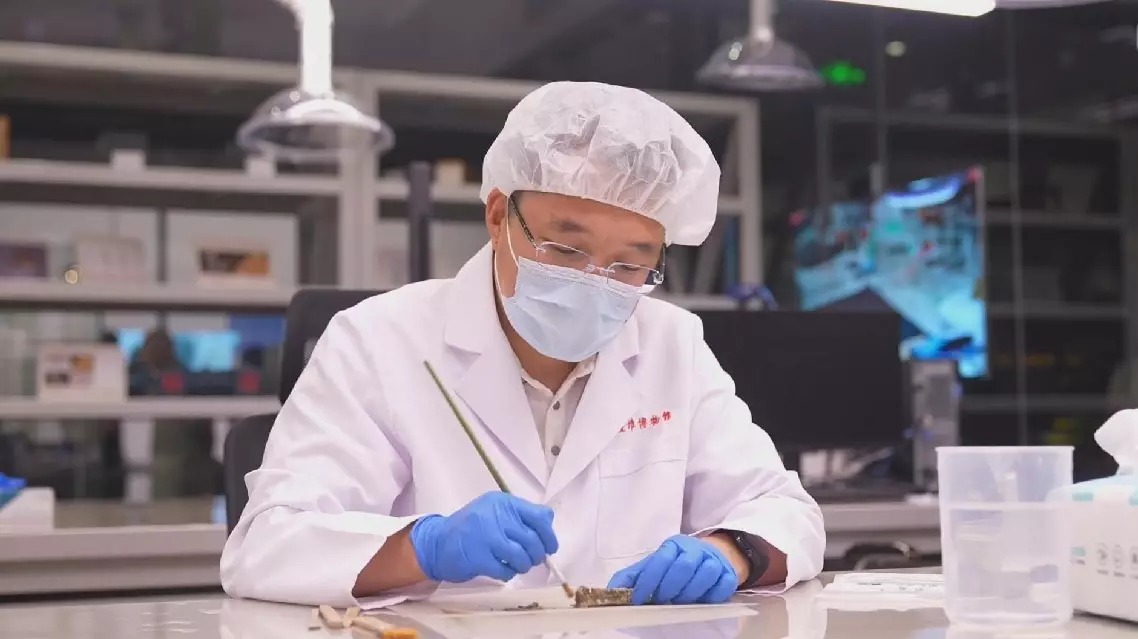
Young restorers combine tradition with high-tech to protect Sanxingdui treasures

Young restorers combine tradition with high-tech to protect Sanxingdui treasures

Chinese meteorologists have deployed a swarm of drones for the first time to conduct three-dimensional observations throughout the entire passage of Typhoon Noul, providing new data to improve forecasting and disaster response.

The experiment began on Friday at the China Meteorological Administration's field research base for low-altitude weather observation in Shenzhen, south China's Guangdong Province, as meteorological researchers tracked Noul, the year's 12th typhoon.

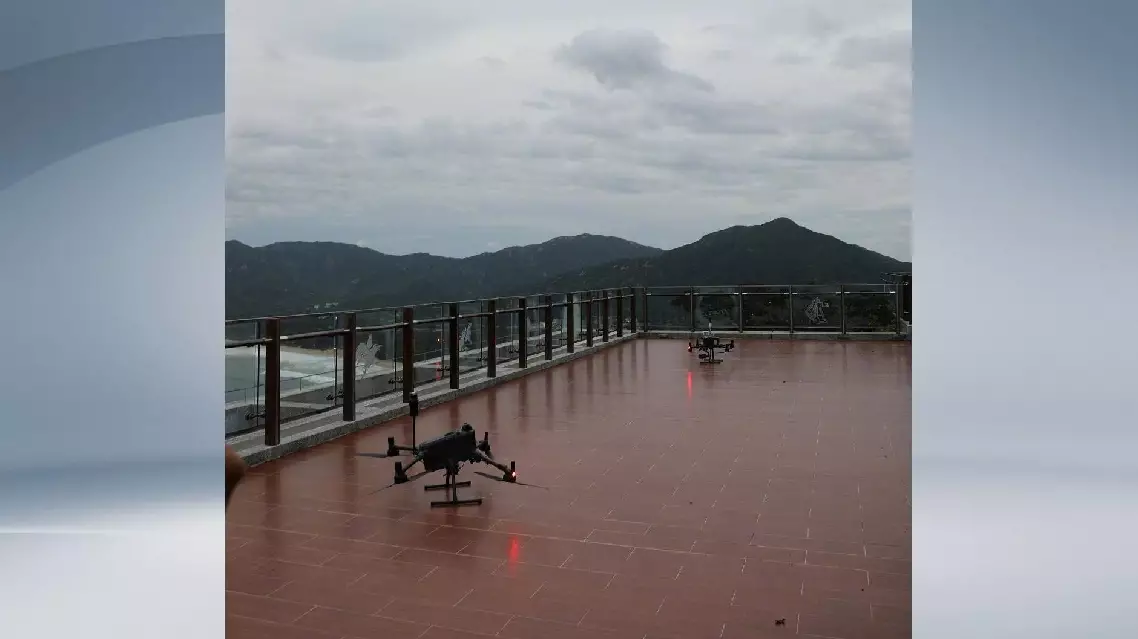
Unlike a single drone, the drone swarm consists of multiple unmanned aircraft operating in coordination to simultaneously collect meteorological data at different locations and altitudes.

The drones continuously measured key low-altitude atmospheric conditions before, during and after the typhoon, including temperature, humidity, wind fields and turbulence. Researchers also monitored flight performance data to assess the operational limits of drones under extreme weather conditions.

The administration said the technology enables high-density, three-dimensional sampling of the lower atmosphere, helping fill gaps in offshore low-altitude observations. The data are expected to improve typhoon monitoring and forecasting while supporting the safe operation of drones in severe weather.

Noul landed near the coastal town of Pinghai in Huidong County, Huizhou City, at around 03:50 on Sunday, packing maximum sustained winds of 162 kilometers per hour.

It waned to a severe tropical storm and is tracking northward toward neighboring Hunan Province in central China.

Drone swarm deployed for full typhoon observation

Drone swarm deployed for full typhoon observation

Recommended Articles