Guided by Chinese President Xi Jinping's emphasis on preserving and innovating ceramic culture, Jingdezhen in east China's Jiangxi Province, long renowned as the world's "porcelain capital," has emerged as a model for protecting and developing Chinese cultural heritage.
The United Nations Educational, Scientific and Cultural Organization (UNESCO) on Saturday added China's Jingdezhen Handicraft Porcelain Industry Sites to the World Heritage List during the 48th session of the World Heritage Committee held in Busan, the Republic of Korea.
It marks the first time that China has nominated an industrial heritage site for World Heritage status, and it is also the first World Heritage site themed around porcelain.
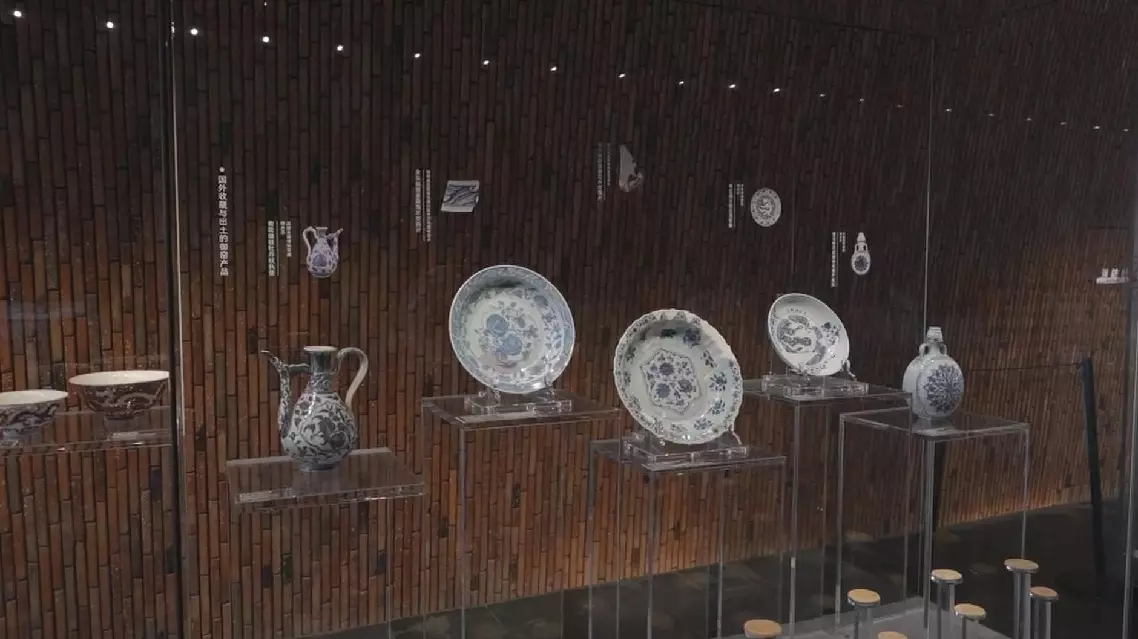
The Jingdezhen Handicraft Porcelain Industry Sites are a group of heritage sites representing the handicraft porcelain industry system that developed in Jingdezhen from the 10th to the 19th century. It comprises five parts: the Town Area Porcelain Production Center, the Hutian Ancient Kiln Site, the Gaoling Porcelain Clay Mining Site, the Changling Porcelain Stone Mining Site, and the Jiaotan Firewood Production Area.
"In this application for World Heritage status, we have made innovations by integrating tangible cultural heritage with intangible cultural heritage. It is not merely the application for porcelain itself, but a comprehensive, full-chain application for the entire Jingdezhen handmade porcelain industry," said Wang Tongmao, director of the Jingdezhen Municipal Leading Group Office for World Cultural Heritage Nomination.
Xi, also general secretary of the Communist Party of China (CPC) Central Committee and chairman of the Central Military Commission, has charted the course for the city's cultural revival.
"On October 11, 2023, the General Secretary visited the Taoyangli Historical Block. In his speech, he particularly emphasized the need to make the 'thousand-year-old porcelain capital' an even brighter calling card. The General Secretary has charted the course for us in creating a new development model for cultural city of Chinese modernization," said Liu Zili, then deputy director of Jingdezhen Ceramic Culture Inheritance and Innovation Experimental Zone Management Committee.
A dozen years ago, Jingdezhen faced a sharp dilemma between urban development and heritage protection as real-estate projects crowded around the imperial kiln site and placed the relics in danger.
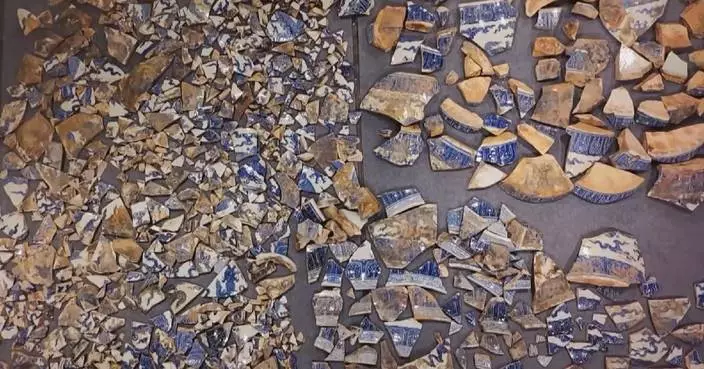
"In 2015, I was a member of the imperial kiln site archaeological team. The senior experts would often come to our excavation site and express the urgency they felt about on protection. In the past, people who came to the imperial kiln site might have felt disappointed, considering how shabby it looked," said Weng Yanjun, head of the Jingdezhen Imperial Kiln Institute.
In March 2015, three renowned archaeologists, Su Bai, Xie Chensheng and Geng Baochang, wrote to leaders about the under-protected state of the precious remains. The situation drew Xi's attention.
"The General Secretary made two important instructions within a single year, emphasizing the protection of the imperial kiln site in Ming and Qing dynasties (1368-1911). He required us to make the protection of the imperial kiln site a starting point to thoroughly explore Jingdezhen's ceramic culture. This holds guiding significance for how Chinese ceramic culture can have exchanges with the world for shared development," said Liu.
"We then took actions. The first thing we do is to retain the roots of the past and the soul of the past. We retain traditional craftsmanship, and the living and production spaces of our ancestors over the past thousand years, so we can protect an authentic, complete and continuous memory," he said.
That same year, Jingdezhen formally launched its World Heritage bid.
In 2019, during an inspection in Jiangxi, Xi called on the province to "build the Jingdezhen National Ceramic Culture Inheritance and Innovation Pilot Zone into a new platform for cultural exchanges with other countries."
During his 2023 visit to Jingdezhen, Xi stressed that "ceramics are a treasure of China and an important calling card of the Chinese civilization."
"We as archaeological and cultural heritage workers are very excited to be able to personally witness the inscription of Jingdezhen Handicraft Porcelain Industry Sites onto the World Heritage List. This would not have happened without the deep care and guidance from General Secretary Xi Jinping on the protection of the imperial kiln site and the whole porcelain-making heritage," said Weng.
Under Xi's leadership, the Jingdezhen Handicraft Porcelain Industry Sites now stand as a living testimony to the innovative development of China's handicraft porcelain technology, art and industry. They are expected to play an even greater role in advancing the global ceramic industry and fostering exchanges and mutual learning among civilizations.
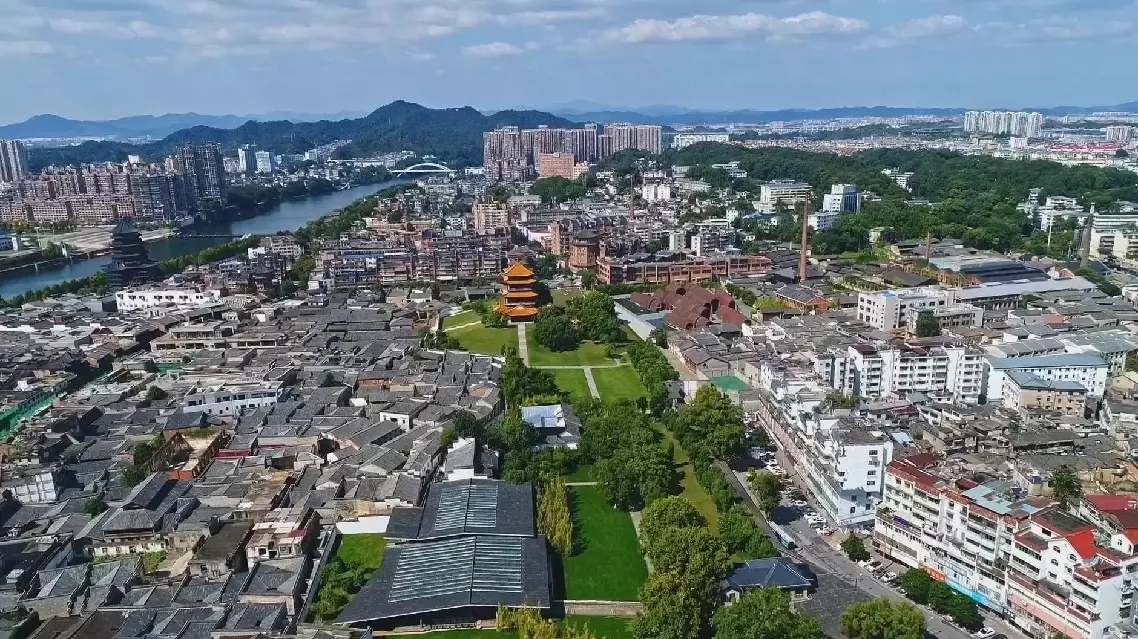
China’s 'porcelain capital' inspired by Xi's guidance to preserve cultural heritage