Skip to Content Facebook Feature Image

China implements 33,000 water conservancy projects in H1

China

China

China

China implements 33,000 water conservancy projects in H1

2026-07-27 17:31 Last Updated At:23:37

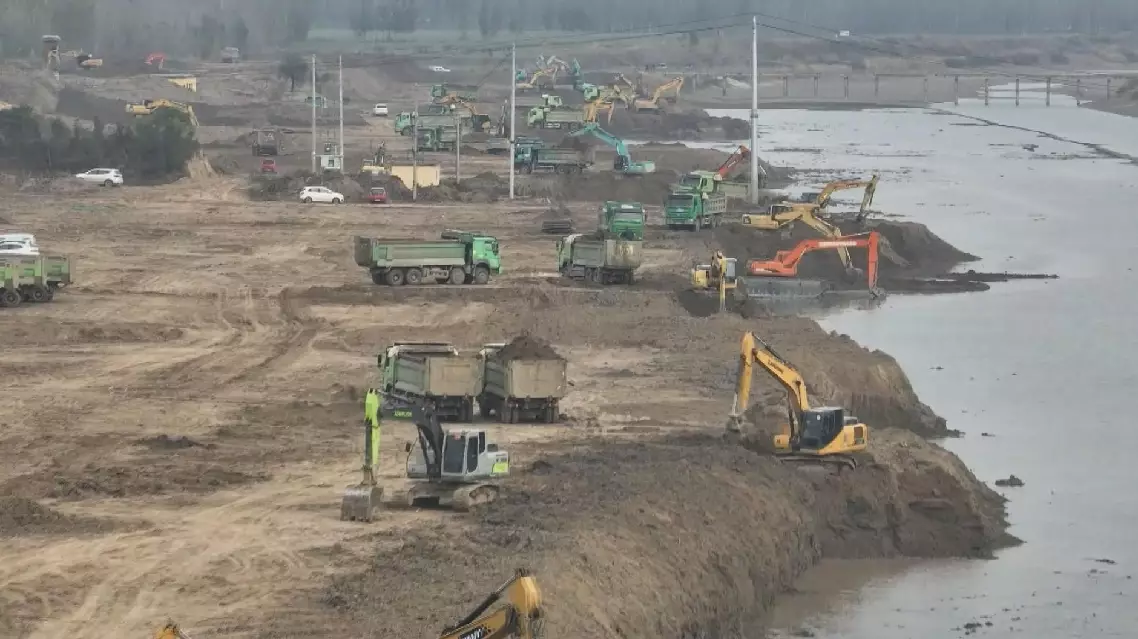
China has redoubled efforts to accelerate the construction of a modern water network, implementing 33,000 water conservancy projects and investing 515.1 billion yuan (about 76.06 billion U.S. dollars) in water conservancy construction in the first half of this year. Construction is accelerating on a number of major projects, including key water conveyance and drainage channels and important regulation and storage nodes of the national water network, such as the Beibu Gulf water resources allocation project and the Yellow River Guxian water conservancy hub. At the construction site of the project to channel water from the Three Gorges Reservoir area to the Hanjiang River, a tributary of the Yangtze River, a follow-up project to the South-to-North Water Diversion Project, eight hard-rock tunnel boring machines are operating simultaneously, with the main water conveyance tunnel having advanced a cumulative total of more than 31 kilometers.

As part of the grain production capacity enhancement initiative, a number of large and medium-sized irrigation construction and modernization projects including the modernization of the Leizhou Peninsula irrigated area project in south China's Guangdong Province and the Pishihang irrigated area project in east China's Anhui Province, have successively commenced construction.

From January to June, China launched 25 major water conservancy projects nationwide, an increase of 11 projects compared to the same period last year.

Meanwhile, China is adopting a river basin-based approach to scientifically plan the construction of reservoirs, waterways, embankments, and flood detention and retention areas, speeding up the development of river basin flood control and drainage systems.

The Shuanghou Reservoir along the Menghe River in east China's Shandong Province is a major water conservancy project under the comprehensive plan for the Huaihe River Basin.

At the construction site, machinery and workers are coordinating efforts across multiple locations to pour concrete for the main structures of the bridgehead and the gate operating room. "Construction on the main body of the dam for Shuanghou Reservoir of the Menghe River has reached 88 percent of its planned progress and it is now capable of flood regulation," said Liu Guibin, the project's manager. In south China's Guangxi Zhuang Autonomous Region, the Dateng Gorge water conservancy project of the Xijiang River, which has just passed its completion acceptance inspection, has withstood the test of two consecutive rounds of major floods on the Xijiang River during this year's flood season.

Yuan Hao, director of the major project investment planning division under the Planning Department of the Ministry of Water Resources, said the country will beef up efforts to combat floods.

"The Ministry of Water Resources will focus on the 2035 targets outlined in the guideline on national water network construction, strengthen coordinated planning, and optimize layout and structure to effectively ensure flood control, water supply, food, and ecological security," he said.
China implements 33,000 water conservancy projects in H1

China implements 33,000 water conservancy projects in H1
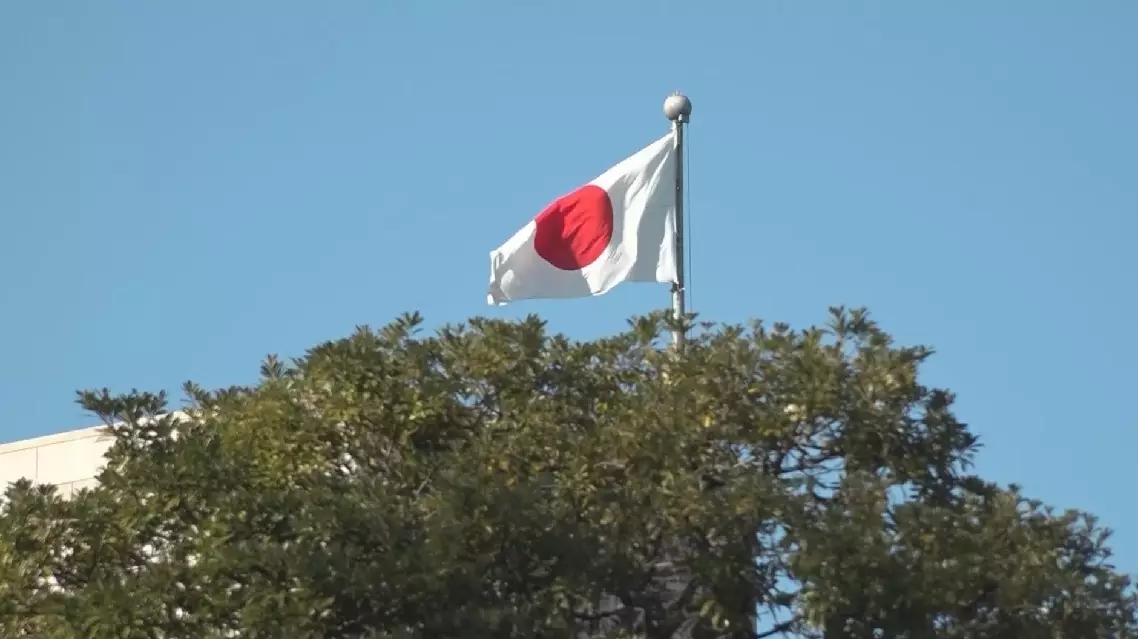
Japan's ongoing push to revise its pacifist constitution and expand military buildup escalate regional tension, warned Japanese lawyer Kyoko Oe, who urged adherence to pacifism and vigilance against the government's dangerous moves.

Since Japanese Prime Minister Sanae Takaichi took office last October, the Japanese government has renewed its push to revise the country's pacifist constitution and accelerated a series of military expansion measures, including increasing defense spending, deploying long-range missiles, and easing restrictions on arms exports.

Speaking on the dangerous policy shifts, Oe criticized the Takaichi administration for bypassing public will.

"We believe that when Japanese citizens are not demanding constitutional reform, pushing it forward through a parliamentary majority clearly violates the principle of popular sovereignty and the obligation to respect the constitution. Moreover, the content of the revision itself is extremely dangerous. [The government] is attempting to change pacifist principles of the Japanese constitution -- the most fundamental part -- and abandon basic concepts, including the renunciation of war and not maintaining military forces," said Oe.

The Japanese government has aggressively accelerated war readiness even under the current constitution, said Oe, adding that amending it will grant the Self-Defense Forces even greater freedom of action at the constitutional level.

"If the constitution is amended, the Self-Defense Forces will gain greater freedom of action at the constitutional level than they have now, and legal interpretations will develop in that direction. Even while the current constitution remains effective, the Japanese government has already forcibly advanced war preparations. For example, manufacturing long-range missiles, which were previously considered unacceptable to possess, and deploying them domestically; conducting joint war games and military exercises with the United States; and massively manufacturing and exporting weapons overseas," said Oe.

The lawyer also criticized Takaichi's provocative remarks on China, saying they have sharply strained bilateral ties and undermined peace and stability in the region.

"We believe that due to Takaichi's remarks made last November, China-Japan relations have become very tense and are deteriorating. Legal experts believe that Takaichi's remarks contain multiple obvious errors. Takaichi should frankly retract the relevant remarks and apologize. Only by building mutual trust with neighboring countries can we maintain our peace, and the peace of East Asia and even the peace of Asia. We believe that what the Takaichi administration is doing runs completely counter to what the Japanese people truly wish to achieve," Oe said.

Japan's constitution revision, military buildup fuel regional tensions: lawyer

Japan's constitution revision, military buildup fuel regional tensions: lawyer

Recommended Articles