BOGOTA, Colombia (AP) — More than a month has passed since Venezuela’s devastating earthquakes, and the constant sound of heavy machinery still echoes through the hardest-hit neighborhoods of La Guaira on the northern coast.
Dust from collapsed buildings hangs in the humid air. Garbage has piled up. Families camp outside homes deemed too dangerous to enter. Water trucks weave through damaged streets.
Click to Gallery
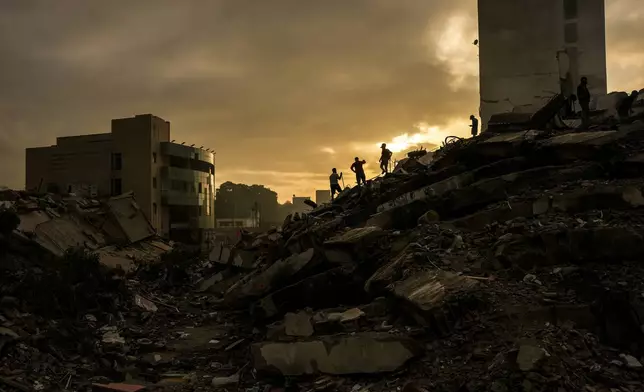
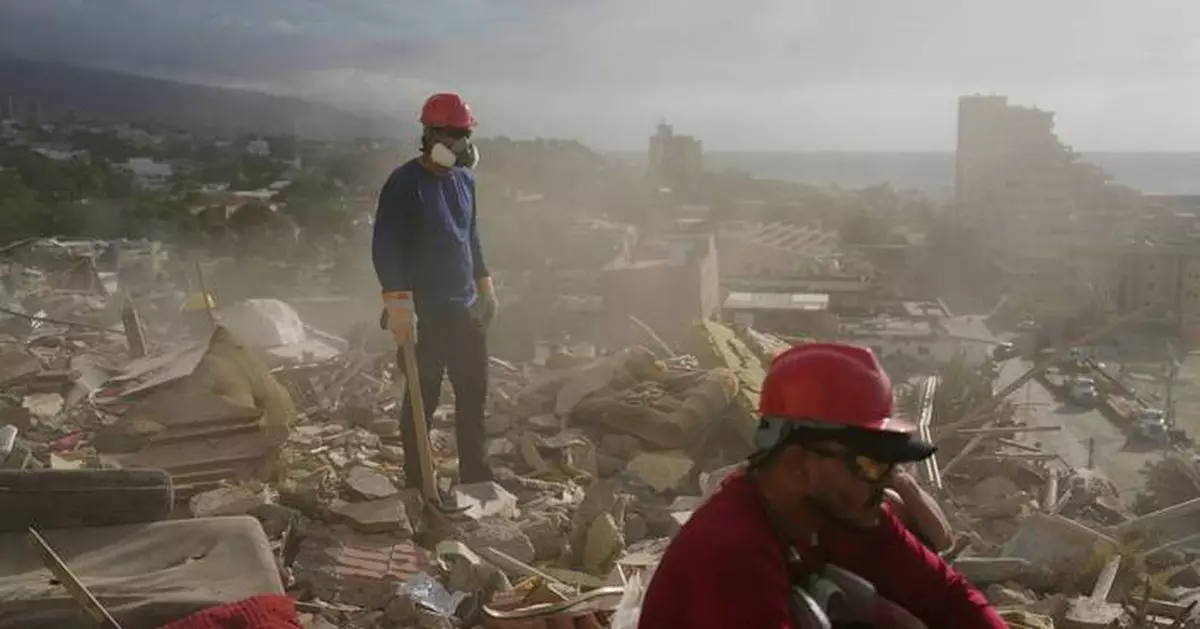
FILE - Men searching for survivors stand atop a mountain of rubble three days after twin earthquakes struck, in La Guaira, Venezuela, June 27, 2026. (AP Photo/Matias Delacroix, File)
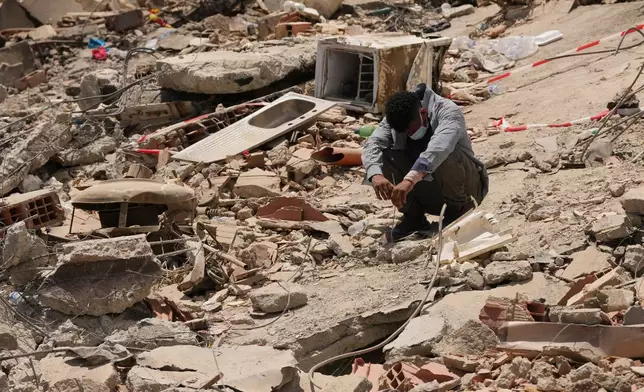
FILE - A man sits amid earthquake rubble in La Guaira, Venezuela, June 29, 2026. (AP Photo/Matias Delacroix, File)
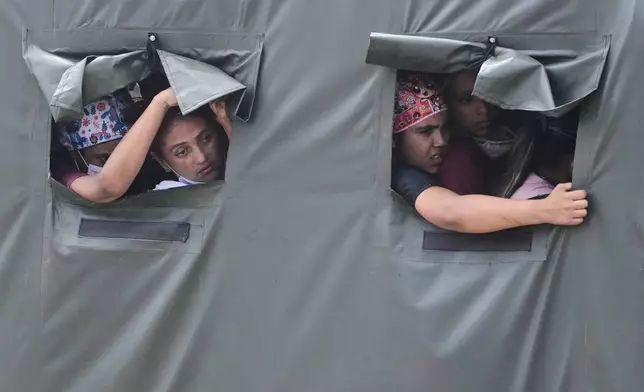
FILE - Health workers ride in a truck on their way to join earthquake relief efforts in La Guaira, Venezuela, June 28, 2026. (AP Photo/Fernando Vergara, File)
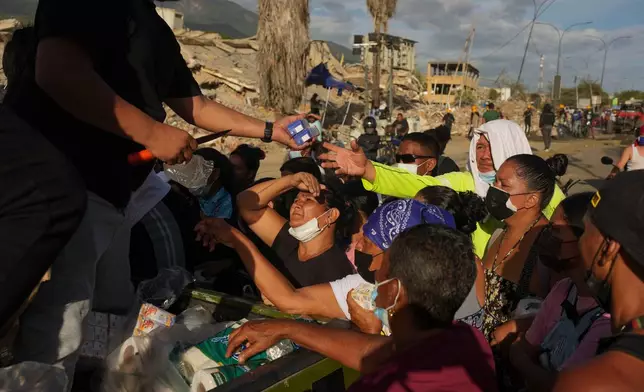
FILE - People affected by the earthquakes line up for food in La Guaira, Venezuela, June 28, 2026. (AP Photo/Matias Delacroix, File)
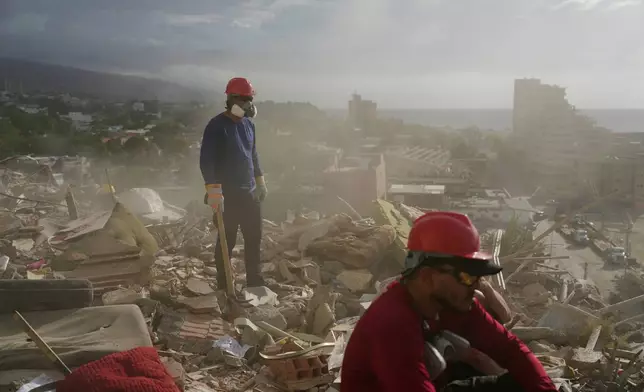
FILE - Rescue workers and volunteers search through the rubble of a building collapsed during the earthquakes in La Guaira, Venezuela, July 6, 2026. (AP Photo/Ariana Cubillos, File)
“The smell of corpses is very strong" in some neighborhoods, said Carolina de Jesús, Venezuela project director for the humanitarian organization Project HOPE, who has spent nearly every day in the region since the quakes.
Public health and environmental experts told The Associated Press the coming weeks are critical to preventing secondary crises caused by contaminants from the rubble and rebuilding.
Government figures say the 7.2 and 7.5 magnitude quakes on June 24 killed over 5,000 people, injured nearly 17,000 and left almost 18,000 homeless. Authorities have not said how many remain missing, though estimates put the figure in the tens of thousands. The World Bank estimates the quakes caused $19.6 billion in direct physical damage.
Survivors are now experiencing the environmental costs in a region where Venezuela’s health system was already weakened by years of economic crisis.
There is “hope, but also enormous pressure over what will happen tomorrow,” de Jesús said.
Among those still searching for loved ones is Mary Cruz Andueza. The tower where her mother lived, part of a government housing program launched under late President Hugo Chávez, collapsed.
“I don’t know if she’s alive, if she’s dead, if she’s in a hospital or still beneath the rubble,” the 35-year-old Andueza said.
She said she became sick after spending days near the rubble.
“The dust made me seriously ill,” she said. “We’ve had coughs, allergies, fever and headaches because we’re working so close to the collapsed buildings every day.”
Managing an estimated 1.2 million tons of debris caused by the quakes is a major environmental challenge. Much of the rubble could be contaminated with fuels, motor oil, paints, solvents, plastics and other hazardous materials released when buildings fell.
That has raised concerns that pollutants could spread if the debris is not properly sorted and disposed of. In La Guaira, steep mountains rise behind densely populated communities, leaving little space.
Authorities are separating contaminated debris from reusable material. Concrete and other recyclable waste will be used in reconstruction, while contaminated material — such as asbestos, chemicals, fuel residues and other hazardous waste — will need to be disposed at specialized facilities, according to Joaquín Benítez, director of Environmental Sustainability at Andrés Bello Catholic University in Caracas.
Benítez said he had seen reports that some debris may have been dumped along the coast or into the sea during the initial emergency response as authorities raced to clear blocked roads. Local journalists said the practice was halted after the first few days.
If debris containing fuels or other hazardous materials reaches coastal waters, contaminants could affect water quality and marine ecosystems. Large volumes of sediment and construction waste could reshape shorelines and damage coastal habitats.
Diego Díaz Martín, president of environmental organization Vitalis, said seasonal rains could trigger landslides on earthquake-weakened hillsides. He also warned that damage to sensitive ecosystems may remain undetected because many affected areas have yet to be assessed.
Martín said the recovery effort should include work to reduce future environmental risks, and called on authorities to rebuild outside landslide-prone areas.
The Venezuelan government did not immediately respond to questions about its response to the environmental and public health impacts of the earthquake.
Access to safe drinking water has become one of the biggest challenges. Even where tanker trucks are supplying communities, de Jesús said, that does not necessarily mean the water has been properly treated.
Unsafe water and inadequate sanitation are contributing to diarrheal diseases, urinary tract infections, skin infections and conditions that allow mosquito-borne diseases to spread, she said.
“Earthquakes do not cause outbreaks by themselves. The risk comes from the post-disaster conditions,” said Dr. Mauricio Cerpa, an epidemiologist with the Pan American Health Organization’s Emergency Operations Center.
Overcrowded shelters, disrupted water and sanitation systems, interrupted healthcare and reduced vaccination coverage create the conditions in which disease can spread, he said.
Cerpa said authorities have identified 18 priority diseases and public health issues requiring immediate notification, including diarrheal diseases, respiratory infections, dengue, malaria and measles. Venezuela’s vaccination coverage had already fallen below recommended levels before the earthquakes, increasing concerns about crowded conditions.
Health officials said disease surveillance in temporary shelters has become an immediate priority. PAHO said health teams are supporting vaccination campaigns and improving water and sanitation conditions.
Cerpa said thousands of people with chronic illnesses such as diabetes and hypertension could face increasing risks if health services remain disrupted.
Thousands of volunteers and humanitarian workers have joined relief efforts amid criticism of the speed and coordination of the official response.
De Jesús said some have developed respiratory illnesses after weeks of breathing silica and cement dust released as collapsed buildings are cleared. Others have suffered dehydration and diarrheal illnesses during long days in the heat.
“One of the main challenges is how to recover all the essential care,” Cerpa said, noting that hospitals must resume treatment for people with chronic illnesses while meeting growing demand for disease surveillance, mental health services and maternal care.
Alycia Clark, Direct Relief’s vice president and chief pharmacy officer, said the earthquakes compounded longstanding shortages of medicines, healthcare workers and medical infrastructure, leaving many patients at risk of missing routine care.
Public health and environmental experts said the next phase of recovery will focus on restoring safe water and sanitation, rebuilding essential health services and managing environmental hazards before they create new emergencies.
Clark said the immediate trauma response would give way to a much longer public health challenge.
“The needs are only going to increase from this point forward,” she said.
The Associated Press’ climate and environmental coverage receives financial support from multiple private foundations. AP is solely responsible for all content. Find AP’s standards for working with philanthropies, a list of supporters and funded coverage areas at AP.org.
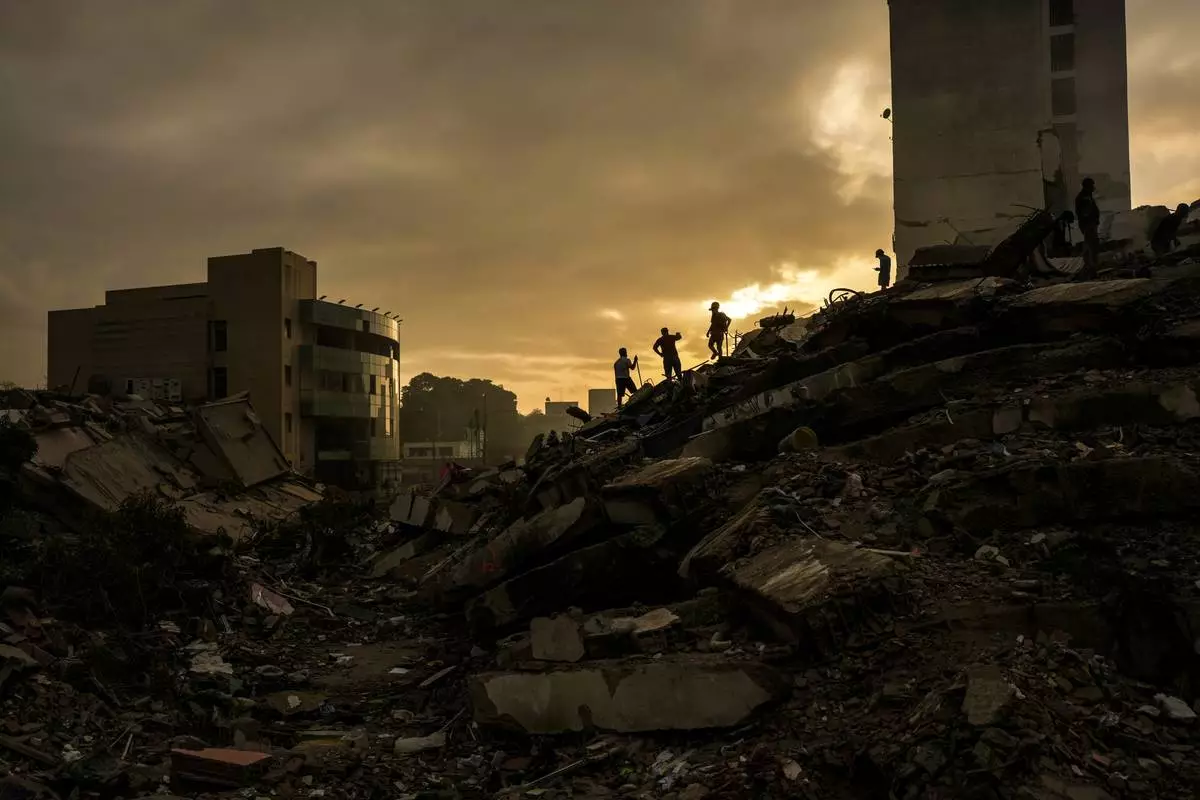
FILE - Men searching for survivors stand atop a mountain of rubble three days after twin earthquakes struck, in La Guaira, Venezuela, June 27, 2026. (AP Photo/Matias Delacroix, File)
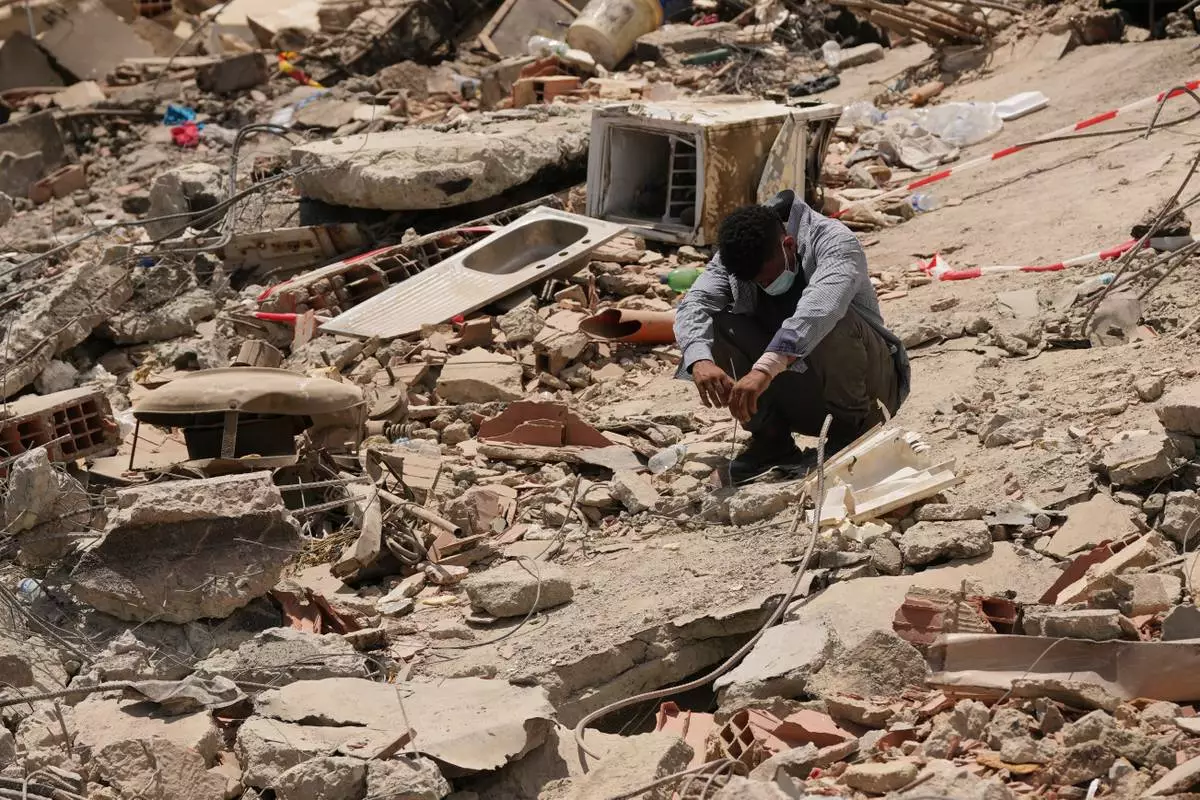
FILE - A man sits amid earthquake rubble in La Guaira, Venezuela, June 29, 2026. (AP Photo/Matias Delacroix, File)
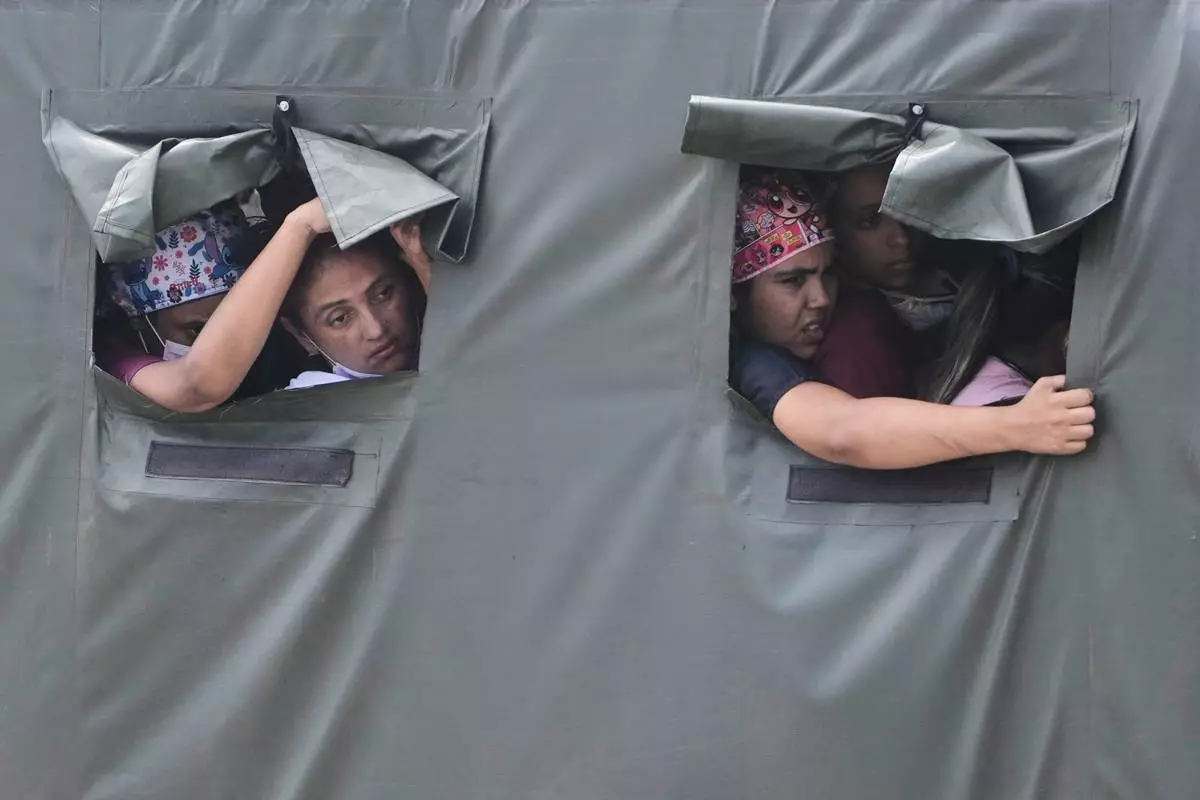
FILE - Health workers ride in a truck on their way to join earthquake relief efforts in La Guaira, Venezuela, June 28, 2026. (AP Photo/Fernando Vergara, File)
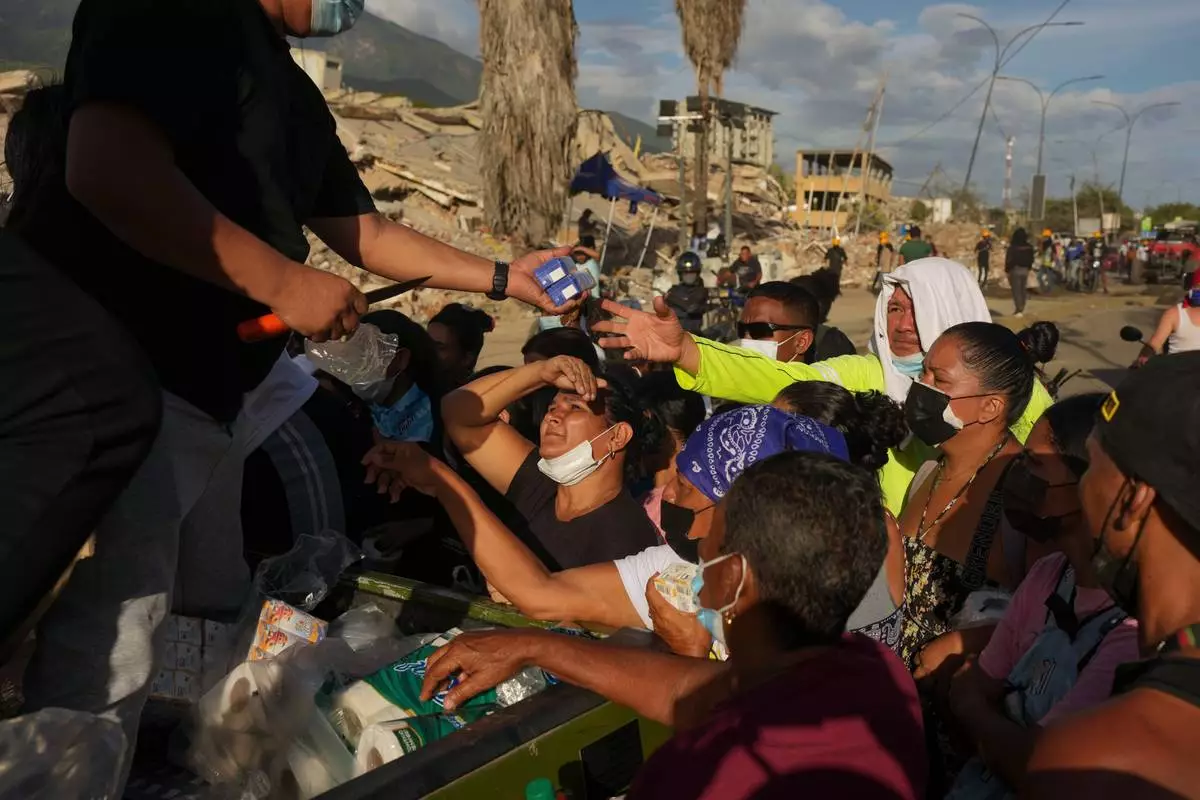
FILE - People affected by the earthquakes line up for food in La Guaira, Venezuela, June 28, 2026. (AP Photo/Matias Delacroix, File)
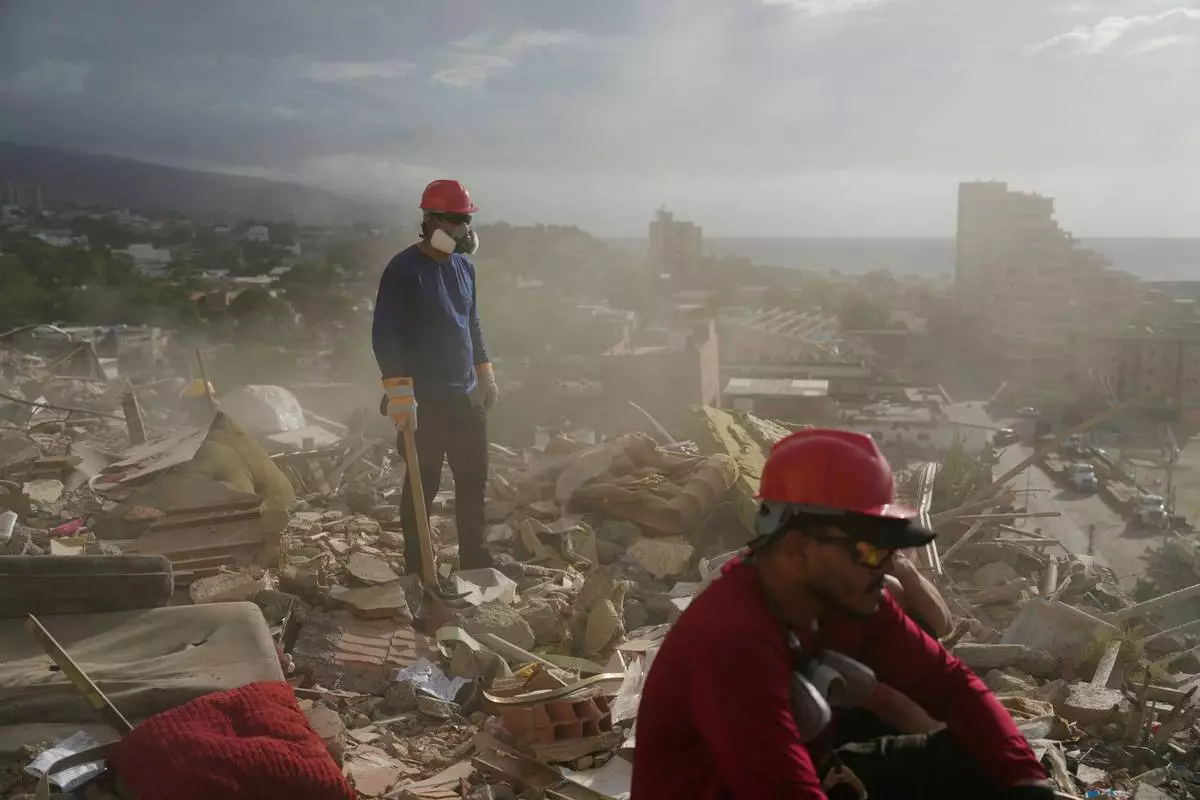
FILE - Rescue workers and volunteers search through the rubble of a building collapsed during the earthquakes in La Guaira, Venezuela, July 6, 2026. (AP Photo/Ariana Cubillos, File)